
Europe Food Cans Market Trends & Summary (2025–2033)
How Sustainability, Convenience, and Changing Food Habits Are Reshaping Metal Packaging Across Europe

Europe Food Cans Market: A Resilient Industry in a Changing Food Landscape
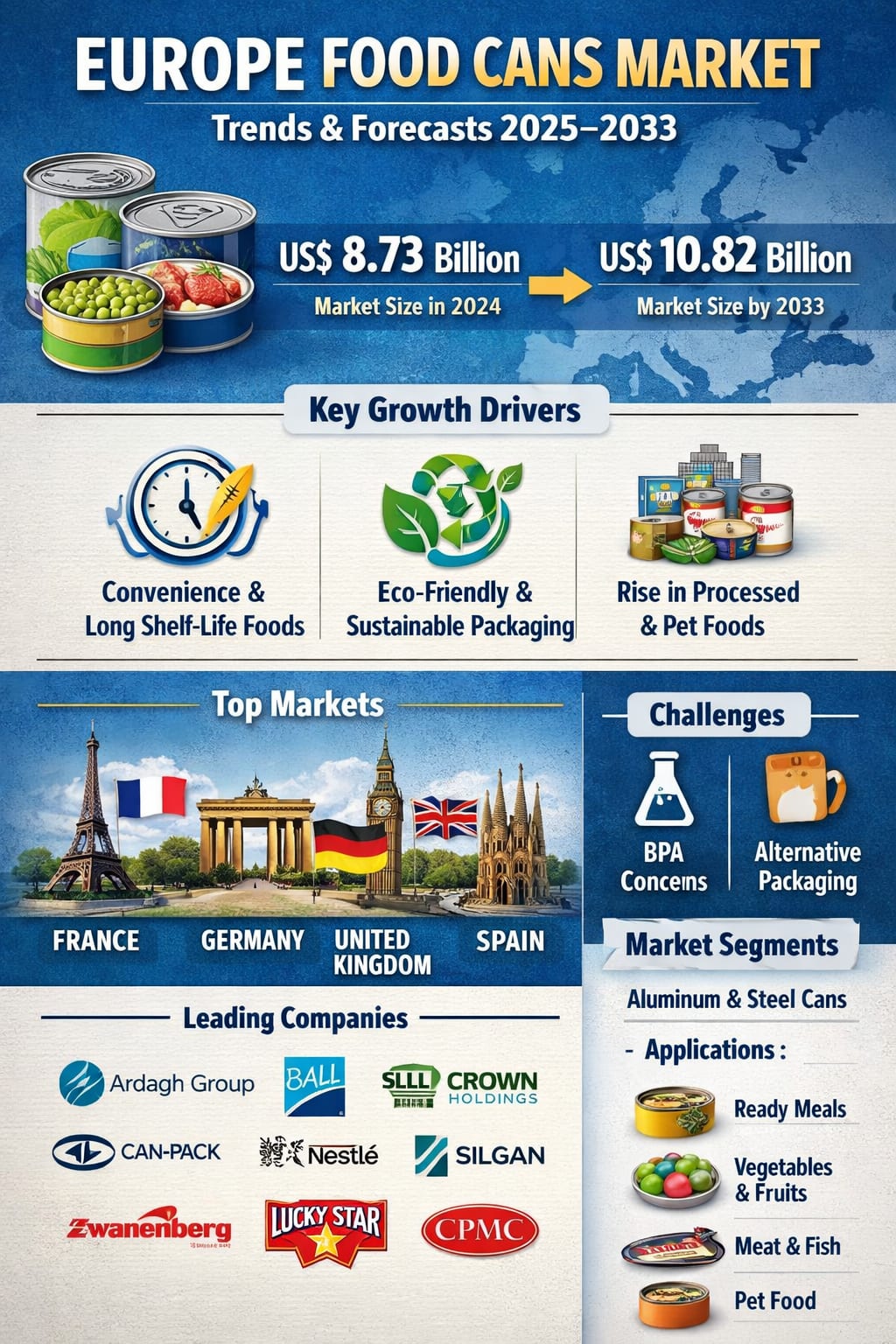
The Europe Food Cans Market continues to demonstrate remarkable resilience and relevance in an era defined by fast-changing consumer preferences, sustainability demands, and evolving food consumption habits. Valued at US$ 8.73 billion in 2024, the market is projected to grow steadily at a CAGR of 2.44% from 2025 to 2033, reaching approximately US$ 10.82 billion by 2033. This growth is being driven by the expanding demand for long-shelf-life food products, rising urbanization, and continuous improvements in sustainable packaging technologies.
Food cans—primarily manufactured from aluminum and steel—remain one of the most reliable forms of food packaging. They protect contents from light, air, and contamination, ensuring food safety and extended shelf life without the need for refrigeration. Across Europe, canned foods continue to play a vital role in preserving vegetables, fruits, meat, fish, soups, ready meals, and pet food, making them an essential component of modern food supply chains.
What makes the current phase of the Europe food cans market particularly interesting is the convergence of convenience, sustainability, and regulation. European consumers are increasingly balancing busy lifestyles with health awareness and environmental responsibility. At the same time, policymakers are pushing for recyclable, BPA-free, and eco-friendly packaging solutions. Together, these forces are reshaping how food cans are designed, produced, and marketed across the region.
Why Food Cans Still Matter in Europe
Despite growing competition from flexible packaging, glass jars, and paper-based solutions, food cans continue to hold a strong position in Europe’s food packaging ecosystem. Their durability, recyclability, and ability to preserve food for long periods make them especially valuable for both households and large-scale food distributors.
In a region where food waste reduction and food security are key priorities, canned foods offer a practical solution. They allow consumers to store food for months—or even years—without significant loss of quality or nutritional value. This is particularly relevant in times of economic uncertainty, when households tend to favor affordable, long-lasting food options.
Moreover, the European Union’s strong focus on the circular economy has given metal packaging an additional boost. Aluminum and steel are among the most recycled materials in the world, and food cans can be recycled repeatedly without losing quality. This aligns perfectly with Europe’s long-term sustainability goals and helps explain why food cans remain a preferred choice for many food manufacturers.
Key Growth Drivers in the Europe Food Cans Market
1. Rising Demand for Convenience and Long Shelf-Life Foods
Modern European lifestyles are increasingly fast-paced, especially in urban centers. Busy work schedules, smaller households, and changing eating habits have fueled demand for ready-to-eat meals, easy-to-prepare foods, and long-lasting pantry staples. Canned foods fit perfectly into this lifestyle, offering convenience without compromising on safety or availability.
Consumers are looking for products that reduce cooking time while still providing reliable nutrition. Canned soups, pasta meals, curries, vegetables, and seafood have become everyday essentials in many European households. The steady growth of urban populations and the expansion of single-person households further reinforce this trend, supporting long-term demand for food cans across the region.
2. Strong Push Toward Sustainable and Eco-Friendly Packaging
Sustainability is no longer a niche concern in Europe—it is a mainstream expectation. Both consumers and regulators are pushing brands to adopt recyclable, low-impact, and BPA-free packaging solutions. Metal cans, made from aluminum and steel, are uniquely positioned to benefit from this shift due to their high recycling rates and compatibility with circular economy models.
In March 2024, European institutions reached agreements on new rules aimed at making all packaging more sustainable, focusing on recyclability, reduction of harmful substances, and increased use of recycled content. Such policies are accelerating investments in eco-friendly can coatings, lightweight materials, and improved recycling systems, further strengthening the long-term outlook of the food cans market in Europe.
3. Growth in Processed and Packaged Food Consumption
Europe has seen a steady rise in the consumption of processed and packaged foods, driven by urbanization, changing family structures, and evolving dietary habits. Canned foods play a crucial role in preserving perishable items such as vegetables, meat, fish, and fruits while maintaining safety and consistency.
Beyond human food, the rapid growth of the pet food segment has become a significant driver for the food cans market. Pet owners increasingly prefer wet canned food for its higher moisture content, perceived freshness, and nutritional benefits. At the same time, the expansion of plant-based and alternative protein products in ready meals is creating new opportunities for innovative canned food offerings across Europe.
Challenges Facing the Europe Food Cans Market
Concerns Over BPA and Can Coatings
Although the industry has made significant progress toward BPA-free linings, consumer concerns about chemical safety in food packaging remain a challenge. Regulatory bodies continue to tighten safety standards, forcing manufacturers to invest in new coating technologies and reformulate existing materials. While these changes improve safety and trust, they also increase production costs and put pressure on profit margins.
Competition from Alternative Packaging Formats
The rise of flexible pouches, glass jars, and paper-based packaging is intensifying competition in the food packaging sector. Many of these alternatives are lighter, resealable, and marketed as more “modern” or “eco-friendly,” especially to younger consumers. In addition, advancements in food preservation technologies are allowing some products to achieve longer shelf lives without relying on metal cans, adding another layer of competitive pressure.
Market Breakdown by Product Type
Europe Aluminum Food Cans Market
Aluminum cans are widely used across Europe due to their lightweight nature, corrosion resistance, and excellent recyclability. They are commonly used for soups, vegetables, seafood, and ready meals, where product safety and shelf life are critical. As sustainability becomes a central focus, many manufacturers are emphasizing 100% recyclable aluminum cans and increasing the use of recycled aluminum to reduce environmental impact and comply with regulatory requirements.
Europe Steel Food Cans Market
Steel cans remain a preferred choice for meat, vegetables, and pet food due to their strength and superior barrier protection against light and oxygen. These properties make steel cans ideal for long-term storage of perishable products. Ongoing innovations, including lightweight steel designs and BPA-free linings, are helping this segment remain competitive while meeting modern safety and sustainability standards.
Market Breakdown by Application
Ready Meals
The demand for ready-to-eat canned meals continues to rise across Europe as consumers seek convenient food solutions that require minimal preparation. Products such as canned pasta dishes, curries, stews, and soups are gaining popularity in both retail stores and online channels, supporting steady growth in this segment.
Vegetables and Fruits
Canned vegetables and fruits remain household staples due to their year-round availability, affordability, and ease of storage. There is a growing market for organic, low-sodium, and preservative-free canned options, reflecting broader health-conscious trends among European consumers.
Meat and Fish
Canned meat and fish continue to play an important role in Europe’s food culture, especially in countries with strong traditions of preserved seafood and meats. These products offer long shelf life and reliable quality, making them popular for both everyday meals and emergency food supplies.
Pet Food
The pet food segment is one of the fastest-growing application areas within the Europe food cans market. Pet owners increasingly favor canned food for its moisture content, palatability, and perceived nutritional advantages. Premium, natural, and grain-free canned pet food products are gaining traction, creating new growth opportunities for manufacturers.
Country-Level Insights
France
France’s food cans market is benefiting from strong demand for canned vegetables, seafood, and ready meals, supported by the country’s commitment to sustainable packaging policies. The growing popularity of BPA-free and eco-friendly cans is reshaping industry standards, while manufacturers are also introducing premium and organic canned food products to appeal to increasingly discerning consumers.
Germany
Germany represents one of the largest food can markets in Europe, driven by high consumption of canned meats, vegetables, and pet food. The country’s strict recycling regulations are pushing manufacturers to innovate in sustainable can design and materials. This strong environmental focus is reinforcing consumer trust in metal packaging and supporting long-term market growth.
United Kingdom
In the UK, rising demand for convenient and healthier food options is boosting the food cans market. Consumers are showing increased interest in organic, additive-free, and nutritionally balanced canned products. At the same time, innovation in digitally printed and customized cans is helping brands stand out in a competitive retail environment.
Spain
Spain’s rich culinary tradition, especially in canned fish, olives, and vegetables, continues to support a vibrant food cans market. As consumers increasingly seek premium and organic products, manufacturers are investing in sustainable practices and innovative packaging solutions to maintain their competitive edge.
Europe Food Cans Market Segmentation
By Product:
Aluminum
Steel
By Application:
Ready Meals
Meat
Vegetables
Fish
Fruits
Powder Products
Pet Food
Others
By Countries:
France, Germany, Italy, Spain, United Kingdom, Belgium, Netherlands, Russia, Poland, Greece, Norway, Romania, Portugal
Company Landscape
Key players operating in the Europe food cans market include:
Ardagh Group
Ball Corporation
Can-Pack S.A.
CPMC Holdings Limited
Crown Holdings Inc.
Nestlé S.A.
Zwanenberg Food Group
Silgan Holdings Inc.
Lucky Star Ltd. (Glenryck)
Sarten Romania SRL
These companies are competing across multiple dimensions, including product innovation, sustainability initiatives, capacity expansion, and strategic partnerships, to strengthen their positions in the European market.
Final Thoughts: A Market Built on Trust, Utility, and Sustainability
The Europe Food Cans Market may not be the flashiest segment of the packaging industry, but it remains one of the most reliable and strategically important. With a market size of US$ 8.73 billion in 2024 and a projected rise to US$ 10.82 billion by 2033, its steady growth reflects the enduring value of metal cans in modern food systems.
As Europe continues to prioritize sustainability, food security, and convenience, food cans are well-positioned to evolve rather than disappear. Innovations in BPA-free coatings, lightweight materials, and recycling technologies will further strengthen their relevance. In a world that increasingly values both practicality and environmental responsibility, food cans are proving that sometimes, the most traditional solutions are also the most future-ready.
About the Creator
Tom Shane
Tom Shane is a content writer specializing in SEO-driven blogs, product descriptions, and thought leadership. He crafts engaging, research-backed content that connects with audiences and drives results.
Vanguard FTSE Canadian High Dividend Yield Index ETF: Your Guide to Steady Income and Smart Investing
Investing can be simple if you choose the right tools. The Vanguard FTSE Canadian High Dividend Yield Index ETF is designed to provide steady income while helping your portfolio grow over time. Focusing on Canadian companies with consistent dividend payments, this ETF is a smart choice for investors who want reliable returns without constantly monitoring the market. They will break down how this ETF works and why it could fit perfectly into your investment strategy.
By John.doe798about 7 hours ago in Trader
Our Song
Evening has given way to night. Gently, I settle next to you on the comfortable, old love seat and reach for your hand. You snatch it away, again. It cuts me to the quick, but I hide the pain, understanding that the reaction is but part of your demented state. Since the accident, your presence here in our cozy home has been clouded by a haze I can't see. Nevertheless, I feel the frigidity of your expressions and it serves as an excruciating reminder of the immeasurable distance between us.
By Dana Crandell7 days ago in Fiction



Comments
There are no comments for this story
Be the first to respond and start the conversation.