
Cocoa Processing Market Size and Forecast 2025–2033 | Renub Research
Rising Demand for Premium Chocolate, Ethical Sourcing, and Innovation in Cocoa-Based Products Reshape the Global Cocoa Processing Industry

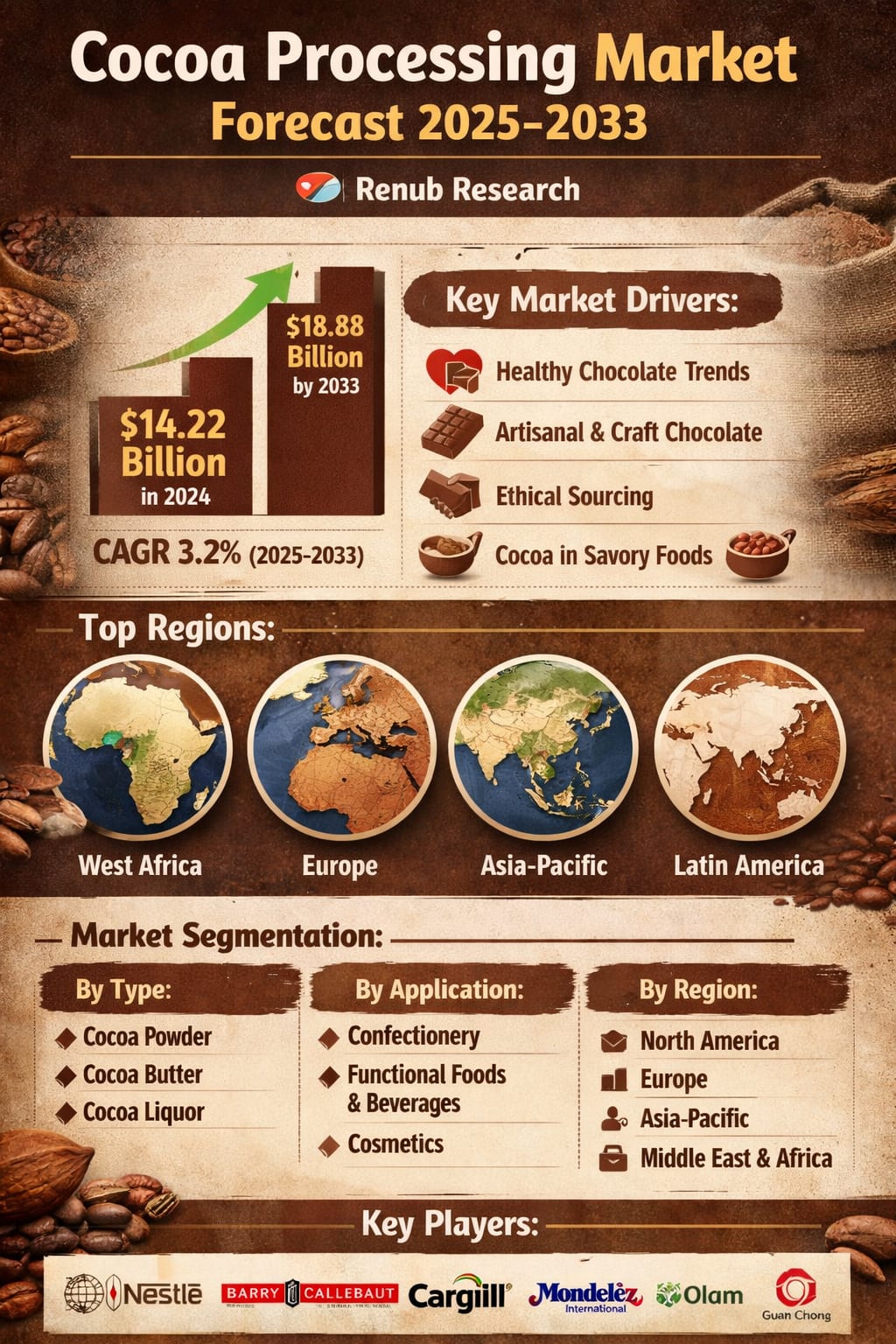
Global Cocoa Processing Market Outlook 2025–2033
The Global Cocoa Processing Market is entering a new phase of steady and sustainable growth, driven by evolving consumer preferences, expanding applications of cocoa derivatives, and increasing focus on ethical and premium production practices. According to Renub Research, the market is expected to reach US$ 18.88 billion by 2033, up from US$ 14.22 billion in 2024, growing at a CAGR of 3.2% from 2025 to 2033.
This growth reflects not only the world’s enduring love for chocolate, but also a broader shift toward healthier formulations, bean-to-bar transparency, and diversified uses of cocoa in functional foods, beverages, cosmetics, and even pharmaceuticals. Cocoa is no longer just a confectionery ingredient—it has become a versatile, value-added commodity shaping multiple industries.
Some of the major forces driving the market include the move toward healthier chocolate formulations, the growing popularity of the bean-to-bar concept, increasing global trade of cocoa, the expansion of artisanal and craft chocolate production, and the emerging use of cocoa in savory and wellness-oriented applications.
Understanding Cocoa Processing: From Bean to Value-Added Products
Cocoa processing refers to the series of methods used to transform raw cocoa beans into finished and semi-finished products such as cocoa liquor, cocoa butter, cocoa powder, and specialty fats, which are further used across industries.
The process typically begins with sorting, where unwanted materials like stones, leaves, and twigs are removed. The beans are then roasted to enhance flavor and aroma. After roasting, winnowing separates the shells from the nibs. These nibs are then ground into a thick paste known as cocoa liquor.
From this stage, several paths are possible. The liquor can be pressed to separate cocoa butter from cocoa solids, which are later ground into cocoa powder. Alkalization may be used to reduce acidity and adjust color and flavor, while conching—the final refining step—helps improve texture, flavor, and shelf life, especially in chocolate production.
This multi-step, technology-intensive process is what enables cocoa to serve such a wide range of end uses, from premium chocolates and bakery products to cosmetics, nutraceuticals, and pharmaceuticals.
Market Drivers: Why Cocoa Processing Demand Is Rising
1. Expanding Global Appetite for Chocolate and Cocoa-Based Products
The primary engine of growth remains the global demand for chocolate and confectionery products. Rising disposable incomes, urbanization, and changing lifestyles—especially in emerging markets—are supporting higher consumption of chocolate, bakery items, and cocoa-based beverages.
At the same time, consumers in mature markets are increasingly shifting toward premium, dark, organic, and functional chocolates, which require higher-quality cocoa processing and better control over sourcing and manufacturing.
2. Growth of the Chocolate Tourism Industry
One of the more interesting trends influencing the cocoa processing sector is the rise of chocolate tourism. Around the world, consumers are showing greater interest in visiting cocoa plantations, chocolate museums, and processing facilities to understand how chocolate is made—from bean to bar.
These immersive experiences increase appreciation for craftsmanship, quality, and ethical sourcing. As a result, cocoa processors are under growing pressure to maintain high production standards, transparency, and sustainability, while also innovating in flavors and product offerings. This close relationship between tourism, storytelling, and product quality is quietly reshaping how cocoa is processed and marketed.
3. Innovation in Cocoa-Based Snacks and Confectionery
Beyond traditional chocolate bars, the market is witnessing a surge in innovative cocoa-based products—including protein bars, energy bites, cocoa-dusted nuts, premium truffles, functional snacks, and low-sugar or sugar-free chocolate alternatives.
These new product categories require specialized cocoa ingredients and consistent quality, pushing processors to upgrade technologies and diversify their portfolios. This continuous cycle of innovation is strengthening demand for advanced cocoa processing capabilities.
4. Rising Demand for Certified and Ethically Sourced Cocoa
Consumers today are far more aware of the social and environmental impact of cocoa farming, especially in regions where issues like child labor, deforestation, and poor working conditions have historically been concerns.
As a result, demand for certified cocoa—such as Fair Trade and Rainforest Alliance—is increasing. Cocoa processors are responding by investing in traceability, partnerships with certified farmers, and sustainable sourcing programs. While this raises operational complexity and costs, it also opens access to premium markets and strengthens brand trust.
Challenges Facing the Cocoa Processing Industry
Sustainability and Ethical Sourcing Pressures
Sustainability is no longer optional—it is becoming a core business requirement. However, implementing ethical sourcing at scale involves higher costs, complex logistics, and long-term investments in farming communities, training, and certification systems. Smaller processors, in particular, may find it challenging to absorb these costs while remaining competitive.
High Energy and Water Consumption
Cocoa processing is an energy- and water-intensive activity, especially during roasting, grinding, and conching. With increasing scrutiny over carbon footprints and water usage, processors are being pushed to invest in energy-efficient machinery, renewable energy, and water recycling systems. While these investments reduce long-term environmental impact, they also increase short-term capital expenditure.
Regional Outlook: How the Market Is Shaping Up Globally
West Africa—especially Ivory Coast and Ghana—continues to dominate raw cocoa bean production. Meanwhile, Europe remains the global hub for cocoa processing, with countries like the Netherlands and Germany playing central roles. At the same time, Asia-Pacific and Latin America are gaining momentum due to rising consumption and growing local processing capacities.
United States Cocoa Processing Market
The U.S. represents a mature and innovation-driven cocoa processing market, supported by strong demand from the confectionery, baking, and beverage industries. There is a growing focus on premium, organic, and ethically sourced cocoa products, as well as clean-label and low-sugar formulations.
Sustainability certifications and traceability are becoming increasingly important, while global price volatility and regulatory compliance remain key challenges. Still, the market continues to benefit from product innovation and strong consumer interest in health and wellness-oriented cocoa products.
Rising sales of bakery and confectionery items are also supporting demand. According to data released by Agriculture and Agri-Food Canada in November 2023, U.S. confectionery retail sales grew at a CAGR of 6.7% between 2018 and 2022, underlining the strong downstream demand for cocoa ingredients.
Germany Cocoa Processing Market
Germany is one of Europe’s most important cocoa processing hubs, supported by advanced infrastructure and a strong presence of multinational and domestic players. The country is among the largest cocoa grinders in the region and plays a vital role in supplying cocoa ingredients across Europe.
Sustainability is a major theme here, with growing adoption of Fair Trade and Rainforest Alliance certifications. Despite challenges such as supply chain disruptions and price fluctuations, Germany’s cocoa processing industry remains resilient, driven by technology, efficiency, and a strong premium chocolate market.
India Cocoa Processing Market
India’s cocoa processing market is growing steadily, fueled by rising demand from the confectionery, bakery, and beverage sectors. The bean-to-bar movement is also gaining popularity, helping consumers connect more closely with locally produced chocolates.
Although domestic cocoa production remains limited and global price volatility poses challenges, government initiatives like the Cocoa Development Program are supporting farmers and encouraging value addition within the country. These efforts are gradually positioning India as an emerging player in the global cocoa processing landscape.
Saudi Arabia Cocoa Processing Market
Saudi Arabia does not produce cocoa beans domestically, but its chocolate and confectionery market is expanding rapidly. The country imports large volumes of cocoa to meet rising demand, especially for premium and artisanal chocolates.
Changing consumer preferences—particularly among Gen Z and urban millennials—are driving interest in high-quality, authentic, and innovative chocolate products. Under the Vision 2030 strategy, investments in local food manufacturing and processing are increasing, creating new opportunities for cocoa processing and chocolate production within the Kingdom.
Market Segmentation Snapshot
By Type:
Cocoa Powder
Cocoa Butter
Cocoa Liquor
Specialty Fats
Others
By Application:
Confectionery
Functional Foods & Beverages
Pharmaceuticals
Cosmetics
By Region:
North America: United States, Canada
Europe: France, Germany, Italy, Spain, United Kingdom, Belgium, Netherlands, Turkey
Asia Pacific: China, Japan, India, Australia, South Korea, Thailand, Malaysia, Indonesia, New Zealand
Latin America: Brazil, Mexico, Argentina
Middle East & Africa: South Africa, Saudi Arabia, United Arab Emirates
Competitive Landscape: Key Players in Focus
The global cocoa processing market is highly competitive, with major players focusing on sustainability, capacity expansion, product innovation, and strategic partnerships. The report covers all key players, including:
Guan Chong Bhd
Ecom Agroindustrial Corp. Limited
Nestlé SA
Barry Callebaut Group
Blommer Chocolate Company
Mondelez International, Inc.
Cargill Incorporated
Olam International
Touton S.A.
These companies are actively investing in ethical sourcing, advanced processing technologies, and diversified product portfolios to strengthen their global positions.
Final Thoughts: A Market Built on Tradition, Innovation, and Responsibility
The global cocoa processing market stands at a fascinating intersection of tradition and transformation. While chocolate remains the heart of the industry, new applications, ethical expectations, and premiumization trends are redefining how cocoa is sourced, processed, and consumed.
With the market projected to grow from US$ 14.22 billion in 2024 to US$ 18.88 billion by 2033, the outlook remains positive and stable. Companies that successfully balance quality, sustainability, innovation, and efficiency will be best positioned to thrive in this evolving landscape.
As consumers continue to demand better products—not just tastier, but also more responsible—the cocoa processing industry is set to play a crucial role in shaping the future of global food, wellness, and lifestyle markets.
About the Creator
United States Tire Market Size, Share, Growth, Latest Trends and Forecast 2026-2034
How the United States Tire Market Keeps the Nation Moving Tires are one of the most overlooked components of modern transportation. They rarely attract attention unless something goes wrong, yet every commute, delivery, and road trip depends on their performance. The United States tire market reflects the country’s deep reliance on mobility — personal vehicles, freight transport, and industrial logistics all revolve around reliable tire technology.
By Jackson Watson6 days ago in Trader




Comments
There are no comments for this story
Be the first to respond and start the conversation.