
BTC and the Human Story Behind Digital Money Fear
Money has always been emotional. It carries hope, stress, memory, and survival in quiet ways.


Money has always been emotional. It carries hope, stress, memory, and survival in quiet ways. When BTC first appeared, many people laughed at it. Some ignored it. Others felt curious but afraid to step closer. A currency made from code sounded strange, almost unreal. Yet over the years, BTC kept returning to the conversation, especially during times when trust in traditional systems felt weak. People did not just see charts and prices. They saw possibility, risk, and sometimes regret for not paying attention earlier. The story of BTC is not only about technology or markets. It is about human behavior under uncertainty. It is about belief, doubt, patience, and fear. To understand BTC, you have to understand the emotions around it.
What BTC Actually Is in Simple Terms
BTC stands for Bitcoin, a digital form of money that exists only online. There are no physical coins or printed notes. It lives on a distributed record system called a blockchain.
Think of it like a public notebook shared across thousands of computers. Every transaction is written into that notebook. Once written, it cannot be easily changed.
No single bank or government controls BTC. That is one reason people find it attractive. It moves directly between users without a central authority approving each step.
For someone new, this sounds abstract. A helpful way to picture it is email versus postal mail. Email removed the need for a central sorting office. BTC aims to do something similar for money transfer.
Why BTC Feels Different From Traditional Money
Traditional money is backed by governments and central banks. People trust it because systems support it.
BTC is backed by math, code, and network agreement. That feels unfamiliar. Trust shifts from institutions to algorithms and open records.
This difference creates emotional reactions. Some people feel freedom. Others feel discomfort.
When your bank holds money, you can call customer support. With BTC, responsibility sits more with the holder. That responsibility can feel heavy, especially for beginners.
The Origin of BTC and Its Quiet Beginning
BTC began in 2009 after a paper described a peer to peer digital currency system. It did not launch with big marketing or corporate backing.
Early users were programmers, privacy advocates, and curious experimenters. They mined coins using home computers. At that time, BTC had little market value.
Stories from those early days feel surreal now. People traded thousands of BTC for small purchases. Not because they were foolish, but because value had not formed yet.
This humble beginning adds to the emotional weight of BTC’s story. It grew from obscurity to global recognition without traditional promotion.
How BTC Is Created Through Mining
BTC enters circulation through a process called mining. Mining is not physical digging. It is computational work.
Computers solve complex mathematical problems. When solved, new BTC is issued and transactions are confirmed.
This process requires energy and hardware. It also limits supply speed. Only a fixed number of BTC will ever exist.
Scarcity plays a psychological role. When people know supply is limited, perceived value often rises. That idea influences long term holders strongly.
Why BTC Price Swings Feel So Intense
BTC is known for price volatility. Sharp rises bring excitement. Sudden drops bring panic.
Unlike slower financial markets, BTC can move dramatically in short time periods. This emotional rollercoaster attracts traders and stresses newcomers.
Imagine checking your savings and seeing a 20 percent change in a week. That is common in BTC markets.
These swings are driven by sentiment, news, regulation talk, and large investor behavior. Price is not only math. It is emotion at scale.
Fear of Missing Out and BTC Decisions
Many people first buy BTC because they fear missing out. They hear stories of early buyers who gained large returns.
Fear pushes quick decisions. Quick decisions often ignore research and risk tolerance.
Later, if price falls, regret follows. This emotional cycle repeats across market waves.
A calmer approach is slower. Learn first. Decide position size carefully. Accept uncertainty before entering. Emotion should not lead financial choices, yet often does.
BTC as a Store of Value Debate
Some people treat BTC like digital gold. They hold it long term and rarely move it.
The idea is simple. Limited supply plus global access could preserve value over time.
Others disagree. They argue that price swings are too large for stable value storage.
Both sides present reasonable points. The debate itself keeps BTC in constant discussion. That discussion influences adoption and perception.
Using BTC for Payments in Daily Life
BTC can be used for payments, but adoption varies by region and business type.
Some merchants accept it directly. Others use payment processors that convert BTC into local currency instantly.
Transaction speed and fees depend on network activity. During busy periods, costs can rise.
For everyday small purchases, traditional payment methods often remain easier. BTC currently fits better for larger transfers or long term holding for many users.
Security Responsibility and Personal Control
With BTC, users can hold their own funds through private keys. A private key is like a master password.
If lost, access is gone permanently. No reset button exists. This reality feels intimidating.
Some prefer custodial platforms that manage keys. Others insist on personal control.
This choice reflects personality. Some value independence strongly. Others value support and recovery options.
Understanding this tradeoff is essential before holding BTC directly.
Government Regulation and Public Reaction
Governments respond to BTC differently. Some support regulated use. Others restrict or ban certain activities.
Regulation news often moves price quickly. Markets react before full details appear.
For users, regulation brings mixed feelings. Oversight can increase safety but reduce privacy.
Public reaction usually depends on trust in local institutions. Where trust is low, interest in BTC often grows.
Media Influence on BTC Sentiment
Headlines shape perception more than technical facts.
Positive stories bring waves of new buyers. Negative coverage causes fear selling.
Media often focuses on extremes. Massive gains or dramatic crashes. Quiet stability rarely makes news.
Learning to separate headlines from fundamentals helps reduce emotional reactions to BTC coverage.
Long Term Holders Versus Short Term Traders
BTC participants often fall into two groups.
Short term traders seek price movement. They watch charts daily. Stress levels run high.
Long term holders focus on years, not weeks. They accept volatility as part of the journey.
Each approach carries risk. Trading demands skill and discipline. Holding demands patience and emotional endurance.
Understanding your own temperament matters before choosing a path.
Common Mistakes New BTC Buyers Make
Buying Without Understanding Storage
Many buy BTC without learning wallet basics. Later they struggle with transfers and safety.
Learning storage first prevents panic later.
Investing Money Needed for Living Costs
Using rent or emergency funds creates emotional pressure. Price drops then feel unbearable.
Only risk money you can afford to leave untouched for long periods.
Following Crowd Hype
Crowd excitement peaks near market tops. Buying only because others are excited often ends poorly.
Independent research reduces this risk.
BTC and Inflation Concerns
Inflation reduces purchasing power of traditional currencies over time.
Some people buy BTC as protection against this erosion. Limited supply attracts them.
Whether BTC truly protects against inflation long term remains debated. Historical data is still developing.
Still, inflation fear remains a strong driver of BTC interest worldwide.
Emotional Cycles in BTC Markets
BTC markets move in emotional waves.
Excitement brings rapid buying. Optimism turns into euphoria. Then doubt appears. Selling increases. Fear spreads.
Later, quiet periods follow when few people talk about BTC. These quieter phases often build foundations for future cycles.
Recognizing emotional cycles helps people avoid extreme reactions.
Social Media and BTC Narratives
Social platforms amplify BTC opinions quickly.
Strong voices gain large followings. Predictions spread fast. Certainty is often overstated.
No one knows exact future prices. Confident predictions should be viewed carefully.
Healthy skepticism protects emotional balance and financial decisions.
Environmental Concerns Around BTC Mining
BTC mining uses significant energy. Critics raise environmental concerns.
Supporters argue that mining increasingly uses renewable sources and excess energy.
The truth varies by region and energy mix. This debate continues and influences regulation and adoption.
Understanding both sides helps avoid oversimplified conclusions.
BTC in Developing Economies
In some developing regions, BTC offers cross border transfer options where banking access is limited.
People use it to receive funds from abroad or protect savings from unstable local currencies.
Practical use cases often look different from investment narratives seen in wealthier countries.
Real world need, not speculation, drives adoption in these areas.
Psychological Stress of Watching BTC Prices
Constant price checking increases anxiety.
Small fluctuations feel larger when watched every hour. Emotional reactions intensify.
Setting viewing limits helps mental health. Long term holders often check less frequently for this reason.
Distance creates perspective.
Generational Differences in BTC Adoption
Younger generations tend to approach BTC with curiosity rather than suspicion.
Older generations often prefer familiar financial systems.
These differences come from experience, not intelligence. Comfort grows from familiarity.
Over time, exposure may reduce this gap.
BTC and Personal Financial Identity
For some, owning BTC becomes part of identity. It represents independence or belief in decentralization.
When identity ties to investment, emotional reactions strengthen.
Price drops feel personal. Criticism feels targeted.
Keeping identity separate from assets protects emotional stability.
Risk Management and Position Size
Risk management matters more than price prediction.
Small positions reduce emotional strain. Large positions magnify every movement.
A balanced allocation allows rational thinking during volatility.
This principle applies across all investments, including BTC.
The Future of BTC Remains Uncertain
No one can promise BTC’s long term outcome.
It may grow in adoption. It may face heavy regulation. It may evolve through technical changes.
Uncertainty is not weakness. It is reality.
Accepting uncertainty leads to calmer decision making than chasing certainty that does not exist.
Conclusion: BTC Is as Much About Emotion as Technology
BTC is often described through code, charts, and economics. But beneath all that lies human emotion.
Hope of financial freedom. Fear of loss. Regret over missed chances. Pride in early belief.
Understanding BTC requires understanding these feelings. Markets move because people move.
When approaching BTC, knowledge matters. Patience matters. Emotional awareness matters most.
Digital money may be built on mathematics, but every buy and sell still comes from a human heart and mind.
About the Creator
Muqadas khan
Hi! Welcome to my Vocal page. I’ll be sharing fresh articles every day covering stories, ideas, and a bit of inspiration to brighten your feed. Thanks for reading and supporting daily writing! 📖💫
Keep reading
More stories from Muqadas khan and writers in Trader and other communities.
Gold Rate in India and the Quiet Emotions Behind Every Gram
In India, gold is never just a metal. It lives in memories, rituals, and quiet family decisions made late at night. Someone checks the gold rate in India before a wedding purchase. Someone else checks it before selling an old bangle to pay a hospital bill. The number on the screen may look small, but the emotion behind it is heavy. Gold has always stood beside people during joy and loss. Its price rises and falls, but its meaning stays rooted in trust. This article explores the gold rate in India not as market noise, but as a reflection of culture, fear, hope, and long-standing habits that continue to shape everyday lives across the country.
By Muqadas khanabout a month ago in Trader
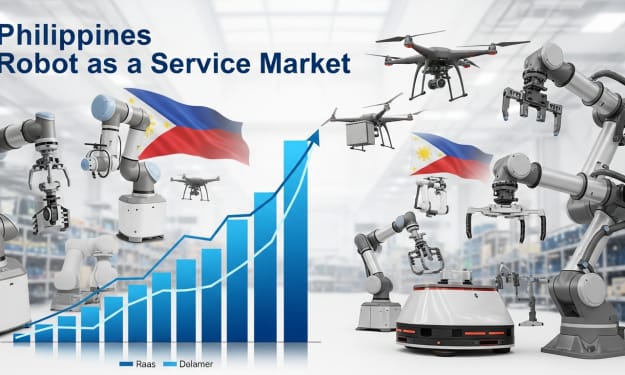
Philippines Robot as a Service Market: Automation Adoption, Service Models & Industrial Transformation
Philippines Robot as a Service Market Overview The Philippines Robot as a Service market share is gaining momentum as organizations search for practical ways to adopt automation without large upfront capital investment. Robot as a Service refers to a model in which robotic systems are delivered through subscription or usage-based agreements that include installation, maintenance, software updates and technical support. This approach allows businesses to convert what would traditionally be capital expenditure into predictable operating costs, making automation more accessible across different industry sizes. The Philippines robot as a service market size reached USD 72.5 Million in 2025. Looking forward, the market is expected to reach USD 244.1 Million by 2034, exhibiting a growth rate (CAGR) of 14.44% during 2026-2034. The strong outlook reflects increasing digital transformation, productivity pressures and growing acceptance of service-based technology models.
By Manisha Dixit4 days ago in Trader
Instructions Included Challenge Winners
For the Instructions Included challenge, we asked writers to tell a story through instructions and to trust the form to carry what could not be said outright. Across the top entries, that trust paid off in many different ways.
By Vocal Curation Team3 days ago in Resources



Comments
There are no comments for this story
Be the first to respond and start the conversation.