
Bitcoin Dominance: Understanding its Role and Implications in Cryptocurrency Markets
What is Bitcoin Dominance?

In the cryptocurrency landscape, "Bitcoin dominance" is a term that refers to Bitcoin's market capitalization as a percentage of the total cryptocurrency market capitalization. This metric is a crucial indicator of Bitcoin's influence and dominance within the broader cryptocurrency market. Understanding Bitcoin dominance is essential for investors and traders as it provides insights into market trends, investor sentiment, and the relative strength of Bitcoin compared to other cryptocurrencies. This article explores the concept of Bitcoin dominance, its significance, factors influencing it, and its implications for the cryptocurrency market.
What is Bitcoin Dominance?
Bitcoin dominance is calculated by dividing Bitcoin's market capitalization by the total market capitalization of all cryptocurrencies and multiplying the result by 100 to express it as a percentage. For example, if Bitcoin's market cap is $500 billion and the total cryptocurrency market cap is $1 trillion, Bitcoin's dominance would be 50%.
Bitcoin dominance serves as a gauge of Bitcoin's relative strength and market share compared to alternative cryptocurrencies, known as altcoins. A high Bitcoin dominance indicates that Bitcoin holds a significant portion of the market cap, suggesting that Bitcoin remains the leading cryptocurrency. Conversely, a declining Bitcoin dominance may signal a shift in investor interest towards altcoins or emerging projects.
Importance of Bitcoin Dominance
Market Sentiment Indicator: Bitcoin dominance is a key indicator of market sentiment. When Bitcoin dominance is high, it often signifies that investors are favoring Bitcoin over altcoins, which may indicate a period of increased confidence in Bitcoin or a general downturn in the broader cryptocurrency market. Conversely, a decline in Bitcoin dominance can suggest growing interest in altcoins and a potential shift in market focus.
Market Trend Analysis: Monitoring Bitcoin dominance can help analysts and traders understand market trends and make informed decisions. A rising dominance may imply that Bitcoin is outperforming other cryptocurrencies, while a falling dominance might indicate the emergence of new trends or opportunities in the altcoin space.
Risk Management: For investors, Bitcoin dominance can provide valuable insights into portfolio management and risk assessment. A significant change in Bitcoin dominance might prompt investors to adjust their strategies, diversify their holdings, or rebalance their portfolios based on the shifting dynamics of the market.
Cryptocurrency Comparisons: Bitcoin dominance allows for comparisons between Bitcoin and other cryptocurrencies. It helps in evaluating how well Bitcoin is performing relative to the rest of the market and assessing the impact of new technologies, regulatory developments, or market events on Bitcoin's market share.
Factors Influencing Bitcoin Dominance
Several factors can impact Bitcoin dominance, including:
Market Cycles: Cryptocurrency markets operate in cycles, with periods of Bitcoin dominance often followed by phases where altcoins experience significant growth. Bitcoin dominance tends to rise during bear markets or periods of consolidation, while altcoin seasons can lead to a decline in dominance as capital flows into alternative projects.
Technological Developments: Innovations and advancements in blockchain technology can influence Bitcoin dominance. For example, the launch of new platforms or the introduction of breakthrough technologies in altcoins can attract investor interest and shift market dynamics.
Regulatory Environment: Changes in the regulatory environment can impact Bitcoin dominance. Favorable regulatory developments for Bitcoin or unfavorable regulations for altcoins can affect market sentiment and alter Bitcoin's dominance. Similarly, increased regulatory scrutiny on Bitcoin or positive regulatory news for altcoins can influence the dominance metric.
Market Sentiment and News: Investor sentiment and news events play a crucial role in shaping Bitcoin dominance. Positive news about Bitcoin, such as institutional adoption or major partnerships, can boost Bitcoin's dominance, while negative news or issues within the Bitcoin network can lead to a decline in dominance.
Altcoin Performance: The performance of individual altcoins and the emergence of new projects can impact Bitcoin dominance. If certain altcoins experience substantial gains or achieve significant milestones, it may draw investment away from Bitcoin and affect its dominance.
Implications of Bitcoin Dominance
Investment Strategies: Bitcoin dominance has implications for investment strategies. Investors may use dominance trends to identify potential entry or exit points for Bitcoin and altcoins. For example, a rising Bitcoin dominance might prompt investors to favor Bitcoin, while a declining dominance could indicate opportunities in altcoins.
Market Sentiment Shifts: Changes in Bitcoin dominance can reflect shifts in market sentiment. A decline in dominance may signal increased investor confidence in altcoins or a broader diversification trend, while a rise in dominance could suggest renewed focus on Bitcoin as a safe haven or a leading asset.
Portfolio Diversification: Investors may use Bitcoin dominance as a tool for portfolio diversification. A high dominance could indicate that Bitcoin is the preferred asset, while a lower dominance might prompt investors to explore altcoin investments to capture potential growth opportunities.
Market Analysis: Analysts and researchers use Bitcoin dominance to assess the overall health and direction of the cryptocurrency market. Tracking changes in dominance can help identify emerging trends, gauge investor interest, and evaluate the impact of external factors on the market.
Navigating Bitcoin Dominance
To navigate Bitcoin dominance effectively, investors and traders should:
Monitor Market Metrics: Regularly track Bitcoin dominance along with other market indicators, such as trading volumes, price trends, and news developments, to gain a comprehensive view of the market landscape.
Stay Informed: Stay updated on technological advancements, regulatory changes, and market trends that could impact Bitcoin dominance and overall market dynamics.
Evaluate Investment Opportunities: Use Bitcoin dominance trends to evaluate potential investment opportunities and adjust strategies accordingly. Consider diversifying investments based on market conditions and dominance metrics.
Implement Risk Management: Implement risk management strategies to protect investments and adapt to changing market conditions. Setting stop-loss orders and regularly reviewing portfolio performance can help mitigate risks.
Conclusion
So, to sum up what is bitcoin dominance, Bitcoin dominance is a crucial metric for understanding the relative strength and influence of Bitcoin within the cryptocurrency market. By monitoring Bitcoin dominance, investors and traders can gain insights into market sentiment, trends, and potential investment opportunities. While Bitcoin dominance provides valuable information, it is essential to consider other factors and metrics when making investment decisions. As the cryptocurrency market continues to evolve, Bitcoin dominance will remain a key indicator of Bitcoin's role and its impact on the broader digital asset landscape.
About the Creator
Keep reading
More stories from Crypto World and writers in Trader and other communities.
Altcoin Season: Navigating the Trend in Cryptocurrency Markets
In the volatile world of cryptocurrency, market trends can shift rapidly, creating distinct phases characterized by different investment opportunities. One such phase is "altcoin season," a period when alternative cryptocurrencies, or altcoins, experience substantial price increases relative to Bitcoin (BTC). This phenomenon often captures the attention of traders and investors looking to capitalize on market movements. This article delves into what altcoin season is, how to identify it, its implications, and strategies for navigating this trend.
By Crypto Worldabout a year ago in Trader
Global Car Rental Market Size and Forecast 2025–2033: The Future of Flexible Mobility
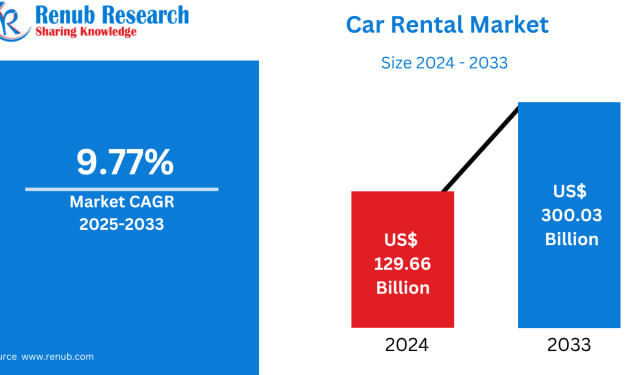
Global Car Rental Market Overview The Global Car Rental Market was valued at USD 129.66 billion in 2024 and is projected to surge to USD 300.03 billion by 2033, growing at a robust CAGR of 9.77% during the forecast period. This impressive growth reflects a structural shift in how consumers and businesses approach transportation—moving away from ownership toward flexible, on-demand mobility solutions.
By Sushant. Renub Research3 days ago in Trader
Australia Tourism Market: Travel Demand, Infrastructure Investment & Experience-Led Growth
Australia Tourism Market Overview The Australia tourism market plays a critical role in national economic activity, employment generation and regional development. The Australia tourism market size reached USD 15.5 Billion in 2024. Looking forward, the market is expected to reach USD 22.3 Billion by 2033, exhibiting a growth rate (CAGR) of 4.13% during 2025-2033. This growth reflects the steady recovery of travel activity, diversification of tourism offerings and ongoing investment in destination infrastructure.
By Amyra Singh2 days ago in Trader
Thoughts on Vocal and the way the world is
"Death cannot stop true love, only delay it." – Wesley in The Princess Bride. I decided to come back to Vocal on a very cold and dark night at the end of December. I had been, and still am, convalescing from a horrible staph infection that had gone misdiagnosed for months. This, paired with the increasing challenges of being healthy, making the best choices for my co-parented child, being a wife, and being a director at a new job, was a lot to manage.
By Jazzy 7 days ago in Confessions



Comments
There are no comments for this story
Be the first to respond and start the conversation.