
Australia Residential Battery Storage Market 2026: Powering Energy Independence Through Smart Home Solutions
Rooftop solar expansion and rising electricity costs are accelerating adoption of home battery systems across Australia.

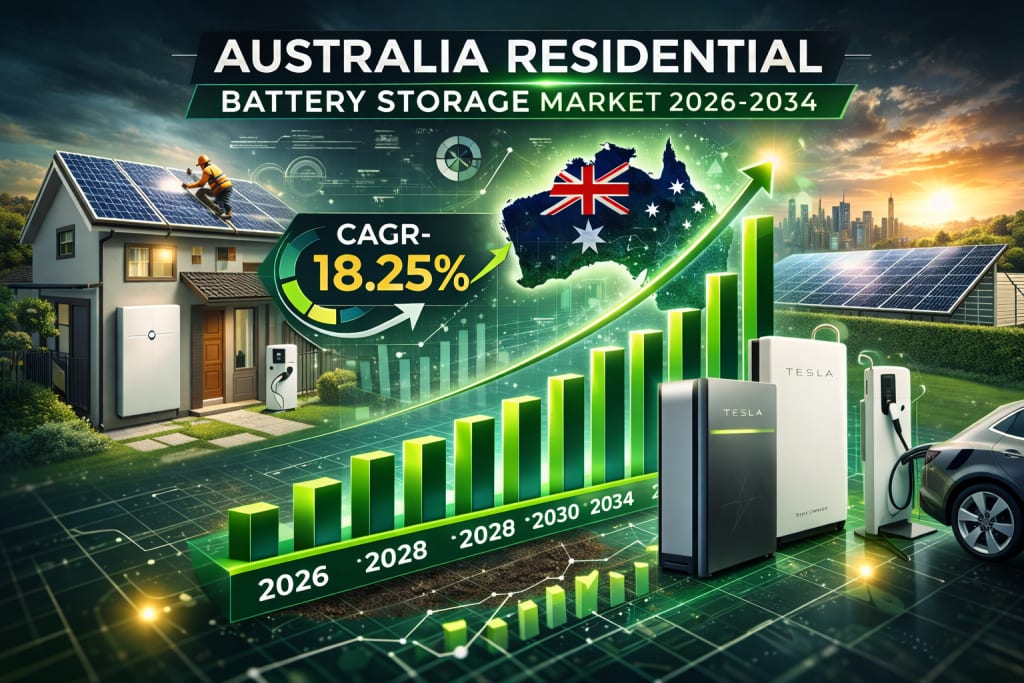
Australia Residential Battery Storage Market Overview
The Australia residential battery storage market size is rapidly evolving as households shift toward energy self-sufficiency and sustainable power usage. With the country already having one of the highest rooftop solar adoption rates in the world, homeowners are increasingly installing battery storage systems to store excess solar energy for later use. This transition enables households to reduce dependence on the electricity grid, improve resilience during outages, and better manage rising utility costs. As a result, residential battery storage is transforming from a backup power solution into a central component of modern home energy systems.
The market reached approximately USD 646.5 million in 2025 and is projected to grow significantly to USD 3,049.8 million by 2034, expanding at a remarkable CAGR of 18.25% during 2026–2034. Growth is fueled by supportive government incentives, feed-in tariff reductions, increasing electricity prices, and growing interest in energy independence. Technological advancements and falling battery costs are further encouraging homeowners to integrate storage solutions alongside solar installations.
Why the Market Is Growing So Rapidly
One of the primary growth drivers is the massive expansion of rooftop solar installations across Australian homes. As feed-in tariffs decline, homeowners now prefer storing surplus solar energy instead of exporting it back to the grid. This increases energy savings and maximizes self-consumption efficiency.
Electricity price volatility is another key factor pushing adoption. Many households are installing batteries to avoid peak tariffs and ensure predictable long-term energy expenses. The ability to maintain power during outages also strengthens the appeal of residential storage systems.
Government incentives play a major role as well. Various state-level rebates and loan programs are lowering upfront costs and encouraging widespread adoption. These policies aim to accelerate renewable energy transition and strengthen grid stability.
Technological improvements in lithium-ion batteries — including higher efficiency, longer lifespan, and smart monitoring features — are making systems more reliable and easier to manage through mobile apps and smart home platforms.
Additionally, participation in Virtual Power Plants (VPPs) allows homeowners to sell stored electricity back to the grid, turning households into active energy producers rather than just consumers.
Request a Sample Report with the Latest 2026 Data & Forecasts
What the Opportunities Are
1. Integration with Rooftop Solar Systems
With millions of homes already equipped with solar panels, adding battery storage becomes a natural upgrade. Companies offering bundled solar-plus-storage packages can capture a large existing customer base.
2. Virtual Power Plant Participation Services
Energy providers can create platforms allowing households to trade stored electricity. This creates recurring income opportunities for users and new revenue models for utilities.
3. Smart Home Energy Management Platforms
Integrating batteries with AI-based monitoring apps enables real-time energy optimization. Companies developing software ecosystems alongside hardware can differentiate their offerings.
4. Financing and Subscription Models
Leasing and pay-as-you-save plans can reduce upfront costs and expand adoption among middle-income households.
5. Off-Grid and Remote Area Solutions
Rural regions with unreliable electricity supply present strong demand for independent energy systems combining solar and storage.
6. Home Backup Power Systems
Increasing extreme weather events and outages create demand for reliable residential backup power solutions.
7. Battery Recycling and Lifecycle Services
As installations grow, recycling and second-life battery applications will become a valuable long-term industry segment.
8. Energy Efficiency Consulting Services
Energy companies can offer home audits and customized battery sizing solutions to maximize efficiency and customer savings.
Recent News & Developments
April 2025: A proposed national home battery subsidy program worth AUD 2.3 billion (USD 1.41 billion) aimed to reduce battery installation costs by about 30% and support installation of one million home batteries by 2030. The rebate could provide up to AUD 4,000 per household, significantly lowering entry barriers and accelerating adoption rates nationwide.
February 2025: Australia installed more than 28,000 residential battery systems in 2024, representing a 30% year-on-year increase, bringing total installations to 121,551 homes. The surge reflects rising consumer interest in energy independence and the effectiveness of incentive programs.
March 2025: A new residential storage system with modular capacity ranging from 5 kWh to 180 kWh entered the Australian market. The system claims to generate up to 2,000 kWh more electricity over ten years compared to conventional systems, targeting households facing average annual electricity bills of about AUD 2,500 (USD 1,630).
April 2025: A 238.5 MW / 477 MWh battery project was commissioned in South Australia to support renewable electricity supply and grid stability. While utility-scale, the development signals broader confidence in battery technology and encourages residential adoption across the country.
Why Should You Know About the Australia Residential Battery Storage Market?
The Australia residential battery storage market highlights the transition toward decentralized energy systems where households actively generate, store, and manage electricity. The technology supports renewable energy adoption while improving grid stability and reducing carbon emissions.
For businesses, the sector offers opportunities in hardware manufacturing, software platforms, installation services, and financing models. For investors, the rapid 18% growth rate indicates strong long-term returns driven by energy transition policies. For policymakers, residential storage plays a crucial role in achieving sustainability targets and reducing infrastructure pressure on national power grids.
About the Creator
Amyra Singh
Market research analyst who loves spotting patterns, digging into data, and turning insights into strategies that help brands grow and stay ahead of the curve.
Keep reading
More stories from Amyra Singh and writers in Trader and other communities.
Australia’s Subscription E-Commerce Market 2026: Recurring Revenue, Consumer Convenience and Digital Retail Innovation
Australia Subscription E-Commerce Market Overview Australia’s subscription e-commerce market is reshaping how consumers access products and services, transitioning from one-off purchases to ongoing personalised engagements. From meal kits and beauty boxes to digital content bundles and curated lifestyle subscriptions, the recurring-revenue model is driving higher customer retention, predictable cash flows for brands and ongoing value for consumers. This trend reflects a broader shift in consumer behaviour toward convenience, tailored experiences and automated fulfilment.
By Amyra Singh2 days ago in Trader



Comments
There are no comments for this story
Be the first to respond and start the conversation.