
Australia Home Office Furniture Market: Remote Work, Ergonomic Design & Housing Trends
How hybrid work models, ergonomic awareness and residential upgrades are shaping Australia’s home office furniture market

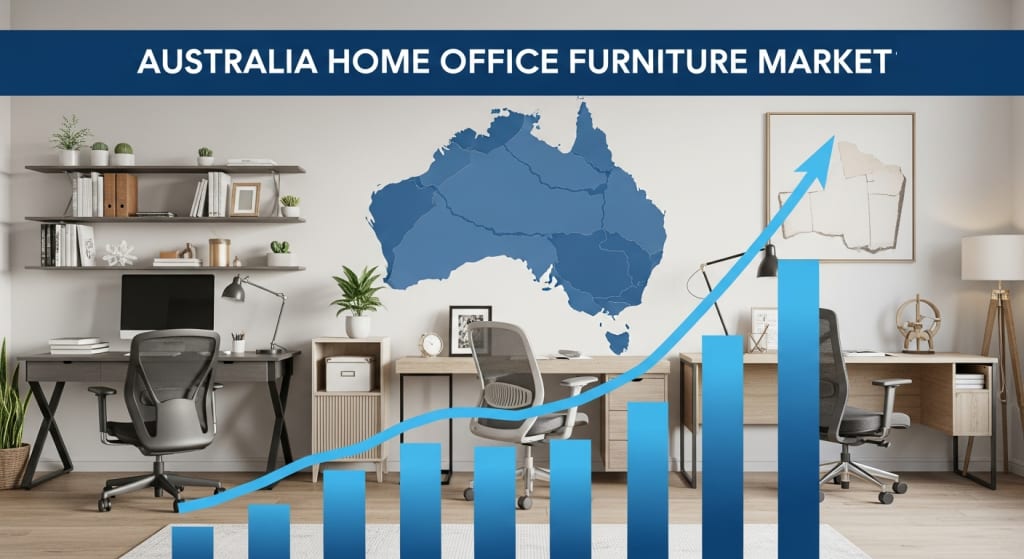
Australia Home Office Furniture Market Overview
The Australia home office furniture market share and size continues to expand as work patterns evolve and households adapt to hybrid and remote working arrangements. The Australia home office furniture market size was valued at USD 909.8 Million in 2025. Looking forward, IMARC Group estimates the market to reach USD 1,370.2 Million by 2034, exhibiting a CAGR of 4.66% from 2026-2034. This growth reflects structural shifts in workplace organization, increased awareness of ergonomics and ongoing residential investment.
Home office furniture includes desks, chairs, storage units, shelving, workstations and accessories designed to support productivity in residential environments. As work-from-home and hybrid models become embedded in many industries, demand for dedicated and functional home office spaces continues to rise.
Driving Growth in the Australia Home Office Furniture Market
One of the primary drivers of market growth is the persistence of hybrid and remote work models. Many organizations now offer flexible work arrangements, allowing employees to work from home for part of the week. This has created sustained demand for home office setups that replicate the functionality of traditional workplaces.
Another key factor is increasing awareness of ergonomics. Extended hours of desk-based work have highlighted the importance of proper posture, seating support and adjustable furniture. Consumers increasingly prioritize ergonomic chairs, height-adjustable desks and accessories that reduce strain and support long-term health.
Residential renovation and home improvement activity also supports demand. Homeowners and renters continue to invest in optimizing living spaces, including the creation of dedicated work areas. Home office furniture purchases are often part of broader interior upgrades.
E-commerce and omni-channel retailing have improved accessibility. Consumers can compare products online, read reviews and access home delivery services, making it easier to purchase bulky furniture items.
Design preferences influence buying behavior as well. Consumers increasingly seek furniture that balances functionality with aesthetic appeal. Neutral colors, minimalist designs and space-saving formats align with contemporary home interiors.
Request a Sample Report with the Latest 2026 Data & Forecasts
What the Opportunities Are
The Australia home office furniture market presents several opportunities across product development, retail and services.
1. Ergonomic and Adjustable Solutions
Demand for height-adjustable desks, task chairs with lumbar support and modular workstations continues to grow.
2. Space-Saving and Multi-Functional Furniture
Compact desks, foldable workstations and storage-integrated furniture suit smaller living spaces.
3. Sustainable Materials and Production
Interest in furniture made from responsibly sourced wood, recycled materials and low-emission finishes is increasing.
4. Customization and Modular Design
Products that can be configured to individual preferences support personalization.
5. Corporate Partnerships
Employers may subsidize or provide furniture for remote employees, creating B2B sales opportunities.
Operational Considerations
The market faces challenges related to raw material costs, supply chain stability and logistics. Furniture manufacturing relies on timber, metal, plastics and upholstery materials, which are subject to price fluctuations.
Competition is intense, with domestic and imported products competing on price and design. Differentiation through quality, ergonomics and sustainability is important.
Delivery and installation logistics for large furniture items affect customer experience. Retailers must manage transportation and returns efficiently.
Recent News & Developments in the Australia Home Office Furniture Market
• Feb 2025: Retailers reported increased demand for ergonomic chairs as hybrid work policies expanded.
• Jun 2025: Several furniture brands introduced modular home office collections targeting small apartments.
• Oct 2025: Industry data indicated a 13% year-on-year increase in online sales of home office furniture.
Why Should You Know About Australia Home Office Furniture Market?
Understanding the Australia home office furniture market provides insight into how work culture, housing trends and consumer behavior intersect. The sector reflects long-term changes in how people organize work within their homes.
For businesses and investors, the market highlights opportunities in ergonomic design, sustainability and digital retailing. For consumers, it illustrates growing options for creating functional and comfortable work environments.
The home office furniture market in Australia is therefore shaped not by short-term trends, but by enduring shifts in how and where people work.
About the Creator
Amyra Singh
Market research analyst who loves spotting patterns, digging into data, and turning insights into strategies that help brands grow and stay ahead of the curve.
Keep reading
More stories from Amyra Singh and writers in Trader and other communities.
Australia Medical Tourism Market: Healthcare Services, Cross-Border Travel & Treatment Demand
Australia Medical Tourism Market Overview The Australia medical tourism market share is developing as the country continues to position itself as a destination for specialized healthcare services combined with a stable regulatory environment and advanced medical infrastructure. The Australia medical tourism market size was valued at USD 350 Million in 2024. Looking forward, IMARC Group estimates the market to reach USD 3,251 Million by 2033, exhibiting a CAGR of 27.2% from 2025-2033. This growth reflects increasing cross-border patient mobility, demand for complex procedures and the reputation of Australian healthcare providers for quality and safety.
By Amyra Singhabout 12 hours ago in Trader
Buried for 33 Years, the Dream to Revive One of the Country’s Largest Gold Mines Is Suddenly Back on the Map
For more than three decades, the vast crater and worn terraces of one of Brazil’s most legendary gold mines have stood silent — a decaying testament to a frenzied gold rush that once drew tens of thousands of prospectors and reshaped a remote corner of the Amazon. Now, after 33 years of inactivity, the dream of reviving this colossal site has re‑emerged, sparking intense debate among miners, local communities, regulators, and environmental advocates.
By Salaar Jamalia day ago in Trader
I Didn’t Quit Trading. I Just Stopped Needing to Be Right.
It was close to 2 a.m. The charts were still open, frozen on the last trade that wiped the account. Again. The numbers looked unreal in that way they always do after a loss—too clean, too final. Zeroes where there used to be hope, confidence, plans.
By nimesh tandela day ago in Trader




Comments
There are no comments for this story
Be the first to respond and start the conversation.