
Australia Grocery Retail Market — Growth, Forecast & Strategic Outlook
Digital transformation, changing consumption patterns, and competitive dynamics are reshaping Australia’s grocery retail landscape.

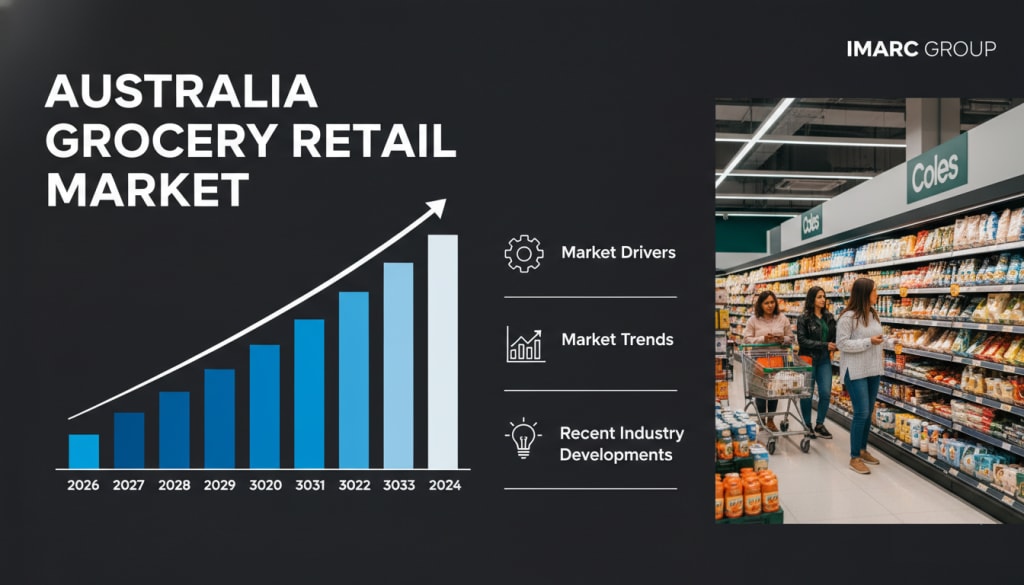
The Australia grocery retail market continues to grow steadily as both traditional retail and digital channels adapt to evolving consumer needs. According to IMARC Group, the market reached USD 54.3 billion in 2025 and is forecast to expand to USD 79.2 billion by 2034, exhibiting a compound annual growth rate (CAGR) of 4.16% during 2026–2034.
This growth is supported by demographic trends, rising urbanization, and shifts in consumer behavior toward convenience, health, and sustainability. The market encompasses a wide range of product categories — including fresh food, packaged food, beverages, and non food items such as household and personal care — sold through hypermarkets and supermarkets, convenience stores, discount formats, online platforms, and other retail channels.
Why the Market Is Growing So Rapidly
1. Population Growth and Urbanization
Australia’s growing population and increasing concentration in urban centres are boosting demand for grocery retail. As more people reside in metropolitan areas, the need for accessible grocery outlets with diverse product offerings continues to rise, providing a stable base of demand for the sector.
Urban lifestyles also tend toward convenience, which drives frequent grocery purchases and supports a range of store formats.
2. Consumer Preference for Convenience
Modern consumers increasingly value convenience in their shopping experiences. Busy lifestyles have made online grocery shopping, home delivery, and click and collect services much more attractive, prompting major grocers to expand digital capabilities and streamline fulfilment systems.
Demand for ready to eat meals and pre prepared foods has grown alongside these digital and omnichannel trends, expanding consumption occasions beyond weekly supermarket trips.
3. Rising Health and Sustainability Awareness
Health consciousness and sustainability are key themes shaping grocery retail demand. Australian consumers show increasing interest in locally produced goods, organic foods, and eco friendly products, prompting retailers to diversify product assortments accordingly.
These preferences influence inventory selection and marketing strategies as shoppers prioritise quality, provenance, and ethical production practices.
4. Expansion of Private Label Brands
Private label products — often positioned as cost effective alternatives to national brands — are gaining popularity. Major chains like Woolworths and Coles have expanded their private label portfolios, spanning basic staples to premium organic ranges, which help maintain competitiveness on pricing while strengthening margins.
Price sensitive consumers value the broader choice and value associated with store brands, particularly during periods of economic uncertainty.
5. Competitive Landscape and Technology Adoption
The competitive grocery landscape — dominated by a small number of major players — drives ongoing innovation in pricing, services, and technology. Retailers are investing in digital solutions like mobile apps, loyalty programs, and AI powered personalisation to enhance customer engagement and optimise operations.
Supply chain optimisation and technological enhancements, including data analytics and inventory automation, also contribute to improved efficiency and responsiveness.
What the Opportunities Are
1. Growth in Online Grocery Shopping
With participation in online channels continuing to rise, especially among younger and tech savvy consumers, grocers can expand e commerce offerings to reach broader customer segments. Delivery optimisation, subscription services, and digital loyalty incentives can strengthen online penetration.
2. Personalised and Health Focused Shopping Experiences
Retailers can tailor assortments and promotions to meet the growing demand for health oriented and ethically sourced products. Personalised product recommendations and curated health ranges can boost customer loyalty.
3. Omnichannel Integration
Seamlessly combining online and offline experiences enhances convenience and strengthens customer relationships. Unified loyalty platforms, digital coupons, and real time stock visibility are just a few ways to elevate omnichannel customer experiences.
4. Expansion of Regional Retail Footprint
Enhanced retail presence in suburban and regional areas — through smaller convenience formats or partnerships with local suppliers — can improve market penetration and provide underserved communities with access to diverse food and grocery options.
5. Advanced Analytics and AI Implementation
Leveraging AI and advanced analytics for pricing optimization, demand forecasting, and personalised marketing can drive operational efficiency and boost sales performance.
6. Sustainability Initiatives
Focusing on sustainability, such as offering eco friendly packaging and reducing food waste, aligns grocery retail with consumer values and emerging regulatory expectations.
7. Strategic Partnerships and Value Chain Collaboration
Collaborations with local producers, technology partners, and delivery platforms can enhance product diversity, improve logistics, and deliver differentiated customer value.
Recent News & Developments in Australia Grocery Retail Market
• January 2025: Government Regulation Impact: New price gouging laws targeting major supermarket chains such as Coles and Woolworths were announced by Treasurer Jim Chalmers, set to take effect from July 1, 2026. These laws, enforced by the Australian Competition and Consumer Commission (ACCC), prohibit excessive pricing practices and impose penalties of up to AUD 10 million or more per breach, aiming to protect consumers amid affordability concerns.
• April 2025: Retail Performance & Competitive Dynamics: Coles reported a 3.9% increase in sales revenue, driven by strong e commerce growth and competitive strategies, while rival Woolworths saw continued momentum with enhanced promotions and discounts. Both grocers strengthened their digital presence to better serve online customers and boost sales.
• October 2025: Supermarket Competitive Insights: Retail data revealed that Coles edged ahead of rivals in customer shopping frequency in key grocery categories, indicating dynamic competition among major supermarkets as they leverage promotional planning and in store execution to attract repeat shoppers.
Why Should You Know About the Australia Grocery Retail Market?
The Australia grocery retail market is fundamental to everyday life and a key indicator of broader economic health and consumer confidence. Its steady growth, fuelled by demographic trends, technological progress, and evolving consumer preferences, makes it an important area for investors, retailers, and policymakers alike. For investors, consistent CAGR and innovation opportunities — especially in e commerce and private label segments — suggest resilient long term returns. For retailers, understanding digital transformation and omnichannel integration is crucial to remaining competitive. For policy makers, insights into price regulation and market competition inform consumer protection strategies and ensure fair access to essential goods.
In an era where convenience, health, sustainability, and value drive consumer choices, the Australia grocery retail market stands as a vibrant and strategically significant sector — one that will continue to adapt and grow as consumer behaviours and technologies evolve.
About the Creator
Amélie Belle
Hi, I’m Amélie Belle—27, New York writer, lover of quiet moments and honest words. I share poetry and reflections on love, healing, and life’s small miracles. If my writing makes you feel seen, I’m exactly where I’m meant to be.
Keep reading
More stories from Amélie Belle and writers in Trader and other communities.
Australia Hormone Replacement Therapy Market — Growth, Forecast & Strategic Insights
The Australia hormone replacement therapy market is experiencing steady expansion as demographic trends and healthcare innovations drive increased adoption of hormonal therapies. According to IMARC Group, the market was valued at USD 202.37 million in 2025 and is projected to grow to USD 317.45 million by 2034, representing a compound annual growth rate (CAGR) of 5.13% from 2026 to 2034.
By Amélie Belleabout 17 hours ago in Trader
FTSE 100 Insight: What Today’s Market Reaction Means for Everyday Investors
FTSE 100 movements today are once again shaping how people think about their money. When the FTSE 100 reacts sharply, it shows how the biggest UK companies are dealing with change. These movements can affect savings, pensions, and future plans for many households. That is why understanding today’s FTSE 100 insight is important, even if you are not an active investor. This article explains what caused the FTSE 100 reaction, how it can affect your finances, and what steps make sense right now.
By John.doe7986 days ago in Trader




Comments
There are no comments for this story
Be the first to respond and start the conversation.