
Australia Hormone Replacement Therapy Market — Growth, Forecast & Strategic Insights
Growing awareness of menopausal health, policy support, and tailored clinical care are reshaping Australia’s hormone therapy landscape.

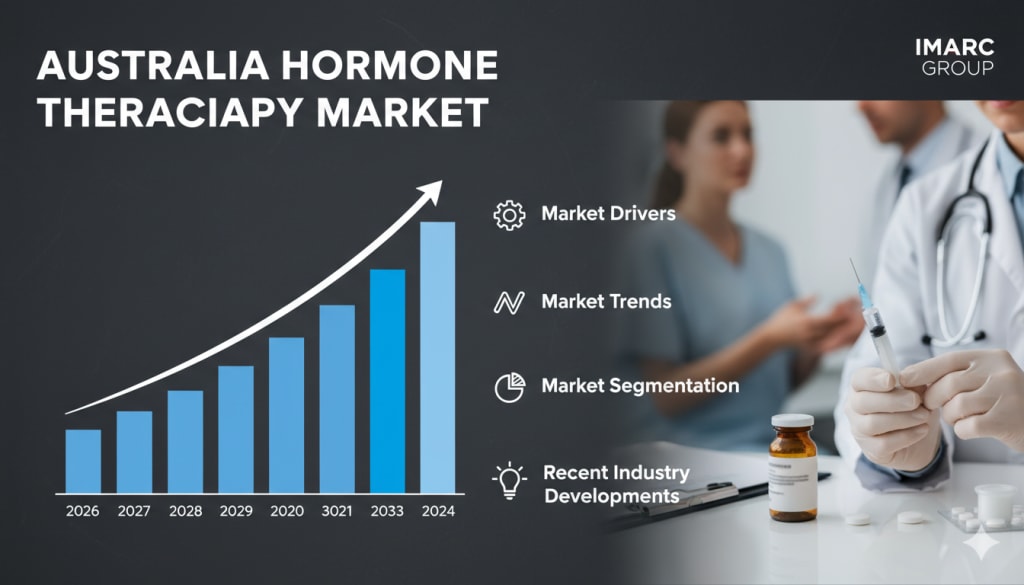
The Australia hormone replacement therapy market is experiencing steady expansion as demographic trends and healthcare innovations drive increased adoption of hormonal therapies. According to IMARC Group, the market was valued at USD 202.37 million in 2025 and is projected to grow to USD 317.45 million by 2034, representing a compound annual growth rate (CAGR) of 5.13% from 2026 to 2034.
This growth reflects expanding awareness of hormone-related health issues, particularly menopausal symptoms, and wider accessibility of modern therapeutic solutions across the nation. The market comprises diverse product segments — such as estrogen, thyroid, testosterone, and human growth hormone replacement therapies — and spans multiple routes of administration and disease types, including menopause, hypothyroidism, male hypogonadism, and growth hormone deficiency.
Australia Hormone Replacement Therapy Market
Why the Market Is Growing So Rapidly
1. Demographic Shifts and Aging Population
Australia’s aging population — particularly women entering perimenopause and menopause — is one of the chief drivers of market growth. As women now spend a significant portion of their lives post-menopause, the demand for hormone replacement therapies to manage vasomotor symptoms, bone health, and overall quality of life has risen sharply. Clinical use of HRT for menopausal symptom relief and long-term health support continues to gain acceptance among healthcare providers.
This increasing patient pool is foundational to market expansion, as a larger share of women seek interventions that alleviate discomfort and functional limitations associated with hormonal changes.
2. Expanded Access Through Government Initiatives
Government policies and healthcare reforms have significantly improved access to modern hormone therapies. In 2025, the Australian Government, through the Pharmaceutical Benefits Scheme (PBS), added several contemporary menopausal hormone therapies — such as Estrogel, Prometrium, and Estrogel Pro — to subsidised status, reducing costs for patients and encouraging greater uptake.
Such subsidization reduces financial barriers and reinforces public confidence in hormone therapy as a preventive and symptomatic treatment option, contributing to broader market adoption.
3. Growing Clinical Confidence and Updated Guidelines
Updated clinical guidelines and evidence supporting individualized treatment approaches have boosted prescriber confidence in hormone replacement therapy. Practitioners increasingly favor modern formulations with improved safety profiles, such as body-identical hormones, which are perceived as more physiologically aligned with endogenous hormone activity.
This shift reflects a broader trend in clinical practice toward personalized care, where therapy decisions are tailored to individual needs rather than universal protocols.
4. Technological Integration and Accessibility
Telehealth services and specialized virtual menopause clinics have expanded treatment access beyond metropolitan centers, enabling women in regional and remote areas to receive expert consultations and consistent care. For example, dedicated telehealth platforms now offer comprehensive menopause assessments and prescription delivery, addressing historical gaps in healthcare accessibility.
Such digital health integration not only bridges geographical barriers but also streamlines patient engagement with hormone therapy solutions.
5. Increased Awareness and Patient Education
Awareness programs and clinical education initiatives are helping to destigmatize hormone therapy and inform patients about symptom recognition and treatment options. This growing public understanding encourages earlier intervention and underscores the importance of hormone management in broader women’s health initiatives.
What the Opportunities Are
1. Enhanced Menopause-Focused Care Offerings
There is a significant opportunity to expand menopause-specific therapeutic services, including tailored treatment packages and integrated care models that address physical and emotional symptoms holistically.
2. Telehealth Program Expansion
Digital health providers can capitalize on rising demand by scaling telehealth platforms that connect patients with specialists, offer educational resources, and manage prescriptions, particularly in underserved regions.
3. Product Innovation and Delivery Formats
Continuous innovation in hormone therapy formulations and delivery mechanisms — such as transdermal patches, personalized dosing, and combination therapies — can meet diverse patient preferences and clinical requirements.
4. Educational Campaign Partnerships
Collaborations between pharmaceutical companies, healthcare providers, and advocacy groups can further disseminate evidence-based information, reducing misconceptions and increasing treatment confidence among patients and practitioners.
5. Clinical Training and Professional Development
Investing in menopause-related training for general practitioners and endocrinologists can elevate diagnostic accuracy and treatment initiation, expanding the market through improved clinical engagement.
6. Regional Healthcare Strengthening
Developing specialized menopause and endocrine care hubs in regions outside major metropolitan centers will reduce disparities in healthcare access and boost treatment uptake across more demographic segments.
7. Patient Support and Adherence Programs
Comprehensive support programs that assist patients with adherence, symptom tracking, and long-term management can improve clinical outcomes and enhance retention in hormone therapy regimens.
Recent News & Developments in Australia Hormone Replacement Therapy Market
• March 2025: Government Healthcare Action: The Australian Government expanded the Pharmaceutical Benefits Scheme (PBS) to include modern menopausal hormone therapies, significantly lowering patient costs. This policy shift improved access to body-identical estrogen and progesterone products, reducing out-of-pocket expenses and encouraging broader adoption throughout the population.
• July 2025: Healthcare Service Expansion: A new virtual menopause hub was launched in southwestern Sydney, offering telehealth and in-person consultations for perimenopause and menopause care. This development is expected to serve up to 200 women monthly, enhancing treatment accessibility in both urban and surrounding regional areas.
• October 2025: Clinical Guidelines Initiative: The Australian Department of Health announced a tender process to establish the nation’s first clinical guidelines for perimenopause and menopause management. This initiative aims to standardize diagnosis and treatment protocols, improving patient care outcomes.
Why Should You Know About the Australia Hormone Replacement Therapy Market?
The Australia hormone replacement therapy market is a critical intersection of demographic health needs, clinical innovation, and healthcare policy. For investors, the segment offers steady growth with expanding patient demand and supportive government frameworks. Healthcare providers and pharmaceutical companies can benefit from increased treatment adoption and opportunities to innovate in formulations, delivery, and patient support. Policy makers gain insight into how focused healthcare strategies — such as subsidization and standardized clinical guidelines — can elevate national health outcomes.
As hormone therapy gains wider acceptance and visibility as a cornerstone of preventative and symptomatic care, understanding this market is increasingly important for stakeholders committed to improving women’s health and driving sustained value across Australia’s healthcare ecosystem.
About the Creator
Amélie Belle
Hi, I’m Amélie Belle—27, New York writer, lover of quiet moments and honest words. I share poetry and reflections on love, healing, and life’s small miracles. If my writing makes you feel seen, I’m exactly where I’m meant to be.
Keep reading
More stories from Amélie Belle and writers in Trader and other communities.
Australia Eco Friendly Bricks Market: Sustainable Construction on the Rise
The Australia eco friendly bricks market reached USD 24.0 Million in 2025 and is anticipated to grow to USD 42.6 Million by 2034, exhibiting a compound annual growth rate (CAGR) of 6.56% between 2026 and 2034.
By Amélie Belle2 days ago in Trader
Australia Electric Iron Market Poised for Strong Growth on the Back of Urban Lifestyles and Smart Innovation
The Australia electric iron market reached approximately USD 41.8 Million in 2025 and is projected to grow to USD 97.1 Million by 2034, expanding at a CAGR of 9.81% during the forecast period of 2026–2034. This striking growth reflects robust consumer demand for modern, efficient home appliances and an evolving retail environment where convenience and technology are increasingly central to purchase decisions.
By Rashi Sharma2 days ago in Trader
Australia Supply Chain Management Market 2026: Digital Transformation, Logistics Optimization & Enterprise Adoption
Australia Supply Chain Management Market Overview The Australia supply chain management (SCM) market is undergoing rapid evolution as businesses seek greater efficiency, resilience and visibility across increasingly complex supply networks. Supply chain management solutions enable organizations to plan, execute and monitor the flow of goods, information and finances from suppliers to end customers. In Australia, SCM systems are becoming essential tools for manufacturers, retailers, logistics providers and distributors navigating global trade volatility, labor constraints and rising customer expectations.
By Amyra Singh7 days ago in Trader



Comments
There are no comments for this story
Be the first to respond and start the conversation.