
Australia Computer Vision Market Poised for Strategic Growth: From Smart Surveillance to AI-Driven Enterprise Transformation
A deep look at how computer vision is reshaping Australian industries, driving innovation, and unlocking new business and policy opportunities.

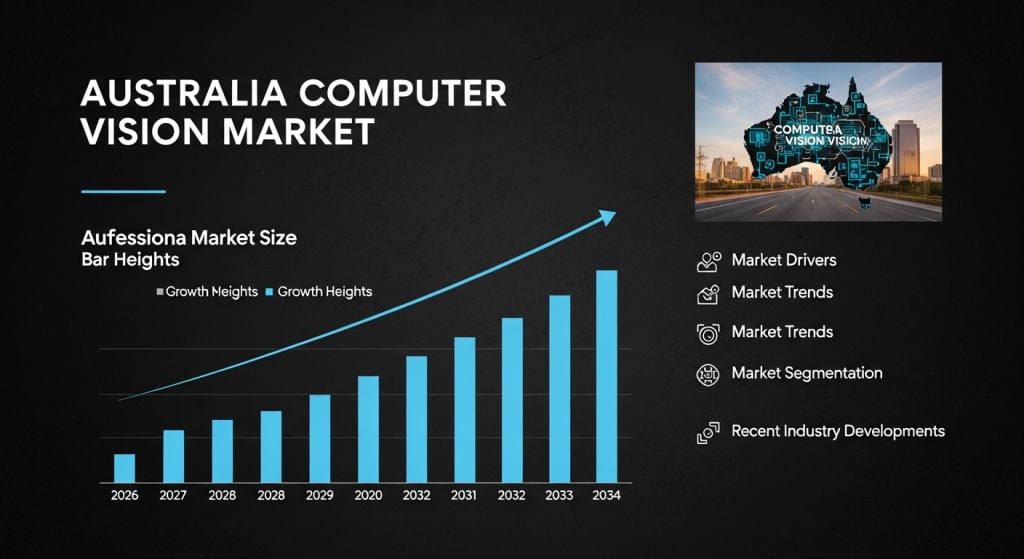
The Australia Computer Vision Market is rapidly evolving from a niche tech segment into a mainstream technology catalyst across multiple sectors. According to IMARC Group’s latest analysis, the market reached USD 434.0 million in 2025 and is poised to grow to USD 706.1 million by 2034, representing a CAGR of 5.56% during 2026–2034.
Computer vision — the field of artificial intelligence (AI) that enables machines to interpret and understand digital images and videos — is increasingly embedded within the Australian technology landscape. This expansion reflects both sophisticated industrial adoption and broader uptake in areas such as retail, healthcare, agriculture, government services, and smart infrastructure. Built on advancements in hardware, software, and AI algorithms, computer vision is redefining how data is captured, analyzed, and acted upon.
Why the Market Is Growing So Rapidly
1. AI and Machine Learning Integration Across Industries
A primary driver of growth is the broader incorporation of AI-led technologies across Australian industries. As businesses transition from traditional manual processes to automated systems, computer vision tools — which leverage pattern recognition, object detection, and real-time analytics — are becoming central to operational efficiency and quality control. IMARC highlights the rising deployment of AI-based computer vision solutions that enhance speed, accuracy, and automation.
In manufacturing, for example, vision systems perform predictive maintenance by detecting equipment wear and failures before breakdowns occur. In healthcare, AI-powered imaging tools support more precise diagnosis and treatment planning. These use cases are supported by ongoing investments in AI innovation hubs and increased venture capital flowing into vision-tech startups.
2. Government Programs and Smart City Initiatives
Government support for digital transformation and smart city frameworks has also been instrumental. Policies aimed at improving public safety, infrastructure management, and operational transparency are increasing demand for integrated computer vision applications. Public sector procurement of vision systems for surveillance, traffic monitoring, and public safety is expanding, further legitimizing these technologies as critical infrastructure.
Programs that incentivize digital modernization — particularly for small and medium enterprises — are helping democratize access to advanced vision technology.
3. Surge in E-Commerce and Retail Automation
The exponential growth of e-commerce in Australia is another key driver. As online shopping continues to gain traction, computer vision plays an essential role in optimizing supply chains, improving fulfillment operations, and enhancing customer experiences. Vision-enabled solutions help with automated product recognition, inventory tracking, fraud prevention, and biometric identity verification — all of which are critical in competitive online retail environments.
Logistics firms are deploying vision tools for package scanning, load management, and route optimization, helping reduce costs and improve delivery performance.
4. Sector-Specific Adoption in Agriculture and Mining
Beyond traditional enterprise use cases, sectors like agriculture and mining are adopting computer vision for specialized applications. In agriculture, vision technology is used for crop analysis, pest detection, and yield forecasting, enabling more efficient and sustainable farming practices. Vision systems are also increasingly used in mining operations for ore quality analysis, conveyor monitoring, and machinery inspection — enhancing safety and productivity in challenging environments.
5. Hardware and Software Advancements
Progress in computing hardware — such as high-resolution cameras, powerful GPUs, and edge computing devices — has significantly lowered barriers to deploying vision systems. These technologies allow real-time processing at the source, reducing latency and improving reliability. On the software side, advancements in deep learning and neural networks continue to enhance the accuracy of object detection and pattern recognition, making vision systems more effective and easier to integrate with existing processes.
What the Opportunities Are
1. Enterprise Digitization Across Verticals
Companies that can craft tailored computer vision solutions for sectors such as manufacturing, healthcare, retail, and logistics have a significant market opportunity. Vision tech can provide automation and analytical insights previously unattainable with manual processes.
2. AI-Enabled Surveillance and Public Safety
With governments investing in smart city infrastructures, opportunities lie in the deployment of vision systems for public safety, traffic management, and urban planning. These solutions can integrate with IoT networks to offer real-time insights into city operations.
3. Retail Personalization and Customer Experience
Retailers can leverage computer vision for personalized shopping experiences (e.g., virtual try-on, visual search), enhanced checkout automation, and more secure payment systems. This delivers measurable increases in customer satisfaction and sales.
4. Healthcare Imaging and Diagnostics
Computer vision continues to advance clinical imaging applications, offering faster, more accurate diagnostic tools. Providers and technology firms can collaborate to introduce vision-enabled platforms that streamline patient care while reducing operational costs.
5. Agricultural Automation
Vision systems tailored for agricultural analytics — such as crop health monitoring and yield estimation — can create new revenue streams for tech service providers and equipment integrators in the agritech sector.
6. Seamless Logistics and Warehouse Automation
Automation in logistics remains a robust opportunity. Vision-based tracking and sorting systems increase throughput and accuracy, reducing dependency on manual labor and minimizing errors. Tech firms providing modular, scalable solutions will benefit most.
7. Policy and Regulatory Frameworks for Ethical AI
Experts and policy makers have an opportunity to shape ethical frameworks that balance innovation with privacy and security. Transparent guidelines around computer vision deployment can help build public trust and facilitate broader adoption.
Recent News & Developments in Australia Computer Vision Market
• March 2025: The Australian government announced enhanced funding under a national innovation initiative aimed at supporting AI and digital technologies in regional economies. The program includes grants for startups developing advanced computer vision solutions for sectors such as agriculture and manufacturing, with funding pools exceeding AUD 50 million focused on scaling commercial deployment.
• June 2025: Tech leader VisionTech Australia launched a new suite of AI-based vision analytics platforms designed for retail and logistics applications. The platform integrates real-time analytics with cloud-based dashboards, enabling medium and large enterprises to reduce processing errors by up to 30% and improve inventory visibility across supply chains.
• September 2025: Independent research data showed that adoption of computer vision technologies in Australian enterprises grew by over 22% compared to year-end 2024, with the number of medium and large businesses deploying vision systems exceeding 1,200. Government contracts for urban surveillance upgrades and private sector investments in vision-based analytics platforms contributed significantly to this uptake.
Why Should You Know About the Australia Computer Vision Market?
For investors, the market represents a steady growth opportunity driven by structural digital transformation across sectors. As companies increase investment in AI and automation, computer vision delivers scalable value and operational efficiency. For business leaders, these technologies can unlock competitive advantages — from cost reduction to customer engagement innovations. And for policy makers, understanding this market is key to framing regulations that encourage innovation while safeguarding societal interests.
In an era where visual data is abundant and computing power continues to rise, Australia’s computer vision market stands at the intersection of technological progress and real-world impact. Recognizing its potential now empowers stakeholders to make informed strategic decisions that resonate long into the future.
About the Creator
Rashi Sharma
I am a market researcher.
Keep reading
More stories from Rashi Sharma and writers in Trader and other communities.
Australia Fitness App Market Set for Explosive Growth as Health and Tech Trends Converge
The Australia fitness app market is entering a transformative phase, propelled by increasing consumer focus on health, digital adoption and the seamless integration of fitness into everyday routines. According to IMARC Group, the market reached USD 70.1 Million in 2025 and is forecast to surge to USD 401.5 Million by 2034, representing a robust compound annual growth rate (CAGR) of 21.40% between 2026 and 2034.
By Rashi Sharma3 days ago in Trader
ivp stock: Small Share, Big Potential for Smart Investors
ivp stock may seem quiet, but it has hidden potential that many investors overlook. While others chase flashy names, ivp stock quietly builds value. In this article, we explain why ivp stock deserves attention, its current strength, and how patient investors could benefit.
By hamza mirza3 days ago in Trader




Comments
There are no comments for this story
Be the first to respond and start the conversation.