
Australia Eyewear Market Gears Up for Strong Growth as Health, Style and Tech Drive Demand
With rising screen time, eye health awareness and fashion trends, the market is forecast to reach nearly USD 6 billion by 2034.

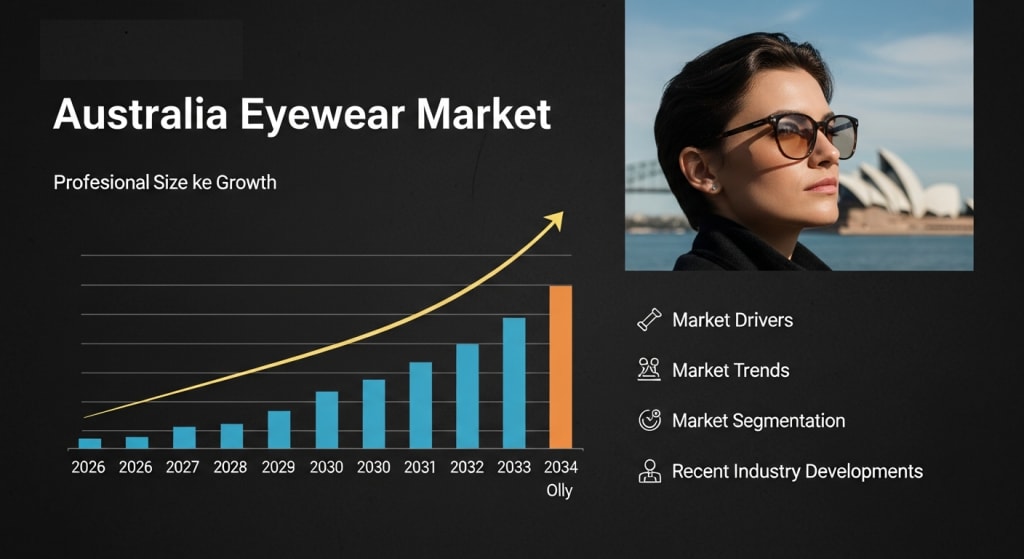
The Australia eyewear market is on a sustained growth trajectory, supported by evolving consumer needs, health awareness and technological innovations. According to IMARC Group, the market reached USD 3,590.6 million in 2025 and is projected to grow to USD 5,845.0 million by 2034, exhibiting a compound annual growth rate (CAGR) of 5.56% between 2026 and 2034.
Eyewear products — including spectacles, sunglasses and contact lenses — play an essential role in both vision correction and eye protection, while also serving as fashion accessories. Over recent years, these products have shifted from pure utility items to lifestyle and wellness goods that integrate health benefits with style and convenience. This shift is a key driver of broader engagement across all age groups and demographics.
Why the Market Is Growing So Rapidly
One of the most significant drivers of growth in the Australian eyewear market is the increasing awareness of eye health challenges associated with prolonged digital device usage. With more people working, studying and socializing through screens, demand is rising for eyewear that offers protection from blue light and eye strain. This trend has helped expand product portfolios and consumer engagement, particularly among younger and working age segments.
An aging population is also contributing to market momentum. As vision related issues such as presbyopia, myopia and other refractive errors become more prevalent with age, there is growing demand for corrective eyewear. Older consumers increasingly invest in both functional and premium eyewear solutions that address comfort, clarity and visual performance.
Fashion and personal expression are further propelling demand. Eyewear has become a key style accessory, with consumers seeking frames and lenses that reflect their identity. Brands have responded by offering diverse designs, vibrant colors and customizable features, strengthening aesthetic appeal without sacrificing functionality.
Another growth catalyst is the rise of e commerce and omnichannel retailing. Consumers now have convenient access to a wider range of eyewear products through online platforms, enabling easy comparison of styles, prices and features. This has expanded market reach beyond traditional optical stores to include independent brand showrooms, retail outlets and direct to consumer digital channels.
Technological advancements — from improved lens materials to smart eyewear functionalities — are also shaping product innovation. Photochromic lenses, blue light blocking coatings, and lightweight frame materials are just a few examples of advancements that enhance comfort and performance, attracting tech savvy and health minded buyers.
Market Segmentation Insights
The Australian eyewear market comprises the following key segments as reported by IMARC Group:
• Product Type: Spectacles, sunglasses, contact lenses.
• Gender: Men, women, unisex.
• Distribution Channel: Optical stores, independent brand showrooms, online stores, retail stores.
• Regional Markets: Australia Capital Territory & New South Wales, Victoria & Tasmania, Queensland, Northern Territory & Southern Australia, Western Australia.
These segments reflect how eyewear demand is distributed across product types, sales channels and geographic regions, helping stakeholders identify priority areas for investment and expansion.
What the Opportunities Are
1. Blue Light and Protective Eyewear Expansion: Rising screen time presents a growing opportunity for specialized products that protect against digital eye strain and blue light exposure.
2. Style Driven Collections: Brands that focus on fashion forward and customizable eyewear options can stand out in a market increasingly driven by personal expression and lifestyle considerations.
3. Omnichannel Growth: Developing seamless integration between online shopping and in store services can enhance customer experience and capture both convenience seekers and traditional shoppers.
4. Advanced Lens Technologies: Investments in innovative lens coatings, lightweight materials and adaptive technologies such as photochromic lenses can differentiate offerings and command premium pricing.
5. Targeted Demographic Marketing: Tailoring products for specific age groups — such as youth, working professionals or older adults — can improve relevance and boost penetration rates.
6. Collaborations and Brand Partnerships: Partnerships with fashion designers, influencers and tech companies can expand visibility and attract new consumer segments.
7. Regional Retail Expansion: Targeted market presence in under served regions with growing demand — especially outside major urban centers — can unlock incremental growth opportunities.
• January 2025: The Australian Optometry Association (AOA) launched a nationwide eye health awareness campaign emphasizing the risks of prolonged digital screen exposure. This initiative encourages regular vision check ups and promotes protective eyewear solutions, contributing to increased consumer interest and sales across both corrective and preventive eyewear categories.
• March 2025: A leading optical retailer announced the rollout of an AI powered virtual try on tool across its online platform, significantly enhancing the e commerce shopping experience. This digital innovation integrates facial mapping and style suggestions, improving purchase confidence and reducing return rates — key metrics for online eyewear sales.
• August 2025: Industry data reported a 15% year on year increase in online eyewear sales driven by strong growth in digitally native brands and consumer preference for direct to consumer purchases. This shift highlights the continued acceleration of e commerce as a primary channel for market expansion and consumer access to diverse product portfolios.
Why Should You Know About Australia Eyewear Market?
The Australia eyewear market reflects a dynamic convergence of health imperatives, lifestyle trends and technological innovation. With IMARC Group forecasting growth from USD 3.59 billion in 2025 to USD 5.85 billion by 2034 at a CAGR of 5.56%, the sector offers meaningful opportunities for investors, retailers, and product innovators alike.
For investors, the expanding demand for specialized and premium eyewear segments — coupled with increasing digital sales penetration — provides fertile ground for strategic positioning. Retailers and brands that leverage omnichannel strategies, adopt advanced technologies and tailor offerings to emerging consumer needs can capture higher market share and build long term loyalty.
Policy makers and public health advocates should also pay attention to the eyewear market, as growing awareness of eye health issues ties directly into broader wellness outcomes and preventive care strategies.
In an era of digital lifestyles and heightened health consciousness, the Australian eyewear market isn’t just about vision correction — it’s about enhancing quality of life, expressing identity and embracing innovation through what we wear.
About the Creator
Rashi Sharma
I am a market researcher.
Keep reading
More stories from Rashi Sharma and writers in Trader and other communities.
Australia Reverse Logistics Market Grows Steadily as E-Commerce and Sustainability Drive Backward Flows
The Australia Reverse Logistics Market is on a clear path of steady expansion as businesses adapt to rising return volumes and sustainability imperatives. According to IMARC Group data, the market reached USD 14,241.2 million in 2025 and is projected to grow to USD 21,448.0 million by 2034, representing a compound annual growth rate (CAGR) of 4.66% during 2026–2034.
By Rashi Sharma2 days ago in Trader
Vinyl Flooring Market Size, Share, Trends, Growth Drivers and Forecast 2034
Vinyl Flooring Market Outlook 2025–2034: Trends, Growth Drivers, and Future Opportunities The vinyl flooring market is experiencing robust expansion as consumers and commercial users increasingly prefer durable, cost-effective, and aesthetically versatile flooring solutions. Vinyl flooring, known for its water resistance, resilience, and ease of maintenance, has emerged as a leading alternative to traditional materials such as wood, ceramic, and stone. With rapid urbanization, rising construction activities, and evolving interior design preferences, vinyl flooring is becoming a staple across residential, commercial, and industrial spaces worldwide.
By Kim Soo hyun6 days ago in Trader
Book Review: Atmosphere by Taylor Jenkins Reid
I flipped the book over in my hands in the centre of the small airport book shop. Although I had heard promising reviews of Atmosphere by Taylor Jenkins Reid, I hesitated. The synopsis didn’t compel me - I wasn’t much of a space girly. In high school it made me cringe when my peers would talk about the stars.
By sleepy drafts4 days ago in BookClub




Comments
There are no comments for this story
Be the first to respond and start the conversation.