
Australia Electric Motor Market Set for Steady Growth to USD 4.6 Billion by 2034 Driven by Electrification and Industrial Modernization
A deep dive into the market size, growth drivers, segmentation trends and opportunities shaping Australia’s electric motor landscape.

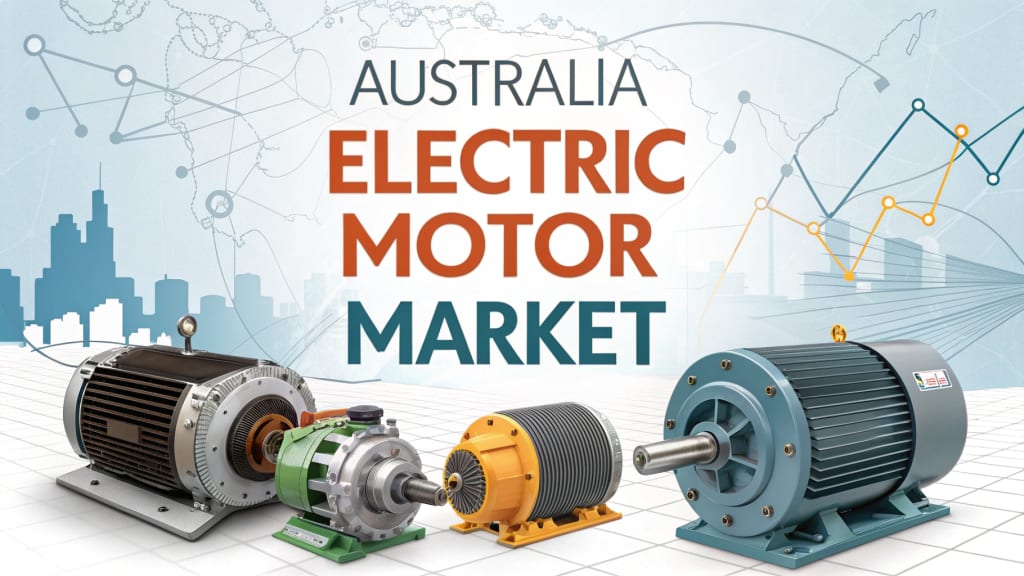
The Australia electric motor market is advancing steadily as the country transitions toward more electrified, automated, and energy efficient systems across transportation, industrial, infrastructure, and renewable energy segments. According to the latest IMARC Group analysis, the market reached a value of USD 3.3 billion in 2025 and is expected to grow to USD 4.6 billion by 2034, representing a compound annual growth rate (CAGR) of 3.33% over 2026–2034.
Electric motors — devices that convert electrical energy into mechanical motion — are fundamental components in a vast array of applications, from industrial machinery and vehicles to household appliances, HVAC systems and energy infrastructure. The wide ranging use and critical performance characteristics of electric motors make them essential to modern economic activities and future technological evolution.
IMARC Group’s segmentation identifies how market demand distributes across key motor types, voltages, rated power classes, magnet types, weights, speeds, and applications — providing stakeholders with a granular view of market structure and growth opportunities.
Why the Market Is Growing So Rapidly
Electrification of Transport:
A major driver of electric motor demand in Australia is the increasing adoption of electric vehicle (EV) technology. As government incentives, emissions targets, and charging infrastructure expand, demand for high performance electric traction motors for passenger cars, commercial vehicles, and industrial transport solutions continues to grow. Electric motors are critical for EV drivetrains, making them a key growth segment within the broader automotive and transport industries.
Industrial Automation and Modernization:
Australian manufacturers are increasingly embracing automation technologies — from robotics and CNC systems to smart conveyor lines and process controls — to enhance productivity and competitiveness. These technologies rely heavily on electric motors for motion control, power delivery, and precision operations. As manufacturers digitize and integrate Industry 4.0 systems, motor sales rise in tandem with capital investments in automation.
Renewable Energy Integration:
The transition toward renewable energy sources such as wind and solar in Australia has amplified the use of electric motors in energy generation and conversion systems. Motors are integral to wind turbine operation, solar tracking mechanisms and grid storage solutions, contributing to the energy transition and supporting national carbon reduction goals.
Energy Efficiency Regulations:
Policymakers continue to promote higher energy efficiency standards for industrial and commercial equipment. These measures are influencing organizations to replace older, less efficient motors with newer, more efficient types that comply with Minimum Energy Performance Standards (MEPS). This regulatory push enhances energy savings, reduces operational costs, and sustains demand for advanced electric motor models.
Infrastructure Growth and HVAC Demand:
Electric motors are deeply embedded in infrastructure systems — notably in HVAC units, pumps, fans, escalators, elevators and auxiliary building functions. As Australia’s urban development expands, especially in commercial and residential construction, the demand for motors supporting climate control and mechanical systems rises commensurately.
What the Opportunities Are
The Australia electric motor market offers several strategic opportunities for manufacturers, investors, suppliers and policymakers:
1. EV Traction Motor Innovation:
Develop bespoke, high efficiency traction motors for growing EV segments, including passenger cars, buses, and commercial vehicles, to capitalize on rising electrification trends.
2. High Efficiency Motor Solutions:
Develop and commercialize motors compliant with or exceeding Australian energy performance standards (e.g., IE4, IE5) to address both regulatory requirements and consumer demand for energy savings.
3. Smart and Connected Motor Technologies:
Integrate IoT, sensors and predictive maintenance capabilities into motors to support Industry 4.0 and smart infrastructure ecosystems, enabling real time monitoring and reduced downtime.
4. Renewable Energy Applications:
Target renewable energy infrastructure with motor solutions optimized for wind turbines, solar trackers and energy storage systems, benefiting from nationwide clean energy deployment.
5. Aftermarket Service Expansion:
Provide refurbishment, spare parts, maintenance and performance testing services that extend motor lifecycles and generate recurring revenue.
6. Local Manufacturing and Supply Chain Strengthening:
Invest in regional production facilities to reduce reliance on global imports, enhancing supply resilience and supporting rapid delivery to heavy use end sectors like manufacturing and mining.
7. Cross Sector Customization:
Design specialized motor solutions for niche sectors — such as aerospace, robotics, marine systems and smart appliances — to unlock new revenue streams.
Recent News & Developments in Australia Electric Motor Market
• March 2025: Government Energy Efficiency Standards (Government Action) — The Australian government implemented updated energy performance regulations requiring more stringent efficiency criteria for industrial and commercial electric motors. These reforms aim to lower national energy consumption and greenhouse gas emissions, prompting organizations to upgrade legacy motors and create new procurement demand.
• June 2025: EV Manufacturing Expansion (Company Action) — A major electric vehicle manufacturer announced plans to expand its local motor production infrastructure, partnering with suppliers to scale production of traction and auxiliary motors. This move is expected to strengthen domestic supply chains, create skilled jobs, and support broader EV adoption across both private and commercial segments.
• October 2025: Market Growth Metrics (Adoption Milestone) — Industry data revealed an 18% year on year increase in electric motor installations across industrial and commercial sectors for the first three quarters of 2025. This adoption surge was most notable in automated manufacturing environments and renewable energy projects, signaling growing confidence and market momentum.
Why Should You Know About the Australia Electric Motor Market?
For investors, business leaders and policymakers, the Australia electric motor market represents a strategic growth sector aligned with electrification, sustainability and technological advancement. With a projected expansion from USD 3.3 billion in 2025 to USD 4.6 billion by 2034 and a reliable CAGR of 3.33%, it indicates sustained demand across both industrial and consumer applications.
Electric motors are foundational components in future oriented technologies — from EVs and renewable energy to smart industry systems and energy efficient infrastructure. Understanding the drivers, segmentation trends, and opportunities in this market enables stakeholders to make informed investment decisions, harness innovation potential, and contribute to Australia’s long term economic and environmental goals. With electrification and automation central to upcoming industrial evolution, the Australia electric motor market stands as a critical area of growth and strategic focus.
About the Creator
Amélie Belle
Hi, I’m Amélie Belle—27, New York writer, lover of quiet moments and honest words. I share poetry and reflections on love, healing, and life’s small miracles. If my writing makes you feel seen, I’m exactly where I’m meant to be.
Keep reading
More stories from Amélie Belle and writers in Trader and other communities.
Australia Industrial Filtration Market Set to Almost Double to USD 1.95 Billion by 2034 as Environmental and Manufacturing Pressures Fuel Adoption
The Australia industrial filtration market is gaining strong traction as strategic sectors — from mining to manufacturing — intensify efforts to improve operational efficiency and meet tightening environmental compliance requirements. According to the latest IMARC Group analysis, the market reached USD 1,064.6 million in 2025 and is expected to grow to USD 1,946.7 million by 2034, displaying a healthy compound annual growth rate (CAGR) of 6.73% from 2026 to 2034.
By Amélie Bellea day ago in Trader




Comments
There are no comments for this story
Be the first to respond and start the conversation.