
Australia Eco Friendly Bricks Market: Sustainable Construction on the Rise
As Australia pushes for greener building practices and carbon-reducing materials, the eco friendly bricks market is expanding steadily — set to nearly double by 2034 amid innovation, regulation and shifting consumer preference.

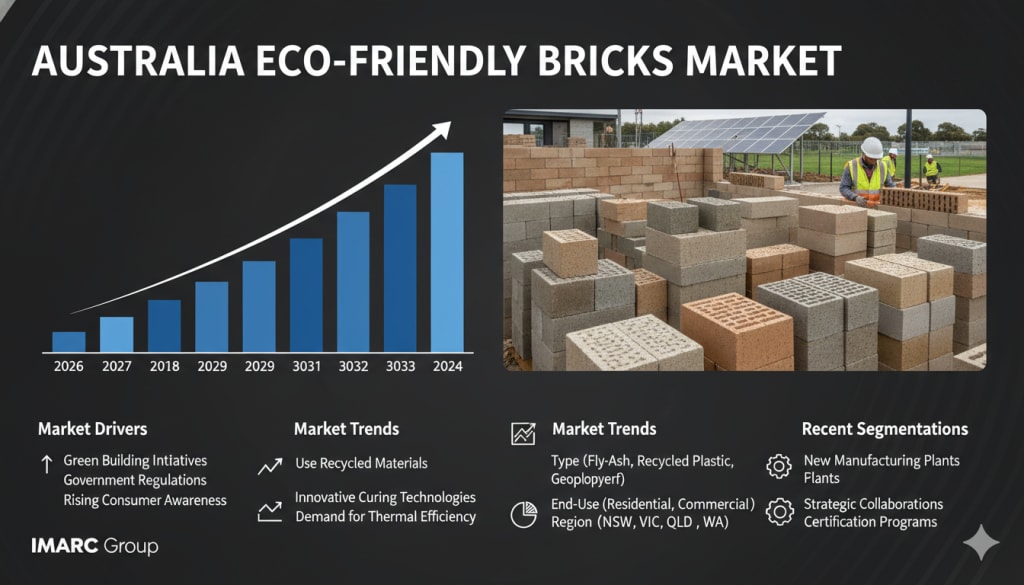
The Australia eco friendly bricks market reached USD 24.0 Million in 2025 and is anticipated to grow to USD 42.6 Million by 2034, exhibiting a compound annual growth rate (CAGR) of 6.56% between 2026 and 2034.
This growth reflects a broader movement within Australian construction toward sustainable, low-impact building materials. Eco friendly bricks, produced using materials such as fly ash, recycled plastics, hempcrete and soil bricks, are emerging as viable alternatives to traditional clay bricks. These alternatives are gaining traction due to their lower embodied energy, reduced carbon footprints, and enhanced performance characteristics such as improved thermal insulation.
The shift toward greener construction is supported by expanding regulatory frameworks, innovations in material science, and growing demand from environmentally conscious consumers and developers. As sustainability becomes embedded within building standards and consumer expectations rise for energy-efficient homes and commercial spaces, eco friendly bricks are positioned as both a practical and ethical choice for Australia’s evolving built environment.
Why the Market Is Growing So Rapidly
A central driver of the Australia eco friendly bricks market is the increasing emphasis on sustainable construction practices across the building sector. Environmental regulations and green building certification systems — including the National Construction Code (NCC) and the Green Star rating system — are encouraging developers to adopt materials with lower embodied carbon and superior environmental performance compared with conventional materials. Such standards often include incentives or benchmarks that favor sustainable alternatives, helping drive adoption of eco friendly bricks in both residential and commercial projects.
Another key growth factor is technological advancement in material innovation. Manufacturers and research institutions are exploring the use of industrial by-products such as fly ash and recycled glass — as well as natural materials like hemp — to produce bricks that meet or exceed the performance of traditional clay bricks while reducing waste and emissions. Collaborations between academic institutions and industry players (for example, partnerships to incorporate waste glass and ash into brick formulations) illustrate how innovation is reducing environmental impact and improving product competitiveness.
Rising consumer awareness and preferences for green living are also influencing market dynamics. Today’s homebuyers and builders are more informed about the environmental impacts of construction materials and are increasingly seeking building solutions that align with carbon-reduction goals and long-term energy savings. Eco bricks often offer superior thermal performance, which can lower energy expenses over a building’s lifetime, making them attractive to sustainability-focused consumers and developers alike.
The broader agenda toward decarbonization and circular economies is pushing the construction industry to rethink material sourcing and waste. By repurposing industrial by-products and recycled inputs into brick production, manufacturers help reduce landfill burdens and conserve virgin resources, aligning with national decarbonization strategies and circular material flows.
Finally, economic viability and performance benefits are enhancing market uptake. As eco friendly bricks become more cost-competitive through improved manufacturing methods and scale, they are increasingly considered not just for niche sustainability projects but also for mainstream applications. These factors collectively are propelling market growth across various construction segments.
Market Segmentation
The Australia eco friendly bricks market is segmented based on type and application.
Type
• Fly Ash Bricks
• Concrete Bricks
• Recycled Plastic Bricks
• Hempcrete Bricks
• Soil Bricks
Application
• Residential Construction
• Commercial Construction
• Landscaping
• Paving
• Structural Applications
Regional Coverage
• Australia Capital Territory & New South Wales
• Victoria & Tasmania
• Queensland
• Northern Territory & Southern Australia
• Western Australia
This segmentation underscores the breadth of demand across both material innovations and construction contexts, from green homes to commercial structures and outdoor landscaping projects.
What the Opportunities Are
1. Innovation in Material Formulations: Manufacturers can invest in R&D to improve the performance attributes of eco bricks (e.g., thermal insulation, structural integrity) using advanced recycled materials and bio-based composites.
2. Government Partnerships and Incentives: Engaging with government green building initiatives can unlock funding and policy support that lowers barriers to adoption among public and private builders.
3. Education and Awareness Campaigns: Companies can lead educational efforts that highlight the long-term energy and cost savings of eco bricks compared with traditional masonry alternatives.
4. Certification and Performance Standards: Working toward or exceeding sustainability certification thresholds (e.g., for Green Star or similar benchmarks) can help eco bricks stand out in sustainable construction projects.
5. Commercial Construction Integration: Targeting larger commercial and infrastructure projects offers scale opportunities as developers adopt green strategies across broader portfolios of buildings.
6. Export and Regional Collaboration: As sustainability standards rise globally, Australian eco brick producers can explore export potential or collaborative innovation with regional partners in Asia-Pacific markets.
7. Lifecycle and Carbon Accounting Services: Providing carbon footprint analysis and lifecycle cost comparisons alongside products can help builders make informed choices, reinforcing the value proposition of eco bricks.
Recent News & Developments in Australia Eco Friendly Bricks Market
March 2025: Government Regulatory Action: The Australian Government strengthened building sustainability requirements within key urban zones, emphasizing reduced embodied carbon in construction materials. This regulatory push includes tax incentives and priority permitting for projects that incorporate sustainable brick alternatives, directly supporting eco brick adoption across residential and commercial developments.
June 2025: Company Expansion & Innovation: A research-industry collaboration announced expanded pilot production of recycled-content bricks that integrate waste glass and fly ash, aiming to scale performance-tested sustainable bricks for broader residential use. Early results show improved insulation properties, positioning the products as viable competitors to conventional bricks.
September 2025: Market Adoption Milestone: Industry reports indicate a noticeable increase in eco brick use across both residential and commercial segments, with a clear uptick in specification by architects and builders. This growth reflects rising certification requirements for green buildings and robust builder preference for materials that contribute to lower operational and embodied emissions.
Why Should You Know About the Australia Eco Friendly Bricks Market?
The Australia eco friendly bricks market represents a strategic intersection of sustainability, construction innovation and environmental impact reduction. For investors, the steady growth toward USD 42.6 Million by 2034 at a 6.56% CAGR highlights a scalable market opportunity within the broader green building ecosystem.
For builders and developers, eco bricks offer a pathway to meet tightening sustainability requirements, reduce lifetime energy costs, and appeal to eco-aware consumers. For policymakers and environmental advocates, the market exemplifies how materials innovation can align with regulatory goals for emissions reduction and resource efficiency. In a construction landscape increasingly guided by carbon accountability and performance standards, eco friendly bricks are more than an alternative — they are a vital component of Australia’s sustainable built future.
About the Creator
Amélie Belle
Hi, I’m Amélie Belle—27, New York writer, lover of quiet moments and honest words. I share poetry and reflections on love, healing, and life’s small miracles. If my writing makes you feel seen, I’m exactly where I’m meant to be.
Keep reading
More stories from Amélie Belle and writers in Trader and other communities.
MCX Gold Rate Today: Market Updates and Investment Insights
The MCX gold rate today is closely monitored by traders, investors, and market analysts across India. Gold remains one of the most preferred safe-haven assets, protecting wealth during economic uncertainty, inflation, and global market fluctuations. Understanding current gold rates, as well as the factors affecting them, is essential for informed investment decisions.
By Hammad Nawaz7 days ago in Trader
Philippines Real Estate Market 2026: Set to Expand to USD 135.9 Billion by 2034 on Urbanization & Investment Growth
Philippines Real Estate Market Overview The Philippines real estate market growth is on a trajectory of sustained expansion as the nation continues to urbanize and attract domestic and foreign investment. According to IMARC Group, the market reached a size of USD 94.4 billion in 2025 and is projected to grow to USD 135.9 billion by 2034, exhibiting a compound annual growth rate (CAGR) of 4.12 % between 2026 and 2034.
By Manisha Dixita day ago in Trader


Comments
There are no comments for this story
Be the first to respond and start the conversation.