
Australia Digital Health Market: Projected to Reach USD 31.1 Billion by 2034
Telehealth, AI, mHealth and national digital infrastructure reshape healthcare delivery

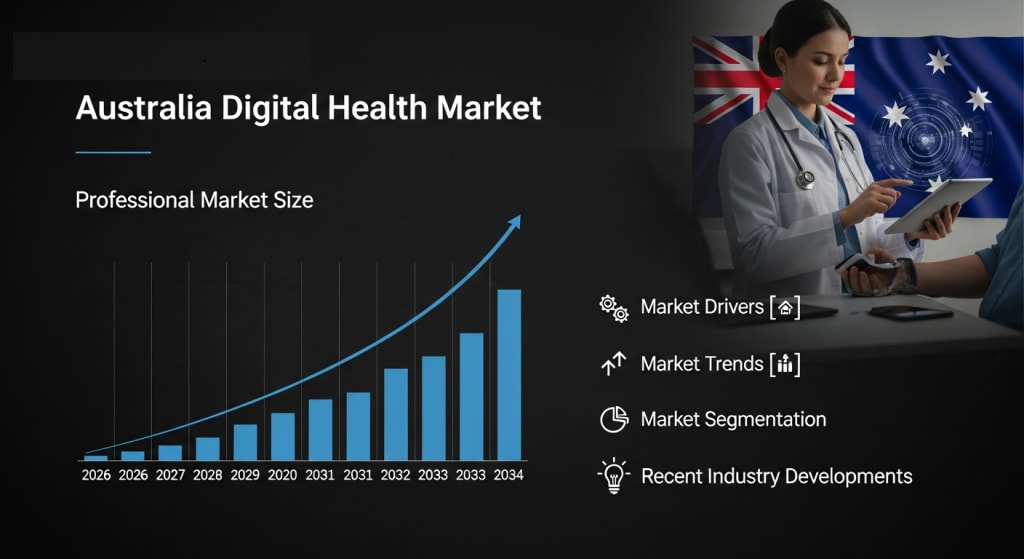
The Australia digital health market is experiencing rapid expansion as technology transforms how healthcare services are delivered and managed across the country. According to the latest IMARC Group report, the market was valued at USD 8.9 Billion in 2026 and is expected to grow to USD 31.1 Billion by 2034, reflecting a strong CAGR of 14.92% % over the 2026–2034 period.
This dynamic growth stems from increased digital adoption, comprehensive government programs such as national electronic health records, and widespread use of telehealth and mobile health applications. Advanced analytics, personalized care solutions, and robust public-private collaborations are unlocking new opportunities while improving care access and outcomes for patients across Australia.
Why the Market Is Growing So Rapidly
1. Expansion of Telehealth Services
Telehealth is a core driver of digital health adoption in Australia. Subsidised virtual consultations via Medicare, and increasing patient comfort with remote care, have made telemedicine an integral part of routine healthcare — particularly in rural and remote regions. The convenience of accessing care from home, combined with cost savings and reduced travel needs, has accelerated uptake among both providers and patients.
2. Government Infrastructure and National Platforms
The Australian Digital Health Agency, through platforms such as My Health Record (MHR), has established national digital frameworks that enable secure storage and sharing of medical data across providers. These infrastructures allow practitioners to access real-time patient records, test results, and prescriptions, enhancing care coordination and reducing errors. Government backing not only boosts adoption of digital tools but also reinforces trust in secure, interoperable systems.
3. Rising mHealth Adoption and Wearables
Mobile health (mHealth) applications and wearable technologies are proliferating, driven by rising smartphone penetration and consumer interest in self-management of health metrics such as physical activity, chronic disease monitoring, and mental wellbeing. Wearables paired with analytics tools provide real-time feedback, empowering users to take control of their health and contributing to preventive care paradigms that reduce long-term healthcare burdens.
4. Integration of Private Insurers and Digital Care Solutions
Australia’s mixed public–private healthcare system encourages innovation through partnership between insurers, tech companies, and healthcare providers. Private health funds increasingly integrate digital platforms for remote consultations, health coaching, and preventive care — aligning insurer incentives with improved patient outcomes and greater service efficiency.
5. Growth of Advanced Analytics and AI Diagnostics
Artificial intelligence and data analytics tools are transforming diagnostic and treatment pathways. AI-enabled systems help clinicians make more accurate diagnoses, predict health risks, and customise treatment plans. This technology not only enhances clinical capabilities but also supports more efficient workflows and resource allocation, helping meet growing demand without proportionate increases in clinical staff.
What the Opportunities Are
1. Personalized and Preventive Digital Care
As chronic conditions like diabetes, cardiovascular diseases, and obesity rise in prevalence, there’s an opportunity to build digital solutions that focus on continuous monitoring, early intervention, and individualized care plans using AI and wearables — improving outcomes while reducing costs.
2. Indigenous and Remote Community Health Solutions
Digital tools offer unique potential to bridge healthcare disparities among Aboriginal, Torres Strait Islander, and remote populations. Tailored, culturally informed telehealth and mobile health services can deliver critical care to regions where access has traditionally been limited.
3. National Interoperability and Data Integration
While systems such as My Health Record exist, next-generation interoperability — connecting hospitals, GPs, pharmacies, insurers, and aged care — could enable real-time, comprehensive views of patient journeys, driving better decision-making and policy planning.
4. Chronic Disease Management Platforms
Digital platforms focusing on long-term condition management can reduce hospital readmissions and improve patient quality of life. Partnering with insurers and providers to integrate such tools into preventative health regimes represents a high-growth opportunity.
5. AI-Enabled Diagnostics and Clinical Decision Support
Providers that incorporate AI tools for imaging, predictive analytics, and risk stratification can enhance clinical accuracy and efficiency — a differentiator in a market pushing toward value-based care.
6. Healthcare Analytics and Population Health Tools
Enterprise analytics solutions that aggregate clinical, operational, and financial data help health systems optimise resource allocation, forecast demand, and improve population health strategies — a valuable service area for digital health firms.
7. Expansion of Digital Therapy and Wellness Apps
Mobile apps offering mental health support, rehabilitation guidance, medication adherence, and lifestyle coaching represent fast-growing segments that expand the reach of clinical care beyond traditional settings.
Recent News & Developments in Australia Digital Health Market
• March 2025: Government Healthcare Policy: The Australian Government announced an expansion of Medicare-funded telehealth services to include additional specialist remote consultations, especially for chronic disease management and mental health. The policy also emphasises digital training for clinicians — a move designed to accelerate equitable access to virtual care, particularly in regional areas.
• May 2025: Healthcare Innovation & Industry Growth: A consortium of local universities, healthcare providers and AI start-ups launched a pilot program to integrate real-time analytics platforms across regional hospital networks, aimed at optimising clinical workflows and reducing emergency wait times by up to 25%. Early results suggest stronger patient engagement and improved operational performance.
• September 2025: Market Adoption Milestone: Independent surveys of digital health platforms revealed that over 40% of Australians had used a telehealth service in the past year, up from under 30% in early 2024 — driven by broader smartphone usage and insurer-supported digital care programs. This surge highlights consumer comfort with digital health and reinforces strong adoption trends across age groups.
Why Should You Know About the Australia Digital Health Market?
For investors, the Australia digital health market represents one of the fastest-growing segments in healthcare technology, with projections showing expansion from USD 8.9 Billion in 2025 to USD 31.1 Billion by 2034 at a CAGR of 14.92%. This growth trajectory outpaces many traditional healthcare segments and reflects sustainable demand for digital care tools that improve outcomes and access.
For healthcare providers and technology businesses, digital health is no longer a niche offering — it’s central to service delivery. Innovations in telemedicine, wearables, AI diagnostics and data integration create competitive advantages for organisations that embed digital services into core care pathways.
For policy makers, digital health offers pathways to improve rural access, reduce care disparities, and enhance system efficiency without proportionate increases in resource strain. Strategic investments in interoperability, cybersecurity, and clinician training will be crucial to ensuring that digital health delivers both equitable and effective outcomes.
About the Creator
Rashi Sharma
I am a market researcher.
Keep reading
More stories from Rashi Sharma and writers in Trader and other communities.
Australia Legal Services Market: Steady Growth on the Path to USD 34.52 Billion by 2034
The Australia legal services market is expanding steadily as businesses and individuals increasingly seek professional legal support across a wide range of practice areas. According to IMARC Group data, the market was valued at USD 23.84 Billion in 2025 and is projected to reach approximately USD 34.52 Billion by 2034, growing at a CAGR of 4.20%% over the 2026–2034 period.
By Rashi Sharmaabout 11 hours ago in Trader



Comments
There are no comments for this story
Be the first to respond and start the conversation.