
Australia Digital Banking Market: Fintech Expansion, Mobile Finance & the Future of Cashless Banking
How mobile apps, real-time payments and financial innovation are reshaping Australia’s digital banking ecosystem

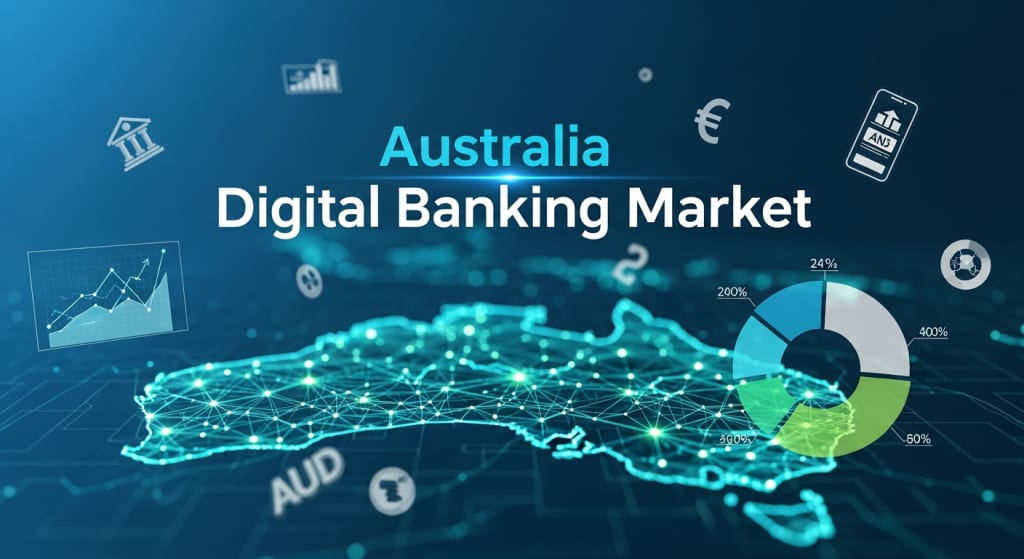
In 2024, the Australia digital banking market was valued at USD 206.97 Million. Looking ahead, the market is projected to grow to USD 569.81 Million by 2033, representing a CAGR of 11.91% between 2025–2033. This strong forecast reflects accelerating demand for digital-first banking services, rising fintech adoption, and growing consumer preference for convenient, mobile-enabled financial products.
Why is the Australia Digital Banking Market Growing?
Digital-first Consumer Expectations & Convenience
Consumers increasingly expect banking to match the convenience of other digital services — seamless mobile apps, 24/7 access, fast transfers and intuitive user experience. Banks and fintechs in Australia are responding with mobile-optimized platforms, virtual cards, simplified onboarding, and features like budgeting tools which resonate with younger, tech-savvy users.
Technological Innovation: AI, Personalization & Real-Time Banking
Banks are embedding advanced technologies — AI, machine learning, data analytics — into their digital-banking platforms. This allows them to offer personalized financial advice, fraud detection, instant payments, and improved security (like biometrics and multi-factor authentication), enhancing user trust and service quality.
Regulation & Fintech Ecosystem Supporting Open Banking & Competition
Australia’s regulatory environment, combined with a growing fintech ecosystem of more than 800 independent fintech companies in 2025, encourages competition and innovation. As traditional banks adapt, and neobanks / digital-only banks emerge, consumers benefit from more choices — lower fees, features, and modern banking experiences.
Shift Toward Cashless Payments & Integration with Digital Payment Platforms
Digital banking is closely tied to digital payments: mobile wallets, contactless payments, real-time transfers. As e-commerce, peer-to-peer payments, BNPL (Buy Now Pay Later) and fintech services grow, so does demand for comprehensive, secure digital banking — making it central to everyday financial activity in Australia.
Changing Demographics & Demand from Younger & Urban Populations
Younger generations and urban professionals — comfortable with smartphones and digital tools — are adopting digital banking at higher rates. They value flexibility, speed, and convenience over traditional branch-based banking. This demographic shift broadens demand for digital-first banking solutions across retail, savings, payments, and lending.
Market Structure & Segmentation:
Service Type — retail banking, business banking, digital payments integration, digital lending, wealth & asset management, digital savings & deposits.
Deployment Type — mobile banking apps, web platforms, digital-only banks (neobanks), hybrid digital-and-branch banks.
Technology / Features — AI & data analytics, biometric / multi-factor authentication, real-time payments, budgeting tools, digital wallets integration, virtual cards.
End-User Segments — retail consumers (individuals), small & medium enterprises (SMEs), digital-first businesses, underbanked / younger demographics. (Inferred from fintech and banking-industry trends)
This segmentation highlights how digital banking serves many user types — from individual consumers seeking convenience to SMEs needing efficient, low-cost banking solutions — and leverages multiple technology and delivery modes to meet diverse needs.
Key Players & Ecosystem Dynamics
The digital banking ecosystem in Australia includes traditional banks shifting to digital delivery, as well as neobanks / digital-only banks. For example, Up Bank — a digital-first bank — offers mobile banking, fee-free accounts, home-loan products, and a user-friendly mobile interface tailored for younger customers and digitally native users.
Additionally, fintech firms — over 800 independent companies as of 2025 — continue to innovate in payments, savings, micro-investing, lending, and embedded finance, pushing banks to modernize.
On the infrastructure side, platforms such as New Payments Platform (NPP) enable real-time bank-to-bank transfers and support the seamless integration of digital banking and payments in Australia’s banking system.
Recent News & Developments in the Australia Digital Banking Market
June 2025: An industry report noted that digital banking interactions in Australia now account for over 99% of customer-bank interactions — reflecting vast consumer shift from traditional branch banking to online channels. Mobile wallets, real-time transfers and app-based banking have surged, showcasing digital banking’s dominance in daily financial activity.
October 2025: Major Australian financial-services providers are stepping up investments in AI-powered banking features — from automated customer support and real-time fraud detection to personalized budgeting tools and predictive finance advice. This technological push is helping banks retain customers, improve user experience, and compete with global fintech players.
Why Should You Know About the Australia Digital Banking Market?
Because the digital banking market isn’t just a niche—it’s rapidly becoming the backbone of Australia’s financial system. From a value of USD 206.97 Million in 2024, it is on track to more than double to USD 569.81 Million by 2033.
For fintech entrepreneurs, payment-tech firms and neobank startups — this is a high-growth space: demand for digital banking, real-time payments, AI-powered services and financial-tech integration is expanding fast.
For traditional banks and financial institutions — going digital is no longer optional. Those who invest in user-friendly interfaces, security, real-time services and integrated finance platforms will retain customers and stay competitive in a fintech-heavy landscape.
For regulators and policymakers — the pace of digital banking evolution highlights the importance of robust cybersecurity, consumer protection, open-banking regulation, and stable payment infrastructure.
For everyday consumers — digital banking offers convenience, speed, flexibility, and access. From managing savings, bills and investments, to seamless payments and financial planning — banking is becoming more accessible and efficient than ever before.
About the Creator
Kevin Cooper
Hi, I'm Kavin Cooper — a tech enthusiast who loves exploring the latest innovations, gadgets, and trends. Passionate about technology and always curious to learn and share insights with the world!
Keep reading
More stories from Kevin Cooper and writers in Trader and other communities.
Australia Payments Market: Digital Transactions, Fintech Expansion & the Future of Cashless Commerce
In 2024, the Australia payments market was valued at USD 806.4 Billion. The same analysis forecasts it will grow to USD 1,341.7 Billion by 2033, with a CAGR of 5.3% between 2025–2033. These numbers reflect a major shift — payments are increasingly digital, fast, and integrated into everyday life and commerce across sectors.
By Kevin Cooper2 months ago in Trader
Australia Edible Grocery Market Set for Steady Expansion on Health, Convenience & E-Commerce Trends
The Australia edible grocery market encompasses a comprehensive range of food products purchased for household consumption, including fresh produce, dairy, meat and seafood, packaged foods, bakery and confectionery, non-alcoholic beverages, and frozen/ready-to-eat meals. According to IMARC Group, the market reached USD 9.5 Billion in 2025 and is expected to grow to USD 12.7 Billion by 2034, posting a compound annual growth rate (CAGR) of 3.23% during 2026–2034.
By Rashi Sharma4 days ago in Trader



Comments
There are no comments for this story
Be the first to respond and start the conversation.