
Australia Construction Market: Urban Growth, Infrastructure Investment & Sustainable Development
How economic recovery, government spending and green initiatives are shaping the construction landscape in Australia

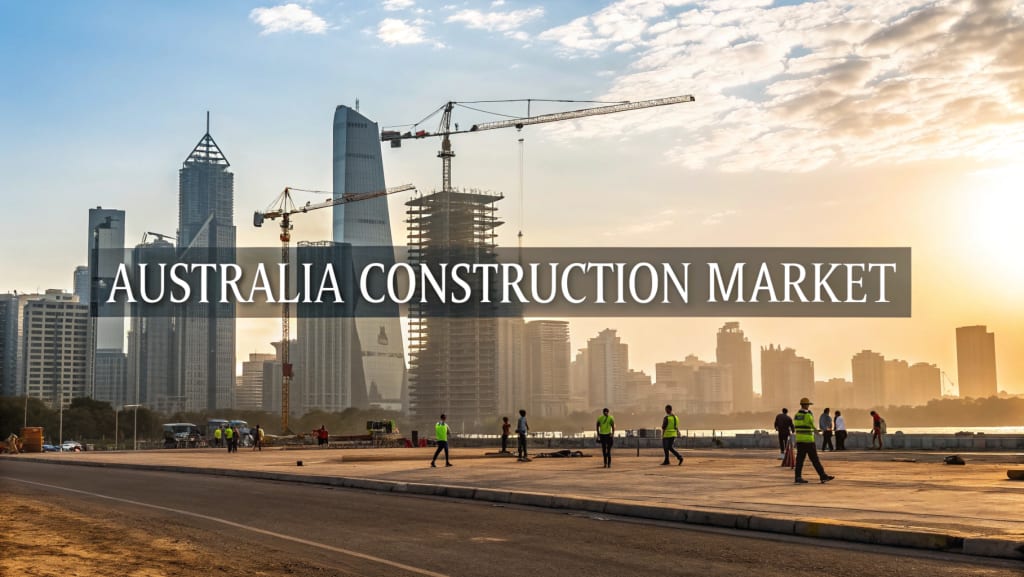
Australia Construction Market
The Australia construction market remains one of the most vital components of the nation’s economic framework, driven by public infrastructure programs, housing demand, commercial development and sustainability-oriented projects. The Australia construction market size was valued at USD 403.2 Billion in 2024. Looking forward, the market is expected to reach USD 588 Billion by 2033, exhibiting a CAGR of 4.30% from 2025-2033.
Construction activity spans residential, commercial, industrial and infrastructure segments — each supported by policy priorities, population growth and investment flows. As Australia continues to navigate post-pandemic economic recovery and long-term development planning, construction remains a bellwether of broader macroeconomic performance.
What’s Driving Market Growth
1. Infrastructure Investment & Government Spending
Federal and state governments have been consistently allocating capital toward large-scale infrastructure projects — including transport corridors, road networks, rail upgrades, ports, utilities expansion and community facilities. These projects are designed to support population mobility, supply-chain efficiency and regional connectivity.
Public spending on infrastructure not only creates construction demand directly, but also stimulates related private investment by improving economic productivity.
2. Residential Construction & Housing Demand
Australia’s housing market continues to generate strong demand for new builds, renovations and multi-family units. Rising urbanization, shifting demographic patterns and an ongoing need for affordable housing have fueled residential construction activity — spanning detached houses, townhouses, apartments and build-to-rent developments.
Government support for urban regeneration and affordable housing programs further reinforces residential construction pipelines.
3. Commercial & Industrial Development
Commercial real estate — including office buildings, retail facilities and mixed-use developments — is adapting to post-pandemic work and consumption behaviors. Flexible workspaces, redevelopments and revitalized urban precincts drive commercial construction.
Industrial construction remains robust, supported by the rise of e-commerce, logistics warehousing and advanced manufacturing facilities — all critical to Australia’s supply chain infrastructure.
4. Sustainable & Green Building Initiatives
Sustainability has become a core consideration in construction planning and execution. Green building standards, energy-efficient designs and low-carbon materials are increasingly integrated into project blueprints. As developers comply with environmental regulations and corporate sustainability goals, demand for sustainable construction solutions continues to grow.
What the Opportunities Are
The Australia construction market offers several compelling opportunities across sectors:
1. Urban Regeneration & Housing Supply Solutions
With persistent housing demand, opportunities exist in build-to-rent models, affordable housing frameworks and mixed-use developments tailored to modern lifestyles and multi-purpose living spaces.
2. Infrastructure & Transport Modernization
Large-scale transport projects — including road, rail, airports and ports — continue to attract investment and private-public partnerships (PPPs), creating long-term construction pipelines.
3. Industrial & Logistics Facilities
The growth of e-commerce and supply-chain modernization requires extensive industrial construction — from distribution centers to automated warehouses and logistics parks.
4. Sustainable & Green Construction
Green construction — involving energy-efficient buildings, carbon-neutral materials and smart systems — offers differentiation and cost-efficiency benefits. There is growing demand for certified green projects and sustainable design expertise.
5. Digital Construction & Innovation Tech
Adoption of digital technologies — such as Building Information Modelling (BIM), modular construction, 3D printing, automation and smart construction equipment — enhances productivity, reduces risk and improves project outcomes.
Recent News & Developments in Australia Construction Market
Jul 2025: The federal government announced additional funding for national infrastructure projects, including major highway upgrades and rail modernization programs — reinforcing construction demand beyond major metropolises.
Sep 2025: Reports indicated a surge in industrial construction commencements, driven by logistics and warehousing demand aligned with e-commerce growth and supply-chain restructuring.
Nov 2025: Industry data revealed that sustainable building certifications and green project bids increased by over 15% year-on-year, reflecting stronger incorporation of environmental performance standards in construction planning.
Why Should You Know About Australia Construction Market?
You should know about the Australia construction market because it is a cornerstone of national economic growth, infrastructure capability and corporate investment strategy. Construction activities reflect where future economic productivity will come from — whether through transport networks, housing supply, commercial revitalization or sustainable development.
For investors, the construction sector reveals where capital flows are heading across public-private collaboration, industrial real estate, and socially impactful housing solutions. Construction performance often correlates with jobs growth, materials demand and supply-chain vitality — making it a strategic indicator of economic resilience.
For developers and planners, understanding construction trends helps align project pipelines with policy support, demographic shifts and technological innovation — ensuring that investments match market needs and sustainability commitments.
About the Creator
Amyra Singh
Market research analyst who loves spotting patterns, digging into data, and turning insights into strategies that help brands grow and stay ahead of the curve.
Keep reading
More stories from Amyra Singh and writers in Trader and other communities.
Australia Real Estate Investment Market: Yield Dynamics, Institutional Capital & Emerging Sectors
Australia Real Estate Investment Market The Australia real estate investment market has proven to be a resilient and attractive destination for both domestic and international capital, supported by strong institutional frameworks, a stable economy and diverse property asset classes. The Australia real estate investment market size reached USD 229.1 Billion in 2024. The market is projected to reach USD 424.7 Billion by 2033, exhibiting a growth rate (CAGR) of 7.10% during 2025-2033.
By Amyra Singhabout a month ago in Trader
The Unseen Journey: Freight Forwarding in Japan’s Everyday Life
Most people in Japan go about their day without thinking twice about how things arrive where they do. A neatly packed bento appears at a convenience store early in the morning. Car parts reach a factory exactly when needed. Books printed overseas show up at a neighborhood shop without delay. These moments feel ordinary, but behind them is an intricate freight forwarding system working quietly in the background.
By Harley Morris4 days ago in Trader



Comments
There are no comments for this story
Be the first to respond and start the conversation.