
The Unseen Journey: Freight Forwarding in Japan’s Everyday Life
Exploring how discipline, trust, and careful planning shape the unseen logistics that keep Japan connected to the world

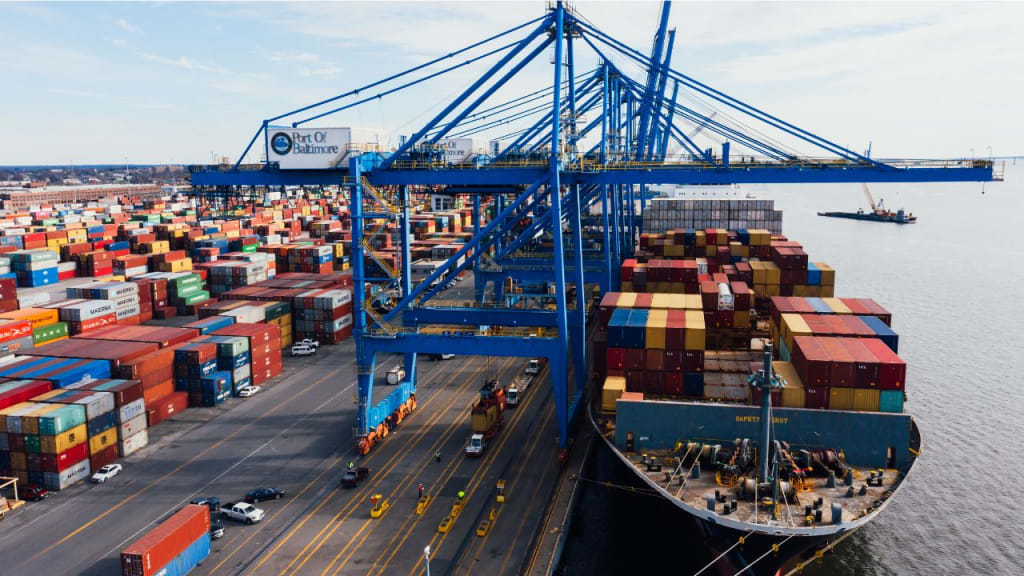
Most people in Japan go about their day without thinking twice about how things arrive where they do. A neatly packed bento appears at a convenience store early in the morning. Car parts reach a factory exactly when needed. Books printed overseas show up at a neighborhood shop without delay. These moments feel ordinary, but behind them is an intricate freight forwarding system working quietly in the background.
Freight forwarding in Japan does not announce itself. There are no dramatic displays of urgency, no visible disorder at ports or warehouses. Instead, there is silence, routine, and consistency. This quiet nature reflects a broader cultural mindset—one where efficiency is expected and reliability is assumed.
At major ports like Yokohama, Kobe, and Nagoya, cargo ships arrive with precision that feels almost rehearsed. Containers are unloaded methodically, each movement deliberate. There is little wasted motion. Workers know their roles, and machines move in harmony with human supervision. The goal is not speed alone, but accuracy. A shipment arriving early can be just as problematic as one arriving late.
Freight forwarders in Japan often act as coordinators rather than controllers. Their role is to ensure that every step—customs clearance, inland transportation, storage, and final delivery—flows without friction. This requires a deep understanding of regulations, timing, and geography. Japan’s strict customs procedures leave little room for error, which means documentation must be flawless. Even small inconsistencies are addressed immediately, not ignored.
What stands out most is the respect given to process. In many places, logistics adapts around shortcuts. In Japan, shortcuts are viewed as risks. The freight forwarding system relies on standardized methods that have been refined over decades. These systems may seem rigid from the outside, but they provide stability in a country where space is limited and demand is high.
Rail freight plays an important role alongside road transport. While trucks handle much of the final delivery, railways move large volumes efficiently between regions. Freight forwarders plan routes with careful attention to congestion, fuel usage, and timing. Night-time transport is often favored to reduce traffic impact, a choice that reflects social responsibility as much as operational efficiency.
Natural disasters are a reality in Japan, and freight forwarding has adapted accordingly. Earthquakes, typhoons, and heavy snowfall are not treated as rare emergencies but as expected challenges. Contingency plans are built into logistics strategies. Alternative ports, backup routes, and emergency storage facilities are identified long before they are needed. When disruptions occur, adjustments are made calmly, often without public awareness.
Another defining feature of freight forwarding in Japan is long-term thinking. Relationships between logistics companies, transport providers, and clients are often built over many years. Trust replaces constant negotiation. This allows freight forwarders to focus on problem-solving rather than conflict management. Communication is direct, respectful, and typically understated.
Technology supports these operations, but it does not dominate them. Automated systems track shipments, manage inventory, and predict delays, yet final decisions often rest with experienced professionals. Human judgment remains central, especially when conditions change unexpectedly. This balance between technology and experience gives Japanese freight forwarding its quiet resilience.
Sustainability is becoming an increasingly important consideration. While the industry does not loudly advertise green initiatives, gradual changes are taking place. Route optimization, fuel-efficient vehicles, and reduced packaging waste are being implemented step by step. The emphasis is on long-term improvement rather than immediate recognition.
What makes freight forwarding in Japan remarkable is not innovation alone, but consistency. Day after day, year after year, goods move with minimal disruption. The system does not rely on heroics or last-minute fixes. It depends on preparation, cooperation, and respect for detail.
In many ways, freight forwarding mirrors daily life in Japan. It is structured but flexible, quiet but effective. Most people will never see the full journey of the products they use, and perhaps that is the point. When logistics works perfectly, it becomes invisible. And in Japan, invisibility is often the highest measure of success.
About the Creator
Harley Morris
Storyteller & digital creator sharing tips on kitchen design, SEO, and small business growth. Writing with purpose, powered by Imperial Worktops. Follow for real ideas that work. listen my podcast on podbean.
Keep reading
More stories from Harley Morris and writers in Trader and other communities.
A Quiet Network That Keeps the Country Moving
Japan is often described through its visible wonders: bullet trains slicing through cities, vending machines glowing on silent streets, ports crowded with cranes standing like steel giants against the sea. Yet beneath these familiar images exists a quieter system—one that most people never notice, but depend on every day. Freight forwarding in Japan is not flashy or dramatic, but it is deeply woven into the rhythm of the country.
By Harley Morris8 days ago in Trader
Australia Stearic Acid Market: Industrial Demand, Sustainability Trends & Functional Applications
Australia Stearic Acid Market Overview The Australia stearic acid market is witnessing robust growth driven by rising demand from end-use industries such as personal care, cosmetics, detergents, rubber processing, pharmaceuticals and industrial chemicals. Stearic acid — a saturated fatty acid typically derived from vegetable fats (such as palm oil, coconut oil) or animal fats — serves as a versatile ingredient in lubricants, surfactants, emulsifiers, stabilisers, and texturising agents across a wide range of applications. The Australia stearic acid market size reached 0.19 Million Tons in 2024. Looking forward, IMARC Group expects the market to reach 0.30 Million Tons by 2033, exhibiting a growth rate (CAGR) of 5.20% during 2025-2033. This growth mirrors steady industrial activity, increasing consumer goods production, and a growing emphasis on functional and sustainable raw materials in manufacturing and formulations.
By Amyra Singh7 days ago in Trader



Comments
There are no comments for this story
Be the first to respond and start the conversation.