
Australia Agricultural Machinery Market: Grounded in Growth, Powered by Technology
Mechanisation, sustainability and precision tech shape a resilient agricultural equipment landscape

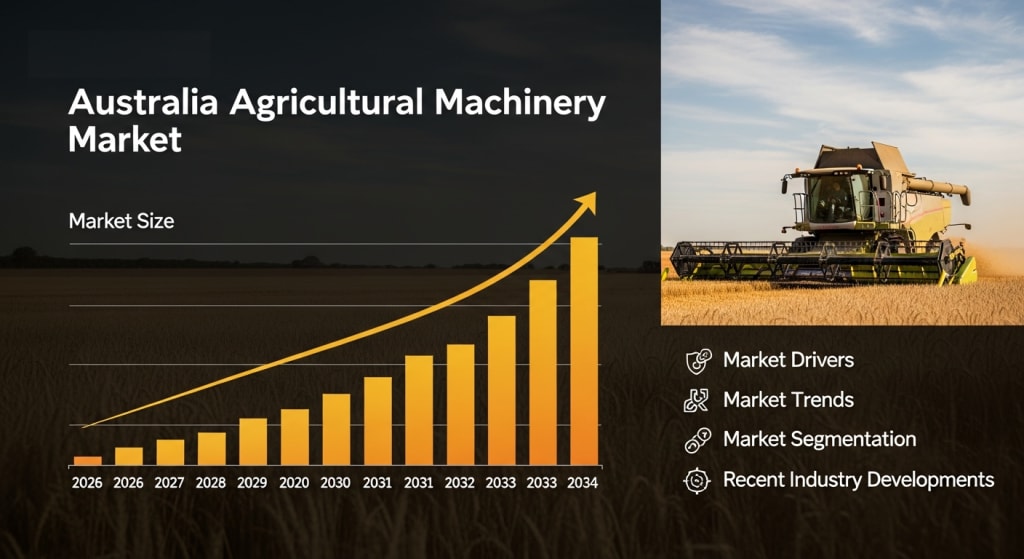
The Australia agricultural machinery market is on a steady expansion trajectory as farmers adopt advanced machinery to boost productivity and meet rising food demand. According to the latest research from IMARC Group, the market was valued at USD 4.0 billion in 2024 and is expected to reach USD 6.4 billion by 2033, growing at a CAGR of 5.18% from 2025 to 2033.
This growth reflects Australia’s continued emphasis on mechanisation, sustainability, precision farming and government incentives — all driving a gradual yet resilient modernisation of agricultural operations. As the agricultural sector contends with labour constraints, rising input costs and environmental priorities, machinery adoption is increasingly central to competitiveness and output growth.
Why the Market Is Growing So Rapidly
1. Rising Food Demand and Agricultural Productivity Needs
Australia’s agricultural sector faces strong pressure to increase output to satisfy both domestic consumption and export commitments. A growing population and rising global demand for agricultural goods — especially grains, livestock and horticultural products — compel farmers to adopt machinery that enhances efficiency, reduces labour dependency and sustains high production volumes.
2. Increased Farm Mechanisation
Mechanisation has become a core strategy in Australian agriculture, particularly on large farms where manual processes are no longer viable at scale. Modern machinery — from tractors to harvesters — reduces physical workload and enables more precise and timely farming activities. The average Australian farm’s size and diverse crop mix further reinforce the need for mechanised solutions that can handle broadacre operations efficiently.
3. Technological Advancements and Precision Agriculture
Technology integration is reshaping how machinery is used on Australian farms. GPS guidance systems, telematics, autonomous steering and variable-rate technologies are increasingly standard in new equipment, helping farmers optimise input usage, reduce waste and improve crop yields. These innovations are crucial in addressing variability in soil, weather and resource availability across regions.
4. Government Support and Financial Incentives
Australian government policies and monetary incentives play a significant role in supporting agricultural mechanisation. Subsidies, concessional loans and tax incentives help reduce the financial burden of upgrading to new equipment, making investment in modern machinery more feasible for a broad range of producers. State programs further tailor support to local crop systems and operational needs.
5. Shift Toward Sustainable Farming Practices
Environmental sustainability has become a priority in Australian agriculture, driven by concerns over soil health, water use and carbon emissions. Machinery that supports conservation tillage, efficient irrigation and precision input application enables farmers to adopt sustainable practices without compromising productivity. This alignment between ecological goals and performance efficiency contributes to machinery demand.
What the Opportunities Are
1. Precision Farming Technologies
Precision ag tools embedded in tractors, planters and harvesters — such as real-time soil mapping, automated guidance and yield sensors — represent a major growth opportunity. These technologies help optimise inputs and elevate farm profitability while supporting sustainable practices.
2. Autonomous and Robotic Solutions
Autonomous machines and robotics — for planting, cultivation and harvesting — can help address labour shortages, increase reliability and reduce labour costs. Early adoption in large farms and crop-specific applications will drive incremental value capture.
3. Irrigation and Water-Efficient Machinery
Australia’s variable climate makes efficient irrigation vital. A growing demand for precision irrigation systems and water-saving machinery — from centre pivots to smart drip systems — presents significant market potential, especially as water costs and regulatory focus on conservation increase.
4. After-Sales Services and Training
Comprehensive after-sales services — including maintenance contracts, operator training and remote diagnostics — add recurring revenue streams for manufacturers and improve machine uptime, enhancing value for farmers.
5. Retrofitting Older Equipment
Many Australian producers operate older fleets that lack modern efficiency features. Offering retrofit solutions — such as GPS kits or telematics add-ons — can expand market reach by enhancing existing machinery performance.
6. Leasing, Rental and Shared Ownership Models
High upfront costs remain a barrier for some small and mid-sized farms. Flexible acquisition models such as leasing, rental fleets, and cooperative ownership can lower entry barriers and accelerate mechanisation adoption.
7. Data Integration and Farm Management Platforms
Platforms that connect machinery data with crop management systems, weather forecasts and financial planning tools help growers make more informed decisions and drive operational efficiencies.
Recent News & Developments in Australia Agricultural Machinery Market
• March 2025: Government Support & Rural Mechanisation: The Australian federal government expanded the On-Farm Connectivity Program with an additional AUD 20 million funding package, aimed at improving digital infrastructure in rural areas and enabling farmers to integrate precision agriculture tools and connected machinery. This initiative is expected to reduce the digital divide in remote farming communities and accelerate adoption of advanced agricultural technologies.
• June 2025: Company Equipment Launch & Innovation: Major manufacturers, including John Deere and AGCO, unveiled enhanced versions of flagship tractors and harvesting equipment tailored to Australian conditions, featuring improved fuel efficiency, advanced telematics and automated steering systems optimized for broadacre cropping. Early trials indicated productivity improvements of up to 15% on large-scale grain operations.
• September 2025: Market Adoption & Mechanisation Trends: Industry data showed a double-digit year-on-year increase in sales of precision agriculture machinery in the first three quarters of 2025, with particularly strong gains in GPS-enabled tractors and variable-rate technology planters. Farmers cited improved resource use efficiency and lower long-term operating costs as key adoption factors.
Why Should You Know About the Australia Agricultural Machinery Market?
For investors, the Australia agricultural machinery market represents a reliable growth sector underpinned by structural shifts in food demand, mechanisation and technological innovation. With projected expansion from USD 4.0 billion in 2024 to USD 6.4 billion by 2033, the market offers steady returns aligned with productivity enhancements and efficiency improvements across agriculture.
For equipment manufacturers and ag-tech firms, the rising adoption of precision tools and connected machinery underscores opportunities to innovate, differentiate and expand into new service segments — particularly with autonomous and data-driven platforms.
For policy makers, enhancing access to modern agricultural machinery supports national goals around food security, rural employment, sustainability and export competitiveness. Thoughtful incentives, training initiatives and infrastructure investments will further strengthen the sector’s contribution to the Australian economy.
About the Creator
Amélie Belle
Hi, I’m Amélie Belle—27, New York writer, lover of quiet moments and honest words. I share poetry and reflections on love, healing, and life’s small miracles. If my writing makes you feel seen, I’m exactly where I’m meant to be.
Keep reading
More stories from Amélie Belle and writers in Trader and other communities.
Australia Smart Homes Market: From Connected Devices to Intelligent Living Spaces
The Australia smart homes market is undergoing rapid transformation as consumers increasingly adopt connected technologies that automate everyday household activities. According to IMARC Group’s latest analysis, the market reached USD 4.29 billion in 2025 and is projected to grow to USD 11.54 billion by 2034, exhibiting a strong CAGR of 11.64% during 2026–2034.
By Amélie Belleabout 3 hours ago in Trader
El Salvador’s Unconventional Bet
As global financial markets grow increasingly unstable, El Salvador is once again taking a path few nations are willing to follow. The country is not only expanding its gold reserves but also continuing its daily accumulation of Bitcoin. This dual approach reflects more than an investment decision. It signals a broader reassessment of how a small, dollar-dependent economy prepares for systemic risk in a changing global order.
By crypto genie4 days ago in Trader




Comments
There are no comments for this story
Be the first to respond and start the conversation.