
Asia Pacific Fast Food Market Size and Forecast 2025–2033
How Urban Lifestyles, Youthful Consumers, and Digital Ordering Are Reshaping the Region’s Quick-Service Food Industry

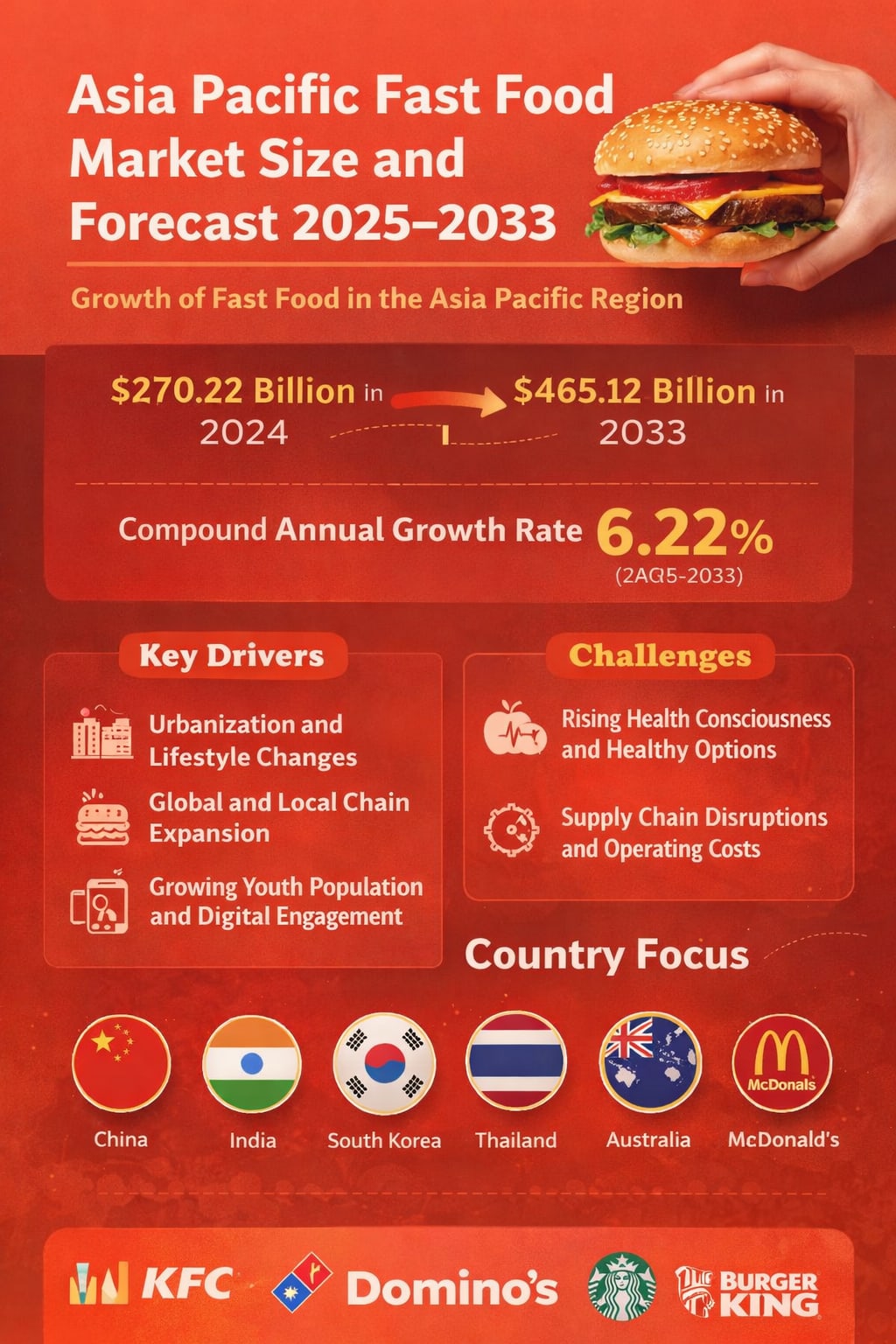
The Asia Pacific fast food market is entering a decisive growth phase, reflecting profound changes in consumer lifestyles, urban development, and food consumption patterns across the region. According to Renub Research, the market was valued at USD 270.22 billion in 2024 and is projected to reach USD 465.12 billion by 2033, expanding at a compound annual growth rate (CAGR) of 6.22% from 2025 to 2033. This impressive growth trajectory is being driven by rapid urbanization, a rising young population, increasing participation of women in the workforce, and the surging demand for convenient and affordable dining options.
From bustling megacities in China and India to fast-developing urban centers in Southeast Asia and Oceania, fast food has become deeply embedded in everyday life. The sector is no longer limited to burgers and fries; it now encompasses a broad spectrum of offerings including pizza and pasta, fried chicken, seafood, Asian and Latin American dishes, and localized fusion menus tailored to regional tastes. At the same time, the rise of digital food delivery platforms and mobile ordering apps has further accelerated market penetration, making fast food more accessible than ever before.
The Asia Pacific Fast Food Market & Forecast report covers the industry by Product (Pizza/Pasta, Burgers/Sandwiches, Chicken, Asian/Latin American, Seafood, Others), End User (Full-Service Restaurants, Quick-Service Restaurants, Catering, Others), as well as Country and Company Analysis for 2025–2033. Together, these segments paint a picture of a dynamic, highly competitive, and rapidly evolving market landscape.
Asia Pacific Fast Food Market Overview
Fast food refers to quick, convenient meals that are prepared and served rapidly, typically through restaurants, takeout counters, or delivery services. Common examples include burgers, pizzas, fried chicken, sandwiches, fries, and noodle-based dishes. In the Asia Pacific region, fast food has gained remarkable popularity due to changing consumer lifestyles, rising urbanization, and increasing exposure to Western and global cuisines.
Younger consumers, in particular, are drawn to fast food because it is affordable, accessible, and offers a wide variety of flavors. The growing number of working professionals and dual-income households has also increased reliance on quick meal options, especially in large cities where long commutes and demanding work schedules leave little time for home cooking. Countries such as China, India, Japan, and South Korea are witnessing rapid expansion of both international and domestic fast food chains, supported by aggressive outlet expansion and strong digital engagement strategies.
Another important growth catalyst is the widespread adoption of online food delivery platforms. Apps and digital marketplaces have transformed how consumers interact with fast food brands, enabling easy ordering, cashless payments, and home delivery within minutes. In parallel, many fast food companies are localizing their menus to better suit regional tastes, offering items such as rice bowls, spicy variations, vegetarian options, and seafood-based meals. As a result, the Asia Pacific fast food market continues to grow as consumers increasingly prioritize speed, convenience, and flavor when dining out or ordering in.
Key Drivers of the Asia Pacific Fast Food Market
Acceleration of Urbanization and Lifestyle Transition
Urbanization is one of the most powerful forces shaping the fast food industry in Asia Pacific. As cities expand and more people migrate to urban centers, daily routines are becoming increasingly time-constrained. Longer working hours, extended commuting times, and busier lifestyles have reduced the time available for traditional meal preparation. In response, consumers are turning to fast food as a practical and efficient solution.
Urban consumers are increasingly prioritizing convenience over time-intensive cooking, and dual-income households are further reinforcing this trend. Fast food restaurants—both global giants and local chains—are meeting this demand by offering affordable, ready-to-eat meals across a wide range of formats, from dine-in and takeout to delivery and drive-through services. With Asia already home to more than half of the world’s urban population and urbanization expected to continue rising sharply in countries such as India, China, and Indonesia, the long-term outlook for the fast food sector remains highly favorable.
International and Domestic Chain Expansion
The Asia Pacific region has become a major expansion frontier for global fast food brands such as McDonald’s, KFC, Domino’s, Subway, and Burger King. These companies are rapidly increasing their footprint not only in tier-1 cities but also in tier-2 and tier-3 cities, where rising incomes and growing middle-class populations are creating new demand.
At the same time, domestic and regional brands are innovating aggressively, offering menu items that better reflect local tastes and dietary preferences. Franchising models, strategic partnerships, and increasingly efficient supply chains have made it easier for both international and local players to scale operations quickly. The expansion of digital ordering platforms has further increased visibility for smaller brands, allowing them to reach customers beyond their immediate physical locations. Together, these trends are intensifying competition while also broadening consumer choice across the region.
Increasing Youth Population and Digital Participation
Asia Pacific is home to one of the world’s largest and most influential youth populations, particularly in countries such as India, Indonesia, and the Philippines. This digitally connected generation is highly responsive to global food trends, social media marketing, and mobile-first experiences. Fast food brands are actively leveraging this behavior through app-based promotions, influencer partnerships, limited-time offers, and value-focused combo meals.
The ease of online ordering, combined with targeted digital advertising and social media engagement, has significantly boosted trial and repeat purchases among Gen Z and millennials. As younger consumers continue to shape modern eating habits and embrace international flavors, fast food is strengthening its cultural and commercial presence across the Asia Pacific region.
Challenges Facing the Fast Food Industry
Growing Health Consciousness and Demand for Healthier Alternatives
Rising awareness of obesity, diabetes, and cardiovascular diseases is prompting many consumers in Asia Pacific to reassess their eating habits. Governments and health organizations are increasingly promoting nutritional awareness and encouraging reduced consumption of high-fat, high-sugar foods, placing fast food brands under greater scrutiny.
This shift is pushing companies to reformulate menus, introduce smaller portions, and add healthier options such as salads, grilled items, and lower-calorie meals. However, balancing taste, affordability, and nutritional value remains a significant challenge. While health-focused offerings can attract new customer segments, they must still meet consumer expectations for flavor and value in order to succeed at scale.
Supply Chain Disruptions and Rising Operating Costs
The fast food industry relies heavily on stable supply chains for key inputs such as poultry, dairy, wheat, and seafood. Geopolitical tensions, climate-related disruptions, and fluctuating fuel prices are increasingly affecting the availability and cost of these raw materials. In addition, inflationary pressures in several Asia Pacific economies have driven up labor, energy, and logistics costs.
These challenges are squeezing profit margins, particularly for smaller and regional chains with limited pricing power. As a result, many companies are investing in supply chain resilience, local sourcing strategies, and operational efficiency improvements. While these measures can strengthen long-term competitiveness, they also require substantial upfront investment and careful execution.
Segment Insights
Asia Pacific Pizza and Pasta Fast Food Market
The pizza and pasta segment is experiencing strong growth, supported by increasing urbanization, rising disposable incomes, and continued exposure to Western dining habits. International brands such as Domino’s, Pizza Hut, and Papa John’s have expanded aggressively across markets including India, China, and Thailand. Localized toppings and flavor adaptations have further boosted acceptance among diverse consumer groups.
Pasta dishes, especially creamy and spicy variants, are also gaining popularity in quick-service formats. The widespread availability of online delivery and value-focused meal deals has made pizza and pasta both convenient and affordable, reinforcing their position as staple offerings in the region’s fast food landscape.
Asia Pacific Seafood Fast Food Market
Seafood-based fast food is growing steadily, driven by strong coastal food traditions, abundant regional seafood supplies, and rising consumer interest in healthier protein sources. Markets such as Japan, South Korea, and Thailand are leading this trend, with items like fried shrimp, calamari, and fish burgers becoming increasingly common in quick-service menus.
Both global and local brands are innovating with region-specific flavors, including tempura-style coatings, teriyaki sauces, and spicy marinades. Sustainability and traceability are also becoming important differentiators, helping brands build trust and appeal among increasingly conscious consumers.
Asia Pacific Chicken Fast Food Market
Chicken remains the dominant category in the Asia Pacific fast food market, driven by its affordability, broad cultural acceptance, and versatility. Fried chicken chains such as KFC and Jollibee, along with numerous local players, enjoy strong popularity across urban and suburban areas. Spicy variants, grilled wraps, and rice-based chicken meals are particularly well-suited to regional taste preferences.
Aggressive marketing campaigns, combo meal promotions, and efficient delivery services continue to support high demand. As disposable incomes rise and Western-style eating habits become more widespread, chicken is expected to remain a cornerstone of the region’s fast food industry.
End-User Insights
Full-Service Restaurants
Full-service fast food restaurants are gaining traction among consumers who want a balance between convenience and a comfortable dine-in experience. These outlets typically offer broader menus, table service, and a more relaxed atmosphere compared to pure quick-service models. Brands such as Pizza Hut and several family-oriented Asian chains are expanding their presence in shopping malls and urban centers.
In markets like Japan, South Korea, and China, dining out is often viewed as a social activity, making full-service formats particularly attractive for families and groups. Rising middle-class incomes and continued urbanization are further supporting the growth of this segment.
Quick-Service Restaurants (QSRs)
Quick-service restaurants form the backbone of the Asia Pacific fast food market. Their success is built on speed, affordability, and convenience—qualities that resonate strongly with busy urban consumers. Global brands such as McDonald’s and Burger King, along with regional players like Lotteria, are expanding rapidly across major cities in China, India, Indonesia, and beyond.
QSRs are also benefiting from digital transformation, including mobile ordering, partnerships with food delivery platforms such as Grab and Zomato, and the rise of cloud kitchens. These innovations are helping brands extend their reach, optimize operations, and meet evolving consumer expectations.
Country-Wise Market Highlights
China
China represents one of the largest and fastest-growing fast food markets in the region. Global brands such as McDonald’s, KFC, and Starbucks coexist with a vibrant ecosystem of local chains offering noodles, dumplings, and rice-based dishes. The rapid adoption of food delivery services has further accelerated growth, making convenience a defining feature of the market. Domestic brands are also gaining ground by emphasizing localized flavors and cultural relevance.
India
India’s fast food market is expanding quickly, driven by urbanization, changing lifestyles, and strong demand from young consumers. International chains such as McDonald’s, Domino’s, and KFC are thriving alongside local brands offering items like samosas, vada pav, and pav bhaji. Digital ordering and delivery platforms have transformed consumption patterns, while growing interest in healthier and vegetarian options reflects India’s diverse culinary and cultural landscape.
South Korea
South Korea’s fast food market is shaped by a tech-savvy, trend-conscious population. International brands compete with strong domestic players such as Lotteria and BBQ Chicken. Delivery apps play a central role in consumer behavior, and there is rising interest in healthier and plant-based alternatives, encouraging continuous product innovation.
Thailand
Thailand’s fast food industry is benefiting from urban growth, busy lifestyles, and strong tourism activity. International chains are well established, while local quick-service offerings such as noodle and rice dishes remain popular. The rapid growth of food delivery platforms and increasing demand for healthier and more sustainable menu options are key trends shaping the market.
Market Segmentation Snapshot
By Product:
Pizza/Pasta, Burgers/Sandwiches, Chicken, Asian/Latin American, Seafood, Others
By End User:
Full-Service Restaurants, Quick-Service Restaurants, Catering, Others
By Country:
China, Japan, India, South Korea, Thailand, Malaysia, Indonesia, Australia, New Zealand, Rest of Asia Pacific
Company Analysis Covers:
Overviews, Key Persons, Recent Developments, Revenue
Key Players Include:
McDonald’s Corporation, Yum! Brands, Inc., Domino’s Pizza Inc., Wendy’s International Inc., Jack in the Box Inc., Starbucks Corp., Papa John’s International Inc., Kentucky Fried Chicken (KFC), Corteva Agriscience
Final Thoughts
The Asia Pacific fast food market is on a strong upward trajectory, supported by urbanization, demographic shifts, and rapid digital adoption. With the market expected to grow from USD 270.22 billion in 2024 to USD 465.12 billion by 2033, the industry offers significant opportunities for both global giants and regional players. However, success will increasingly depend on how well companies balance convenience with health considerations, manage supply chain risks, and adapt to diverse local tastes. In a region defined by scale, diversity, and rapid change, the brands that combine operational efficiency with cultural relevance will be best positioned to lead the next chapter of growth.
About the Creator
Spain Hotel Market Size and Forecast 2025–2033: Tourism Boom, Infrastructure Push, and the Future of Hospitality
Spain Hotel Market Overview The Spain Hotel Market is expected to reach US$ 34.54 billion by 2033, up from US$ 25.90 billion in 2024, growing at a CAGR of 3.25% from 2025 to 2033. This steady and resilient growth reflects Spain’s enduring appeal as one of the world’s most visited travel destinations, supported by strong cultural heritage, diverse geography, favorable climate, and continuous investments in tourism infrastructure.
By Sakshi Sharma3 days ago in Trader
The Pride Flag and the Diversion
For nearly a decade, the LGBTQIA Pride Flag rippled in the wind at Christopher Park, a kaleidoscope of color staked into the soil of America’s first national monument to LGBTQIA+ liberation. That flag came down this week. Federal officials, citing new guidance from the Trump Administration, silently lowered the rainbow flag from its pole across the street from the Stonewall Inn. The birthplace of the modern gay rights movement now flies only the United States flag.
By Tim Carmichael4 days ago in Pride


Comments
There are no comments for this story
Be the first to respond and start the conversation.