
Antacids Market Trends & Summary: How Everyday Digestive Relief Is Becoming a Big Business
From lifestyle disorders to booming OTC demand, the global antacids market is steadily expanding as consumers seek fast, convenient solutions for acid-related discomfort.

Introduction: Small Tablets, Big Market Impact
In an age defined by fast food, stressful schedules, and increasingly sedentary lifestyles, digestive discomfort has become an almost universal complaint. Heartburn, acid reflux, indigestion, and related gastric issues are no longer occasional inconveniences—they are routine health concerns for millions of people worldwide. This everyday reality has quietly but steadily turned antacids into one of the most consistently demanded categories in over-the-counter (OTC) healthcare.
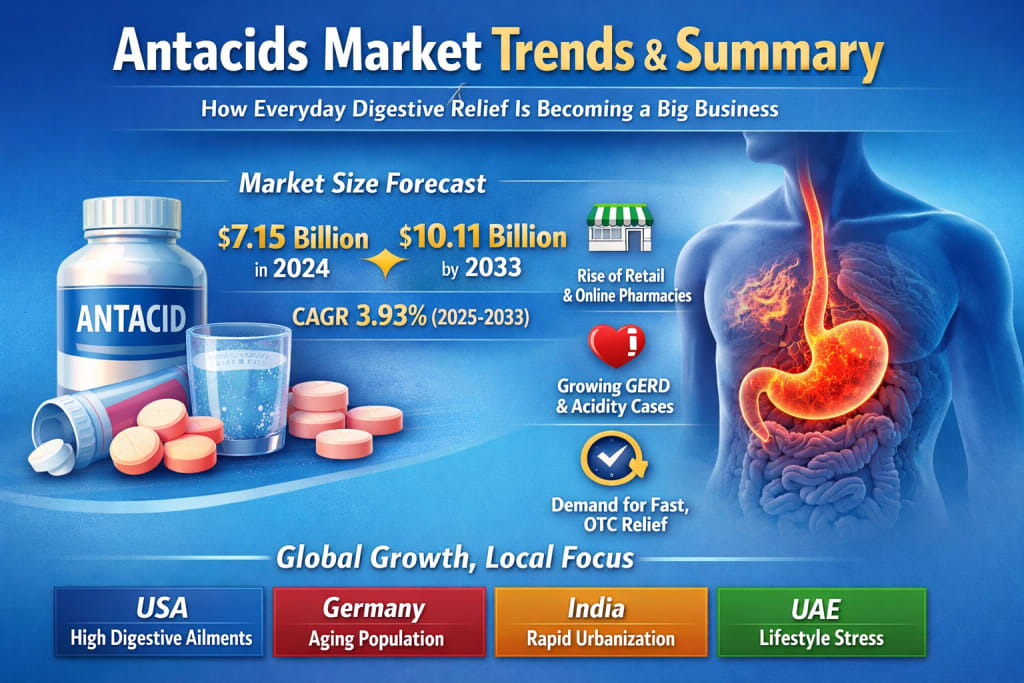
According to Renub Research, the global Antacids Market is expected to reach US$ 10.11 billion by 2033, up from US$ 7.15 billion in 2024, growing at a compound annual growth rate (CAGR) of 3.93% from 2025 to 2033. While this growth may appear moderate compared to some high-tech pharmaceutical segments, it reflects something far more powerful: stable, recurring demand driven by lifestyle trends, demographic shifts, and the rising culture of self-medication.
Antacids occupy a unique space in modern healthcare. They are affordable, widely accessible, and trusted by consumers for quick relief. Available in chewable tablets, liquids, powders, and other convenient formats, these products have become a staple in homes, workplaces, and travel kits. As awareness of digestive health grows and retail and online pharmacies continue to expand their reach, the antacids market is quietly cementing its role as a cornerstone of everyday wellness.
Global Antacids Industry Overview
Antacids are medications designed to neutralize excess stomach acid, providing relief from symptoms such as heartburn, acid reflux, sour stomach, and indigestion. By increasing the pH level of stomach contents, they reduce acidity and ease the burning or discomfort that accompanies acid-related conditions.
One of the biggest advantages of antacids is their immediate action. Unlike some prescription therapies that take time to show results, antacids work quickly, making them a preferred choice for people seeking fast, on-the-spot relief. Their over-the-counter availability further strengthens their appeal, allowing consumers to manage mild digestive issues without visiting a doctor.
Today, antacids are available in a wide range of formulations—from chewable tablets and flavored liquids to powders and effervescent solutions. This variety not only improves patient compliance but also allows brands to differentiate themselves in a competitive market by focusing on taste, convenience, and speed of action.
From a public health perspective, the growing burden of acid-related disorders is a major factor supporting long-term demand. A 2022 study by the National Institutes of Health (NIH) reported that 783.95 million people worldwide were diagnosed with GERD in 2019. Between 1990 and 2019, the years lived with disability (YLD) related to GERD increased by over 77%, while both prevalence and incidence also rose sharply. These numbers underline a simple truth: acid-related digestive disorders are becoming more common, not less.
At the same time, the rise of e-commerce and online pharmacies has transformed how consumers purchase healthcare products. The convenience of ordering antacids online, often bundled with other wellness items, is accelerating market penetration—especially in urban and semi-urban areas.
Key Growth Drivers in the Antacids Market
1. Aging Population and Shifting Demographics
One of the most powerful long-term drivers of the antacids market is the global aging population. Older adults are more prone to digestive issues, including acid reflux and indigestion, due to physiological changes, medication use, and lifestyle factors. As a result, they are more likely to rely on antacids for routine symptom management.
According to the World Health Organization (WHO), by 2030 and 2050, one in six people globally will be aged 60 or older. The number of people over 60 is expected to rise from 1.4 billion in 2020 to 2.1 billion in the coming decades. This demographic shift alone creates a strong and sustained demand base for antacid products worldwide.
2. Rising Incidence of Acidity and Heartburn
Modern diets—often high in spicy, fatty, and processed foods—combined with irregular eating habits have significantly increased the prevalence of heartburn, acidity, and indigestion. Obesity, lack of physical activity, poor sleep patterns, and high stress levels further worsen digestive health.
Conditions such as gastroesophageal reflux disease (GERD) are becoming increasingly common, pushing more people toward regular use of antacids. Because these products are easily available without a prescription, they are frequently used as a first line of self-treatment, directly boosting market demand.
3. Increasing Stress and Anxiety Levels
Stress and anxiety are no longer niche problems—they are global health concerns. Chronic stress can stimulate excess stomach acid production, leading to symptoms like acid reflux, heartburn, and stomach discomfort. As more people experience stress-related digestive issues, reliance on quick-relief solutions such as antacids continues to grow.
The growing awareness of digestive health, combined with the convenience of OTC medications, has made antacids a go-to option for millions of consumers seeking fast relief without medical appointments or prescriptions.
4. Expansion of Retail and Online Pharmacies
The rapid growth of retail pharmacy chains and online healthcare platforms has significantly improved access to antacids. Consumers can now purchase these products not only from local pharmacies and supermarkets but also through e-commerce platforms that offer home delivery and subscription models. This wider availability is playing a crucial role in sustaining and expanding global demand.
Challenges Facing the Antacids Market
1. Side Effects and Overuse Concerns
Despite their benefits, antacids are not without drawbacks. Overuse or prolonged use can lead to side effects such as constipation, diarrhea, electrolyte imbalances, and disruptions in normal stomach acidity. For example, magnesium-based antacids may cause diarrhea, while calcium or aluminum-based products can lead to constipation or, in rare cases, conditions like milk-alkali syndrome or hypophosphatemia.
There is also concern that excessive reliance on antacids may mask serious underlying conditions such as ulcers or chronic GERD, delaying proper diagnosis and treatment. These concerns can make some consumers more cautious and may limit long-term usage in certain segments.
2. Competition from Alternative and Natural Remedies
Another growing challenge comes from natural and lifestyle-based alternatives. Herbal remedies such as ginger, chamomile, and peppermint, along with dietary changes and stress management, are increasingly popular among consumers who prefer “natural” solutions.
As awareness of holistic health approaches grows, some consumers are shifting away from traditional pharmaceutical antacids, creating competitive pressure on established brands and potentially limiting market expansion in certain regions.
Regional Market Insights
United States Antacids Market
The United States represents a mature yet steadily growing antacids market. High prevalence of acid reflux, heartburn, and indigestion—driven by lifestyle factors and dietary habits—continues to support strong demand. The wide availability of OTC antacids in supermarkets, pharmacies, and online platforms makes these products easily accessible to consumers.
Innovation in formulations, including chewable, flavored, and fast-acting options, further strengthens market growth. However, concerns about overuse and side effects remain a moderating factor in long-term consumption trends.
Germany Antacids Market
Germany’s antacids market is supported by a strong healthcare system, high consumer awareness, and an aging population prone to digestive issues. The trend toward self-medication and the availability of advanced formulations such as effervescent powders and chewable tablets are helping drive demand.
While regulatory scrutiny and concerns about misuse exist, overall consumer focus on digestive wellness continues to sustain the market.
India Antacids Market
India is one of the fastest-growing markets for antacids, fueled by changing diets, rising stress levels, and increasing urbanization. A large population base, improving healthcare access, and growing awareness of digestive health are key contributors to market expansion.
The availability of affordable antacid products across pharmacies and retail stores, combined with the rise of e-commerce, is making these products accessible to a broader segment of the population. Despite challenges such as limited awareness in some rural areas, long-term growth prospects remain strong.
United Arab Emirates Antacids Market
In the UAE, demand for antacids is rising due to sedentary lifestyles, dietary habits, and high stress levels common in urban environments. High purchasing power and a well-developed healthcare infrastructure support the availability of a wide range of premium and standard antacid products.
Urban consumers, in particular, show a strong preference for convenient, fast-acting digestive solutions, keeping market momentum positive.
Market Segmentation Overview
By Drug Class:
Proton Pump Inhibitors
H2 Antagonists
Acid Neutralizers
Pro-Motility Agents
By Formulation Type:
Tablets
Liquid
Powder
Others
By Distribution Channel:
Retail Pharmacy
Hospital Pharmacy
Online Pharmacy
By Region and Country:
North America: United States, Canada
Europe: France, Germany, Italy, Spain, United Kingdom, Belgium, Netherlands, Turkey
Asia Pacific: China, Japan, India, Australia, South Korea, Thailand, Malaysia, Indonesia, New Zealand
Latin America: Brazil, Mexico, Argentina
Middle East & Africa: South Africa, Saudi Arabia, United Arab Emirates
Competitive Landscape and Company Insights
The global antacids market is highly competitive, with both multinational pharmaceutical giants and strong regional players. Key companies operating in this space include:
Abbott Laboratories
AstraZeneca plc
Bayer AG
Boehringer Ingelheim International GmbH
Dr. Reddy’s Laboratories Ltd.
GlaxoSmithKline plc
Johnson & Johnson
Pfizer Inc.
Procter & Gamble Company
Sanofi S.A.
Sun Pharmaceutical Industries Ltd.
Takeda Pharmaceutical Company Limited
These companies compete on factors such as brand recognition, product efficacy, formulation innovation, pricing, and distribution reach. Many are also investing in consumer education, digital marketing, and improved formulations to strengthen their positions in an increasingly informed and competitive marketplace.
Final Thoughts: A Steady Market with Everyday Relevance
The global antacids market may not be the flashiest segment of the pharmaceutical industry, but its importance is undeniable. With the market projected to grow from US$ 7.15 billion in 2024 to US$ 10.11 billion by 2033 at a CAGR of 3.93%, antacids will remain a reliable pillar of the OTC healthcare space.
Driven by aging populations, lifestyle-related digestive disorders, rising stress levels, and expanding retail and online pharmacy networks, demand for antacids is set to remain strong and consistent. At the same time, challenges such as side effect concerns and competition from natural remedies will push manufacturers to innovate and focus more on safety, convenience, and consumer trust.
About the Creator
Keep reading
More stories from shibansh kumar and writers in Trader and other communities.
Orthopedic Prosthetics Market Trends & Summary: Innovation, Aging Populations, and the Future of Mobility
Introduction The global orthopedic prosthetics market is entering a new era of transformation, driven by rapid technological progress, shifting demographics, and rising expectations for quality of life. According to Renub Research, the Orthopedic Prosthetics Market is expected to reach US$ 3.79 billion by 2033, up from US$ 2.27 billion in 2024, growing at a CAGR of 5.86% from 2025 to 2033. This steady growth reflects not only the increasing medical need for prosthetic solutions but also the expanding acceptance of these devices as life-enhancing technologies rather than mere medical aids.
By shibansh kumar2 days ago in Trader
Philippines Bakery Market 2026: Rising to USD 5.4 Billion by 2034 on Changing Consumer Lifestyles
Philippines Bakery Market Overview The Philippines bakery market size has emerged as a steadily expanding segment of the nation’s broader food and retail economy, driven by evolving consumer preferences and shifts in lifestyle and spending patterns. According to the latest IMARC Group report, the market was valued at USD 3.7 billion in 2025 and is projected to grow to USD 5.4 billion by 2034, exhibiting a compound annual growth rate (CAGR) of 4.42% over the 2026–2034 forecast period.
By Manisha Dixita day ago in Trader
Germany Flight Disruptions Expose Growing Strain on European Air Travel
Germany flight disruptions have once again disrupted travel plans for thousands of passengers, underscoring the growing strain on Europe’s aviation network. A large number of flights were delayed or canceled in a single day, creating chaos across airports and raising concerns about the system’s ability to cope with rising travel demand. The situation reflects deeper structural challenges that continue to affect air travel across the region.
By Hammad Nawazabout 19 hours ago in Trader
The Saddest Thing - The Billionaires Who Rule America Aren't Even Enjoying Themselves
This single post says more about our ruling class than a thousand policy papers. The saddest thing about today's system is that the men robbing the rest of us - sabotaging our economic prospects, our pensions, our access to affordable healthcare - are not even happy.
By Scott Christenson🌴7 days ago in The Swamp


Comments
There are no comments for this story
Be the first to respond and start the conversation.