
AI in Finance: How Artificial Intelligence is Revolutionizing Investment Strategies and Trading
Discover how Artificial Intelligence in finance is reshaping investment strategies and trading. Learn how AI-driven tools, algorithms, and machine learning are changing the future of investing.

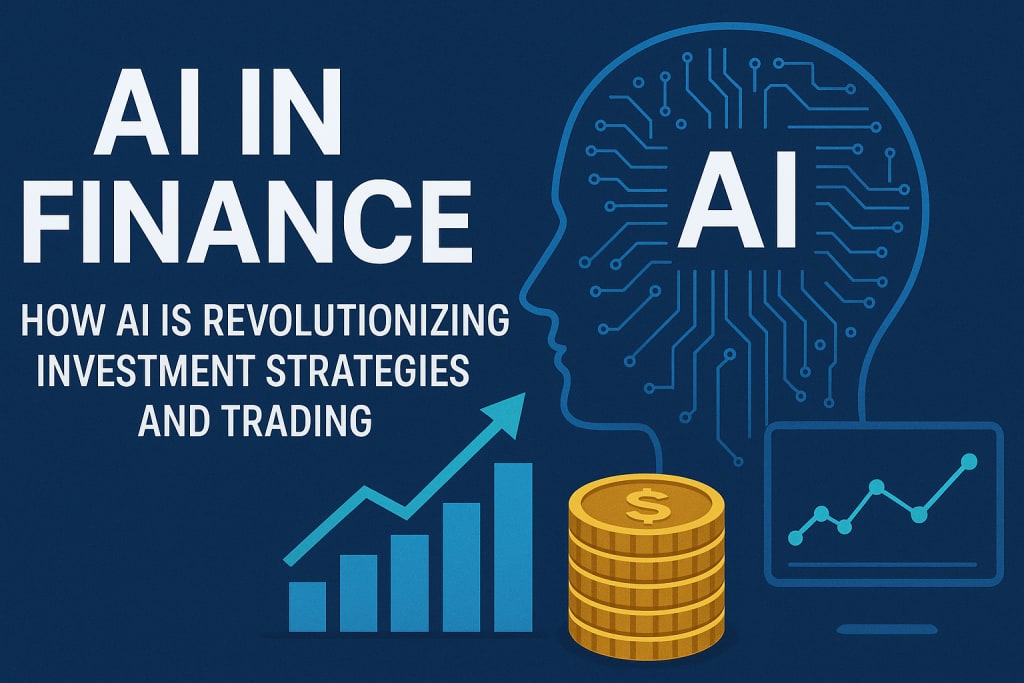
In a world where technology seems to advance faster than we can keep up, one thing is clear: Artificial Intelligence (AI) is changing the way we think about investing. For decades, traditional finance relied on human instincts, experience, and analysis to make critical investment decisions. Today, AI is taking that process to new heights, offering a more data-driven, objective approach.
But how exactly is AI reshaping the finance landscape? From faster decision-making to smarter algorithms, AI’s influence on investment strategies and trading is becoming undeniable. In this article, we’ll explore how AI is impacting the financial world and why investors should start paying closer attention to its potential.
The Rise of Artificial Intelligence in Finance:
What is AI in Finance?
Artificial Intelligence in finance refers to the use of machine learning algorithms, data analytics, and other AI-driven technologies to analyze vast amounts of data, make decisions, and optimize investment strategies. Unlike traditional finance, where decisions are often made by human analysts using historical data and experience, AI can process large datasets quickly, recognize patterns, and even predict market trends.
AI tools are now being employed for a variety of purposes, including algorithmic trading, risk management, fraud detection, and portfolio management. The ability to analyze complex data at lightning speed is what makes AI so appealing to financial institutions.
Why is AI Gaining Traction in Finance?
The financial world is built on the idea of prediction: predicting market trends, stock movements, or even economic shifts. Historically, investors used their intuition, analysis, and past trends to guide their decisions. However, in today’s fast-moving world, these methods are becoming less reliable.
AI steps in by offering a way to process and analyze big data in real-time. This allows financial experts and traders to make faster, more accurate decisions. With AI, investors can detect patterns and anomalies in data that would otherwise go unnoticed. This ability to predict market movements with greater precision is one of the main reasons AI has gained popularity in the finance sector.
AI and Investment Strategies:
Smarter Portfolio Management:
AI is revolutionizing how investment portfolios are managed. Instead of relying on a financial advisor or portfolio manager to make decisions, AI systems can help automate much of the decision-making process.
For example: AI-powered robo-advisors are now used by thousands of investors. These platforms analyze an individual's financial situation, risk tolerance, and goals, and then automatically build a portfolio that aligns with those factors. What’s more, AI algorithms can continuously monitor the portfolio and make adjustments when necessary even in response to the most minor market changes.
Personalization of Investment Plans:
AI allows for more personalized investment strategies. Traditionally, financial advisors would offer generic advice based on broad categories, often without taking a deep dive into an individual’s unique needs or circumstances. But AI can dive much deeper. By using machine learning, AI can tailor recommendations to the specific financial situation of each investor.
This level of personalization can result in portfolios that are more suited to a person’s unique risk tolerance and financial goals. It’s a more individualized approach to investment, which is exactly what modern investors are looking for.
Risk Management Made Easier:
Managing risk is an essential part of investing. AI can make this process easier by predicting potential risks based on historical data and real-time analysis. AI algorithms can identify trends and forecast how certain assets or investment strategies might perform under different market conditions.
Take, for example, the COVID-19 pandemic. AI systems were used by many investors to predict how global markets would react to the pandemic's impact on the global economy. These systems were able to make more informed predictions, helping investors mitigate potential losses during uncertain times.
AI in Trading:
Algorithmic Trading: The Power of Speed
When it comes to trading, speed is everything. The quicker a trader can make decisions, the better. This is where algorithmic trading powered by AI shines.
Algorithmic trading involves using pre-programmed algorithms to execute trades at high speeds, often making decisions in fractions of a second. AI can take this process a step further by using machine learning to adjust and optimize trading strategies based on real-time market data. This allows traders to react to market changes almost instantaneously something humans simply can’t do.
High-Frequency Trading (HFT):
Another major application of AI in trading is in high-frequency trading (HFT). HFT uses powerful algorithms to execute a large number of orders at incredibly fast speeds. These algorithms can analyze multiple market signals and execute trades in real-time, capitalizing on small market inefficiencies that would be impossible for humans to identify.
In HFT, AI can automatically decide when to buy or sell an asset based on the market data it’s receiving. This is done much faster than human traders can process the same data. The ability of AI to scan and analyze vast amounts of market data has revolutionized trading strategies, especially in fast-moving markets.
AI in Forex Trading:
AI is also making waves in the foreign exchange (forex) market. Forex trading involves the exchange of currencies, and it’s a highly volatile market. AI-driven systems help traders by predicting currency fluctuations based on patterns and data points that might go unnoticed by humans.
AI in forex trading can spot subtle market trends and even predict short-term currency price movements with remarkable accuracy. The system continuously monitors real-time data, adjusting trading strategies as needed, making it a valuable tool for forex traders looking to maximize profits while minimizing risk.
The Role of Machine Learning in Finance:
How Machine Learning is Improving Predictions:
Machine learning, a subset of AI, is particularly effective in financial prediction. In traditional finance, predicting stock prices or economic events was often a guessing game, relying heavily on historical data and human expertise. However, machine learning is designed to learn from data, improving its predictions over time.
For example, machine learning models are used to predict stock price movements by analyzing vast amounts of historical data, news articles, and market sentiment. The system continuously updates its models and refines its predictions based on the latest available data. This provides traders and investors with predictions that are more accurate and reliable than ever before.
Sentiment Analysis and Market Forecasting:
AI-powered sentiment analysis is another powerful tool in financial markets. By using machine learning, AI systems can analyze news, social media, and other online sources to gauge public sentiment about a particular stock or asset. This sentiment data is then used to forecast price movements and predict how the market will respond to news events.
For example, if a major company releases disappointing earnings results, AI systems can instantly scan news articles, social media, and other relevant sources to measure public sentiment and predict how the stock might react. This information can give traders an edge in making timely and informed decisions.
Challenges and Ethical Considerations:
Data Privacy Concerns:
As AI systems become more integrated into finance, concerns over data privacy continue to grow. AI relies on vast amounts of data to make predictions, and this data often includes sensitive information. Investors need to ensure that the platforms and systems they use are secure and that their personal data is protected.
Financial institutions and regulators are working to establish guidelines to safeguard data privacy. However, as the use of AI increases, so too does the need for robust data protection laws and technologies.
Bias in AI Models:
Another issue is the potential for bias in AI models. AI systems are only as good as the data they are trained on. If that data contains biases, those biases can be reflected in the predictions and recommendations the AI provides. For instance, if an AI model is trained on data that includes historical biases or inequalities, it may inadvertently perpetuate those same biases in its investment strategies.
To address this issue, AI developers need to be mindful of the data they use and ensure that it is representative and free from biases. Ethical considerations must be a part of AI’s development to prevent unintended harm.
Conclusion: The Future of AI in Finance
Artificial Intelligence in finance is more than just a trend it’s the future of investing. From smarter portfolio management to faster, more accurate trading, AI is helping investors make better, more informed decisions. However, like any technology, it comes with its challenges, including data privacy concerns and potential bias.
As AI continues to evolve, it will likely play an even bigger role in the financial sector. Whether you’re a retail investor looking to make better investment decisions or a professional trader aiming to gain an edge, AI has the potential to reshape the way we invest, trade, and manage financial risk.
The question is no longer whether AI will change finance it’s how quickly it will happen, and whether investors are ready to embrace the opportunities it brings. The future of investing is here, and it’s powered by AI.
About the Creator
Zeenat Chauhan
I’m Zeenat Chauhan, a passionate writer who believes in the power of words to inform, inspire, and connect. I love sharing daily informational stories that open doors to new ideas, perspectives, and knowledge.
Keep reading
More stories from Zeenat Chauhan and writers in Trader and other communities.
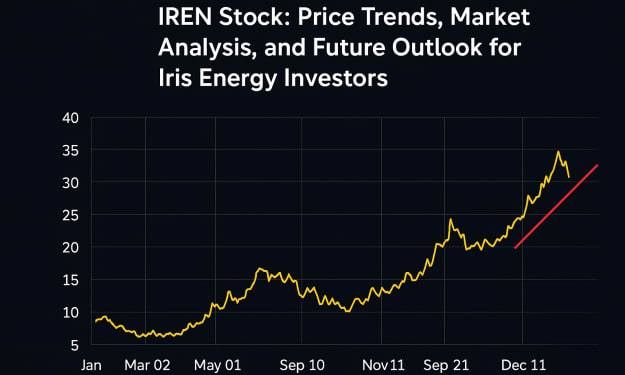
IREN Stock: Price Trends, Market Analysis, and Future Outlook for Iris Energy Investors
Investors often search for clarity when it comes to companies that connect technology with energy. Iris Energy, known by its ticker symbol IREN stock, is one of those companies that attracts attention for both its promise and its risks. The market for digital infrastructure is never simple, and the stock market reflects that uncertainty every day.
By Zeenat Chauhan4 months ago in Trader
Australia Construction Market: Infrastructure Expansion, Urban Growth & Industrial Momentum
Australia Construction Market Overview The Australia construction market remains a key driver of economic activity, employment and long-term growth, reflecting robust investment in public infrastructure, residential building, commercial developments and industrial facilities. The Australia construction market size was valued at USD 420.5 Billion in 2025. Looking forward, the market is expected to reach USD 603.0 Billion by 2034, exhibiting a CAGR of 4.09% from 2026-2034. The market is driven by the growing government infrastructure spending, economic expansion, which is leading to the construction of commercial, residential, and mixed complexes, and advanced technologies and sustainability trends. This sustained expansion stems from government infrastructure programmes, urbanisation trends, rising housing demand, and private sector investment in commercial and industrial projects. As Australia positions itself for future growth, the construction sector continues to mirror economic resilience, evolving policy focus and the shift toward sustainable development.
By Amyra Singh5 days ago in Trader
How to Succeed at the Benson Directory®
Congratulations and welcome to the Benson Directory® employee #22391! As our newest call handler, you will have the privilege of speaking with dozens of unique and interesting people on a daily basis as well as the opportunity to earn bonuses for high performance. Contained within this handbook you will find a set of ease to follow instructions designed to help you settle in to your new role and begin paving the way to success.
By S. A. Crawford2 days ago in Fiction



Comments
There are no comments for this story
Be the first to respond and start the conversation.