
Africa Confectionery Market Size & Forecast 2025–2033: Sweet Growth Driven by Youth, Urbanization, and Expanding Retail
Africa’s confectionery industry is set for strong expansion as rising urban populations, youthful consumers, and modern retail networks reshape snacking habits across the continent.

Introduction: A Sweeter Future for Africa’s Confectionery Industry
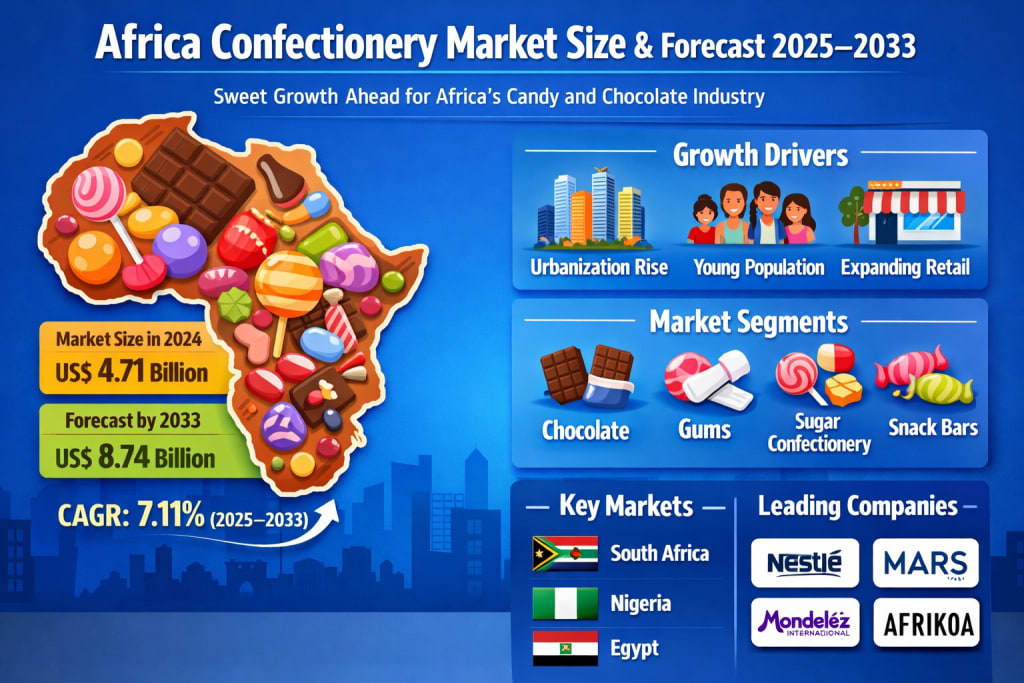
The African confectionery market is entering a dynamic phase of growth, fueled by changing lifestyles, rising disposable incomes, and a rapidly expanding young population. According to Renub Research, the African confectionery market was valued at around US$ 4.71 billion in 2024 and is forecast to reach approximately US$ 8.74 billion by 2033, growing at a compound annual growth rate (CAGR) of 7.11% from 2025 to 2033.
This impressive growth trajectory reflects more than just a rising appetite for sweets. It signals a deeper transformation in consumer behavior across the continent. Urbanization, modernization of retail, and exposure to global food trends are reshaping how African consumers snack, celebrate, and indulge.
Confectionery in Africa is not only about chocolates, candies, and chewing gum—it is also closely tied to culture, tradition, and social life. From traditional sweets made with local ingredients to modern packaged treats sold in supermarkets and kiosks, the sector represents a blend of heritage and globalization. As economic development continues and retail infrastructure improves, confectionery is increasingly becoming a daily indulgence rather than an occasional luxury.
Africa Confectionery Market Outlook
Confectionery is a broad category of sweet food products that includes chocolates, candies, gums, toffees, lollipops, and snack bars. In Africa, confectionery plays a meaningful role in both cultural traditions and everyday consumption. Many African societies associate sweets with celebrations such as weddings, birthdays, religious festivals, and social gatherings.
For example, in Nigeria, popular snacks like chin chin and puff-puff are commonly served during festivities and social events. In parts of Eastern Africa, dates, honey, and traditional sweets such as halva reflect long-standing culinary customs. Alongside these traditional products, Western-style chocolates, gums, and packaged candies are gaining popularity, especially in urban centers.
Confectionery also supports local economies. Street vendors, small shops, and kiosks selling sweets are common sights in markets and neighborhoods, providing employment and income opportunities. As globalization and urbanization continue to influence African cities, consumer tastes are evolving, leading to a growing blend of traditional and modern confectionery preferences.
Key Growth Drivers of the Africa Confectionery Market
1. Increasing Urbanization and Evolving Consumer Behavior
Africa is currently the fastest urbanizing continent in the world, with cities expanding at an average rate of around 3.5% annually. By 2050, the continent’s population is expected to grow from about 1.5 billion to nearly 2.5 billion, with almost 80% of this growth occurring in urban areas. Already, more than 700 million Africans live in cities, and this number is projected to double to around 1.4 billion by 2050.
Urbanization is significantly reshaping consumption habits. City lifestyles often come with busier schedules, greater exposure to advertising, and easier access to modern retail formats such as supermarkets and convenience stores. This environment encourages impulse purchases and demand for convenient, ready-to-eat products like chocolates, candies, and chewing gum. Rising disposable incomes among the urban middle class further support the growth of indulgent snack categories, including confectionery.
2. Expanding Retail and Distribution Networks
The steady expansion of modern retail and distribution infrastructure across Africa is another major catalyst for market growth. Supermarkets, hypermarkets, convenience stores, and organized retail chains are becoming more common, particularly in urban and semi-urban areas. This improves product visibility, accessibility, and brand penetration.
For instance, Massmart operates hundreds of stores across South Africa, while Carrefour has established a strong presence through franchise models in several African countries. These retail networks provide shelf space for both global and regional confectionery brands, making a wide variety of products available to consumers.
At the same time, traditional kiosks, small shops, and street vendors continue to play a crucial role, especially in reaching rural and low-income consumers. The gradual rise of e-commerce and mobile-based retail platforms in some markets is also contributing to improved distribution and consumer access.
3. Growing Youth Population and Demand for Indulgent Snacks
Africa has one of the youngest populations in the world. More than 70% of the continent’s population is below the age of 30, and by 2030, African youth are expected to account for about 42% of the world’s young population. This demographic profile creates a powerful consumer base for confectionery products.
Young consumers are more likely to view confectionery as an affordable indulgence—something fun, shareable, and emotionally rewarding. They are also more open to trying new flavors, packaging styles, and brand experiences, especially those promoted through social media and digital platforms.
The popularity of flavored chocolates, bubble gum, lollipops, and novelty candies highlights the importance of taste, variety, and sensory appeal in attracting younger buyers. According to recent consumer surveys, many snackers are excited to discover new products but still prioritize taste, which keeps confectionery firmly in demand.
Key Challenges Facing the Africa Confectionery Market
1. Supply Chain and Infrastructure Constraints
Despite strong growth prospects, the African confectionery market faces notable logistical challenges. In many regions, limited cold storage facilities, poor road networks, and unreliable electricity supplies make distribution difficult—particularly for temperature-sensitive products like chocolate.
These constraints increase transportation costs, raise the risk of spoilage, and lead to inconsistent product availability. In addition, many manufacturers depend on imported raw materials such as cocoa butter, sugar, and dairy ingredients, making them vulnerable to global price fluctuations and supply disruptions.
Small and local producers often struggle to maintain consistent quality and shelf life under these conditions. Improving logistics, warehousing, and local sourcing capabilities will be essential for long-term market efficiency and stability.
2. Rising Health Awareness and Concerns About Sugar Consumption
Health awareness is gradually increasing across African markets, especially in urban areas. Growing concerns about obesity, diabetes, and lifestyle-related diseases are making some consumers more cautious about sugar intake. In response, certain governments are considering or implementing sugar taxes and stricter nutrition labeling regulations.
While confectionery remains a popular indulgence, manufacturers are under pressure to adapt by introducing sugar-free, low-calorie, or fortified alternatives. However, developing and marketing these products at affordable prices remains challenging in highly price-sensitive markets.
Segment Insights
Africa Dark Chocolate Market
Dark chocolate is gaining popularity among urban, middle-class consumers who associate it with premium quality and health benefits. Its higher cocoa content, richer flavor profile, and antioxidant reputation appeal to more health-conscious and sophisticated buyers. Both global and regional brands are introducing dark chocolate variants with different cocoa percentages to attract new consumers. Smaller pack sizes are also helping improve affordability and accessibility.
Africa Milk and White Chocolate Market
Milk and white chocolates continue to dominate the African chocolate segment due to their sweet, creamy taste and broad appeal among children and families. These products are widely used for gifting, celebrations, and everyday snacking. Local manufacturers often focus on affordable, small-sized packs to suit mass-market demand, while brands experiment with local flavors such as nuts and tropical fruits to cater to regional preferences.
Africa Sugar Chewing Gum Market
Sugar chewing gum remains popular because of its low price, convenience, and strong impulse-buy appeal. It is widely sold through kiosks, street vendors, and small shops, ensuring deep market penetration even in rural areas. A wide variety of flavors—mint, fruit, and tropical—keeps the category attractive, although growing health awareness is gradually shifting some demand toward sugar-free options.
Africa Chewing Gum Market (Overall)
The broader gum market is evolving toward functional and sugar-free products, especially in urban areas. Consumers increasingly view gum as a lifestyle product that offers freshness and oral care benefits. Global brands are promoting gums with xylitol and herbal ingredients, while local players continue to compete with low-priced, single-stick offerings for mass consumers.
Africa Protein Bar Market
The protein bar segment is still emerging but shows strong potential, driven by rising health awareness and urban fitness culture. Young professionals, gym-goers, and sports enthusiasts are increasingly seeking convenient, protein-rich snacks. Local manufacturers are exploring affordable formulations using ingredients like peanuts and soy, while international brands target higher-income consumers through supermarkets and health stores.
Africa Lollipops, Toffees, and Nougats Market
Lollipops, toffees, and nougats remain long-standing favorites, especially among children. Their low cost, colorful appearance, and long shelf life make them ideal for impulse purchases. Seasonal promotions, flavor innovation, and improved packaging that withstands hot climates continue to support steady demand across both urban and rural markets.
Distribution Channel Insights: Convenience Stores Lead the Way
Convenience stores are a crucial distribution channel for confectionery in Africa. Their locations near schools, workplaces, and transport hubs make them perfect for impulse buying. Single-serve packs and affordable pricing strategies suit the purchasing habits of a wide consumer base. These stores also serve as important platforms for launching new flavors and limited-edition products, offering brands quick visibility and consumer feedback.
Country Insights
South Africa Confectionery Market
South Africa is the most developed confectionery market on the continent, supported by advanced retail infrastructure, strong local and international brands, and efficient logistics. Demand is growing for both sugar-free products and premium chocolates, while e-commerce and seasonal promotions continue to boost market penetration.
Nigeria Confectionery Market
Nigeria is one of the fastest-growing confectionery markets in Africa, driven by its large, young population and expanding middle class. Affordable, small-pack products dominate, and both local and international players are активно expanding their presence despite infrastructure and power supply challenges.
Market Segmentation Overview
By Product Type:
Chocolate (Dark, Milk & White)
Gums (Bubble, Chewing, Sugar, Sugar-Free)
Snack Bars (Cereal, Fruit & Nut, Protein)
Sugar Confectionery (Hard Candy, Lollipops, Mints, Gummies, Toffees, Nougats, Others)
By Distribution Channel:
Convenience Stores
Online Retail
Supermarkets/Hypermarkets
Others
By Country:
Egypt
Nigeria
South Africa
Rest of Africa
Key Players Covered
Afrikoa
August Storck KG
General Mills Inc.
Kellogg Company
Mars Incorporated
Mondelēz International Inc.
Nestlé SA
PepsiCo Inc.
The Hershey Company
(Analyzed from four viewpoints: Overview, Key Persons, Recent Developments, and Revenue)
Final Thoughts
The African confectionery market is on a clear upward trajectory, supported by powerful demographic trends, rapid urbanization, and expanding retail networks. While challenges related to infrastructure and health awareness remain, the industry is adapting through innovation, smaller pack sizes, and the introduction of healthier alternatives.
With a forecast CAGR of 7.11% from 2025 to 2033, Africa’s confectionery sector is set to remain one of the most exciting growth stories in the global food industry. For brands that can balance affordability, accessibility, and innovation, the future looks undeniably sweet.
About the Creator
Philippines Digital Advertising Market 2026: Set for Rapid Expansion with Mobile, Social, and E-Commerce Fueling Growth
Philippines Digital Advertising Market Overview The Philippines digital advertising market size is experiencing a period of sustained and dynamic growth, driven by mobile penetration, influencer engagement, e-commerce expansion, and supportive digital infrastructure policies. According to IMARC Group, the market reached USD 2.1 billion in 2025 and is projected to grow to USD 5.4 billion by 2034, representing a compound annual growth rate (CAGR) of 11.22% during 2026–2034.
By Manisha Dixitabout 16 hours ago in Trader



Comments
There are no comments for this story
Be the first to respond and start the conversation.