
5 Viral TikTok Budget Hacks That Actually Work
Tested, tweaked, and proven ways TikTok helped me save money in real life


5 Viral TikTok Budget Hacks That Actually Work
Tested, tweaked, and proven ways TikTok helped me save money in real life
Scrolling through TikTok often feels like falling into a time vortex. One minute you're laughing at a dog in sunglasses, and the next you're knee-deep in a budgeting tip that promises to save you hundreds. I’ll be honest, I didn’t expect to find genuine financial wisdom on a platform known for dance trends and lip-syncing. Yet here I am, notebook in hand, scribbling down money-saving hacks shared by twenty-somethings with ring lights and bullet journals.
I decided to put five of the most popular TikTok budgeting hacks to the test. Some were brilliant, others a bit silly, and one completely changed how I manage my spending. These are the five that actually worked, not just in theory, but in real life.
1. The “Cash-Stuffing” Method
Cash-stuffing videos on TikTok are oddly satisfying to watch. Someone lays out colourful envelopes, counts crisp notes, and allocates cash to categories like groceries, petrol, or entertainment. It’s simple. You withdraw a set amount of cash each month, divide it into envelopes based on your budget, and spend only what’s in each one.
I tried it for three months, focusing on variable expenses like dining out and transport. The result? I became more conscious of every dollar I spent. There’s something incredibly powerful about physically handing over money instead of swiping a card. It created a mental barrier that helped reduce impulse purchases, and I ended the month with extra cash, something that never used to happen.
Why it works:
It puts limits on your spending without using apps or spreadsheets, and it’s surprisingly fun to do.
2. The “5-Day Rule” for Impulse Buys
One TikToker shared a rule that transformed her finances: if you see something you want to buy that isn’t essential, wait five days. If you still want it after that period, go ahead and get it. If not, consider it a bullet dodged.
I applied this to online shopping, where it's far too easy to go overboard. I added a few items to my cart, closed the tab, and came back five days later. In most cases, I either forgot about the item or realised I didn’t truly need it.
Why it works:
It creates space between desire and decision, helping you make more intentional purchases.
3. The “No-Spend Weekend” Challenge
The idea is simple: pick one weekend each month where you don’t spend a single penny. That means no takeout, no drinks, no online shopping, nothing. TikTokers turned it into a game, some made it a competition between friends.
My first no-spend weekend was tough. I hadn’t realised how often I rely on money for entertainment. But it also opened my eyes to free alternatives. I went for a walk, decluttered my wardrobe, cooked with what I had at home, and read a book that had been sitting unread for months.
Why it works:
It resets your habits and proves that you don’t need to spend money to have a good time.
4. The “$1 per Use” Rule
This TikTok budgeting principle is all about value. If you’re going to spend on something, divide the cost by how often you’ll realistically use it. If the result is $1 per use or less, it’s likely worth the spend. If not, reconsider.
I used this to evaluate a pricey coat I’d been eyeing. $120, but I knew I’d wear it all winter, maybe even into next year. Given that I’d likely wear it over 100 times, it passed the test. On the other hand, a glittery handbag that cost $60 and would probably only get two or three uses? It didn’t make the cut.
Why it works:
It reframes spending around practicality rather than impulse, helping you buy smarter and with purpose.
5. Budgeting With a Soundtrack
This one surprised me. A creator claimed that pairing budgeting with music made it less stressful and even a bit therapeutic. The key? Use a calming playlist, pour a cup of tea, and treat your monthly budgeting session like self-care.
It sounded a bit fluffy at first, but I gave it a go. And you know what? It completely shifted the mood. Instead of dreading the task, I actually looked forward to it. I lit a candle, turned on some instrumental jazz, and got to work. I felt in control, calm, and accomplished when I finished.
Why it works:
Budgeting doesn’t have to feel like punishment. Creating a pleasant atmosphere turns it into a reflective, empowering ritual.
Final Thoughts
TikTok isn’t exactly the place you’d expect to find practical finance advice, but it’s packed with relatable, real-world ideas. These five hacks worked for me not because they were revolutionary, but because they were easy to implement and made budgeting feel more human.
Money management isn’t just about numbers. It’s about behaviours, emotions, and everyday choices. When you find ways to make those choices more mindful, even if it’s inspired by a 15-second video, you’re already ahead.
So, if you’re sceptical about learning finance tips from people filming on their phones in their bedrooms, I get it. But give one of these hacks a try. You might find that what starts as a trend becomes the foundation of a habit that genuinely changes your life.
About the Creator
Mutonga Kamau
Mutonga Kamau, founder of Mutonga Kamau & Associates, writes on relationships, sports, health, and society. Passionate about insights and engagement, he blends expertise with thoughtful storytelling to inspire meaningful conversations.
Keep reading
More stories from Mutonga Kamau and writers in Trader and other communities.
Mexico 5G Infrastructure Market Size, Share, Industry Trends & Forecast 2026–2034
Market Overview The Mexico 5G infrastructure market is becoming a critical pillar in the country’s digital transformation. Telecommunication companies, infrastructure providers, and government agencies are increasingly investing in next‑generation network technologies to deliver faster connectivity, lower latency, and greater network capacity. As businesses and consumers rely more on digital platforms, the demand for advanced communication infrastructure is expanding rapidly across Mexico.
By Jackson Watson3 days ago in Trader
Aroma Chemicals Market Size and Forecast 2026–2034
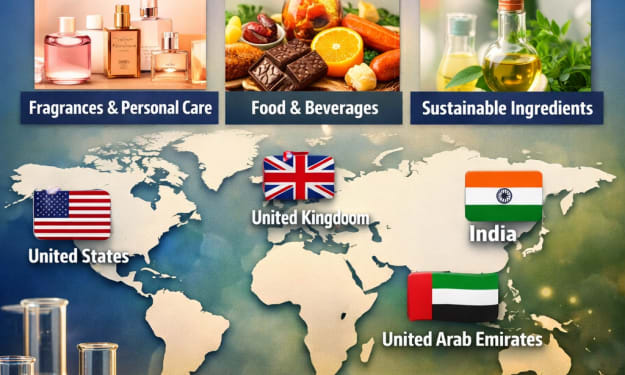
The global Aroma Chemicals Market is poised for steady expansion over the next decade, supported by growing demand across personal care, food and beverage, healthcare, and household products. According to Renub Research, the Aroma Chemicals Market is expected to reach US$ 12.91 billion by 2034, up from US$ 8.03 billion in 2025, registering a CAGR of 5.42% during 2026–2034.
By shibansh kumar6 days ago in Trader


Comments
There are no comments for this story
Be the first to respond and start the conversation.