
Trump and World War III
The Doomsday Clock is merely two and a half minutes to midnight.

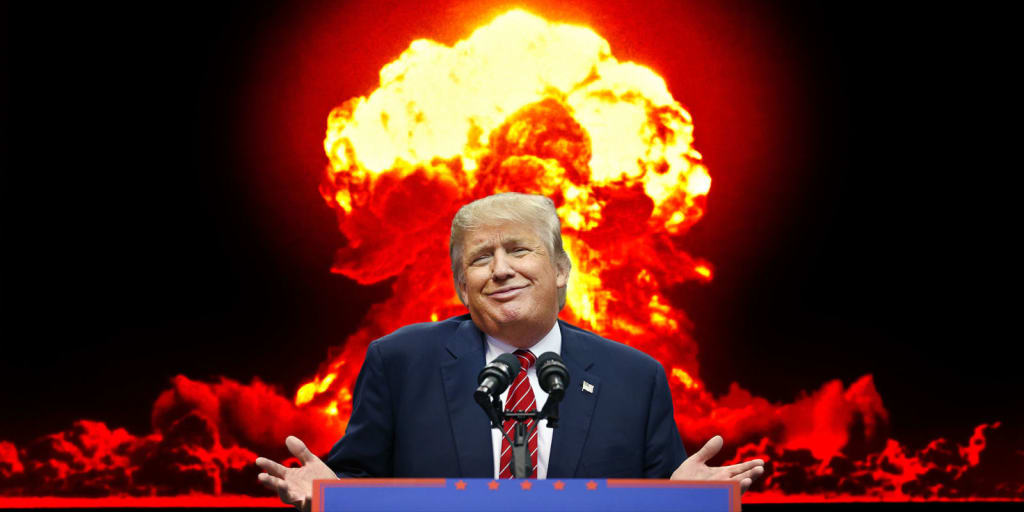
The Doomsday Clock is merely two and a half minutes to midnight. The Intercontinental Ballistic Missiles (ICBM) of North Korea are not getting any further from U.S. territory. Their Hwasong-14 missile is now capable of hitting Alaska and development is not stopping. U.S. President Donald Trump has been mocking North Korean dictator Kim Jong Un on Twitter, calling him "Little Rocket Man" and saying that it is a waste of time to even negotiate with him. And because of this, many believe Trump is aiming for the destruction of North Korea.
Trump states that military options are available, but since they would have devastating effects on North Korea and surrounding countries, they are not his first choice. Experts think that if the U.S. fires at DPRK, it will provoke a disastrous response from Pyongyang that would threaten South Korea. Based on what we’ve seen from their multiple missile tests, we know DPRK has a considerable arsenal of close range ballistic missiles. Seoul, Tokyo, and other major hubs could be at risk.
Aside from the solution of blocking trade between China and North Korea, ergo cutting off their resources, Defense Secretary Jim Mattis suggested that the United States still had military options for dealing with North Korea, but he did not expand on the subject when asked for details.
White House Chief of Staff John Kelly says that Americans should be wary of North Korea. He stated that the North has developed a "pretty good" intercontinental ballistic missile capability and is developing a nuclear re-entry vehicle, necessary for the missile to re-enter Earth's atmosphere.
In August, US defense secretary James Mattis and US Secretary of State Rex Tillerson presented a co-authored opinion piece which announced that the U.S. was pursuing a campaign of "peaceful pressure" on North Korea. This month, Tillerson draws attention again to the fact that the US was interested in seeking peace through diplomatic means. However, Trump hit up Twitter and said that Tillerson was "wasting his time," followed by, "...save your energy Rex; we'll do what has to be done!"
Trump has also been feuding with Senator Bob Corker. Mocking his height and making other claims about Corker. So in turn, Corker calls the White House an "adult day care." Corker warns that Trump “doesn’t realize that . . . We could be heading towards World War III with the kinds of comments that he’s making.” Trump says, "I think I have a little bit different attitude on North Korea than other people might have. And I listen to everybody, but ultimately my attitude is the one that matters, isn't it? That's the way it works."
About the Creator
Allie Ho
Hey there! Caught your eye heh? Then please read some more, you're bound to find it either mindboggling or interesting.
White House Weighs Executive Action to Cap Credit Card Rates
The White House is reportedly considering executive action to impose a cap on credit card interest rates, a move that could significantly impact millions of Americans grappling with rising debt. With household credit card balances climbing and interest rates at multi-decade highs, the potential policy has sparked debate among economists, consumer advocates, and the financial industry. The decision, if implemented, would be one of the most direct interventions by the federal government into consumer credit markets in decades. Rising Credit Card Debt in America Credit card debt has surged in the United States, fueled by post-pandemic spending, inflation, and rising interest rates. According to recent reports, U.S. consumers carry over $1 trillion in outstanding credit card balances, with average interest rates hovering around 20% or higher. For many households, high-interest debt has become a cycle that is increasingly difficult to escape. The White House’s contemplation of a federal cap on these rates reflects growing concern about consumer financial stress. Advocates argue that without intervention, millions of Americans may face long-term financial instability, risking defaults and broader economic consequences. What the Executive Action Might Entail While details are still emerging, an executive action could allow the federal government to directly limit the interest rates charged on credit cards without requiring new legislation from Congress. Historically, credit card interest rates have been regulated at the state level, with federal law largely leaving them to market forces. Potential provisions of such an executive action could include: Maximum APR (Annual Percentage Rate) Limits: A fixed ceiling on the interest rate credit card companies can charge. Protection for Vulnerable Consumers: Specific safeguards for households carrying high balances or at risk of default. Transparency Requirements: Ensuring credit card terms and fees are clearly disclosed to consumers. The action may be temporary or structured to last until Congress enacts more permanent legislation addressing consumer credit. Supporters’ Perspective Consumer advocacy groups and some Democratic lawmakers have welcomed the idea of a rate cap. They argue that excessive interest rates exacerbate inequality and disproportionately affect lower- and middle-income households. “Credit cards should not be traps that keep hardworking Americans in debt,” says Angela Martinez, director of a consumer rights nonprofit. “A rate cap can provide immediate relief, giving families breathing room to pay down balances and regain financial stability.” Supporters also contend that such an intervention could prevent predatory practices by certain lenders and protect the broader economy from potential debt crises caused by widespread defaults. Critics’ Concerns Financial institutions and some economists warn that capping rates could have unintended consequences. Banks may respond by: Reducing Credit Access: Higher-risk consumers might find it harder to obtain credit if lenders can’t price risk appropriately. Increasing Fees: Banks could compensate for lost interest income through higher fees or other charges. Impacting Lending Behavior: Credit card issuers may tighten credit limits, change terms, or reduce incentives like rewards programs. Economist Kevin Anderson notes, “While a rate cap helps existing cardholders, it could reduce access to credit for consumers who need it most. The challenge is finding a balance between affordability and maintaining a healthy credit market.” Historical Context Interest rate caps are not a new concept in the United States. During the 1980s and 1990s, several states imposed limits on credit card interest rates, but federal law eventually allowed national banks to preempt state caps, creating today’s largely market-driven system. Previous efforts at limiting rates at the federal level have been controversial, with debates centered on consumer protection versus market efficiency. The current economic environment—high inflation and rising consumer debt—has reignited discussions about the need for intervention. Potential Economic Impact Implementing a federal rate cap could have wide-ranging effects: Immediate Consumer Relief: For households carrying high-interest debt, even a small reduction in rates could free up monthly cash flow for other expenses or debt repayment. Market Adjustments: Banks may revise lending practices, potentially affecting the broader credit market and interest rates on other loan products. Behavioral Changes: Consumers may adjust borrowing habits, potentially reducing reliance on credit cards and seeking alternative financing. Financial analysts caution that the effectiveness of such a policy depends on the specific structure of the cap and accompanying measures to ensure continued access to credit. Political Implications The move to cap credit card rates reflects a broader political focus on economic fairness and consumer protection. For the administration, it signals a commitment to addressing everyday financial challenges faced by Americans, particularly in the context of rising inflation and living costs. However, any executive action is likely to face legal challenges from financial institutions and industry groups arguing that such a cap exceeds presidential authority or conflicts with federal banking laws. The outcome could shape debates on executive power and the limits of regulatory intervention in financial markets. What Consumers Should Know For consumers, the news of a potential rate cap offers hope but also underscores the importance of personal financial management. Experts advise: Pay Down High-Interest Debt: Reducing balances remains the most effective way to limit interest costs. Shop for Lower-Rate Cards: Comparing credit card offers can help minimize interest payments. Budget Carefully: Managing monthly expenses and avoiding new high-interest debt remains critical, regardless of policy changes. Even with a federal cap, personal financial decisions will continue to determine long-term stability. Conclusion The White House’s consideration of an executive action to cap credit card interest rates highlights the ongoing struggle between consumer protection and market dynamics. For millions of Americans carrying high-interest debt, the proposal could offer much-needed relief. At the same time, the move introduces uncertainty for banks, lenders, and the broader credit market. Legal, economic, and political factors will all play a role in shaping the final outcome. Ultimately, whether the policy is enacted or challenged, the discussion underscores a central issue: ensuring that credit is both accessible and affordable for all Americans. As the administration weighs its options, households, financial institutions, and lawmakers will watch closely, knowing that the decisions made today could have lasting effects on consumer finances for years to come.
By Muhammad Hassana day ago in The Swamp




Comments
There are no comments for this story
Be the first to respond and start the conversation.