
Ukraine Says It Hit Russian ‘Shadow Fleet’ Tankers With Underwater Drones in the Black Sea
A new phase of maritime warfare unfolds as Kyiv targets covert oil carriers fueling Russia’s war economy.

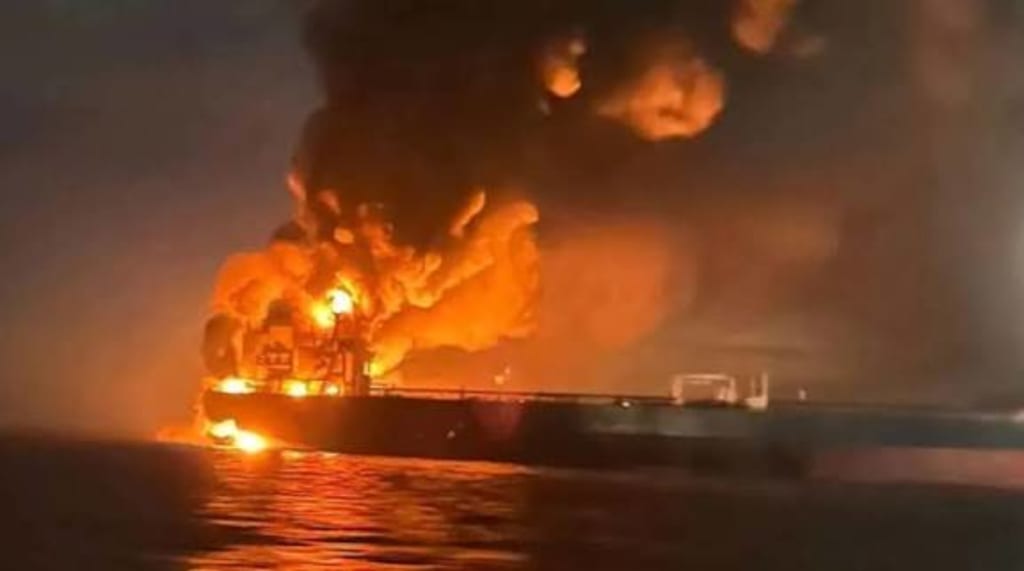
The Russia-Ukraine war has stretched across land, air, and cyberspace for nearly three years. But the Black Sea has quietly grown into one of the most important — and unpredictable — battlegrounds. This week, tensions surged again as Ukraine claimed responsibility for striking Russian “shadow fleet” oil tankers with underwater drones, signaling a major escalation in its maritime strategy.
According to Ukrainian officials, the drones targeted vessels believed to be part of Russia’s covert network of tankers used to transport oil in violation of international sanctions. These ships, commonly referred to as the “shadow fleet,” operate without proper documentation, tracking systems, or safety measures. Their purpose, Kyiv argues, is to keep oil flowing — and revenue pouring into Moscow’s war chest.
Ukraine’s decision to go after these tankers shows just how far the war has evolved. What began as territorial defense has now become a complex effort to undermine Russia’s economic and military infrastructure. By striking vessels tied to oil exports, Ukraine hopes to choke off crucial funding that fuels Russia’s ongoing attacks.
Reportedly, the underwater drones struck at least two tankers near the southwestern Black Sea. Though independent verification is still limited, Ukraine says the drones were home-built and part of a growing arsenal of unmanned systems designed to avoid direct confrontation with Russia’s navy. These naval drones are compact, fast, and difficult to detect — making them ideal for sabotage missions.
The use of underwater drones is not entirely new, but Ukraine’s reliance on them symbolizes a shift toward asymmetric warfare. With a smaller traditional navy, Kyiv has turned to innovation, developing both surface and underwater drones to neutralize Russia’s maritime advantage. Over the past year, Ukrainian forces have struck warships, ports, and naval bases using similar technology.
What makes this latest incident especially significant is the nature of the target. Unlike military ships, these tankers play a central role in Russia’s ability to bypass Western sanctions. After restrictions on Russian oil exports took effect in 2022, Moscow assembled a fleet of old, poorly regulated tankers operating mostly in the shadows. Many sail under flags of convenience and avoid disclosing their routes.
Ukraine argues that these ships are not civilian assets but economic lifelines sustaining the war. Damaging or deterring them, Kyiv believes, puts pressure directly on the Kremlin. Still, such strikes also carry risks. Hitting oil tankers raises fears of environmental disasters, global market instability, and accidental escalation into NATO waters.
Russia has responded sharply, accusing Ukraine of “state-sponsored terrorism” and threatening retaliation. Russian officials claim that the strikes endangered international shipping and could lead to “serious consequences.” Moscow maintains that its oil exports comply with global rules — a claim widely disputed by experts and monitoring groups.
Ukraine, however, insists the tankers were legitimate targets. Officials argue that Russia has attacked countless civilian sites, from apartment blocks to hospitals, and thus has no standing to lecture on maritime conduct. Moreover, Kyiv says its operations were carried out in waters where Russia has repeatedly deployed naval mines, violated shipping agreements, and obstructed Ukrainian grain exports.
International reaction remains cautious. Western governments have not publicly endorsed the strikes, but many analysts say disrupting Russia’s shadow fleet is consistent with efforts to enforce sanctions. Several intelligence reports in recent months have warned that Russia’s covert shipping network poses safety risks due to poor maintenance, lack of insurance, and the transport of hazardous materials.
The Black Sea has already seen multiple high-profile escalations, including the sinking of Russia’s flagship cruiser, the Moskva, and repeated attacks on naval infrastructure in Crimea. Each incident pushes the boundaries of the conflict further into maritime space, raising questions about how far both countries are willing to go.
For Ukraine, the strikes send a clear message: it will continue leveraging technology and creativity to offset Russia’s numerical advantage. With limited resources, Kyiv has embraced drones as a cost-effective equalizer. The underwater drones used in this operation reportedly cost a fraction of the tankers they target.
For Russia, the attacks highlight a new vulnerability. Protecting an aging, scattered fleet of covert oil tankers is a challenge that could strain its naval capabilities. If these strikes continue, Moscow may face harder choices about how to allocate military resources.
Most importantly, this development underscores the broader truth of the war: geography, technology, and economics are all intertwined. The Black Sea is no longer just a strategic waterway but a symbol of how modern warfare refuses to stay confined to traditional battlefields.
As both countries brace for the next phase of the conflict, the role of the sea — and the silent drones moving beneath its surface — will likely become even more critical.
About the Creator
Fiaz Ahmed Brohi
I am a passionate writer with a love for exploring and creating content on trending topics. Always curious, always sharing stories that engage and inspire.
Keep reading
More stories from Fiaz Ahmed Brohi and writers in The Swamp and other communities.
Ukraine War Briefing: Two Killed and Dozens Wounded as Russia Launches Another Overnight Attack on Kyiv
As the war in Ukraine enters another unforgiving year, the city of Kyiv once again woke up to horror. An overnight Russian attack—one of the heaviest in recent weeks—left two civilians dead and dozens more badly wounded, shattering any sense of safety the capital’s residents try to hold on to. With each new wave of drones and missiles, it becomes painfully clear that Moscow’s strategy is shifting toward relentless psychological pressure, forcing Ukrainians to endure sleepless nights, shattered homes, and constant fear.
By Fiaz Ahmed Brohi4 months ago in The Swamp
The Forsyth House Fire
Since 1851, Forsyth House has stood on the corner of Union Street and Gordon Street in the heart of Glasgow. Its iconic, or was... because on Sunday 8th of March, 2026, a fire broke out in a small, seemingly un-named shop in the building and tore all that history down. As I write, the rubble is still unsettled and the street is still blocked off. Central Station is quiet on the upper level, and around 30 small businesses have quite literally gone up in smoke.
By S. A. Crawford3 days ago in The Swamp




Comments
There are no comments for this story
Be the first to respond and start the conversation.