
"Zelensky says peace deal is 90% ready in New Year address"
Ukrainian president strikes a hopeful tone, saying diplomacy is nearing a breakthrough as a new year begins

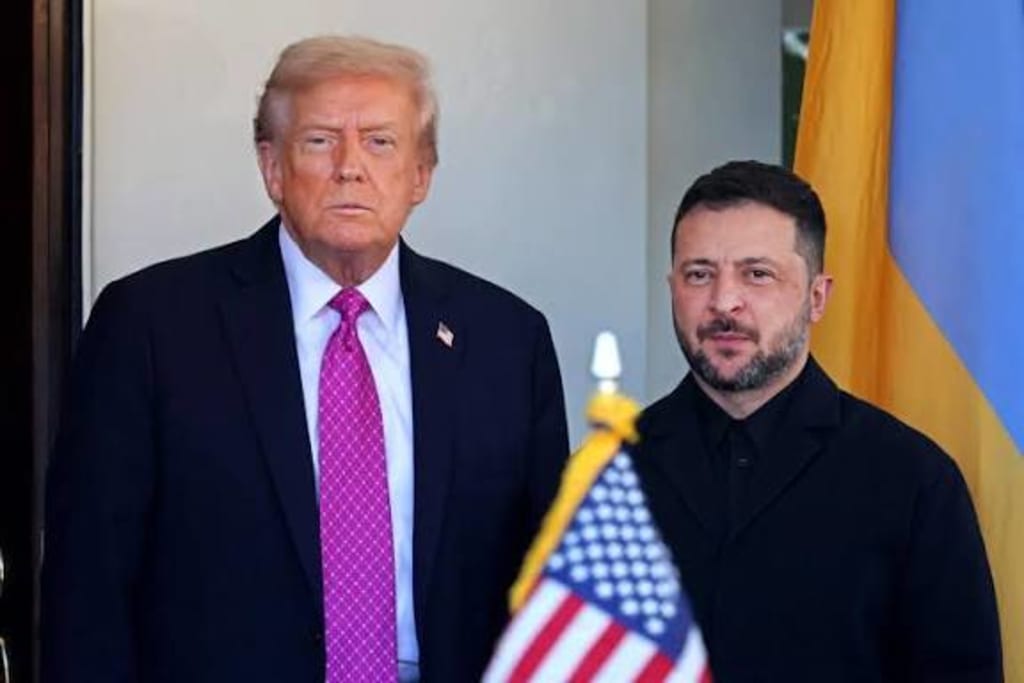
As the world stepped into a new year marked by uncertainty and ongoing conflicts, Ukrainian President Volodymyr Zelensky delivered an address that stood out for its cautious optimism. In his New Year speech, Zelensky claimed that a potential peace deal to end the war is “90% ready,” signaling what could be the most significant diplomatic development since the conflict began. His words immediately drew global attention, raising hopes while also prompting questions about what peace might realistically look like for Ukraine and the wider region.
Zelensky’s statement comes after years of relentless fighting that has reshaped Ukraine’s cities, economy, and society. The war has caused immense human suffering, displaced millions, and destabilized global energy and food markets. Against this backdrop, even a hint of progress toward peace carries enormous weight. By declaring that negotiations are nearly complete, Zelensky appeared to send a message not only to Ukrainians but also to international partners who have supported the country militarily, financially, and diplomatically.
In his address, Zelensky emphasized that peace would not mean surrender or forgetting the sacrifices made by Ukrainian soldiers and civilians. Instead, he framed the potential deal as one rooted in sovereignty, security, and long-term stability. According to him, Ukraine’s core red lines remain intact, including territorial integrity and guarantees that future aggression will be prevented. This framing suggests that while compromises may be part of diplomacy, Ukraine is determined to protect its fundamental national interests.
The claim that a deal is “90% ready” also highlights how complex and fragile peace negotiations can be. The remaining 10%, though numerically small, often represents the most contentious issues—such as territorial control, security guarantees, reconstruction responsibilities, and accountability for war crimes. History shows that many peace efforts fail at the final stage, when trust is lowest and political pressure is highest. Zelensky’s words therefore balance hope with realism, acknowledging progress without declaring victory prematurely.
International reactions to the statement have been mixed but attentive. Allies in Europe and beyond welcomed the hopeful tone, while stressing that any agreement must be just and sustainable. Many governments have reiterated that peace should not reward aggression or set a dangerous precedent for future conflicts. At the same time, there is growing fatigue among global audiences, who have watched the war drag on with no clear end in sight. Zelensky’s message may serve to renew diplomatic energy at a moment when momentum is badly needed.
Domestically, the New Year address carried emotional significance. For Ukrainians who have lived through air raids, blackouts, and personal loss, the possibility of peace offers a rare moment of relief. Zelensky used his speech to honor fallen soldiers, thank frontline workers, and acknowledge the resilience of ordinary citizens. By tying the peace process to national unity and sacrifice, he sought to reassure the public that their struggles have not been in vain.
However, skepticism remains. Critics argue that peace announcements can sometimes be strategic, aimed at boosting morale or influencing international opinion rather than reflecting concrete progress. Others warn that even if a deal is close, its implementation could be fraught with challenges. Ceasefire violations, political opposition, and shifting military realities could all derail the process. Zelensky himself hinted at these risks, noting that peace is not a single document but a long-term commitment requiring vigilance.
The broader implications of a near-ready peace deal extend beyond Ukraine. A resolution could reshape European security, influence global alliances, and affect energy and economic stability worldwide. For many countries, the war has become a symbol of the struggle between international law and the use of force. How it ends will likely shape global politics for years to come.
As the new year unfolds, Zelensky’s words stand as both a promise and a test. They offer hope to a war-weary nation and a watching world, while underscoring the hard work still required to turn diplomacy into lasting peace. Whether the final 10% can be resolved will determine if this New Year address is remembered as a turning point—or simply another moment of cautious optimism in a long and painful conflict.
About the Creator
Fiaz Ahmed Brohi
I am a passionate writer with a love for exploring and creating content on trending topics. Always curious, always sharing stories that engage and inspire.
Keep reading
More stories from Fiaz Ahmed Brohi and writers in The Swamp and other communities.
"France defends decision to grant George Clooney and his family French citizenship amid criticism"
Conclusion: More Than a Celebrity Story Ultimately, the controversy surrounding George Clooney’s French citizenship is less about one actor and more about how nations balance law, values, and public perception. France’s defense of its decision underscores its commitment to republican principles, even in the face of criticism. Whether the debate fades or reshapes future discussions on citizenship, one thing is clear: in a globalized world, the intersection of fame, law, and national identity will continue to provoke strong opinions—and France is not backing down from its interpretation of what it means to belong.France has found itself at the center of an unusual but revealing debate after defending its decision to grant French citizenship to Hollywood star George Clooney and his family. What might have been a quiet administrative move instead sparked criticism, social media backlash, and political commentary, forcing French officials to publicly justify the decision. The controversy highlights deeper questions about national identity, celebrity privilege, and how modern nations balance openness with public sentiment.
By Fiaz Ahmed Brohi2 months ago in The Swamp
The Forsyth House Fire
Since 1851, Forsyth House has stood on the corner of Union Street and Gordon Street in the heart of Glasgow. Its iconic, or was... because on Sunday 8th of March, 2026, a fire broke out in a small, seemingly un-named shop in the building and tore all that history down. As I write, the rubble is still unsettled and the street is still blocked off. Central Station is quiet on the upper level, and around 30 small businesses have quite literally gone up in smoke.
By S. A. Crawford3 days ago in The Swamp
Success uncertain, but Israelis continue to back ‘heroic’ war with Iran
Tens of thousands of Israelis continue to express strong support for their country’s military campaign against Iran, even as doubts grow about the war’s ultimate objectives, costs and outcomes. According to a March 2026 poll by the Israel Democracy Institute, roughly 82 – 93 % of Israelis — particularly Jewish Israelis — support the ongoing conflict with Iran, a level of consensus that crosses traditional political divides. That backing includes many who have historically opposed Prime Minister Benjamin Netanyahu’s government, who now describe the campaign as a necessary defence against Tehran’s long‑standing threats. A Nation Rallying Around the Flag The war, which escalated after a series of Israeli strikes deep inside Iranian territory, has largely united public opinion behind the government. Within Israel, many citizens view the campaign not only as a defence of national security but as a “heroic” initiative to dismantle Iran’s capabilities and prevent future threats. Mainstream political parties, including many in the centre and moderate right, now publicly support the war effort — often with little political dissent. Political analysts describe this phenomenon as a classical “rally‑round‑the‑flag” effect, where public opinion consolidates during wartime irrespective of the government’s overall popularity. Within Israeli society, foreign policy and security threats — particularly those tied to Iran’s nuclear and missile programmes — have long dominated the national consciousness. In Tel Aviv, veteran activist Alon‑Lee Green of the Palestinian‑Jewish advocacy group Standing Together noted that efforts to protest the war were met with rapid police intervention, reflecting both the high level of public support and a sensitive atmosphere around dissent during active conflict. Leadership Frames War as Existential and Historic Prime Minister Netanyahu, speaking from Jerusalem, has repeatedly framed the operation against Iran as not just a tactical military endeavour but a defining moment in Israel’s history. In public addresses, he has described the campaign as one that will be “recorded in the annals of Israel” and one fought for the security of future generations. In these speeches, the struggle against Iran is often placed in existential terms — as defending the nation from decades of hostile rhetoric and regional interference. Netanyahu’s messaging resonates particularly strongly among older generations who remember repeated threats from Iran’s leadership and proxy militias. For many Israelis, memories of past wars and missile attacks from Lebanon and Gaza inform their acceptance of expansive military action. Uncertainty and the Lack of Clear Endgame Despite overwhelming public support, there is growing unease — among experts and some politicians — about the lack of a well‑defined strategy for achieving long‑term goals in Iran. Even within Israeli security circles, questions have emerged about how a prolonged campaign, focused on airstrikes and targeted operations, might lead to meaningful regime change in Tehran, or whether the country could instead become entrenched in a drawn‑out conflict with unpredictable regional consequences. Israeli officials themselves acknowledge that success is not guaranteed. While military operations have reportedly degraded Iran’s nuclear and missile‑related infrastructure, analysts point out that dismantling these capabilities entirely — let alone securing the collapse of Iran’s political leadership — remains uncertain. Iranian authorities, despite suffering high‑profile losses, including the killing of Supreme Leader Ali Khamenei in late February, have maintained internal control and continued retaliatory operations. More broadly, strategic analysts say that Tehran’s decentralised defence doctrine — designed to absorb shocks from heavy bombardment and stay operational — makes it unlikely that short‑term military actions will achieve decisive victory. Instead, these analysts argue that Iran may be prepared for a long, attritional conflict that external military force alone cannot quickly resolve. Political and Regional Implications The domestic political landscape in Israel has also shifted. Opposition figure Yair Lapid has publicly said that he no longer intends to pursue no‑confidence motions against Netanyahu’s government amidst the war, reflecting how national security concerns have overshadowed traditional partisan disputes. Regionally, the conflict has triggered broader instability. Israel’s ongoing military activities have overlapped with fighting in Lebanon, where the militant group Hezbollah has escalated hostilities, and tensions continue across the Middle East as neighbouring states grapple with the conflict’s ripple effects. Internationally, leaders have responded with mixed messaging. While the United States, under President Donald Trump, has expressed support for Israel’s actions and claimed progress in degrading Iran’s capabilities, several European leaders have urged a return to diplomacy to avoid a wider regional conflagration. A War Without a Clear Ending in Sight For ordinary Israelis, the war’s human and economic costs — compounded by global energy market volatility and regional civilian casualties — are often viewed through the prism of long‑term national security. Yet beneath widespread support lies a complex calculus: a recognition that decisive victory may be elusive and that the path to a stable Middle East might require more than military force. As the campaign continues, both the government and the public are left to weigh short‑term achievements against the uncertainties of an open‑ended war, where the outcome is not predetermined and the consequences echo far beyond Israel’s borders.
By Fiaz Ahmed 2 days ago in The Swamp
Babbling Dixie
The short form of tomorrow is never the whole story. Abbreviations mean nothing when we are born to die and we all are aren't we? Being spoken for before birth is something we're not supposed to remember like some kind of karma after effect. Still here we are spending our lives looking for each other.
By Canuck Scriber Lisa Lachapelleabout 7 hours ago in Fiction



Comments
There are no comments for this story
Be the first to respond and start the conversation.