
Youm-e-Takbeer: Pakistan’s Peaceful Rise as a Responsible Nuclear Power
"Commemorating Strength Through Stability: Celebrating Pakistan's Commitment to Peace and Deterrence"

Youm-e-Takbeer: Pakistan’s Peaceful Nuclear Milestone
:Explore the history and significance of Youm-e-Takbeer, Pakistan’s peaceful rise as a responsible nuclear power and symbol of strategic stability.
Youm-e-Takbeer: Pakistan’s Peaceful Rise as a Responsible Nuclear Power
Introduction
On 28 May 1998, Pakistan entered a pivotal chapter in its history by conducting nuclear tests at the Chagai Hills in Balochistan. This day, now commemorated as Youm-e-Takbeer, symbolizes not just a demonstration of military capability but the country’s firm stance on peace through strategic stability. Amid regional tensions and global scrutiny, Pakistan emerged as a responsible nuclear power committed to deterrence, peace, and sovereignty.
Youm-e-Takbeer is more than a historic event—it's a declaration of self-reliance, a testament to scientific achievement, and a moment of national pride that continues to shape Pakistan’s defense policy and geopolitical posture.
The Road to 28 May 1998: A Historical Context
Genesis of the Pakistan Nuclear Program
The origins of Pakistan’s nuclear program trace back to the early 1970s, following India’s first nuclear test in 1974 (Smiling Buddha). That test profoundly altered regional security dynamics, compelling Pakistan to initiate its own nuclear development program for maintaining strategic balance.
Led by Dr. Abdul Qadeer Khan, Pakistan’s nuclear scientists accelerated efforts under tight international sanctions and limited technological access.
The Kahuta Research Laboratories (KRL) became the backbone of Pakistan’s uranium enrichment program.
By the late 1990s, the nation had achieved the technical capability to conduct nuclear tests but held back—until provoked.
The Chagai Hills Nuclear Tests: A Defining Moment
Why May 1998 Changed Everything
In May 1998, following a series of nuclear tests by India, regional tensions escalated dramatically. On 11 and 13 May, India conducted five nuclear explosions, shifting the power balance in South Asia and posing a direct threat to Pakistan’s national security.
Faced with overwhelming public pressure and strategic necessity, Pakistan responded decisively.
28 May 1998: Youm-e-Takbeer
At 3:16 PM, under the codename Chagai-I, Pakistan successfully detonated five nuclear devices in the Ras Koh Hills of Chagai, followed by another test on 30 May (Chagai-II).
The world witnessed the rise of the seventh nuclear power—but one that emphasized deterrence over aggression.
President Rafiq Tarar and Prime Minister Nawaz Sharif declared the tests a “last resort”, reinforcing the commitment to a no-first-use policy and minimum credible deterrence.
Strategic Stability and Responsible Nuclear Doctrine
Minimum Credible Deterrence
Pakistan’s nuclear doctrine rests on the principle of minimum credible deterrence—the idea that nuclear weapons serve solely as a deterrent against external aggression, not as tools of war.
Key pillars of this policy include:
Non-aggressive posture
Survivability of nuclear forces
Robust command and control system
Second-strike capability
This approach reinforces Pakistan’s image as a responsible nuclear state, focused on regional peace and balance, not escalation.
Peaceful Nuclear Power and Civilian Use
While defense remains a central pillar, Pakistan has also invested in the peaceful use of nuclear energy, including:
Civil nuclear power plants (e.g., Kanupp, Chashma Nuclear Complex)
Nuclear medicine and cancer treatment centers
Agricultural biotechnology and energy research
This dual-purpose application of nuclear technology reflects a holistic and ethical commitment to national development.
International Response and Global Positioning
Global Reactions and Sanctions
Pakistan’s tests were met with mixed reactions:
The United States, Japan, and EU nations imposed economic sanctions, freezing aid and trade programs.
However, many countries, including China, Turkey, and Saudi Arabia, expressed support and understanding of Pakistan’s security concerns.
Over time, the global community acknowledged Pakistan’s nuclear restraint and transparency in command systems.
Engagement with Non-Proliferation Norms
Though not a signatory to the Non-Proliferation Treaty (NPT), Pakistan has consistently:
Upheld non-proliferation principles
Supported the establishment of nuclear-weapon-free zones
Proposed a Strategic Restraint Regime in South Asia, emphasizing dialogue and transparency
Youm-e-Takbeer as a National Symbol
Commemorating Strength Through Peace
Every year, Youm-e-Takbeer is observed across Pakistan with:
Speeches by leaders emphasizing sovereignty, resilience, and scientific progress
Media features highlighting the Chagai Hills nuclear test and its legacy
Public recognition of the scientists and engineers who made the achievement possible
The day is not celebrated as a show of might, but as a reminder of sacrifice, resolve, and the enduring pursuit of peace through strength.
H3: Lessons from Youm-e-Takbeer
National unity in the face of external pressure can drive transformative achievement.
Scientific investment is vital for strategic autonomy.
Peace and deterrence are not mutually exclusive—they can coexist through thoughtful policy.
Conclusion: A Legacy of Peaceful Strength
Youm-e-Takbeer is not merely about nuclear capability—it’s about Pakistan’s rise as a responsible global actor. It reflects the country's unwavering commitment to sovereignty, peace, and technological progress in a region often fraught with instability.
In the 26+ years since the tests, Pakistan has:
Avoided nuclear escalation
Strengthened its command and control systems
Advocated for regional dialogue and non-aggression
The legacy of 28 May 1998 lives on—not in stockpiles, but in strategic restraint, in the promise of peaceful nuclear energy, and in the resolve of a nation that chose to stand tall without standing hostile.
Call to Action
As the world evolves and new challenges arise, it is essential to reflect on what Youm-e-Takbeer truly represents. Let it serve not just as a date in history, but as a lesson in leadership, responsibility, and the enduring value of peace through strength.
🇵🇰 Let us honor this day by committing to science, security, and solidarity—and by recognizing Pakistan's rightful place as a force for strategic stability and global peace.
About the Creator
Shamshair Khan Hasan Zai
I share content on health, business, travel, motivation, and simple ways to earn money—focused on hope growth, and practical advice to help you live a better, more successful life.
Keep reading
More stories from Shamshair Khan Hasan Zai and writers in The Swamp and other communities.
May 28th: How Pakistan’s Nuclear Test Redefined Regional Power Balance
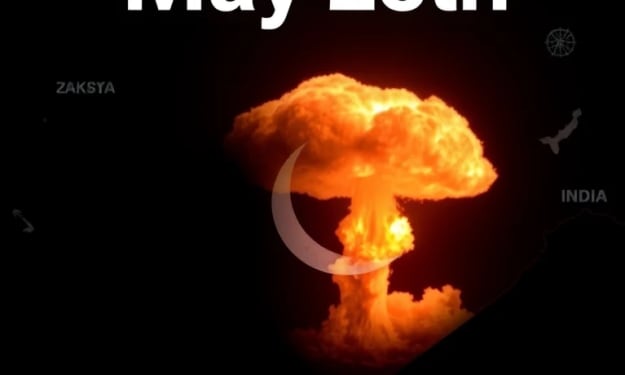
Introduction May 28th stands as a defining date in the history of South Asia, marking Pakistan’s emergence as a nuclear-armed state and fundamentally reshaping the regional power balance. On this day in 1998, Pakistan conducted its first public nuclear weapons test, sending shockwaves through the geopolitical landscape of South Asia and the wider international community. This act was not merely a demonstration of military capability but a bold assertion of strategic autonomy, directly challenging the long-standing nuclear dominance of India. The May 28th nuclear test underscored Pakistan’s resolve to safeguard its national security in a highly volatile regional environment and introduced a new dimension to the Pakistan India nuclear rivalry.
By Shamshair Khan Hasan Zai8 months ago in The Swamp



Comments (2)
*"If you liked my story, kindly tap the heart (❤) button. Your support keeps me inspired to write more!"*
The article on Pakistan's nuclear milestone is really interesting. It makes me think about how countries navigate strategic stability. I wonder how Pakistan managed to develop its program despite sanctions. Also, it's fascinating how a single event like the Chagai Hills tests could reshape a nation's defense policy. What do you think were the most crucial factors in Pakistan's nuclear development?