
Xi Jinping Vows to Reunify China and Taiwan in New Year’s Eve Speech
“China’s President Xi Jinping emphasizes reunification as a historical and cultural mission, setting the tone for cross-strait relations in 2026.”

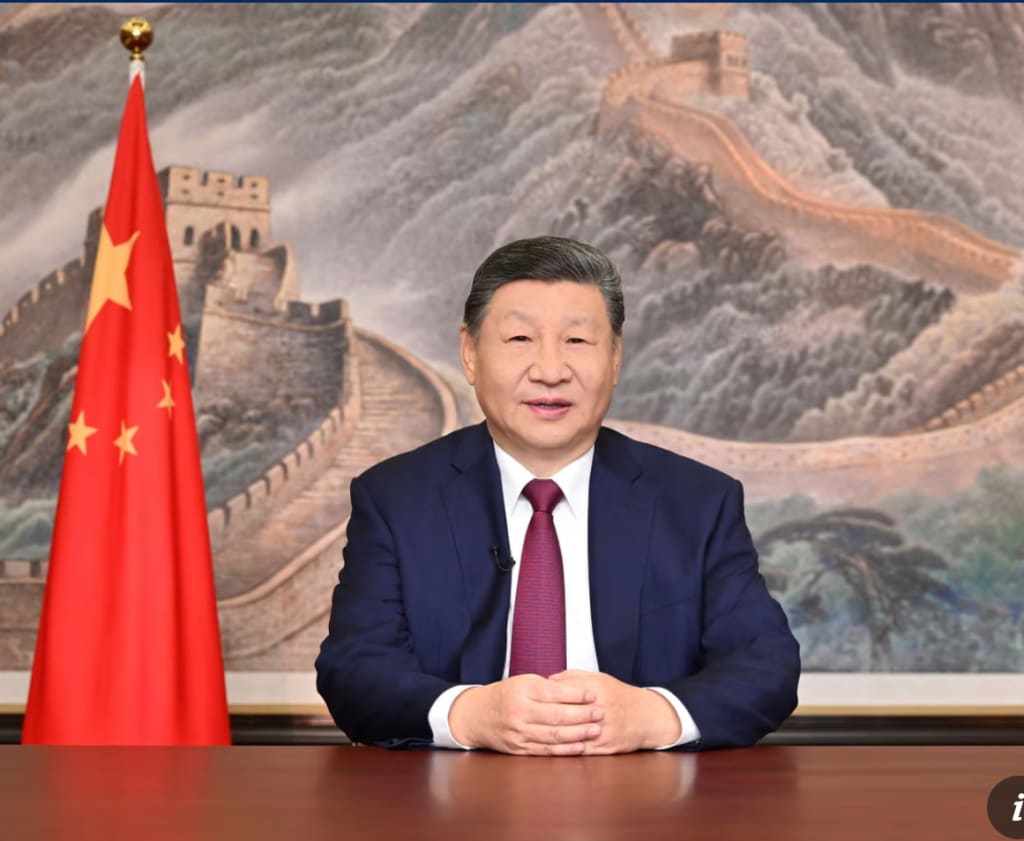
As the world rang in 2026, Chinese President Xi Jinping used his New Year’s Eve address to deliver a message that caught the attention of governments, analysts, and citizens around the globe. Beyond celebrating China’s economic achievements and technological progress, Xi’s speech emphasized one of Beijing’s most sensitive and politically charged topics: the reunification of Taiwan with mainland China.
In his address, broadcast live across multiple platforms, Xi reaffirmed China’s long-standing position that Taiwan is an inseparable part of its territory. While the speech didn’t contain direct threats of military action, it made clear that reunification is considered an “unstoppable trend” — a priority that Xi framed as both a historical and cultural mission.
A Strong Statement on Reunification
Xi Jinping stressed that the bond between people on both sides of the Taiwan Strait is one of “blood and kinship.” For him, reunification is not just political but also a matter of national pride and historical justice. He connected this goal to China’s broader vision of national rejuvenation, portraying Taiwan’s eventual return as part of the country’s destiny.
The timing of this declaration is significant. Coming on the eve of a new year and a new Five-Year Plan (2026–2030), it underscores that Taiwan remains central to China’s strategic priorities. Analysts note that this speech, while firm in language, reflects a consistent policy approach rather than a sudden escalation.
Military Drills and Regional Tensions
The speech followed China’s completion of large-scale military exercises near Taiwan, dubbed “Justice Mission 2025.” These drills included aircraft, naval vessels, and simulated blockades, widely interpreted as a warning to foreign powers and “separatist forces.”
Taiwan, for its part, has maintained a stance of peace and stability while simultaneously strengthening its defense capabilities. The U.S. and Japan have closely monitored these developments, concerned that continued military pressure could heighten the risk of miscalculation.
This combination of political rhetoric and military demonstrations represents Beijing’s dual strategy: signaling strength while reinforcing territorial claims without triggering direct conflict.
International Reactions
Xi’s remarks quickly drew global attention. Western governments emphasized the importance of peace and stability in the Taiwan Strait while reaffirming support for Taiwan’s democratic institutions. U.S. policymakers face a delicate balancing act: deterring any unilateral moves on Taiwan while avoiding direct confrontation with China.
Neighboring countries in the Indo-Pacific, including Japan, South Korea, and ASEAN nations, have also expressed concern. Taiwan sits at the heart of critical trade routes, so any conflict could disrupt regional economies and global supply chains. Even nations with strong economic ties to China have stressed the need for diplomatic solutions and dialogue.
Taiwan’s Perspective
Taiwan’s leadership responded by reiterating its commitment to democracy and self-determination. President Lai Ching-te emphasized that Taiwan seeks peaceful relations with China but will not yield to coercion. Strengthening defense capabilities and international partnerships remains central to Taiwan’s strategy.
The island’s vibrant democratic system — including independent institutions, free elections, and a strong civil society — contrasts sharply with mainland China’s one-party governance, highlighting why the reunification question remains complex and sensitive.
Domestic Messaging in China
Within China, Xi framed reunification as part of a broader narrative of national pride and achievement. The speech referenced historic anniversaries, economic milestones, and technological breakthroughs, presenting reunification as a continuation of the country’s progress.
By connecting Taiwan to China’s national identity and historical mission, Xi aims to foster unity and reinforce the legitimacy of the government’s strategic goals. The speech also signals to domestic audiences that the leadership remains focused on long-term objectives, even as global attention zooms in on regional security issues.
Looking Ahead in 2026
As the new year begins, the Taiwan issue remains one of the most sensitive geopolitical topics in the world. Xi Jinping’s New Year’s Eve message made clear that China’s position is resolute: reunification is inevitable.
How this rhetoric translates into action will depend on a complex mix of factors, including Taiwan’s policies, international diplomacy, and global geopolitical shifts. For now, Beijing’s message is clear, and 2026 is likely to be another year of close international attention on the Taiwan Strait.
Xi’s speech reminds the world that while new years bring fresh beginnings, some geopolitical challenges persist — and cross-strait relations are at the forefront of both China’s domestic agenda and the international diplomatic spotlight.
About the Creator
Muhammad Hassan
Muhammad Hassan | Content writer with 2 years of experience crafting engaging articles on world news, current affairs, and trending topics. I simplify complex stories to keep readers informed and connected.
Keep reading
More stories from Muhammad Hassan and writers in The Swamp and other communities.
Bangladesh Mourns Khaleda Zia in State Funeral With Massive Crowds
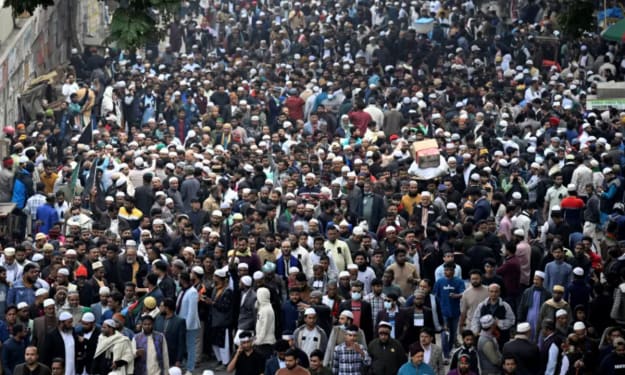
Bangladesh came together in a historic display of grief on December 31, 2025, as the nation bid farewell to Begum Khaleda Zia, the country’s first female prime minister. A state funeral drew massive crowds in Dhaka, with hundreds of thousands — possibly over a million — citizens coming together to honor a leader whose life shaped the destiny of Bangladesh. A Sea of Mourners in Dhaka Even before dawn, streets leading to the National Parliament building were filled with people. Supporters carried Bangladesh Nationalist Party (BNP) banners, national flags, and placards expressing love for their “mother of the nation.” From rural towns to provincial districts, people traveled long distances to participate in the farewell procession. The government declared a three-day national mourning period and a public holiday to allow citizens to pay their respects. Security forces, including over 10,000 police and military personnel, were deployed to maintain order during the unprecedented gathering. Funeral Prayers and National Tribute The funeral prayers (Namaz-e-Janaza) were held at the South Plaza of the Jatiya Sangsad Bhaban (National Parliament Building) in the early afternoon. Dignitaries from across South Asia, including India, Pakistan, Nepal, Bhutan, and Sri Lanka, attended. India’s External Affairs Minister S. Jaishankar presented a letter of condolence from Prime Minister Narendra Modi. Khaleda Zia was laid to rest beside her husband, former President Ziaur Rahman, who was assassinated in 1981. Military honor guards stood in silent tribute as family, party leaders, and foreign diplomats offered their final respects. Remembering Khaleda Zia: Triumphs and Controversies Khaleda Zia’s political career was marked by resilience, determination, and controversy. Born in 1945, she entered politics following her husband’s assassination and became Bangladesh’s first female prime minister, serving three terms over more than a decade. She was a prominent figure in the fight against authoritarian rule during the late 1980s and early 1990s, credited with helping restore parliamentary democracy. Yet her political journey was not without challenges. Legal battles, corruption charges, and periods of house arrest marked her later years, which her supporters decried as politically motivated. Her rivalry with Sheikh Hasina, leader of the Awami League, defined Bangladeshi politics for decades. Dubbed the “Battle of the Begums,” this rivalry often polarized the electorate, reflecting broader ideological divides in the country. The Emotional Farewell Wednesday’s funeral brought together people from all walks of life, reflecting the deep emotional connection many Bangladeshis felt toward Khaleda Zia. For supporters, she symbolized the struggle for democracy and women’s empowerment. Placards calling her “Maa” (mother) were common, a sign of affection and reverence. Sharmina Siraj, a mourner from outside Dhaka, told reporters, “Her programs for girls’ education and women’s empowerment changed our community. It’s hard to imagine such leadership again.” Political Implications Moving Forward With national elections approaching in February 2026, Khaleda Zia’s death adds a layer of uncertainty to the political landscape. Her son, Tarique Rahman, now acting head of the BNP, is likely to play a central role in rallying party support. The massive turnout at the funeral could signal renewed momentum for the party as it prepares for the upcoming elections. A Nation United in Grief While Khaleda Zia’s legacy remains complex, her state funeral served as a powerful reminder of her impact on Bangladesh’s history. Millions came together to mourn, celebrate, and reflect on a life that inspired devotion, debate, and determination. The event was not just a farewell; it was a nationwide tribute to a leader who broke barriers, navigated political turmoil, and left a lasting mark on the country. Whether remembered for her achievements or controversies, Khaleda Zia’s influence on Bangladesh’s political landscape will continue to resonate for years to come. Tags for Vocal Media: Bangladesh, Khaleda Zia, Politics, State Funeral, BNP, Dhaka, South Asia, Women in Politics, Leadership, National Mourning
By Muhammad Hassan20 days ago in The Swamp
Suppliers: The Backbone of Global Trade, Communities, and Modern Economies
Suppliers are the often unseen backbone of modern economies, connecting raw materials to finished products and linking local communities to global markets. From small family-owned businesses to multinational corporations, suppliers play a critical role in ensuring that goods and services reach consumers efficiently and reliably.
By Aarif Lashari5 days ago in The Swamp



Comments
There are no comments for this story
Be the first to respond and start the conversation.