
With 'Personal Intelligence,' Google Finally Admits How Much It Knows About You. It's Scary-Good.
How Google’s New AI Technology is Changing the Way We Interact With Data


Google has long been known for its powerful algorithms, search engines, and AI-driven services, but the recent unveiling of “Personal Intelligence” marks a new era in just how much the tech giant knows about individual users. According to internal statements and demonstrations, Personal Intelligence can analyze, predict, and interact with personal data in ways that feel almost human — and for many, that’s both fascinating and unnerving.
With Personal Intelligence, Google is not just offering smart suggestions or predictive text; the technology learns patterns in your behavior, preferences, and routines, effectively creating a digital mirror of your daily life. While Google promises privacy safeguards, the sheer depth of its insights is enough to make users pause and reflect on how much information they have willingly — or unknowingly — shared online.
What Is ‘Personal Intelligence’?
Personal Intelligence is a new AI framework from Google designed to leverage the company’s vast network of data collection points: Gmail, Google Maps, Search history, YouTube preferences, Android device usage, and more.
The system is reportedly capable of:
Anticipating needs: Suggesting actions based on habits, like reminding you of meetings or recommending restaurants at times you usually eat out.
Predictive communication: Drafting emails, messages, or social media posts that match your typical tone and style.
Decision support: Helping with daily decisions, from planning commutes to managing finances, by analyzing patterns in your behavior.
Personalized learning: Offering suggestions for articles, videos, and courses tailored to your interests and knowledge gaps.
Unlike previous AI tools, Personal Intelligence doesn’t just react to explicit input — it proactively interprets and predicts behavior, making it feel eerily intuitive.
Why It Feels “Scary-Good”
Many users report a mix of awe and unease when seeing what Personal Intelligence can do. There are several reasons for this reaction:
Depth of Insight: The AI doesn’t just know what you search; it recognizes patterns, habits, and even emotional cues.
Seamless Integration: Google combines data across multiple services, creating a holistic understanding of a user’s life.
Proactive Behavior: Unlike traditional assistants, Personal Intelligence can initiate actions, not just respond.
Human-Like Suggestions: Its ability to draft text, propose decisions, or suggest content based on your personality is almost uncanny.
The “scary-good” factor isn’t that the AI is malicious — it’s that it knows you so well that your own digital self could almost stand in for you.
The Privacy Debate
With great intelligence comes great responsibility, and privacy advocates are raising serious concerns about Personal Intelligence:
Data Centralization: Google aggregates vast amounts of personal data across all its platforms, which could be vulnerable to breaches or misuse.
User Consent: While Google claims users opt-in, many might not fully realize how much information the AI analyzes.
Algorithmic Bias: AI predictions might reinforce personal habits and biases rather than challenge them, creating digital echo chambers.
Surveillance Concerns: Even with safeguards, critics argue that such comprehensive profiling gives Google unprecedented insight into private lives.
The company insists that privacy controls and data anonymization are in place, but experts warn that the technology is only as safe as the policies and users’ understanding of them.
How Personal Intelligence Could Change Everyday Life
Despite concerns, there are significant benefits to the technology:
Efficiency: Daily tasks could be automated or optimized, saving time in work and personal life.
Personalized Learning: Students and professionals could receive highly customized recommendations for skill development.
Health and Wellness: Predictive insights could help track habits, suggest healthier routines, and even alert users to behavioral risks.
Seamless Integration Across Devices: From smart speakers to phones, the AI could unify tasks and notifications for a smoother experience.
In essence, Personal Intelligence could make your digital ecosystem feel intelligent, responsive, and personalized like never before.
The Broader Implications
The introduction of Personal Intelligence highlights several trends in technology and society:
AI as an Extension of Self: Our devices are no longer just tools — they increasingly act as digital extensions of our personalities, habits, and preferences.
Trade-Off Between Convenience and Privacy: As AI becomes more capable, users must decide how much personal information they are willing to share.
Shift in Human-AI Interaction: Predictive AI challenges the traditional “command-response” model, moving toward anticipatory intelligence that feels almost human.
Ethical and Regulatory Pressure: Governments and regulators may soon need to establish rules around predictive AI, especially when it accesses sensitive personal data.
Personal Intelligence is not just a Google product — it represents a turning point in how AI intersects with daily life.
Expert Opinions
Industry experts are divided on the technology’s potential:
Tech Optimists: Argue that AI like Personal Intelligence can enhance productivity, creativity, and decision-making.
Privacy Advocates: Warn that it represents a new frontier in surveillance capitalism, where corporations have unprecedented insight into personal lives.
Behavioral Psychologists: Note that predictive AI could shape decisions and behaviors in subtle ways, influencing habits without conscious awareness.
This mix of perspectives illustrates that Personal Intelligence is both exciting and potentially disruptive, depending on how it is used and regulated.
Final Thoughts
Google’s Personal Intelligence demonstrates how advanced AI has become at understanding humans. It is simultaneously a tool for convenience, efficiency, and personalization, and a reminder of how much of our lives are already visible to large tech companies.
For users, the key takeaway is awareness: while these technologies can be extremely helpful, it is essential to understand the data they access, the predictions they make, and the privacy choices available.
Personal Intelligence may be scary-good, but it is also a call to examine the relationship between humans and machines, and to ensure that innovation does not outpace privacy, ethics, and user consent.
About the Creator
Muhammad Hassan
Muhammad Hassan | Content writer with 2 years of experience crafting engaging articles on world news, current affairs, and trending topics. I simplify complex stories to keep readers informed and connected.
Keep reading
More stories from Muhammad Hassan and writers in The Swamp and other communities.
Intel Confirms 'Nova Lake' Core Ultra 400 CPUs Launching This Year
Intel has officially confirmed that its “Nova Lake” Core Ultra 400 series CPUs are set to launch later this year, signaling another major push in the company’s efforts to dominate the high-performance computing market. The announcement has already stirred excitement among PC enthusiasts, gamers, and tech industry insiders who are eager to see what Intel’s next-generation chips will deliver in terms of performance, efficiency, and innovative features.
By Muhammad Hassana day ago in The Swamp
Royal Mail Warns Customers It May ‘Suspend Deliveries to Your Address’
Royal Mail has issued a warning to certain customers, indicating that it may temporarily suspend deliveries to specific addresses under certain circumstances. This announcement has raised concerns among residents and businesses alike, highlighting the challenges facing postal services in the UK amid rising operational pressures.
By Aarif Lashari2 days ago in The Swamp
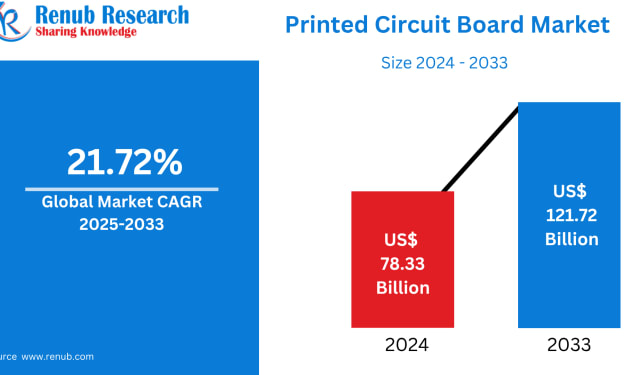
Global Printed Circuit Board Market Size and Forecast 2025–2033
Introduction: The Backbone of the Digital World The Global Printed Circuit Board (PCB) Market is entering a decisive growth phase as electronics become more compact, powerful, and interconnected. According to Renub Research, the PCB market was valued at USD 78.33 billion in 2024 and is projected to reach USD 121.72 billion by 2033, expanding at a CAGR of 5.02% during the forecast period.
By Marthan Sir2 days ago in The Swamp


Comments
There are no comments for this story
Be the first to respond and start the conversation.