
Winter Battles in Donbas: Russia Pushes Hard on Pokrovsk and Kupyansk
As fighting intensifies, Ukraine struggles to hold its last major strongholds in the Donbas — here’s the latest from the front, analyzed by Meduza

The war in eastern Ukraine has entered another brutal chapter this winter. Russian forces are intensifying pressure on Ukrainian defenses around Pokrovsk and Kupyansk, two cities that now represent critical anchors in Ukraine’s hold on the Donbas region. According to Meduza, the fighting is not slowing down, and both sides are bracing for what could be a decisive stretch in the months ahead.
Pokrovsk: Holding the Line
Pokrovsk, located in Donetsk Oblast, is a key defensive point for Ukraine. Think of it as the gateway to larger cities like Kramatorsk and Sloviansk. If Russian forces capture Pokrovsk, it could destabilize Ukraine’s defensive lines and widen Moscow’s offensive.
Recent reports indicate that Ukrainian troops have withdrawn from positions south of nearby towns like Kostiantynivka and Myrnohrad. While it may sound like a setback, this is a strategic consolidation. Kyiv is regrouping to strengthen the most vulnerable points of its defense.
Meanwhile, Russian troops are advancing from multiple directions — from the Kleban-Bykske Reservoir and across the Siverskyi Donets–Donbas canal. They’ve established bridgeheads threatening to encircle Ukrainian forces. Urban clashes have intensified in neighborhoods around Pokrovsk, especially in villages like Rodynske and Hryshyne, where control has shifted multiple times in recent weeks.
Kupyansk: A Fragmented Battlefield
To the northeast, Kupyansk in Kharkiv Oblast presents a different kind of challenge. Ukrainian forces have successfully split a Russian bridgehead on the western bank of the Oskil River, limiting Moscow’s ability to reinforce isolated units. The city center is mostly under Ukrainian control, but the surrounding areas remain contested.
Russian forces are pushing from areas like Radkivka toward Kupyansk’s western suburbs, aiming to reconnect with isolated units and potentially encircle segments of Ukrainian defenders. Control over river crossings, particularly at Kupyansk-Vuzlovyi, remains a high-stakes struggle.
Winter Warfare and Shifting Strategies
Winter is notoriously tough on military operations. Cold weather and snow slow down large movements, but both sides are still pushing. Russian forces are attempting incremental gains with combined arms operations, while Ukraine reallocates its limited troops to cover the most critical sectors.
Ukrainian units like the 12th Special Forces Brigade “Azov” have been repositioned from encircled positions to areas where they can be more effective. These tactical withdrawals reflect a broader reality: Ukraine is defending a long front with finite resources, and tough decisions are being made to maximize impact.
On the Russian side, analysts note that Moscow is focusing on grinding down Ukrainian defenses ahead of a potential spring offensive. They hold numerical advantages in certain sectors, including around Siversk and Lyman, where control of the Siverskyi Donets River could determine the outcome of several key battles.
The Human Cost
The war isn’t just about territory — it’s about people. Cities like Pokrovsk have endured heavy shelling, and industrial infrastructure, as well as residential areas, have been heavily damaged. Local defenders describe the situation as dire, with shortages of equipment and supplies making the defense even harder.
Urban fighting around Pokrovsk and Kupyansk has been fierce. Both sides are conducting raids and counterattacks, turning the cities into fragmented battlefields where every street and building counts. These clashes highlight how the Donbas conflict has shifted from open-field battles to intense urban and semi-urban warfare.
What’s Next?
Meduza reports that January is a preparatory period for both armies. The spring offensive season is approaching, and the next few months could bring renewed large-scale operations. Holding strongholds like Pokrovsk and Kupyansk will be critical for Ukraine, not just for tactical reasons but also for morale.
For Russia, success in these areas could open a path toward deeper penetration into Donetsk and beyond. But the costs are high, and Ukraine continues to adapt despite intense pressure. Both military strategy and political will remain in flux, making this winter a pivotal moment in the ongoing conflict.
Final Thoughts
The battles in Pokrovsk and Kupyansk are more than just lines on a map. They represent the resilience of Ukraine’s defenses and the persistence of Russian offensives. As the war continues, these cities may become even more crucial in determining the outcome in the Donbas region. For now, the conflict grinds on, street by street, village by village, as both sides brace for the battles ahead.
About the Creator
Keep reading
More stories from Aqib Hussain and writers in The Swamp and other communities.
Many Fiery Remarks, Little Clarity on What’s Next at Security Council Meeting on Iran
When the United Nations Security Council met on January 15, 2026, to discuss the escalating crisis in Iran, it was anything but calm. The chamber was filled with passionate speeches, heated accusations, and urgent warnings, yet by the end of the session, one thing was clear: there was very little clarity on what comes next.
By Aqib Hussain4 days ago in The Swamp
China’s Birthrate Plunges to Lowest Level Since 1949
China, long known for its staggering population, is now facing a demographic reality that could reshape its future. According to recent reports, the country’s birthrate has plunged to its lowest level since 1949, signaling a potential crisis not just for China’s economy, but for global markets that depend on its workforce.
By Muhammad Hassana day ago in The Swamp
Royal Navy Plans Jet-Powered Autonomous Carrier Drone: A Bold Step Toward the Future of Naval Aviation
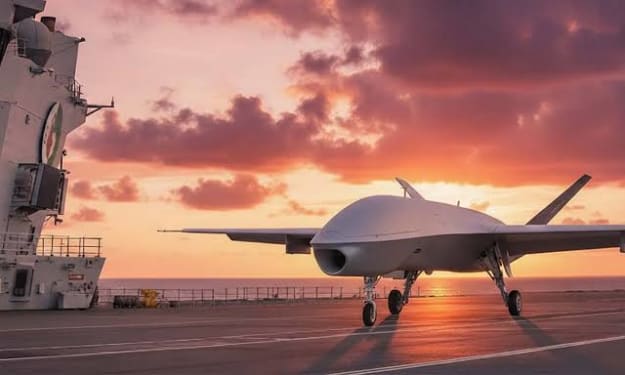
The Royal Navy is preparing for a major leap in naval aviation with plans to develop and deploy a jet-powered autonomous carrier drone. This move signals a decisive shift toward uncrewed combat and support systems, reflecting how modern navies are adapting to rapid technological change, evolving threats, and the high costs of traditional manned aircraft. If realised, the project could reshape how Britain projects power at sea and how aircraft carriers operate in the decades ahead. Why the Royal Navy Is Turning to Autonomous Jets Aircraft carriers have long been symbols of national power, but they are also expensive and vulnerable assets. Modern conflicts increasingly feature long-range missiles, electronic warfare, and drone swarms, forcing navies to rethink traditional carrier air wings. By investing in a jet-powered autonomous drone, the Royal Navy aims to enhance reach, survivability, and flexibility without putting pilots at risk. Autonomous carrier drones can operate in environments that would be highly dangerous for human crews. They can fly longer missions, tolerate higher levels of risk, and be produced at lower cost than manned fighter jets. For a navy operating a limited number of carriers, such as the UK’s Queen Elizabeth-class, this technology offers a way to multiply combat power without dramatically expanding budgets. What Makes a Jet-Powered Drone Different Unlike propeller-driven drones commonly used for surveillance, a jet-powered autonomous drone is designed for high speed, longer range, and potentially stealthy operations. Such drones could escort crewed fighter jets, conduct deep reconnaissance, suppress enemy air defenses, or even carry precision-guided weapons. The jet propulsion element is crucial. It allows the drone to integrate more seamlessly with carrier-based fighters like the F-35B, operating at similar speeds and altitudes. This opens the door to “manned-unmanned teaming,” where human pilots command or coordinate with multiple autonomous systems during a mission. Expanding the Role of UK Aircraft Carriers For the Royal Navy, this initiative aligns with a broader effort to future-proof its carrier strike groups. Autonomous drones could significantly extend the operational radius of a carrier, allowing it to strike targets farther inland while remaining at a safer distance from hostile shores. In addition to combat roles, these drones could support intelligence, surveillance, and reconnaissance missions, electronic warfare, and even logistics. A single carrier could deploy a mix of crewed jets, helicopters, and autonomous aircraft, creating a more versatile and resilient air wing. This approach also offers strategic advantages. By relying more on uncrewed systems, the UK can maintain credible naval power even with limited personnel resources. It also reduces the political and human costs associated with pilot losses in high-risk missions. Challenges on the Path to Deployment Despite its promise, the project faces significant technical and operational challenges. Launching and recovering jet-powered drones from aircraft carriers is complex, especially from short-takeoff decks like those used by the Royal Navy. Engineers must ensure that autonomous systems can safely handle deck operations, sudden weather changes, and high-stress combat conditions. There are also questions around command and control. Autonomous drones must be resilient to cyber attacks, electronic jamming, and communication disruptions. Developing secure systems that allow human operators to supervise or override autonomous decisions is critical, particularly given ethical and legal debates around autonomous weapons. Integration with existing platforms is another hurdle. The Royal Navy will need to ensure that new drones can work seamlessly with NATO allies, share data in real time, and fit within joint operational frameworks. How This Fits Into Global Trends The UK is not alone in pursuing carrier-based autonomous aircraft. The United States, China, and other major powers are all investing heavily in similar technologies. By moving early, the Royal Navy aims to remain competitive and relevant in an era where naval dominance increasingly depends on information, automation, and networked systems rather than sheer numbers of ships or aircraft. This initiative also reflects lessons learned from recent conflicts, where drones have proven decisive in surveillance, targeting, and strike roles. The future battlefield is likely to be crowded with uncrewed systems, and navies that fail to adapt risk falling behind. A Glimpse of the Navy of Tomorrow The Royal Navy’s plan for a jet-powered autonomous carrier drone is more than a technical upgrade—it represents a strategic transformation. It shows how Britain is preparing for a future where naval power is defined by adaptability, technological sophistication, and intelligent use of automation. While many details remain under development, the direction is clear. By embracing autonomous aviation, the Royal Navy is laying the groundwork for a more flexible, resilient, and forward-looking carrier force. If successful, this initiative could redefine how the UK operates at sea and ensure its carriers remain effective in an increasingly complex and contested world.
By Fiaz Ahmed Brohi4 days ago in The Swamp



Comments
There are no comments for this story
Be the first to respond and start the conversation.