
Wild Elephant Kills Tourist in Thailand’s Khao Yai National Park
Third Fatality Linked to Same Animal Sparks Safety Concerns
By [Your Name] | February 3, 2026
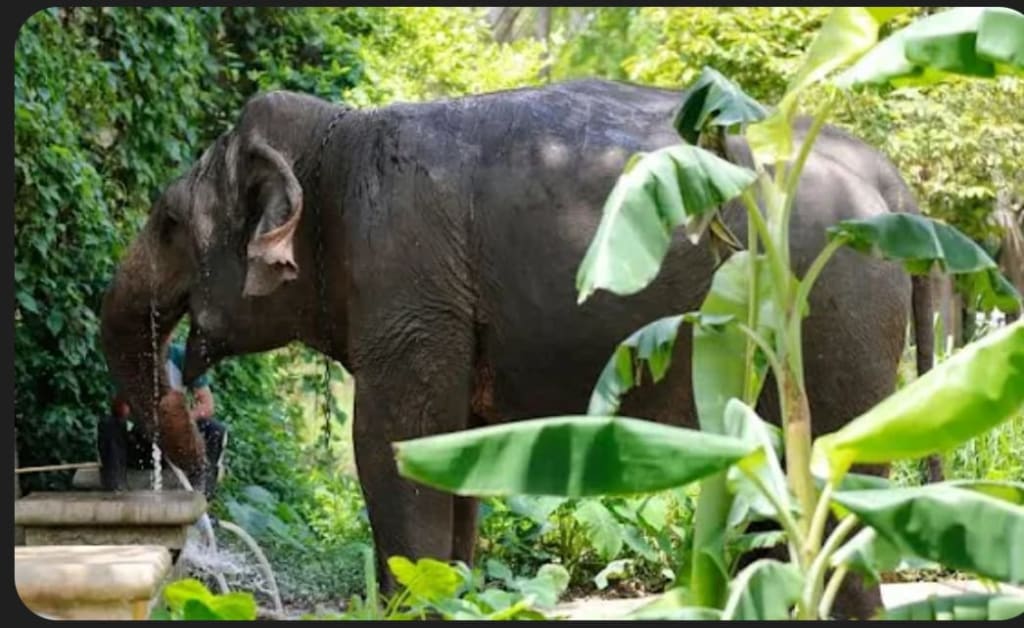
A wild bull elephant in Thailand’s Khao Yai National Park has killed a tourist, marking the third death linked to the same animal and raising urgent concerns about human-wildlife conflict in the region.
The latest victim, 65-year-old Thai man Jiratchai Jiraphatboonyathorn, was fatally trampled while walking near his campsite early Monday morning. Witnesses say the attack happened suddenly and without warning.
A Sudden, Fatal Encounter
Authorities report that Jiratchai and his wife were near the Khlong Pla Kang ranger station campground in the Wang Nam Khiao district when the bull elephant charged.
“He was struck and trampled immediately. There was nothing anyone could do,” said a local ranger.
The victim’s wife escaped unharmed and alerted nearby campers and park officials. Emergency responders confirmed the man had died from trampling injuries.
This is the third confirmed fatality attributed to the same bull elephant, locally known as Plai Oi Wan. Two previous deaths in the park are now officially linked to this animal.
Pattern of Attacks Raises Alarm
Khao Yai National Park is Thailand’s oldest protected area, covering over 2,000 square kilometers and home to a large population of wild Asian elephants. The park draws millions of tourists annually but has seen a rise in fatal human-elephant encounters.
“We are aware of the risks posed by this particular bull. Immediate action is necessary to protect both visitors and local communities,” said Chaiya Huayhongthong, park chief.
Statistics show that over 220 people have been killed in wild elephant attacks across Thailand since 2012, highlighting the growing human-wildlife conflict.
Authorities Plan Action
Following Monday’s attack, park authorities and local police scheduled a meeting to determine the next steps for the bull elephant.
Options include:
Relocation to a remote area away from human activity
Behavior modification programs to reduce aggression
Enhanced monitoring to track movement and alert visitors
“We will probably decide to relocate him or change his behaviour,” said Chaiya, though no final decision has been made.
Meanwhile, police have increased patrols around high-risk areas, including campgrounds and hiking trails.
Human-Wildlife Conflict in Thailand
Experts say that Thailand’s wild elephant population, now approaching 800 individuals, increasingly overlaps with human settlements due to habitat loss and agricultural expansion.
Elephants often travel long distances in search of food and water. These encounters, especially with adult bull elephants, can turn deadly within seconds.
Conservationists stress the importance of:
Tracking high-risk elephants
Educating communities and visitors on safe behavior
Building safe infrastructure in campsites
Collaborating with wildlife experts to implement humane control
Despite being protected by law and revered culturally, elephants remain a significant safety concern in Thailand’s parks and rural areas.
Tourism Under Scrutiny
Khao Yai National Park is a major tourism hub, attracting visitors for its forests, waterfalls, and wildlife. Incidents like this third fatality threaten both lives and the reputation of Thailand’s tourism sector.
Authorities emphasize that most visitors never encounter dangerous wildlife if they follow safety guidelines. Rangers continue to monitor known elephant routes and provide early-warning systems near campsites.
A Wake-Up Call
The death of Jiratchai Jiraphatboonyathorn underscores the delicate balance between human activity and wildlife conservation. With three fatalities tied to a single animal, experts call for urgent strategies to prevent further tragedies.
“This is a clear sign that we must act decisively to ensure human safety while preserving our elephant populations,” said a park official.
As Thailand navigates this human-wildlife conflict, the challenge remains: coexistence without compromising lives. Authorities hope that lessons learned from this incident will lead to safer, smarter, and more sustainable conservation policies.
About the Creator
Keep reading
More stories from Ayesha Lashari and writers in The Swamp and other communities.
‘Superhuman’ Teen Swims Hours to Save Family Stranded Off Australian Coast
Introduction In an astonishing story of bravery, 13-year-old Austin Appelbee has been hailed as “superhuman” after swimming for four hours through rough waters off the Western Australian coast to save his mother and two younger siblings. What began as a relaxing family outing quickly turned into a life-threatening ordeal, highlighting both the unpredictable power of the sea and the extraordinary courage of one young teenager.
By Ayesha Lashari6 days ago in The Swamp
Why Black History Matters in America?
The United States of America is celebrating their 250th anniversary in 2026. I'm proud to be an American and as someone who was born here, I wouldn't imagine myself living anywhere else. This is a country where opportunities are possible. Where anyone can be successful in anything they desire to do. Equality, community, and togetherness are the backbones of what America is and should be about. However, we have an administration who wants to erase and disregard those who have made positive, meaningful impacts in our country, specifically Black figures, such as Martin Luther King, Jr., Rosa Parks, and Maya Angelou. President Trump and his administration have been constantly complaining and fighting against what they call the "Woke agenda". They use this excuse as a distraction from other issues they refuse to address, such as the high cost of living, climate change, and inflation. That equality is dividing America, when in reality, it's bringing us together. Being woke is not tied to a specific political party. No matter where you stand on the political spectrum, you can still care about other people and their plights. Compassion and empathy for others isn't tied to a political party, either. We were taught as children to treat others the way we want to be treated and not judge others because they're different from us. Caring about others isn't a personal attack on your beliefs. It doesn't make you any less of a person. People who are easily offended over African American figures, past or present, or anything related to it, are grasping at straws. Current and future generations need to know who people like Harriet Tubman and Shirley Chisholm were, especially in the classroom. Black History is part of American History. It should be recognized, not hidden or forgotten. Besides, you can't shield children from everything, just because your feelings are easily hurt.
By Mark Wesley Pritchard 7 days ago in The Swamp
‘Sana-mania’ Grips Japan as Ultra-Conservative Takaichi Expected to Secure Election Landslide
Japan’s political landscape is being swept by what commentators have dubbed “Sana-mania,” as Sanae Takaichi, a leading figure of the country’s ultra-conservative movement, appears poised to win a decisive victory in the upcoming election. With opinion polls pointing toward a landslide result, her rise reflects a growing appetite among voters for strong leadership, national identity, and tougher security policies amid regional uncertainty and domestic economic pressure. Takaichi, a former internal affairs minister and long-time ally of the late Prime Minister Shinzo Abe, has campaigned on a platform rooted in traditional values, expanded defense capabilities, and economic nationalism. Her blunt rhetoric and uncompromising positions have energized conservative supporters while alarming critics who fear Japan is moving away from its post-war pacifist orientation. A Wave of Popularity Over recent weeks, campaign rallies across major cities such as Osaka, Nagoya, and Tokyo have drawn unusually large crowds. Supporters wave banners emblazoned with her name and chant slogans calling for a “strong Japan.” Social media platforms have amplified her message, with hashtags linked to Takaichi trending nationwide. Political analysts describe the phenomenon as reminiscent of earlier political surges driven by charismatic figures who promised stability and national pride. Polls released by major Japanese media outlets show Takaichi holding a commanding lead over her rivals, particularly among older voters and those concerned about China’s growing military presence in the region. Younger voters, while more divided, have also shown interest in her promises of technological investment and economic reform. Policy Positions and Ideology At the core of Takaichi’s platform is a pledge to revise Japan’s interpretation of its pacifist constitution. She argues that current security threats—from North Korea’s missile tests to rising tensions in the Taiwan Strait—require Japan to develop stronger defense capabilities and closer cooperation with allies. She has also advocated increased military spending and a more assertive foreign policy, aligning with conservative factions that believe Japan must shed what they view as post-war constraints imposed by history. Her economic agenda emphasizes supply chain independence, protection of domestic industries, and incentives for companies to bring manufacturing back to Japan. Culturally, Takaichi has championed traditional family structures and opposed progressive social reforms. This stance has earned her strong backing from nationalist groups but criticism from civil society organizations and younger, urban voters who favor more liberal policies. Dividing the Nation While “Sana-mania” has electrified her base, it has also intensified polarization within Japanese society. Opposition parties warn that her leadership could undermine Japan’s diplomatic relationships and provoke unnecessary confrontation in East Asia. Some academics argue that her rhetoric risks reopening unresolved historical wounds related to Japan’s wartime past. Human rights groups have expressed concern about her views on education and media regulation, fearing that stricter controls could limit freedom of expression. Feminist organizations are divided: while some praise the possibility of Japan’s first openly nationalist female leader, others criticize her resistance to gender equality reforms. Nevertheless, Takaichi’s supporters see her as a symbol of resilience. “Japan needs a leader who will not bow to foreign pressure,” said one rally attendee in Kyoto. “She speaks with clarity and courage.” Regional and International Implications If elected in a landslide, Takaichi’s leadership could reshape Japan’s regional posture. Relations with China and South Korea may face renewed strain, especially over territorial disputes and historical issues. At the same time, ties with the United States are expected to strengthen, particularly in defense and technology cooperation. Washington has remained cautious in its public statements, emphasizing the importance of stability and alliance coordination regardless of election outcomes. Analysts suggest that a Takaichi government would likely support expanded military exercises and deeper intelligence sharing with Western partners. In Southeast Asia, reactions are mixed. Some governments welcome a stronger Japan as a counterbalance to China, while others worry about escalating tensions that could disrupt trade and security. Economic Uncertainty Japan’s economy remains fragile after years of stagnation, inflationary pressures, and an aging population. Takaichi has promised aggressive stimulus measures and tax reforms to boost growth, but economists question whether her protectionist tendencies could discourage foreign investment. Business leaders have expressed cautious optimism, noting her focus on innovation and digital transformation. However, they remain wary of policies that could isolate Japan from global markets at a time when cooperation is seen as essential for recovery. A Turning Point The upcoming election is widely viewed as a referendum on Japan’s future direction. A landslide victory for Takaichi would signal a shift toward assertive nationalism and a break from the cautious consensus politics that has dominated in recent decades. For supporters, her rise represents renewal and confidence. For critics, it marks a troubling departure from the values that guided Japan’s post-war reconstruction and diplomacy. As “Sana-mania” continues to dominate headlines, one thing is clear: the election is more than a contest of personalities. It is a defining moment for Japan’s identity, security, and role in the world. Whether Takaichi’s surge will translate into long-term stability or deeper division remains uncertain. What is undeniable is that her movement has already reshaped the national conversation, forcing voters to confront fundamental questions about tradition, power, and Japan’s place in an increasingly unstable global order.
By Fiaz Ahmed 3 days ago in The Swamp



Comments
There are no comments for this story
Be the first to respond and start the conversation.