
‘Sana-mania’ Grips Japan as Ultra-Conservative Takaichi Expected to Secure Election Landslide
Surging popularity signals a sharp shift in Japan’s political mood Nationalist rhetoric and security fears fuel a dramatic campaign wave Takaichi’s rise reflects growing demand for strong leadership and traditional values Polls predict decisive victory amid debate over Japan’s future direction A political phenomenon reshapes Japan’s election and regional outlook

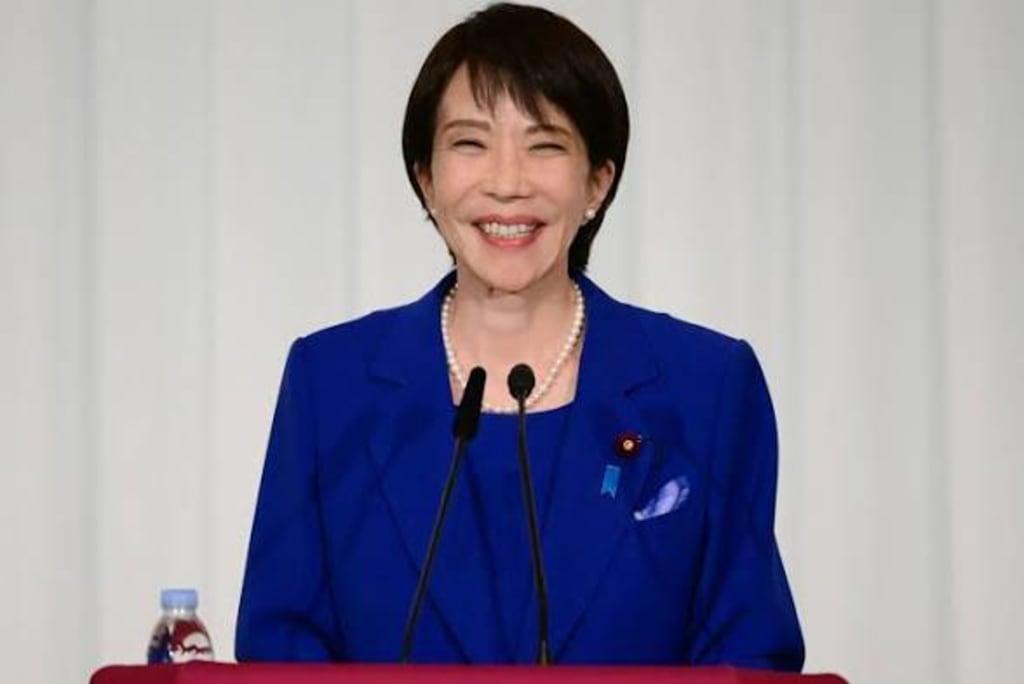
Japan’s political landscape is being swept by what commentators have dubbed “Sana-mania,” as Sanae Takaichi, a leading figure of the country’s ultra-conservative movement, appears poised to win a decisive victory in the upcoming election. With opinion polls pointing toward a landslide result, her rise reflects a growing appetite among voters for strong leadership, national identity, and tougher security policies amid regional uncertainty and domestic economic pressure.
Takaichi, a former internal affairs minister and long-time ally of the late Prime Minister Shinzo Abe, has campaigned on a platform rooted in traditional values, expanded defense capabilities, and economic nationalism. Her blunt rhetoric and uncompromising positions have energized conservative supporters while alarming critics who fear Japan is moving away from its post-war pacifist orientation.
A Wave of Popularity
Over recent weeks, campaign rallies across major cities such as Osaka, Nagoya, and Tokyo have drawn unusually large crowds. Supporters wave banners emblazoned with her name and chant slogans calling for a “strong Japan.” Social media platforms have amplified her message, with hashtags linked to Takaichi trending nationwide. Political analysts describe the phenomenon as reminiscent of earlier political surges driven by charismatic figures who promised stability and national pride.
Polls released by major Japanese media outlets show Takaichi holding a commanding lead over her rivals, particularly among older voters and those concerned about China’s growing military presence in the region. Younger voters, while more divided, have also shown interest in her promises of technological investment and economic reform.
Policy Positions and Ideology
At the core of Takaichi’s platform is a pledge to revise Japan’s interpretation of its pacifist constitution. She argues that current security threats—from North Korea’s missile tests to rising tensions in the Taiwan Strait—require Japan to develop stronger defense capabilities and closer cooperation with allies.
She has also advocated increased military spending and a more assertive foreign policy, aligning with conservative factions that believe Japan must shed what they view as post-war constraints imposed by history. Her economic agenda emphasizes supply chain independence, protection of domestic industries, and incentives for companies to bring manufacturing back to Japan.
Culturally, Takaichi has championed traditional family structures and opposed progressive social reforms. This stance has earned her strong backing from nationalist groups but criticism from civil society organizations and younger, urban voters who favor more liberal policies.
Dividing the Nation
While “Sana-mania” has electrified her base, it has also intensified polarization within Japanese society. Opposition parties warn that her leadership could undermine Japan’s diplomatic relationships and provoke unnecessary confrontation in East Asia. Some academics argue that her rhetoric risks reopening unresolved historical wounds related to Japan’s wartime past.
Human rights groups have expressed concern about her views on education and media regulation, fearing that stricter controls could limit freedom of expression. Feminist organizations are divided: while some praise the possibility of Japan’s first openly nationalist female leader, others criticize her resistance to gender equality reforms.
Nevertheless, Takaichi’s supporters see her as a symbol of resilience. “Japan needs a leader who will not bow to foreign pressure,” said one rally attendee in Kyoto. “She speaks with clarity and courage.”
Regional and International Implications
If elected in a landslide, Takaichi’s leadership could reshape Japan’s regional posture. Relations with China and South Korea may face renewed strain, especially over territorial disputes and historical issues. At the same time, ties with the United States are expected to strengthen, particularly in defense and technology cooperation.
Washington has remained cautious in its public statements, emphasizing the importance of stability and alliance coordination regardless of election outcomes. Analysts suggest that a Takaichi government would likely support expanded military exercises and deeper intelligence sharing with Western partners.
In Southeast Asia, reactions are mixed. Some governments welcome a stronger Japan as a counterbalance to China, while others worry about escalating tensions that could disrupt trade and security.
Economic Uncertainty
Japan’s economy remains fragile after years of stagnation, inflationary pressures, and an aging population. Takaichi has promised aggressive stimulus measures and tax reforms to boost growth, but economists question whether her protectionist tendencies could discourage foreign investment.
Business leaders have expressed cautious optimism, noting her focus on innovation and digital transformation. However, they remain wary of policies that could isolate Japan from global markets at a time when cooperation is seen as essential for recovery.
A Turning Point
The upcoming election is widely viewed as a referendum on Japan’s future direction. A landslide victory for Takaichi would signal a shift toward assertive nationalism and a break from the cautious consensus politics that has dominated in recent decades.
For supporters, her rise represents renewal and confidence. For critics, it marks a troubling departure from the values that guided Japan’s post-war reconstruction and diplomacy.
As “Sana-mania” continues to dominate headlines, one thing is clear: the election is more than a contest of personalities. It is a defining moment for Japan’s identity, security, and role in the world.
Whether Takaichi’s surge will translate into long-term stability or deeper division remains uncertain. What is undeniable is that her movement has already reshaped the national conversation, forcing voters to confront fundamental questions about tradition, power, and Japan’s place in an increasingly unstable global order.
About the Creator
Fiaz Ahmed
I am Fiaz Ahmed. I am a passionate writer. I love covering trending topics and breaking news. With a sharp eye for what’s happening around the world, and crafts timely and engaging stories that keep readers informed and updated.
Keep reading
More stories from Fiaz Ahmed and writers in The Swamp and other communities.
Jewish Australians Must Be Safe From Fear or Harassment. But Shielding Isaac Herzog From Legitimate Protest Is Not the Answer
Australia faces a difficult but necessary balancing act: ensuring the safety and dignity of Jewish Australians while also protecting the democratic right to peaceful protest. This tension came into sharp focus following heightened security measures surrounding the visit of Israeli President Isaac Herzog, with authorities moving to restrict or discourage demonstrations in the name of public order. While concerns over antisemitism and public safety are legitimate, shielding political leaders from lawful protest risks undermining the very freedoms that define Australian democracy. The Real Threat of Antisemitism There is no question that antisemitism has increased globally in recent years, including in Australia. Jewish community organizations have reported a rise in verbal abuse, vandalism, and online harassment. For many Jewish Australians, international conflicts have translated into local anxiety, as political rhetoric spills into social spaces, workplaces, and schools. The responsibility of the Australian government is clear: Jewish citizens must be protected from fear, intimidation, and violence. Harassment based on religion or ethnicity is unacceptable, and law enforcement must respond decisively to threats or hate crimes. These protections, however, should not be conflated with efforts to silence political criticism or suppress public dissent. Criticism of the Israeli government or its policies is not inherently antisemitic. Equating protest with hatred risks diluting the meaning of antisemitism and weakening the fight against genuine prejudice. The Role of Protest in a Democracy Peaceful protest is a cornerstone of democratic society. From civil rights movements to anti-war campaigns, public demonstrations have long served as a means for citizens to express opposition to policies they believe are unjust. Australia’s democratic tradition depends on the ability of people to gather, speak, and challenge power without fear of reprisal. Isaac Herzog’s visit, as that of a foreign head of state, naturally involves heightened security. However, the decision to curtail or tightly control demonstrations around his presence raises serious questions. When governments preemptively restrict protests to avoid political discomfort, they risk turning public safety into a tool of political insulation. Protest does not equate to disorder. In fact, well-organized demonstrations often strengthen democratic legitimacy by allowing grievances to be aired openly rather than suppressed and driven underground. Separating Safety From Silence Authorities often argue that restrictions on protests are necessary to prevent clashes or threats. But this logic becomes problematic when applied too broadly. The presence of protest does not automatically endanger Jewish Australians. On the contrary, conflating political opposition with communal threat risks deepening divisions and creating a false narrative that Jewish identity and Israeli state policy are inseparable. Many Jewish Australians themselves hold diverse views on Israeli politics. Some support the government; others strongly oppose it. Treating criticism of Israel as inherently hostile to Jewish people denies this diversity and risks marginalizing voices within the Jewish community who advocate for peace, reform, or accountability. Protecting Jewish Australians means ensuring their safety from harassment—not shielding political leaders from scrutiny. A Precedent With Consequences Restricting protests around Herzog’s visit sets a troubling precedent. If authorities can silence demonstrations for one foreign leader due to political sensitivity, what prevents the same approach from being applied to others? Democracy weakens when leaders are insulated from criticism, especially on controversial international issues. Civil liberties advocates warn that such measures normalize exceptional powers that can later be used more broadly. The language of security, once expanded, is rarely narrowed again. What begins as protection can evolve into permanent limitation on public expression. This concern is not theoretical. History shows that emergency measures introduced during tense political moments often linger long after the immediate crisis passes. The Risk of Polarization Suppressing protest may also inflame tensions rather than calm them. When people feel silenced, frustration grows. Open, visible protest allows grievances to be expressed within lawful boundaries. It gives communities an outlet for disagreement and encourages dialogue rather than confrontation. Moreover, portraying protesters as threats can harden attitudes on both sides. Jewish Australians may feel they are being targeted for political reasons, while protesters may feel their rights are being sacrificed for diplomatic convenience. Neither outcome fosters social cohesion. True safety is not achieved through silence but through trust in democratic institutions and mutual respect among communities. What a Better Approach Looks Like A more balanced response would protect both community safety and democratic rights. This means: Enforcing laws against hate speech and violence without criminalizing political expression. Allowing peaceful protests in designated areas with appropriate security measures. Engaging with community leaders to reduce tension and clarify that protest is directed at policy, not people. Publicly distinguishing between antisemitism and political criticism. Such an approach affirms that Jewish Australians deserve protection from harassment while also affirming that political leaders—domestic or foreign—are not above scrutiny. A Test of Democratic Maturity Australia’s response to controversial visits and international conflicts is a test of its democratic maturity. It must show that it can protect minorities without eroding civil liberties. Shielding Isaac Herzog from legitimate protest may appear to offer short-term stability, but it risks long-term damage to democratic norms. The goal should not be to eliminate discomfort but to manage disagreement peacefully. Democracy is not defined by the absence of conflict but by how conflict is handled. Conclusion Jewish Australians must be safe from fear, intimidation, and harassment—this is non-negotiable. But safety cannot come at the expense of free expression and peaceful protest. Protecting one community should not require silencing another. Legitimate protest against political leaders, including Isaac Herzog, is not a threat to democracy; it is a sign of it working. The challenge for Australia is to uphold both security and freedom, proving that it can defend its citizens without abandoning its principles. In moments of political tension, restraint and clarity matter most. A society confident in its values does not hide its disagreements—it confronts them openly, lawfully, and with respect.
By Fiaz Ahmed 2 days ago in The Swamp
Why Black History Matters in America?
The United States of America is celebrating their 250th anniversary in 2026. I'm proud to be an American and as someone who was born here, I wouldn't imagine myself living anywhere else. This is a country where opportunities are possible. Where anyone can be successful in anything they desire to do. Equality, community, and togetherness are the backbones of what America is and should be about. However, we have an administration who wants to erase and disregard those who have made positive, meaningful impacts in our country, specifically Black figures, such as Martin Luther King, Jr., Rosa Parks, and Maya Angelou. President Trump and his administration have been constantly complaining and fighting against what they call the "Woke agenda". They use this excuse as a distraction from other issues they refuse to address, such as the high cost of living, climate change, and inflation. That equality is dividing America, when in reality, it's bringing us together. Being woke is not tied to a specific political party. No matter where you stand on the political spectrum, you can still care about other people and their plights. Compassion and empathy for others isn't tied to a political party, either. We were taught as children to treat others the way we want to be treated and not judge others because they're different from us. Caring about others isn't a personal attack on your beliefs. It doesn't make you any less of a person. People who are easily offended over African American figures, past or present, or anything related to it, are grasping at straws. Current and future generations need to know who people like Harriet Tubman and Shirley Chisholm were, especially in the classroom. Black History is part of American History. It should be recognized, not hidden or forgotten. Besides, you can't shield children from everything, just because your feelings are easily hurt.
By Mark Wesley Pritchard 6 days ago in The Swamp
Clintons Agree to Testify in House Epstein Investigation Ahead of Contempt of Congress Vote
Former President Bill Clinton and former Secretary of State **Hillary Clinton have agreed to testify in a U.S. House of Representatives investigation into convicted sex offender Jeffrey Epstein, in an effort to head off or address a planned contempt of Congress vote over their previous refusal to appear. � New Hampshire Public Radio +1 Background: A Standoff Over Subpoenas The House Oversight Committee — chaired by Republican Rep. James Comer (Kentucky) — has been probing the Justice Department’s handling of the Epstein case and a wide release of related documents. As part of that inquiry, the panel issued subpoenas to both Clintons last August seeking sworn testimony about their past interactions with Epstein and his associates. � wlrn.org Both Bill and Hillary Clinton initially refused to sit for depositions, challenging the validity of the subpoenas, describing the investigation as politically motivated, and arguing that other former officials had provided written statements instead of in-person testimony. � wlrn.org The New Agreement to Testify Late Monday, attorneys for the Clintons informed the Oversight Committee that both would appear for depositions on mutually agreeable dates in response to the subpoenas, reversing their earlier refusal. � wlrn.org Their legal team asked that House Republicans agree not to proceed with contempt proceedings if the Clintons comply with deposition requests. � wlrn.org However, Oversight Committee Chair James Comer said that no formal agreement has been finalized yet, noting that nothing is in writing and that he may still insist on terms that meet the committee’s requirements. � wlrn.org Contempt of Congress: Why It Matters The threat of a contempt vote emerged after months of stalemate. The Oversight Committee already advanced criminal contempt of Congress charges against both Bill and Hillary Clinton due to their earlier refusals to testify. If contempt resolutions are approved by the full House, they could be referred to the U.S. Department of Justice, which could pursue prosecution — potentially involving fines or even jail time under rare circumstances. � wlrn.org Historically, holding a former president in contempt of Congress would be virtually unprecedented. Some lawmakers on both sides of the aisle have expressed concern about the political and legal implications of such a move. � wlrn.org Political Reactions and Debate Republicans, especially Comer, have stressed they want sworn depositions rather than limited interviews or written declarations, and have criticized offers from the Clinton legal team that seemed to limit scope or format. � wlrn.org Democrats such as House Minority Leader Hakeem Jeffries have pushed back on contempt moves, arguing they are politically motivated and inconsistent with the committee’s handling of other witnesses. Some Democrats opposed contempt for one or both Clintons earlier as well. � wunc.org The Clintons’ camp has accused Comer of politicizing the probe and failing to hold the previous Trump administration accountable for delays in releasing the Department of Justice’s Epstein case files. � wlrn.org What’s Next: Negotiations and Depositions At this stage: The Clintons have agreed in principle to appear for depositions. The committee has not formally dropped contempt proceedings and insists on conditions it views as necessary for compliance. A full House vote on contempt could still be scheduled if negotiations do not resolve the procedural impasse. � wlrn.org Both sides are negotiating elements such as: The format of testimony (e.g., transcribed interview vs. sworn deposition) Location and timing of the depositions Whether contempt votes will be postponed or withdrawn once testimony is scheduled. � wlrn.org Context: The Wider Epstein Inquiry This development unfolds against the backdrop of a massive release of Epstein-related documents by the Department of Justice earlier this year, which included mention of many high-profile figures and intensified legislative scrutiny of the financier’s networks. � The Guardian Although neither Bill nor Hillary Clinton has been accused of criminal wrongdoing in connection with Epstein’s offenses, their past association with him—especially Bill Clinton’s travel on his plane in the early 2000s—has made them focal points in the congressional inquiry. � wlrn.org Why This Story Matters Whether or not the Clintons’ agreement will actually prevent a contempt vote, it is significant because: It involves former top U.S. officials agreeing to testify to Congress — a rare occurrence. It illustrates how politics and oversight can collide when investigations touch well-known public figures. It demonstrates ongoing bipartisan tensions over both the Epstein investigation and broader questions about congressional authority and transparency. � wlrn.org
By Zahid Hussain5 days ago in The Swamp
The Lesions of Devotion
Every day I set myself down on the freshly cut lawn and strip myself bare. I take my guitar and finger the frets and pick at the strings, listening for dissonance. My life is dissonance. I twist the tuning pegs until each string sounds bright. Then I kneel, calves pointing behind me, kneecaps facing forward. All exposed to the breeze. I close my eyes and play the melody.
By Paul Stewarta day ago in Fiction


Comments
There are no comments for this story
Be the first to respond and start the conversation.