
Why Your Power Bill Is Spiking Faster Than a Nearby Data Center’s
Unpacking the hidden forces driving energy costs up—beyond your own household habits

If you’ve recently opened your electricity bill and felt a pang of disbelief, you’re not alone. Many households across the country are seeing energy costs climb at rates that seem almost unfair—sometimes even faster than the colossal power consumption of nearby data centers, those tech giants quietly humming away in sprawling facilities. But why is this happening? And what does it say about the way energy is generated, distributed, and consumed in today’s world?
The Energy Paradox: Households vs. Data Centers
At first glance, the comparison seems absurd. A typical household uses, on average, 877 kWh per month, while a large data center can consume millions of kilowatt-hours. Yet, in recent months, some families report year-over-year electricity increases of 20–30%, even as data centers operating nearby see relatively smaller percentage jumps in costs. The reason lies in a combination of systemic energy economics, infrastructure, and policy trends.
Transmission Costs and the Hidden Infrastructure Burden
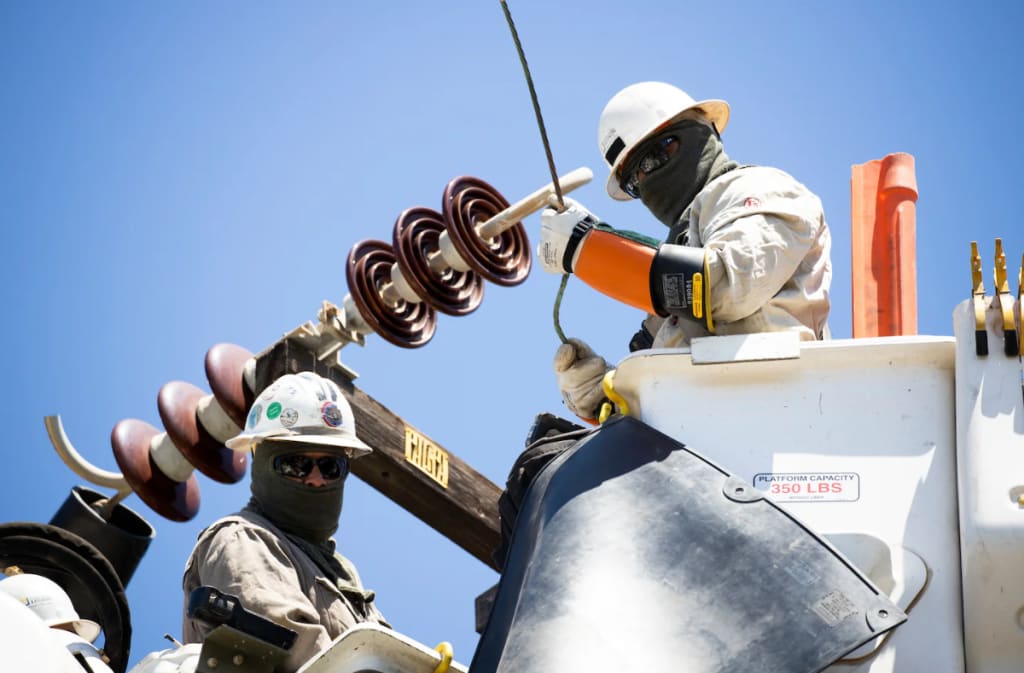
One major factor behind surging residential energy bills is the cost of transmission. Electricity doesn’t magically appear in your home—it travels through a vast network of power lines, substations, and transformers. Maintaining and upgrading this infrastructure is expensive. Utilities often pass these costs directly onto consumers, which means households bear the brunt of price spikes even if overall electricity generation costs remain steady.
Data centers, by contrast, frequently negotiate long-term energy contracts at fixed rates with utilities, giving them a buffer against short-term fluctuations. Some even invest in private power sources like solar arrays or cogeneration systems, further insulating themselves from rising energy prices.
Peak Demand and Time-of-Use Pricing
Residential energy bills are also impacted by the timing of consumption. Utilities increasingly adopt time-of-use pricing, where electricity costs more during periods of peak demand—typically hot afternoons when air conditioners are blasting. Households often face these peak rates without realizing it.
Data centers, on the other hand, often operate around the clock and can shift workloads to off-peak hours or leverage battery storage to minimize costs during high-rate periods. Essentially, your household is paying a premium for energy at the moments you most need it, while tech companies optimize consumption strategically.
Supply Chain Pressures and Fuel Costs
Another invisible driver of rising bills is the cost of fuel used in power generation. Even if your electricity comes from a grid mix including renewable sources, the price of natural gas, coal, and oil can influence overall rates. Geopolitical instability, market speculation, and inflationary pressures on commodities all contribute.
Meanwhile, large energy consumers like data centers can sometimes secure favorable fuel hedges or participate in demand response programs that allow them to scale back usage during high-cost periods, giving them a financial edge over the average household.
Renewable Energy Transition and Short-Term Pain
The transition to renewable energy is critical for combating climate change but comes with transitional costs. Integrating wind, solar, and other renewables into the grid requires new infrastructure, backup systems for intermittent sources, and sometimes higher short-term tariffs. These costs are often reflected more sharply in residential bills, whereas large commercial consumers may benefit from renewable energy credits, tax incentives, or off-site renewable energy contracts.
Regulatory Policies and Local Variations
Energy pricing is not uniform. State and municipal regulations, taxes, and fees can dramatically impact your bill. Areas with aggressive clean energy mandates or carbon pricing may see residential bills spike faster than industrial rates. Utilities frequently argue that households are easier targets for rate adjustments than massive corporations with political influence.
Behavioral and Lifestyle Factors
It’s not all systemic—behavioral factors also matter. A family running multiple appliances during peak hours, leaving lights on, or using old HVAC systems may see bills that rise faster than expected. Meanwhile, data centers invest heavily in energy-efficient cooling, virtualization, and AI-powered workload management, making their energy usage highly optimized despite massive absolute consumption.
Why It Feels Personal
When your bill spikes while a nearby data center quietly hums along, it can feel like an unfair imbalance. But the reality is that energy economics are complex, combining infrastructure costs, fuel markets, policy decisions, and consumption patterns. Households often bear the visible brunt of price changes, while large commercial operations leverage scale, contracts, and technology to shield themselves.
What You Can Do
While the macro-level drivers of rising energy bills may be out of your control, there are still steps you can take:
Audit Your Energy Use: Identify appliances and habits that drive up peak demand and consider energy-efficient replacements.
Shift Usage: Move high-consumption tasks to off-peak hours if your utility offers time-of-use pricing.
Invest in Smart Technology: Programmable thermostats, smart plugs, and energy monitoring systems can make a measurable difference.
Explore Renewable Options: Even small rooftop solar installations or community solar subscriptions can reduce dependency on the grid.
Advocate for Fair Pricing: Participate in local energy forums and support policies that balance residential and commercial energy costs.
The Bigger Picture
The rising gap between household energy bills and data center costs highlights a broader reality: modern energy systems are optimized for scale, not necessarily fairness. Data centers, with their multi-million-dollar infrastructure, long-term contracts, and energy efficiency investments, can buffer themselves against volatility. Households, by contrast, absorb the short-term shocks of grid maintenance, fuel price swings, and regulatory transitions.
Understanding why your power bill spikes faster than a nearby data center is the first step toward regaining control. It’s not just about personal consumption—it’s about recognizing the larger forces at play and taking strategic actions to protect yourself from the next surge.
About the Creator
Muhammad Hassan
Muhammad Hassan | Content writer with 2 years of experience crafting engaging articles on world news, current affairs, and trending topics. I simplify complex stories to keep readers informed and connected.
Keep reading
More stories from Muhammad Hassan and writers in The Swamp and other communities.
By Dumping Tonnes of Sand into the Ocean for 12 Years, China Has Created Brand New Islands from Scratch
Imagine looking out over the South China Sea and seeing islands that weren’t there a decade ago. That’s exactly what’s happening. For 12 years, China has been dredging millions of tonnes of sand from the seabed and dumping it onto shallow reefs. The result? Massive artificial islands with runways, harbors, and even radar systems — entirely built from scratch. It’s an extraordinary engineering achievement. But it’s also a deeply controversial story that touches on geopolitics, environmental damage, and international law. How Do You Build an Island From the Ocean? The process is intense, complicated, and massive in scale. Specialized ships called cutter-suction dredgers scoop up sand and crushed coral from the seabed. That slurry is pumped through pipelines onto reefs, layer by layer, until the area rises above the high-tide line. Once land starts forming, engineers reinforce it with rock and concrete to protect it from storms. Roads, runways, and harbors soon appear, along with radar and communication systems. What was once just a coral reef becomes a fully functional island capable of hosting military aircraft and ships. From a technical standpoint, it’s impressive. From an environmental and geopolitical standpoint, it’s far more complex. Why These Islands Matter The South China Sea is one of the most strategic waterways in the world. About one-third of global maritime shipping passes through here every year, and the sea is rich in oil, gas, and fish. Several countries — including Vietnam, the Philippines, Malaysia, Brunei, and Taiwan — have claims in the region. China, however, claims almost the entire South China Sea under the so-called “nine-dash line.” Artificial islands give China a physical presence in contested waters, turning submerged reefs into military and logistical hubs. Once an island has a runway or a port, it changes the balance of power. It’s no longer just sand; it’s a foothold that can influence maritime traffic, regional security, and international diplomacy. From Coral Gardens to Concrete Islands There’s a darker side to this story. These islands are built on coral reefs — ecosystems that took thousands of years to form. Dredging and dumping sand destroys these reefs almost instantly. Sediment plumes cloud the water, smothering coral and blocking sunlight. Fish nurseries vanish, and entire marine ecosystems collapse. Nearby fishing communities in countries like the Philippines and Vietnam report lower catches as fish populations decline. What was once a thriving marine environment becomes, for many species, a barren landscape. Geopolitical Tensions Artificial islands aren’t just about sand and concrete; they’re about power projection. Once they host ports, airstrips, and radar systems, they act like permanent military outposts in the middle of contested waters. Even after a 2016 international tribunal ruled that China’s expansive claims were legally invalid, Beijing continued construction. Its neighbors are responding: Vietnam has built its own artificial islands, and the U.S. conducts freedom-of-navigation operations to challenge China’s dominance. These islands are flashpoints for tension, with ships and planes moving constantly to assert influence. What began as an engineering project has become a high-stakes geopolitical chessboard. Legal Questions According to the United Nations Convention on the Law of the Sea (UNCLOS), artificial islands do not generate territorial waters or exclusive economic zones. So technically, China cannot claim surrounding seas just because it built land there. But in practice, perception matters. Once an island is equipped with infrastructure and personnel, it becomes a de facto presence that is difficult to ignore. Countries, ships, and planes start operating around it, effectively shifting influence without officially changing borders. International law is struggling to keep up with technological possibilities. Creating new land from the ocean wasn’t something lawmakers imagined when defining maritime rights. Environmental and Strategic Impacts The environmental consequences are serious: coral reefs, fish populations, and coastal ecosystems are destroyed. Yet these islands also reshape the geopolitical map. They allow China to extend its reach in the South China Sea, assert military presence, and strengthen supply chains across contested waters. This raises a broader question: how should the world balance technological innovation with environmental protection and international norms? Artificial islands like these may be an engineering triumph, but they come with costs that ripple across oceans and generations. The Takeaway China’s decade-long project to create islands from the sea is more than a feat of engineering. It’s a story about power, ambition, and the lengths nations will go to secure influence. These islands are now military bases, geopolitical tools, and environmental scars all at once. As technology advances, creating land where none existed will become easier. But the lessons of the South China Sea are clear: reshaping the earth may give a country strategic advantages, but it also disrupts ecosystems, challenges international law, and sparks regional tension. Sand and sea may seem endless, but the consequences of building on top of them will last for generations.
By Muhammad Hassan2 months ago in The Swamp
The Forsyth House Fire
Since 1851, Forsyth House has stood on the corner of Union Street and Gordon Street in the heart of Glasgow. Its iconic, or was... because on Sunday 8th of March, 2026, a fire broke out in a small, seemingly un-named shop in the building and tore all that history down. As I write, the rubble is still unsettled and the street is still blocked off. Central Station is quiet on the upper level, and around 30 small businesses have quite literally gone up in smoke.
By S. A. Crawford3 days ago in The Swamp



Comments
There are no comments for this story
Be the first to respond and start the conversation.