
Why the World Doesn’t Really Want Peace
Despite global calls for unity, war remains profitable — and peace, inconvenient. Here’s the truth behind the system that thrives on chaos
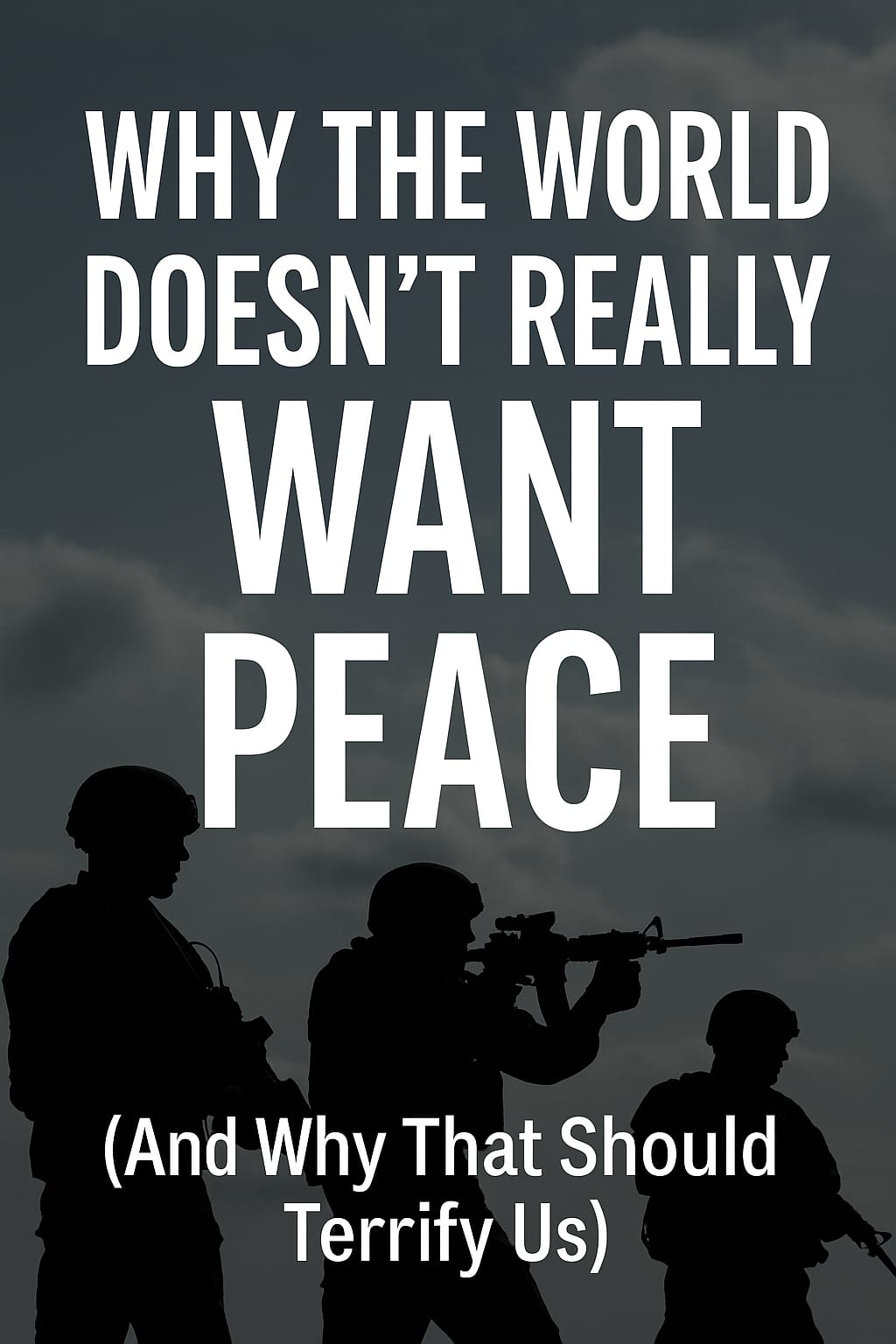
Why the World Doesn’t Really Want Peace
(And Why That Should Terrify Us)
If every world leader stood on a stage today and claimed they wanted peace, would you believe them? Most people would. Because peace sounds noble, beautiful, and human. But the harsh truth is: the world doesn’t truly want peace. At least not the kind of peace that challenges power, money, and control.
Everywhere you look — from global summits to television debates — peace is discussed as a distant dream. We hear about peace talks, peace treaties, peace conferences. But somehow, violence always returns, often stronger and more complex than before. Why? Because war and chaos are deeply profitable.
Peace demands equality. Peace demands listening, sharing, forgiving. These are not values that benefit those who sit at the top. In fact, true peace threatens the systems that rely on conflict to maintain dominance. Peace levels the playing field — and not everyone wants that.
📌 Power Thrives on Chaos
History shows us that every major empire expanded through force. Whether it was the Romans, the British, or today's global superpowers — war was the tool of growth. Peace was never the plan — it was the reward after dominance.
Even in modern times, nations invest billions in weapons, militaries, and defense strategies. Schools, healthcare, and poverty reduction often come second. Why? Because a strong military signals power. A peaceful nation, in contrast, is often seen as vulnerable or naive.
In fact, international aid and diplomacy are often weaponized to serve national interests, not humanitarian goals. Countries fund conflicts indirectly while publicly calling for peace. It’s a game, and the players know the rules well.
💰 War is a Business
The global arms trade is worth over $500 billion annually. If real peace were achieved tomorrow, this massive industry would collapse. Factories would shut down. Jobs would be lost. Entire economies that rely on defense production would weaken.
This is why global powers never completely stop conflicts — they manage them. A low-grade state of fear, of potential war, keeps the machine running. It keeps contracts flowing. It keeps the rich richer.
From private security firms to defense contractors, war is a source of employment and innovation — but at what cost? For every technological breakthrough in warfare, a generation is left traumatized, displaced, or silenced.
📺 The Media Sells Fear
Modern media thrives on conflict. War, terror, division — these make for good headlines. 'Peace Established' rarely goes viral. But 'Nation Under Threat' does.
We are conditioned to fear 'the other' — people of different religions, colors, cultures, or opinions. When we fear, we become easier to manipulate. We become dependent on the very systems that benefit from our fear.
Social media adds fuel to the fire, turning every disagreement into a warzone of comments, accusations, and rage. Algorithms reward outrage — not dialogue.
🌍 True Peace Requires a Revolution
Stopping violence is not enough. Peace requires structural change. It demands social justice, income equality, healthcare access, education for all, and human dignity.
These demands shake the very foundation of systems built on control, inequality, and exploitation. That’s why most leaders speak about peace, but rarely act in a way that makes it possible.
Peace is not the absence of war — it’s the presence of fairness, opportunity, and respect. It is revolutionary. And revolutions are rarely welcomed by those who benefit from the current order.
🕊 So What Can We Do?
Maybe the governments of the world don’t want peace. Maybe the industries and media corporations don’t either. But we, the people, can still choose it.
We can reject hate. We can refuse to let fear divide us. We can teach our children to love, not fight. We can build communities where understanding is more powerful than suspicion.
Real peace may not make headlines. It may not be profitable. But it heals. It strengthens. It uplifts. And that makes it worth fighting for.
So while the world may not truly want peace — we still can. And we must. Because if we don’t work for it, no one else will. The first step to changing the world is believing it can be better — and then acting like it.
About the Creator
Keep reading
More stories from writers in The Swamp and other communities.
Child Among Campers: Ensuring Safety and Fun in Outdoor Adventures
Camping is a cherished pastime for families and adventure seekers alike. From serene lakesides to mountain trails, the outdoors offers a perfect escape from the digital world. However, when children are among campers, extra care and preparation are essential to ensure safety while fostering a fun, educational, and memorable experience.
By Aarif Lashari7 days ago in The Swamp
Europe’s Largest Rare Earths Mine: How EU Funding Clashes with Environmental Laws
Europe is racing to secure its position in the global green technology supply chain, and at the heart of this strategy is a massive rare earths project. Rare earths are essential for everything from electric vehicle batteries to wind turbines, solar panels, and even high-tech electronics. But the continent’s largest planned rare earths mine is highlighting a stark tension: EU funding for strategic mineral projects vs. strict environmental protections.
By Muhammad Hassan6 days ago in The Swamp
Whiskey At Dusk
Guess the whiskey was more important to you in the end, wasn’t it? It was more than the well-being of your friends; more vital than showing up to the places you promised you would and could come to; more critical of a matter than fulfilling your damn responsibilities and getting the press off your back.
By Snarky Lisa5 days ago in Humans


Comments
There are no comments for this story
Be the first to respond and start the conversation.