
Why the Rising Price of Gold Signals a Long-Term Global Shift
From safe-haven asset to economic barometer, gold is quietly telling a bigger story
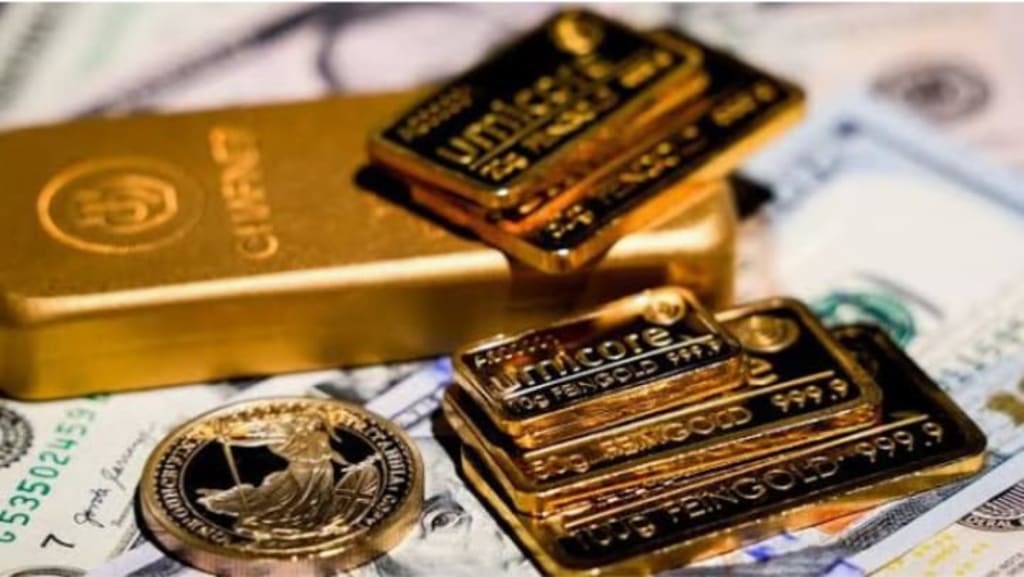
For centuries, gold has been seen as a symbol of wealth, stability, and power. Yet in recent years, its rising price is no longer just about tradition or short-term market fear. Instead, gold is increasingly reflecting a deeper, long-term shift in the global economic and political landscape. What we are witnessing today is not a temporary spike driven by crisis headlines, but a structural change in how nations, investors, and institutions view money, risk, and trust.
Gold’s steady climb is telling us something important: the world is transitioning into a new financial era.
Gold as More Than a Safe Haven
Traditionally, gold has been viewed as a “safe-haven” asset—something investors rush to during wars, recessions, or financial crashes. While that role still exists, it no longer explains the full picture. Even during periods of relative economic stability, gold prices have remained elevated and resilient.
This persistence suggests that gold is now functioning as a long-term hedge against systemic uncertainty, not just short-term fear. Investors are not merely reacting to one crisis at a time; they are preparing for a future where volatility is the norm rather than the exception.
Erosion of Trust in Fiat Currencies
One of the strongest drivers behind gold’s long-term rise is declining confidence in fiat currencies. Massive money printing, ballooning government debt, and persistent inflation have raised serious questions about the sustainability of paper money.
Central banks around the world have expanded their balance sheets at unprecedented levels. While this has helped stabilize economies in the short term, it has also diluted currency value over time. Gold, which cannot be printed or manipulated in the same way, becomes an attractive alternative.
In this context, rising gold prices reflect a loss of trust—not necessarily in any single currency, but in the global fiat system as a whole.
Central Banks Are Sending a Signal
Perhaps the clearest evidence of a long-term shift comes from central banks themselves. Over the past decade, many countries—particularly in Asia and the Global South—have significantly increased their gold reserves.
This is not accidental. Central banks are diversifying away from reliance on the U.S. dollar and other reserve currencies. Gold offers neutrality, liquidity, and independence from political influence. When institutions with long-term horizons and access to elite economic data choose gold, it reinforces the idea that the global financial order is slowly evolving.
Their actions send a powerful message: gold still matters, and it is becoming strategically important again.
Geopolitical Fragmentation and De-Dollarization
The world is becoming more fragmented. Trade wars, sanctions, regional conflicts, and shifting alliances have weakened the idea of a single, unified global system. In this environment, dependence on one dominant currency becomes a risk.
Gold thrives in times of geopolitical tension because it exists outside political systems. It cannot be frozen, sanctioned, or defaulted on. As countries seek to protect their sovereignty and economic independence, gold naturally regains prominence.
The rise in gold prices reflects this broader move toward de-dollarization and multipolarity, where economic power is spread across regions rather than centered in one dominant authority.
Gold vs. Digital Assets: Old Value in a New World
The emergence of cryptocurrencies initially raised questions about gold’s relevance. Yet instead of replacing gold, digital assets have highlighted its strengths. While crypto markets are innovative, they remain volatile, speculative, and heavily sentiment-driven.
Gold, by contrast, has thousands of years of historical credibility. In a digital world filled with algorithms, leverage, and speed, gold offers something rare: permanence. Its rising price suggests that even in an age of innovation, investors still crave assets with proven endurance.
Rather than competing, gold and digital assets together reflect a broader desire to escape traditional financial systems.
Inflation Is Not Temporary
Another reason gold prices signal a long-term shift is the realization that inflation may not be “transitory.” Supply chain restructuring, energy transitions, labor shortages, and demographic changes are reshaping global production.
These structural pressures make sustained inflation more likely over the long run. Gold historically performs well in such environments, acting as a store of value when purchasing power erodes.
The market is increasingly pricing gold not as a reaction to current inflation numbers, but as protection against future economic realities.
A Mirror of Global Anxiety—and Adaptation
Ultimately, gold’s price is a mirror. It reflects collective psychology, institutional strategy, and long-term expectations. The fact that it continues to rise despite changing news cycles suggests a deeper awareness: the old economic playbook may no longer work.
This does not mean collapse is inevitable. Rather, it means adaptation is underway. Gold’s resurgence is part of a broader recalibration—one where resilience, diversification, and trust become central themes.
Conclusion: Listening to What Gold Is Telling Us
Gold is not shouting. It is quietly, steadily signaling change. Its rising price reflects long-term concerns about debt, currency stability, geopolitics, and economic structure. For podcast listeners, investors, and curious observers alike, gold offers a powerful narrative about where the world may be headed.
Ignoring gold’s message would mean overlooking one of the most honest indicators of global transition. In an uncertain future, gold is not just preserving value—it is preserving insight.
About the Creator
Keep reading
More stories from Ayesha Lashari and writers in The Swamp and other communities.
How the Finished 2 Line Across Lake Washington Will Transform Daily Commutes
After years of planning, engineering, and construction, a transformative chapter in Pacific Northwest transit is about to begin. On March 28, 2026, Sound Transit’s long-awaited 2 Line Crosslake Connection will officially open to passengers, completing a continuous light rail link across Lake Washington that connects downtown Seattle, Mercer Island, Bellevue, and Redmond with the greater regional rail network.
By Ayesha Lashari5 days ago in The Swamp
Why Black History Matters in America?
The United States of America is celebrating their 250th anniversary in 2026. I'm proud to be an American and as someone who was born here, I wouldn't imagine myself living anywhere else. This is a country where opportunities are possible. Where anyone can be successful in anything they desire to do. Equality, community, and togetherness are the backbones of what America is and should be about. However, we have an administration who wants to erase and disregard those who have made positive, meaningful impacts in our country, specifically Black figures, such as Martin Luther King, Jr., Rosa Parks, and Maya Angelou. President Trump and his administration have been constantly complaining and fighting against what they call the "Woke agenda". They use this excuse as a distraction from other issues they refuse to address, such as the high cost of living, climate change, and inflation. That equality is dividing America, when in reality, it's bringing us together. Being woke is not tied to a specific political party. No matter where you stand on the political spectrum, you can still care about other people and their plights. Compassion and empathy for others isn't tied to a political party, either. We were taught as children to treat others the way we want to be treated and not judge others because they're different from us. Caring about others isn't a personal attack on your beliefs. It doesn't make you any less of a person. People who are easily offended over African American figures, past or present, or anything related to it, are grasping at straws. Current and future generations need to know who people like Harriet Tubman and Shirley Chisholm were, especially in the classroom. Black History is part of American History. It should be recognized, not hidden or forgotten. Besides, you can't shield children from everything, just because your feelings are easily hurt.
By Mark Wesley Pritchard 6 days ago in The Swamp
Nancy Pelosi Warns Press Freedom Is ‘Under Siege’ After Arrest of Journalist
Former U.S. House Speaker Nancy Pelosi has warned that press freedom is “under siege” following the arrest of a journalist in what she described as a troubling escalation of pressure on independent media and democratic institutions. Her comments come amid growing concern from civil liberties groups and lawmakers that journalists are increasingly being targeted for their reporting. Pelosi issued her warning after authorities detained a reporter covering a politically sensitive investigation, an incident that has drawn sharp criticism from press freedom advocates and sparked renewed debate over the treatment of journalists in the United States and abroad. “The free press is the guardian of our democracy,” Pelosi said in a statement. “When journalists are arrested for doing their jobs, it sends a dangerous message and undermines the constitutional principles that protect all of us. Press freedom is under siege, and we must not be silent.” Arrest Sparks Political Backlash The journalist was taken into custody while reporting on alleged misconduct involving senior public officials, according to media organizations familiar with the case. Law enforcement officials said the arrest was related to obstruction and failure to comply with police instructions, but critics argue the action was disproportionate and politically motivated. Video footage circulating online appeared to show the reporter being escorted away from the scene while identifying themselves as a member of the press. The outlet employing the journalist said they were clearly marked as media and had been performing their duties lawfully. Civil liberties groups quickly condemned the arrest, calling it an attack on press freedom and demanding the journalist’s immediate release. The Committee to Protect Journalists said the detention “raises serious concerns about the growing hostility faced by reporters covering controversial or politically sensitive issues.” Pelosi’s Warning on Democratic Norms Pelosi, who has long positioned herself as a defender of democratic institutions, linked the arrest to a broader pattern of pressure on journalists and public accountability. “This is not an isolated incident,” she said. “Across our country and around the world, reporters are being harassed, intimidated, and jailed for telling the truth. This moment calls for moral clarity and firm action from leaders of both parties.” She urged Congress to strengthen legal protections for journalists and reaffirm the importance of the First Amendment, which guarantees freedom of speech and of the press. Pelosi’s remarks echo earlier warnings from international organizations, including the United Nations and Reporters Without Borders, which have noted a decline in global press freedom over the past decade. Response From Authorities Law enforcement officials defended their actions, saying the arrest was not intended to target journalism but to maintain order at the scene of an ongoing investigation. “Our officers acted in accordance with established procedures,” a police spokesperson said. “The individual was detained after refusing repeated lawful orders to leave a restricted area.” However, media lawyers countered that journalists frequently work in challenging environments and that police must make special efforts to respect their role in documenting events of public interest. “Detaining a reporter who is clearly identified as press sets a dangerous precedent,” said a constitutional law expert. “It risks chilling investigative reporting and discouraging journalists from covering sensitive stories.” Growing Anxiety Among Journalists The incident has intensified concerns within the journalism community about safety and legal risks. Reporters’ unions and newsroom editors said they were alarmed by what they view as a shrinking space for independent reporting. “Journalists are not the enemy of the state,” said a spokesperson for a national press association. “They are essential to transparency and accountability. Arrests like this make our work more dangerous and less secure.” Several media organizations announced they were reviewing their safety protocols and legal support for reporters covering protests, court cases, and political investigations. Some journalists have pointed to an increase in threats, harassment, and legal pressure, both online and in physical settings. They argue that political rhetoric portraying the press as untrustworthy has contributed to a climate in which attacks on reporters are more easily justified. International Implications Pelosi also highlighted the international consequences of the arrest, warning that actions against journalists in democratic societies can embolden authoritarian governments elsewhere. “When a democracy fails to protect its press, it weakens its moral authority to speak out against repression abroad,” she said. Human rights groups echoed that concern, noting that governments in several countries have cited Western examples to defend their own crackdowns on media. “This is how norms erode,” said a senior researcher at a global rights organization. “Each incident makes it easier for others to justify even harsher measures.” Calls for Accountability Lawmakers from both parties have called for an independent review of the arrest. A bipartisan group of representatives said they would seek clarification from the Justice Department and local authorities about the circumstances surrounding the detention. Some have proposed legislation aimed at strengthening protections for journalists, including clearer guidelines for law enforcement interactions with the media and penalties for wrongful arrests. The journalist was later released pending further legal proceedings, according to their employer. The outlet said it would contest the charges and pursue legal action if necessary. A Test for Press Freedom The episode has become a symbol of broader anxieties about the state of press freedom in a polarized political environment. Analysts say that while isolated arrests may not indicate systemic repression, they can have powerful symbolic effects. “Democracy depends on scrutiny,” said a political scientist specializing in civil liberties. “If journalists fear arrest or retaliation, fewer stories get told, and the public becomes less informed.” Pelosi concluded her remarks with a call for vigilance and unity in defending democratic values. “We must stand with journalists who risk their safety to bring us the truth,” she said. “Our democracy is strongest when the press is free, fearless, and protected.” As investigations into the arrest continue, the case is likely to fuel ongoing debate about the balance between law enforcement authority and the constitutional rights of the press—an issue that remains central to the health of democratic societies worldwide.
By Fiaz Ahmed Brohi3 days ago in The Swamp
Rachel Reviews: Lunch Tales: Teagan by Lucille Guarino
Well, I did enjoy this! Sometimes, all you need is just great storytelling and this is what Lucille Guarino delivers here. There's no big message to this book; it's just about folks and families, living their lives and coping with everything that's being thrown at them and finding their way. But when it's done well, like it is here, then you have characters to whom you can relate, tension which leaves you rooting for a better outcome, attraction which has your heart racing and an urge, as a reader, to see the characters happy with the people with whom they belong.
By Rachel Deeminga day ago in BookClub



Comments
There are no comments for this story
Be the first to respond and start the conversation.