
Why the Govt's Approval for 114 French Dassault Rafales Raises Questions
India’s ambitious fighter jet acquisition sparks debate over cost, technology, and strategic priorities

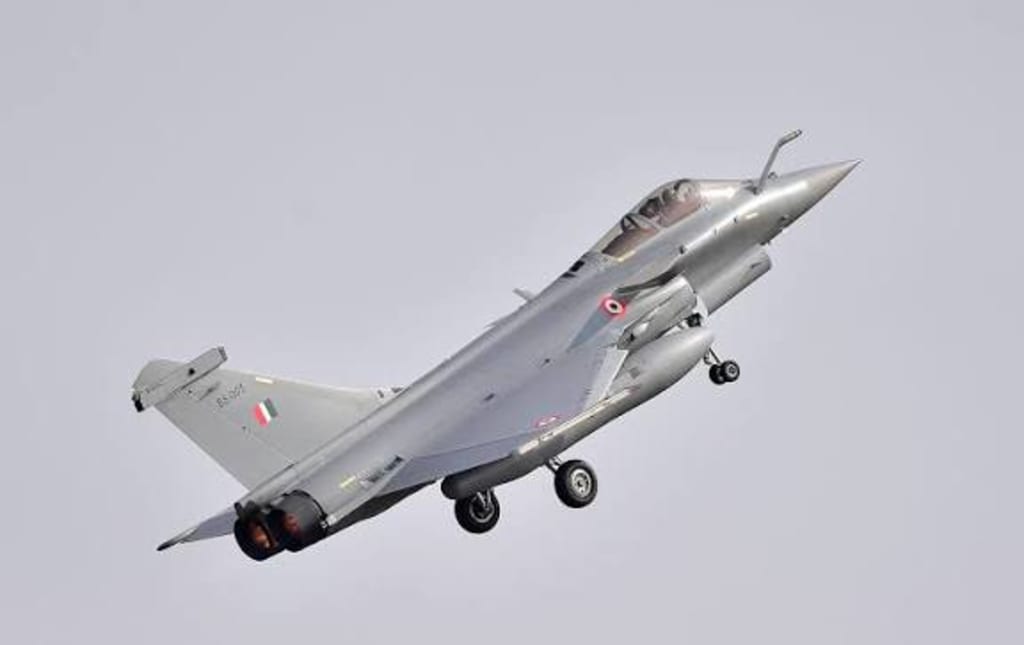
India’s recent approval for the purchase of 114 Dassault Rafale fighter jets from France has reignited discussions about defense planning, procurement processes, and the balance between national security and fiscal responsibility. While the government frames this as a step toward modernizing the Indian Air Force (IAF), critics are questioning whether this massive acquisition is entirely justified or if it masks deeper strategic and operational issues.
The Rafale Deal in Context
The Rafale deal is one of the largest defense procurements in India’s history, valued at over $15 billion. The aircraft, built by French aerospace giant Dassault Aviation, is considered one of the most advanced multi-role fighters in the world, equipped with state-of-the-art avionics, weapons systems, and stealth capabilities. India has already inducted a batch of these jets, and the government’s approval now paves the way for the remaining 114 to be produced and delivered.
Proponents argue that Rafales will significantly enhance India’s air combat capabilities, particularly in high-altitude operations along the northern borders with China and in countering aerial threats from Pakistan. The jets’ ability to carry advanced missiles and precision-guided munitions makes them a formidable addition to the IAF’s fleet.
Questions About Costs and Procurement
Despite the strategic rationale, several questions remain. Critics highlight the high cost per aircraft, which far exceeds what India spends on domestic fighter programs such as the HAL Tejas. While Rafales offer advanced technology, the steep price tag raises concerns about whether such large-scale imports strain India’s defense budget and divert funds from domestic development programs.
Moreover, the approval process itself has drawn scrutiny. Transparency advocates argue that the government’s decision-making lacks sufficient public disclosure and debate. Questions have been raised about how costs were negotiated, why offset agreements with French companies have not fully materialized, and whether India could have leveraged more local manufacturing to reduce expenses and foster the domestic defense industry.
Domestic Defense Industry Implications
India has invested heavily in indigenous defense production under initiatives like “Make in India”, aiming to reduce dependence on foreign suppliers and build local expertise. Critics of the Rafale deal argue that approving 114 foreign jets sends a mixed message to domestic manufacturers. HAL, India’s primary defense aerospace company, has been developing the Tejas fighter and has faced delays due to technical challenges and budget constraints. By purchasing a large number of foreign jets, some fear that local projects may be deprioritized, slowing India’s long-term goal of self-reliance in defense technology.
Supporters counter that Rafales are needed immediately to address capability gaps while domestic programs catch up. They point out that indigenous jets like the Tejas cannot yet match the operational readiness, range, or payload of the Rafale, and that the imported jets complement rather than replace domestic efforts.
Strategic Significance and Regional Dynamics
Beyond cost and procurement concerns, the Rafale acquisition has geopolitical implications. France has been a key defense partner, and the deal strengthens Indo-French relations in the face of evolving security challenges in South Asia and the Indo-Pacific. The jets enhance India’s deterrence posture against potential adversaries and signal India’s commitment to modernizing its armed forces.
However, critics caution that such acquisitions must be balanced with broader defense strategy. They argue that focusing on high-end fighters like Rafales may overlook other critical areas such as unmanned aerial vehicles, cyber defense, naval aviation, and ground-based air defense systems. A holistic approach, they contend, is essential to address the full spectrum of modern warfare threats.
Public Debate and Accountability
The approval of 114 Rafales also raises questions about democratic accountability in defense spending. Large-scale defense deals often involve classified details, but citizens and defense analysts stress the need for transparent justification, oversight by parliamentary committees, and adherence to ethical procurement practices. Public debate ensures that such multimillion-dollar acquisitions serve national interests rather than becoming politically motivated or financially opaque decisions.
Conclusion
India’s decision to approve 114 Rafale jets undoubtedly strengthens the IAF’s capabilities and bolsters strategic ties with France. Yet, it also highlights enduring debates over cost-effectiveness, domestic defense industry development, procurement transparency, and long-term strategic planning. As the Rafales gradually join the fleet, India will need to balance immediate defense needs with the broader goal of building a self-reliant, technologically advanced military.
The Rafale deal is more than a transaction—it is a litmus test for India’s defense policy, industrial strategy, and governance. The government must ensure that while India soars with these cutting-edge jets, it does not lose sight of the bigger picture: developing indigenous capabilities, maintaining fiscal prudence, and preparing comprehensively for the complex security landscape of the 21st century.
About the Creator
Fiaz Ahmed Brohi
I am a passionate writer with a love for exploring and creating content on trending topics. Always curious, always sharing stories that engage and inspire.
Keep reading
More stories from Fiaz Ahmed Brohi and writers in The Swamp and other communities.
Yankee, Go Home’: Greenlanders Protest Trump’s Takeover Plans
In a wave of vocal opposition, thousands of Greenlanders have taken to the streets in protest, chanting “Yankee, go home” as news of former President Donald Trump’s reported interest in acquiring the Arctic island reverberates across the territory. The protests highlight the deep-seated concern among Greenlanders that foreign intervention could undermine their autonomy, culture, and control over strategic natural resources. The controversy began after reports surfaced that Trump had proposed purchasing Greenland, a vast autonomous territory of Denmark, rich in minerals, rare earth elements, and strategic Arctic real estate. Although the plan was officially dismissed by Danish officials, the mere suggestion ignited strong reactions across Greenland, where local residents and politicians see such a move as a threat to their self-governance and national identity. Protests and Public Sentiment In Nuuk, the capital of Greenland, demonstrators waved flags, carried banners, and voiced frustration at what they perceive as a historical pattern of foreign powers attempting to exert influence over their land. “We are not a commodity to be bought,” one protester told local media. Another held a sign reading, “Our home, our rules”, reflecting widespread sentiments that Greenlanders should have the final say in decisions affecting their territory. This public outcry is not just about land ownership—it is deeply tied to the preservation of Greenlandic culture and environmental stewardship. Many Greenlanders fear that foreign control could lead to exploitation of natural resources without consideration for local needs or environmental impact. Greenland, with its fragile Arctic ecosystem, is already facing the consequences of climate change, making sustainable governance a critical priority for its residents. Strategic Importance of Greenland Greenland’s geopolitical significance extends far beyond its ice-covered landscape. It sits atop rich deposits of rare earth minerals essential for modern electronics, renewable energy, and defense technology. Its location also gives strategic access to the Arctic Ocean, which is becoming increasingly navigable due to melting ice. These factors have drawn attention from major powers seeking a foothold in the Arctic, including the United States, China, and Russia. Trump’s interest, while unprecedented in modern times, underscores the island’s importance on the global stage. Analysts suggest that U.S. leaders view Greenland as critical for national security, satellite positioning, and Arctic military strategy. However, Greenlanders and Danish officials alike have made it clear that such considerations cannot override the rights and wishes of the people who call the island home. Danish Response and Autonomy Denmark, which governs Greenland under a framework of autonomous self-rule, swiftly rebuffed any talk of selling the territory. Danish Prime Minister stated that Greenland is “not for sale”, emphasizing that decisions about the island’s future must involve its residents and government. Greenlandic Premier echoed this sentiment, warning that foreign proposals, no matter how influential, would not bypass local authority. The protests, therefore, are not just directed at Trump personally, but at what is perceived as a disregard for Greenlandic sovereignty. Citizens demand that their voices be central in international discussions that impact their land, economy, and environment. Environmental Concerns Beyond political sovereignty, Greenlanders are acutely aware of the environmental implications of foreign intervention. Mining operations, military installations, and large-scale infrastructure projects could disrupt local ecosystems, wildlife habitats, and traditional ways of life, particularly for communities reliant on fishing and hunting. Many protesters argue that Greenland’s fragile Arctic environment must be prioritized over geopolitical and economic ambitions. Climate scientists have also weighed in, noting that Greenland’s ice sheet plays a critical role in regulating global sea levels. Any mismanaged exploitation of the island could have consequences that extend far beyond its borders, affecting coastal communities worldwide. Global Reactions The protests have drawn international attention, highlighting Greenland as a symbol of self-determination in a region increasingly contested for its resources. Observers from neighboring countries, as well as global media outlets, have noted that Greenlanders’ activism sends a clear message: foreign powers must respect local governance, culture, and environmental stewardship. Conclusion The slogan “Yankee, go home” captures the essence of the Greenlandic response—a firm assertion of autonomy in the face of external pressures. While Greenland remains under Danish governance, the island’s residents are clearly sending a message to the world: any discussion about their land, resources, or political future must include their voices. The protests serve as a reminder that even in the era of global geopolitics, the rights and perspectives of local communities cannot be ignored. As the Arctic continues to gain strategic and economic importance, Greenland’s stance may become a template for other regions seeking to protect sovereignty and environmental integrity in the face of international pressure. For now, Greenlanders remain united in their call: their home is their own, and no foreign power—no matter how influential—can override that right.
By Fiaz Ahmed Brohi2 days ago in The Swamp
Squished Between Chairs’ on a Train: How Some Passengers Survived a Crane Collapse
The train was supposed to be uneventful. A routine journey. Phones out, headphones in, coffee cups balanced on fold-down trays. No one on board expected that, within seconds, a normal commute would turn into a scene of chaos, fear, and raw human instinct.
By Aqib Hussain4 days ago in The Swamp
The Devil's Cut
“Comrade, finally you’re awake.” The voice was smooth, sensual. A flickering incandescent bar was all that lit the white, sterile room. All Vladimir remembered was everything going black. He tried to move his arms and found them strapped to the gurney.
By Matthew J. Fromm6 days ago in Fiction




Comments
There are no comments for this story
Be the first to respond and start the conversation.