
Why Saudi Arabia Just Moved Into Syria’s Oil and Gas Fields
Riyadh’s quiet energy diplomacy signals a strategic shift in Middle East power dynamics

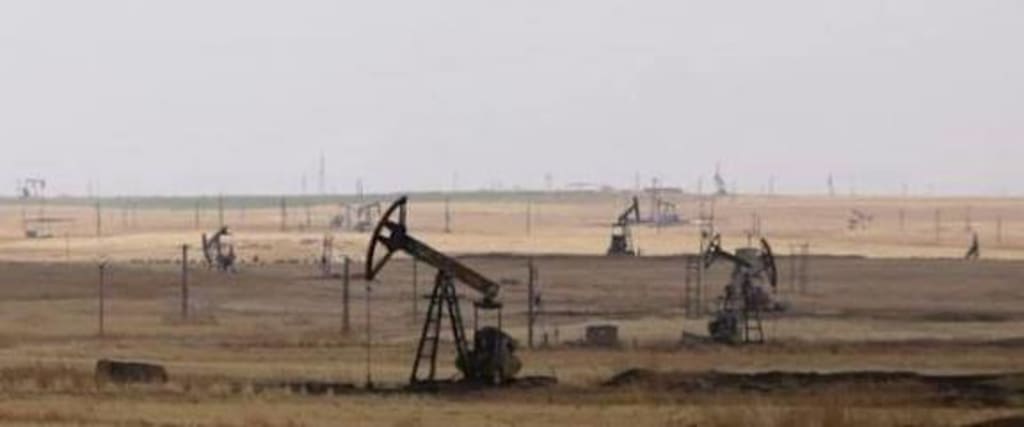
Saudi Arabia’s recent involvement in Syria’s oil and gas sector has surprised many observers, marking a significant shift in Middle Eastern geopolitics. After more than a decade of war and diplomatic isolation, Syria is slowly re-entering regional calculations, and Riyadh’s move signals changing priorities driven by energy security, regional stability, and strategic influence.
A Strategic Energy Calculation
At the heart of Saudi Arabia’s interest lies energy. Syria’s oil and gas reserves are modest compared to Gulf giants, but their strategic location matters. Syria sits at the crossroads of the Middle East, linking the Mediterranean, Iraq, and broader Levant. Control or influence over energy infrastructure in Syria provides leverage over regional energy routes, pipelines, and future reconstruction projects.
Saudi Arabia is also recalibrating its long-term energy strategy. While it remains a global oil powerhouse, the Kingdom is diversifying investments and securing regional energy assets to reduce vulnerabilities. By stepping into Syria’s energy sector, Saudi Arabia positions itself early in a market that could expand rapidly once sanctions ease and reconstruction accelerates.
Shifting Regional Politics
This move reflects broader diplomatic changes. In recent years, Saudi Arabia has softened its stance toward Syria after years of backing opposition forces. The reopening of diplomatic channels and Syria’s gradual reintegration into Arab forums signal a regional consensus: isolation has failed to produce stability.
By engaging economically rather than militarily, Saudi Arabia aims to shape Syria’s post-war future while counterbalancing rivals. Iran and Russia have long dominated Syria’s energy and military sectors. Saudi involvement introduces a new power dynamic, reducing Tehran’s monopoly over Syrian resources and offering Damascus alternatives.
Economic Leverage Over Conflict Zones
Energy investment is also a political tool. By supporting oil and gas development, Saudi Arabia gains influence in areas critical to Syria’s economic recovery. Energy revenues can stabilize state finances, rebuild infrastructure, and reduce reliance on illicit trade networks that flourished during the war.
For Riyadh, this creates leverage. Economic engagement allows Saudi Arabia to push for political moderation, reduced militia influence, and regional cooperation. It is a softer approach compared to past confrontational policies, aligning with Saudi Arabia’s recent emphasis on diplomacy and economic statecraft.
A Signal to Global Powers
Saudi Arabia’s move also sends a message beyond the Middle East. The Kingdom is asserting itself as a regional problem-solver rather than merely an oil exporter. By stepping into Syria’s energy sector, Riyadh demonstrates independence in foreign policy, balancing relations with the United States, Russia, and China.
This strategy fits Saudi Arabia’s broader Vision 2030 goals, which emphasize diversification, foreign investment, and regional leadership. Energy diplomacy becomes a tool to expand influence while avoiding direct military entanglement.
Risks and Challenges
Despite the opportunities, the move is not without risks. Syria remains under heavy international sanctions, particularly from the United States and Europe. Any large-scale Saudi investment must navigate legal and financial restrictions carefully to avoid penalties.
Security is another concern. Many oil and gas fields are located in unstable regions where militias, foreign forces, and local factions operate. Ensuring safe operations will require coordination with Syrian authorities and possibly regional security guarantees.
There is also the reputational risk. Critics argue that engaging economically with Damascus could legitimize a government accused of severe human rights violations. Saudi Arabia must balance pragmatic interests with regional and international perceptions.
What This Means for the Region
Saudi Arabia’s entry into Syria’s oil and gas fields marks a turning point. It suggests that the Middle East is moving away from endless proxy wars toward pragmatic engagement. Economic influence is replacing military confrontation as the preferred tool of power.
For Syria, Saudi involvement offers a chance to diversify partnerships and accelerate reconstruction. For Saudi Arabia, it strengthens regional leadership and limits rival influence. For the broader region, it hints at a future where energy cooperation may help stabilize long-fractured states.
Conclusion
Saudi Arabia’s move into Syria’s oil and gas sector is not just about energy—it is about reshaping regional power, reducing conflict through economic leverage, and positioning the Kingdom as a central architect of Middle Eastern stability. While challenges remain, the decision reflects a calculated shift toward diplomacy, investment, and long-term strategic influence in a region eager for reconstruction and peace.
About the Creator
Fiaz Ahmed Brohi
I am a passionate writer with a love for exploring and creating content on trending topics. Always curious, always sharing stories that engage and inspire.
Keep reading
More stories from Fiaz Ahmed Brohi and writers in The Swamp and other communities.
UK Armed Forces Personnel Recognised in New Year Honours: A Tribute to Service and Sacrifice
Every year, the UK New Year Honours list shines a spotlight on individuals whose dedication has strengthened the nation. In the latest honours list, members of the UK Armed Forces have once again been recognised for their exceptional service, bravery, and commitment—often carried out far from public attention. These awards are not just ceremonial titles; they represent years of sacrifice, leadership, and unwavering duty to the country. Honouring Commitment Beyond the Battlefield The New Year Honours system recognises a wide range of contributions, from frontline operations to training, logistics, humanitarian missions, and veteran welfare. For armed forces personnel, these honours often reflect service that goes far beyond combat. Many recipients have played key roles in peacekeeping missions, disaster relief operations, and international security partnerships. In recent years, UK forces have been involved in complex global challenges, including NATO deployments, counter-terrorism operations, cyber defence, and humanitarian assistance. Honours awarded to service members acknowledge their adaptability in an era where military service increasingly demands diplomatic, technical, and humanitarian skills alongside traditional defence roles. Recognising Leadership and Courage Among those honoured are senior officers whose leadership has guided units through demanding operations and periods of rapid change. Effective leadership in the armed forces is not only about strategy but also about protecting the wellbeing of personnel under command. Many award recipients are praised for fostering morale, inclusivity, and professionalism in high-pressure environments. At the same time, junior ranks and non-commissioned officers are also recognised, highlighting that bravery and excellence are not limited by rank. Acts of courage, innovation, and selfless service—often performed quietly—are central to the honours awarded. Service During Challenging Times Recent honours also reflect the armed forces’ role during national and global crises. From supporting civil authorities during emergencies to assisting with international humanitarian efforts, UK military personnel have repeatedly stepped in when civilian systems were stretched. During times of global uncertainty, armed forces personnel often face extended deployments, family separation, and personal risk. The New Year Honours serve as public acknowledgment of these sacrifices, reminding society that security and stability depend on people willing to serve beyond the call of duty. Diversity and Modern Military Values The honours list increasingly reflects the diversity of today’s UK Armed Forces. Men and women from varied backgrounds are being recognised, underscoring the military’s evolving culture and commitment to equality and inclusion. This diversity strengthens operational effectiveness and ensures the armed forces better represent the society they serve. Recognition is also being given to individuals who have championed mental health support, veteran reintegration, and welfare initiatives. These efforts highlight a growing understanding that caring for service members does not end when their deployment does—it continues throughout their lives. The Impact on Families and Communities While honours are awarded to individuals, the impact extends to families and communities. Behind every service member is a network of loved ones who share the burden of service. Long absences, relocations, and uncertainty are part of military life, and recognition offers families a moment of shared pride and validation. For communities, these honours reinforce the connection between civilians and the armed forces. They humanise military service, shifting the focus from abstract defence policies to real people who dedicate their lives to national service. More Than Medals: A National Message Public recognition through the New Year Honours sends an important message: service matters. In a world where military roles are often debated or misunderstood, these awards reaffirm respect for professionalism, integrity, and sacrifice. They also inspire future generations. Young people considering military careers see that dedication and excellence are valued and acknowledged. This recognition plays a role in sustaining a capable and motivated defence force. Conclusion The recognition of UK Armed Forces personnel in the New Year Honours is more than a formal tradition—it is a meaningful tribute to those who protect, serve, and support the nation in visible and unseen ways. These honours celebrate courage, leadership, and service while reminding the public of the human commitment behind national security. As the UK faces evolving global challenges, the individuals honoured this year stand as examples of resilience and duty. Their recognition is a moment for the nation to pause, reflect, and say a collective thank you to those who serve.
By Fiaz Ahmed Brohi19 days ago in The Swamp
U.S. Pushes for Faster Action to Cut Reliance on China for Rare Earths
Rare Earths: Small Minerals, Massive Power Rare earth elements may sound obscure, but they sit at the heart of modern life. From smartphones and electric vehicles to fighter jets and missile systems, these minerals are essential to both civilian technology and national defense. That reality is why the United States is now pushing for quicker, more decisive action to reduce its dependence on China for rare earth supplies. For years, Washington talked about diversification. Now, it wants speed. The shift reflects growing concern that reliance on a geopolitical rival for critical materials is no longer sustainable in an era of strategic competition. Why China’s Dominance Worries Washington China controls roughly 60–70% of global rare earth mining and an even larger share of processing and refining. Even when rare earths are mined elsewhere, they are often shipped to China for processing. This gives Beijing enormous leverage over global supply chains. U.S. officials fear that in a moment of heightened tension—over Taiwan, trade disputes, or technology restrictions—China could restrict exports. Beijing has already hinted at this possibility in the past, using export controls as a diplomatic tool. From Washington’s perspective, this is not a hypothetical risk. It is a strategic vulnerability that touches everything from renewable energy goals to military readiness. Rare Earths and National Security Few issues unite Democrats and Republicans as strongly as national security. Rare earths fall squarely into that category. Advanced weapons systems rely on these materials for precision guidance, radar, and communications. A disrupted supply could delay production, weaken deterrence, and raise costs dramatically. Pentagon officials have repeatedly warned that dependence on China for defense-critical materials undermines U.S. security. As a result, rare earth supply chains are increasingly viewed through the same lens as energy independence once was. This framing explains the urgency behind Washington’s push for faster action. Why “Quicker Action” Matters Now The U.S. has discussed rare earth independence for over a decade, yet progress has been slow. Mining projects face environmental reviews, local opposition, and long development timelines. Processing facilities require heavy investment and technical expertise that has largely migrated to China. What has changed is the global context. Rising U.S.-China tensions, supply-chain disruptions during the pandemic, and growing demand for clean energy technologies have compressed timelines. Waiting another decade is no longer acceptable to policymakers. Quicker action now means fast-tracking permits, increasing federal funding, and working more aggressively with allies. The Role of Allies in Diversification The United States does not expect to solve the rare earth challenge alone. Instead, Washington is pushing for a “friend-shoring” strategy—building supply chains with trusted partners rather than relying on geopolitical rivals. Australia, Canada, Japan, and several European countries are key players in this effort. Australia already hosts significant rare earth mining operations, while Japan has invested heavily in reducing its own dependence on China after facing export restrictions in the past. By coordinating investment, sharing technology, and aligning regulations, the U.S. hopes to create an alternative ecosystem that can compete with China’s dominance. Environmental and Economic Tensions Rare earth mining is not clean. It involves toxic waste, radioactive byproducts, and significant environmental risks. Ironically, minerals essential for green technologies come with heavy environmental costs at the extraction stage. This creates a political dilemma. Americans want clean energy, but often oppose mining projects in their own communities. Faster action will require balancing environmental protections with strategic necessity—a challenge that has stalled projects in the past. The Biden administration, like administrations before it, faces pressure to prove that domestic mining can be done responsibly without undermining climate commitments. China’s Likely Response Beijing is watching these developments closely. While China has not yet weaponized rare earth exports on a large scale, it understands the leverage it holds. At the same time, China is moving up the value chain—focusing more on advanced manufacturing and less on raw material exports. If the U.S. accelerates diversification successfully, China may respond by tightening export controls in the short term while investing in higher-end technologies that keep it indispensable in other ways. This dynamic underscores that rare earths are not just a resource issue, but part of a broader strategic competition. Economic Implications Beyond Security Reducing reliance on China is not only about defense. It is also about economic resilience. Supply disruptions during the pandemic exposed how fragile global supply chains can be. Rare earth shortages could slow electric vehicle adoption, raise consumer prices, and delay infrastructure projects. By pushing for faster action, Washington hopes to stabilize future growth and protect key industries. Domestic production and allied partnerships could also create jobs and spur innovation, particularly in rural and industrial regions. However, building new supply chains will not be cheap. Consumers and taxpayers may face higher costs in the short term as alternatives to Chinese supplies come online. Challenges That Could Slow Progress Despite political momentum, obstacles remain. Mining projects take years to develop. Processing facilities require specialized knowledge. Workforce shortages, local resistance, and regulatory complexity all pose risks to rapid progress. There is also the danger of overpromising. Policymakers must manage expectations, making clear that reducing reliance on China is a long-term effort, even if action accelerates now. Failure to deliver tangible results could weaken public support and give critics ammunition. Final Thoughts The U.S. push for quicker action in reducing reliance on China for rare earths marks a turning point. What was once a niche policy issue has become a strategic priority at the highest levels of government. This is not about cutting China out of the global economy entirely. It is about ensuring that no single country can control materials essential to modern life and national defense. Speed, coordination, and political will will determine whether Washington succeeds. As competition intensifies, rare earths will remain a quiet but powerful force shaping the future of technology, security, and global influence. The race is no longer just about who has the minerals—but who controls the supply chains that define the 21st centur
By Muhammad Hassan6 days ago in The Swamp




Comments
There are no comments for this story
Be the first to respond and start the conversation.