
Why Notifications Feel More Stressful Than Useful Now
How Alert Overload Ruins Focus, Battery, and the Smartphone Experience

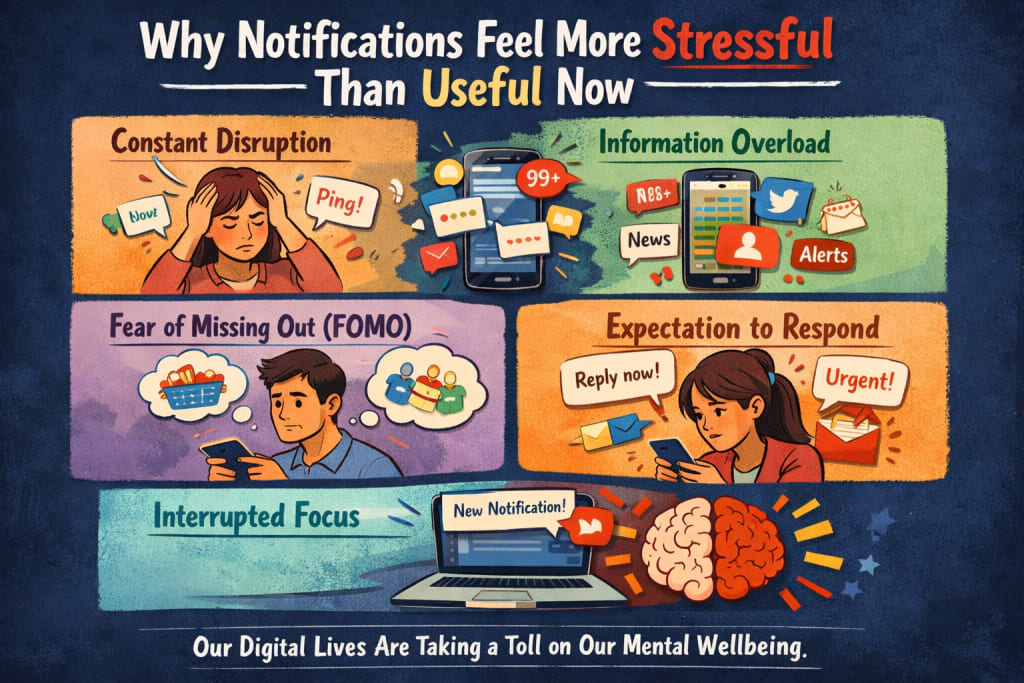
Notifications were intended to aid us.
They were designed to save time, keep us informed, and make sure we didn’t miss what was important.
Somewhere along the road, they stopped doing it.
Now, alerts feel weighty. Distracting. Sometimes tiring.
You look at your phone dozens of times a day—not because you want to, but because something pushed you there. And frequently, what you perceive isn’t essential at all.
This isn’t a lack of discipline.
It’s a design issue.
Notifications Are No Longer Signals—They’re Interruptions
Originally, notifications were alerts for items that required attention.
Calls.
Messages.
Urgent updates.
Today, alerts include:
promotions
reminders you didn’t ask for
“suggested” content
activity from folks you hardly contact with
system nudges and hints
The phone doesn’t discriminate significance very effectively.
Everything comes with the same urgency.
Your brain is compelled to decide—again and again—what matters.
Every Notification Creates a Mental Task
Even when you don’t open a notice, it still consumes energy.
Your brain has to:
notice it
read it
judge it
determine whether to act
That decision-making occurs dozens of times a day.
Individually, it seems little.
Collectively, it generates mental tiredness.
You’re not weary because you’re busy.
You’re fatigued because you’re continuously interrupted.
Notifications Break Focus More Than We Realize.
Focus demands continuity.
Notifications undermine continuity.
Each alert:
draws attention away
interrupts focus
forced context switching
Even brief disruptions might take minutes to recover from psychologically.
That’s why individuals feel scattered—even when they haven’t “done much.”
The phone isn’t only exchanging information.
It’s fragmenting attention.
Why Notifications Drain Battery Too
Notifications don’t merely affect the mind.
They impact the phone.
Each one:
awakens the processor
activates network radios
illuminates the screen
causes animations
More alerts equal more wake-ups.
That contributes to:
standby battery drain
heat accumulation
background activity
A loud phone is a busy phone.
Smart Notifications Made Things Worse, Not Better
Phones aim to be helpful by prioritizing notifications.
In actuality, “smart” alerts often:
guess wrong
surface things you don’t care about
continuously learning from conduct you didn’t plan
The outcome is more alerts—not less.
The phone gets proactive in the incorrect direction.
The Emotional Effect No One Talks About
Notifications provide a slight feeling of duty.
You feel:
pressed to reply
guilty for disregarding
apprehensive about missing something
Even when nothing essential is occurring.
This low-level tension grows throughout the day.
By nightfall, you feel intellectually drained—with no apparent explanation why.
Why Turning Everything Off Isn’t the Answer
Some people attempt radical solutions:
muting everything
utilizing focus modes continually
monitoring the phone only at specified times
These tactics work temporarily—but they’re hard to continue.
The issue isn’t alerts existing.
It’s notifications being undisciplined.
The Shift That Actually Helped Me
I didn’t silence my phone.
I curated it.
I asked:
Does this notice help me act?
Or does it merely demand attention?
If it didn’t help, it went away.
Messages remained.
Calls stayed.
Everything else has to earn its spot.
The phone didn’t fall quiet.
It became courteous.
Why Fewer Notifications Feel Like a Better Phone
When notifications are reduced:
focus improves
battery stabilizes
the phone feels calmer
you cease responding continually
The gadget feels helpful again—not demanding.
Nothing about the hardware changed.
The experience did.
This Is a Design Problem, Not a Personal Failure
If alerts seem overwhelming, it’s not because you lack control.
Phones are built to compete for attention.
Reclaiming that attention isn’t about discipline—it’s about limits.
Final Reflection
Notifications were supposed to help users.
Now, users serve alerts.
Reversing that connection doesn’t entail uninstalling applications or renouncing technology.
It needs determining what merits disturbing your life.
A tranquil phone isn’t a weaker one.
It’s a better one.
Disclaimer
This article represents my findings and general smartphone notification behavior. Notification features and controls may vary based on device and operating system

About the Creator
abualyaanart
I write thoughtful, experience-driven stories about technology, digital life, and how modern tools quietly shape the way we think, work, and live.
I believe good technology should support life
Abualyaanart
Keep reading
More stories from abualyaanart and writers in The Swamp and other communities.
Two Wounded in a Shooting with U.S. Federal Agents in Portland, Oregon
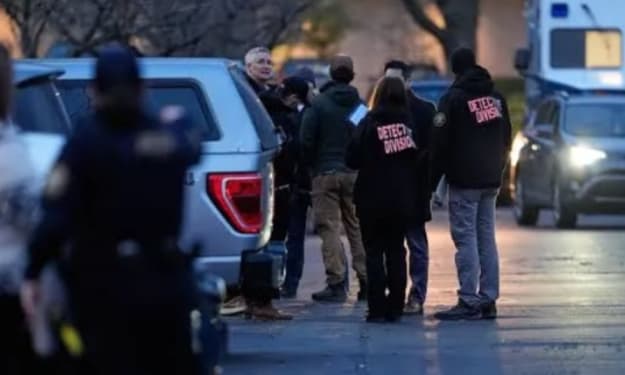
Portland, Oregon, once again found itself at the center of a national debate after two people were wounded in a shooting involving U.S. federal agents in early January. The incident, which unfolded in a residential area of Southeast Portland, has raised serious questions about the role of federal law enforcement in American cities, the use of force during immigration operations, and the growing divide between federal agencies and local governments. As investigations continue, the shooting has become more than a single law-enforcement encounter. It now symbolizes deeper political, legal, and social tensions that have been simmering for years in Portland and across the United States. What Happened in Portland According to initial reports, the incident occurred during what federal authorities described as a targeted enforcement operation. Agents from the Department of Homeland Security, including officers connected to Customs and Border Protection, attempted to stop a vehicle in Southeast Portland. Federal officials claim that during the stop, the situation escalated rapidly. They allege that the driver attempted to use the vehicle as a weapon, placing agents in immediate danger. In response, at least one federal agent discharged a firearm, striking two individuals inside the vehicle. The wounded individuals later sought medical assistance, prompting local Portland police to respond. Importantly, city police confirmed they were not involved in the federal operation itself and only became aware of the incident after emergency calls were made. Both individuals were transported to a hospital and were reported to be in stable condition. One of the wounded was later taken into federal custody following treatment. Conflicting Narratives and Unanswered Questions As with many high-profile law-enforcement shootings, competing narratives quickly emerged. Federal authorities framed the shooting as a matter of self-defense, emphasizing that agents faced a life-threatening situation. They also suggested that the individuals involved may have been connected to organized criminal activity, though these claims have not been independently verified in court. Local leaders and civil rights advocates, however, expressed alarm. Portland officials questioned why heavily armed federal agents were conducting operations in residential neighborhoods without coordination with local law enforcement. Critics argue that such actions increase the risk of violence and undermine public trust. At the heart of the controversy is transparency. Many residents are demanding the release of body-camera footage, clear explanations of the agents’ authority, and answers about whether de-escalation tactics were used before gunfire erupted. Reaction from City and State Leaders Portland’s city leadership responded swiftly. The mayor and several city council members publicly called for a pause on federal immigration enforcement operations within city limits until a full investigation is completed. Oregon’s governor echoed those concerns, describing the shooting as “deeply troubling” and emphasizing the need to protect community safety while respecting the rule of law. The state attorney general announced an independent review to determine whether the federal agents acted within legal boundaries. This pushback reflects a long-standing tension between Oregon’s state policies — which emphasize sanctuary protections — and federal enforcement strategies that prioritize aggressive immigration operations. Community Response and Public Protests The shooting sparked immediate protests across Portland. Demonstrators gathered near federal buildings and downtown streets, holding signs calling for accountability and chanting against what they described as the “militarization” of immigration enforcement. For many community members, especially immigrants and people of color, the incident intensified existing fears. Advocacy groups warned that federal operations conducted without local oversight can create a climate of fear, discouraging residents from reporting crimes or cooperating with authorities. Protesters also linked the Portland shooting to a broader national pattern, citing other recent incidents involving federal agents and civilians. To them, the shooting was not an isolated case, but part of a systemic issue demanding national attention. A Broader National Debate The Portland incident comes at a time when the United States is deeply divided over immigration policy and federal power. Supporters of strong federal enforcement argue that agents must be allowed to act decisively to combat serious crime, including gang activity and human trafficking. They contend that restricting federal operations would leave dangerous individuals free to operate. Opponents counter that aggressive tactics often blur the line between law enforcement and military action. They argue that without accountability and local cooperation, federal agents risk violating civil liberties and escalating routine encounters into deadly confrontations. Legal experts also point out that holding federal agents accountable can be challenging due to complex jurisdictional rules and legal protections, further fueling public frustration. What Happens Next Investigations into the shooting are ongoing, with federal and state authorities reviewing evidence, witness statements, and operational protocols. Whether disciplinary action, policy changes, or legal consequences will follow remains uncertain. What is clear is that the shooting has reignited a conversation Portland knows well — about who holds power, how it is exercised, and at what cost. For now, the city waits. Residents, activists, and officials alike are watching closely, aware that the outcome of this case could shape the future of federal enforcement not only in Portland, but across the country.
By Muhammad Hassana day ago in The Swamp
If You Love Me, You'll Do It
I met Jason when I was five years old. I could say that I loved him from the moment I saw him. He was so handsome to me and I felt in awe by his presence. When they introduced him as the new kid in school, I wanted to be his friend right away. I remember it like it was yesterday. I remember his smile and how he didn't seem shy. He appeared confident and ready to learn. I waved at him and said "hello," before anyone else could even say a word. He sat next to me, and I asked him if he wanted to be friends. He looked so happy as he said, "Yes!"
By Sidney Smith (Sid Smith)5 days ago in Fiction



Comments
There are no comments for this story
Be the first to respond and start the conversation.