
Why Gold and Silver Prices Are Surging at Breakneck Speeds
A perfect storm of economic uncertainty, inflation fears, and geopolitical tensions is sending gold and silver prices soaring, attracting investors worldwide.

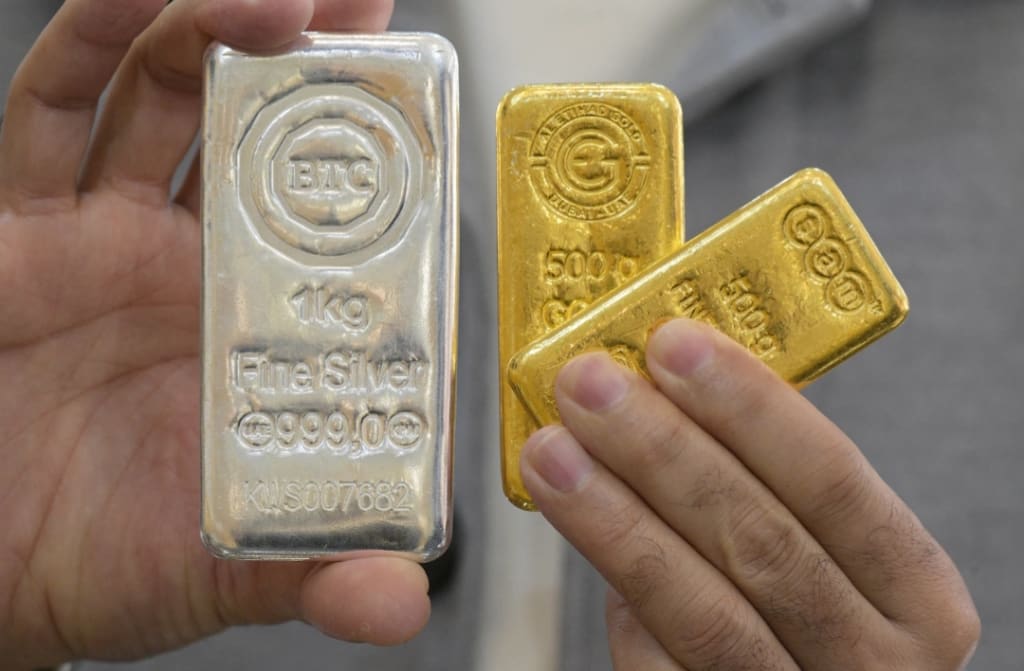
Gold and silver — long considered safe-haven assets — have recently seen explosive price growth, captivating both retail and institutional investors. While gold has traditionally been the go-to refuge during times of economic turbulence, silver’s surge has also drawn attention due to its dual role as both an industrial metal and an investment asset. Understanding why these precious metals are climbing at breakneck speeds requires examining the interplay of macroeconomic pressures, global market dynamics, and investor psychology.
---
Global Economic Uncertainty Drives Safe-Haven Demand
One of the primary drivers behind the surge in precious metals is economic uncertainty. Inflationary pressures, fluctuating interest rates, and fears of potential recessions are prompting investors to seek stability in tangible assets like gold and silver.
Inflation Hedge: As central banks around the world inject liquidity into economies and governments grapple with rising prices, gold and silver offer a hedge against currency devaluation. Unlike fiat money, these metals maintain intrinsic value over time.
Market Volatility: Stock market fluctuations and concerns about tech and real estate sectors have reinforced the role of precious metals as a safe-haven investment, drawing capital from riskier assets.
Financial analysts note that during periods of heightened uncertainty, gold often leads the charge, with silver following closely due to its similar store-of-value properties combined with industrial demand.
---
Geopolitical Tensions Fuel Investor Fear
Geopolitical instability also plays a critical role. Tensions in regions such as the Middle East, Eastern Europe, and parts of Asia have heightened concerns over energy supply disruptions, trade conflicts, and military confrontations. These factors encourage investors to diversify into hard assets that are less susceptible to political and economic shocks.
For instance, gold historically spikes during conflicts or periods of heightened military activity, reflecting its role as a global financial safeguard. Silver, though smaller in market size, often mirrors gold’s movements while benefiting from additional industrial demand.
---
Industrial Demand Powers Silver’s Surge
While gold is almost purely a financial asset, silver has unique dual utility, combining investment appeal with industrial demand. Silver is crucial in electronics, solar panels, medical devices, and electric vehicles, making it sensitive not only to financial markets but also to technological adoption and manufacturing trends.
The global push toward green energy and renewable technologies has intensified silver demand. Solar panel production, in particular, consumes large quantities of silver, creating a structural shortage that puts upward pressure on prices. Unlike gold, which is mined primarily for investment, silver’s industrial applications add a layer of sustained demand growth, driving prices higher during economic expansion.
---
Supply Constraints Tighten the Market
Another factor accelerating price surges is limited supply growth. Gold and silver mining faces challenges including declining ore grades, rising extraction costs, labor constraints, and geopolitical risks in key mining regions.
Gold: Large-scale gold deposits are becoming increasingly difficult to access, and the industry’s focus on sustainability and environmental regulations has slowed new production.
Silver: Although abundant in some deposits, silver is mostly a byproduct of base metal mining, which makes its supply relatively inflexible. This limited ability to scale production in response to rising demand has contributed to rapid price appreciation.
---
Monetary Policy and Currency Movements
Central bank policies, especially in the United States and Europe, have a direct impact on gold and silver prices.
Low Interest Rates: When interest rates are low, the opportunity cost of holding non-yielding assets like gold and silver decreases, making them more attractive to investors.
Weakening Dollar: Since gold and silver are typically priced in U.S. dollars, a weaker dollar makes these metals cheaper for foreign buyers, boosting global demand.
Recent fluctuations in monetary policy signals, including indications of slower-than-expected rate hikes, have created a surge in precious metal purchases, amplifying price momentum.
---
Investor Psychology and Market Speculation
Market psychology plays an often-overlooked role. Precious metals, particularly during periods of sharp price increases, attract speculative buying, creating a feedback loop where rising prices spur more investment, further driving prices upward.
ETFs and Retail Participation: Exchange-traded funds (ETFs) focused on gold and silver have seen inflows from both institutional and retail investors, increasing demand without corresponding growth in physical supply.
Fear of Missing Out (FOMO): Social media discussions, investment forums, and global news coverage contribute to rapid shifts in investor behavior, amplifying price volatility in short periods.
---
Comparing Gold and Silver Surges
While both metals are benefiting from the same macroeconomic and geopolitical factors, silver’s higher volatility and industrial relevance mean it can experience steeper short-term gains than gold. Historically, the gold-silver ratio (the number of ounces of silver required to buy one ounce of gold) has been used by traders to identify relative value opportunities. The recent price movements have narrowed this ratio, suggesting that silver may continue to outperform gold in the near term.
---
Outlook: Will the Rally Continue?
Analysts are cautiously optimistic but warn that precious metal markets are sensitive to changes in interest rates, inflation trends, and geopolitical events. Sustained demand from safe-haven investors, combined with industrial pressures and limited supply, points to continued bullish momentum, though sharp corrections remain possible in the short term.
Key factors to monitor include:
Central bank policy announcements and interest rate changes
Geopolitical developments and energy security concerns
Industrial growth in technology and green energy sectors
Market sentiment and speculative flows in ETFs and futures markets
---
Conclusion: A Perfect Storm Driving Prices
The current surge in gold and silver prices is not caused by a single factor, but by a convergence of economic uncertainty, geopolitical tension, supply constraints, industrial demand, and investor behavior. For investors, policymakers, and industrial stakeholders, this environment highlights both opportunity and risk.
As global markets remain volatile, gold and silver continue to demonstrate their dual role as financial hedges and industrial commodities, cementing their place at the center of the world’s economic stage. Whether the rally continues will depend on how macroeconomic and geopolitical conditions evolve — but for now, both metals are moving at breakneck speeds, capturing the attention of investors worldwide.
About the Creator
Keep reading
More stories from Salaar Jamali and writers in The Swamp and other communities.
NATO Chief Rutte: “Keep on Dreaming” If You Think Europe Could Defend Itself Without the US — As It Happened
In a forceful statement that has reverberated through diplomatic circles, NATO Secretary‑General Mark Rutte told European lawmakers that Europe simply cannot defend itself without the United States, and that anyone who believes otherwise should “keep on dreaming.” His remarks came during a high‑profile hearing in the European Parliament in Brussels, amidst ongoing debates about defence spending, strategic autonomy, and NATO’s future — particularly as geopolitical tensions persist with Russia and China.
By Salaar Jamalia day ago in The Swamp
Hyundai Motor to Recall Nearly 84,000 US Vehicles Over Instrument Panel Display Failure, NHTSA Says
Hyundai Motor Company has announced a major recall affecting nearly 84,000 vehicles in the United States, after the National Highway Traffic Safety Administration (NHTSA) flagged an issue with instrument panel displays. According to officials, the displays in certain models may fail unexpectedly, preventing drivers from seeing critical information such as speed, fuel level, and warning lights. The recall highlights the importance of vehicle safety oversight and timely responses to potential defects.
By Muhammad Hassan4 days ago in The Swamp
Joshua Kershaw: Heartbreaking Update as Body Found in Thailand Search for Brit
Tragedy struck as authorities in Thailand confirmed the discovery of a body believed to be British man Joshua Kershaw, who had gone missing in recent weeks. The news brings a heartbreaking update to a search that captured global attention, highlighting both the dangers travelers can face abroad and the determination of authorities and loved ones to find missing individuals.
By Aarif Lashari7 days ago in The Swamp




Comments
There are no comments for this story
Be the first to respond and start the conversation.