
Why Did Iran Strike Israel? Unpacking a High-Stakes Escalation
From covert tensions to overt conflict: What’s behind Iran's direct military action against Israel?

Introduction
In a historic and alarming shift, Iran launched a direct military strike against Israel in April 2024, marking a significant escalation in their decades-long proxy conflict. While hostilities between the two nations have simmered for years—through cyber warfare, intelligence operations, and regional militias—this open attack raised global concern about a broader Middle East war. But what exactly prompted Iran’s action? And what are the implications?
This article explores the full context behind the Iranian strike, including the reasons, execution, and consequences of one of the most dangerous developments in modern Middle Eastern geopolitics.
1. Background: A Long-Standing Shadow War
Iran and Israel have been adversaries for decades, but their conflict has often unfolded indirectly—through espionage, cyberattacks, and proxy battles in places like Syria, Lebanon, and Gaza. Iran supports groups like Hezbollah and Hamas, whom Israel considers existential threats. Meanwhile, Israel has conducted hundreds of airstrikes against Iranian military installations in Syria, and has been accused of assassinating Iranian nuclear scientists.
This covert “shadow war” has remained below the threshold of full-blown conflict—until now.
2. Trigger: The Damascus Consulate Airstrike
The direct Iranian strike came shortly after a suspected Israeli airstrike targeted Iran’s consulate in Damascus, Syria, on April 1, 2024. That airstrike killed seven members of Iran’s Islamic Revolutionary Guard Corps (IRGC), including two high-ranking generals.
From Iran’s perspective, this was more than just a military blow—it was a symbolic attack on its sovereignty and diplomatic presence. Iranian leaders vowed swift retaliation, branding the incident a violation of international law.
3. The Strike: Symbolic Force, Controlled Impact
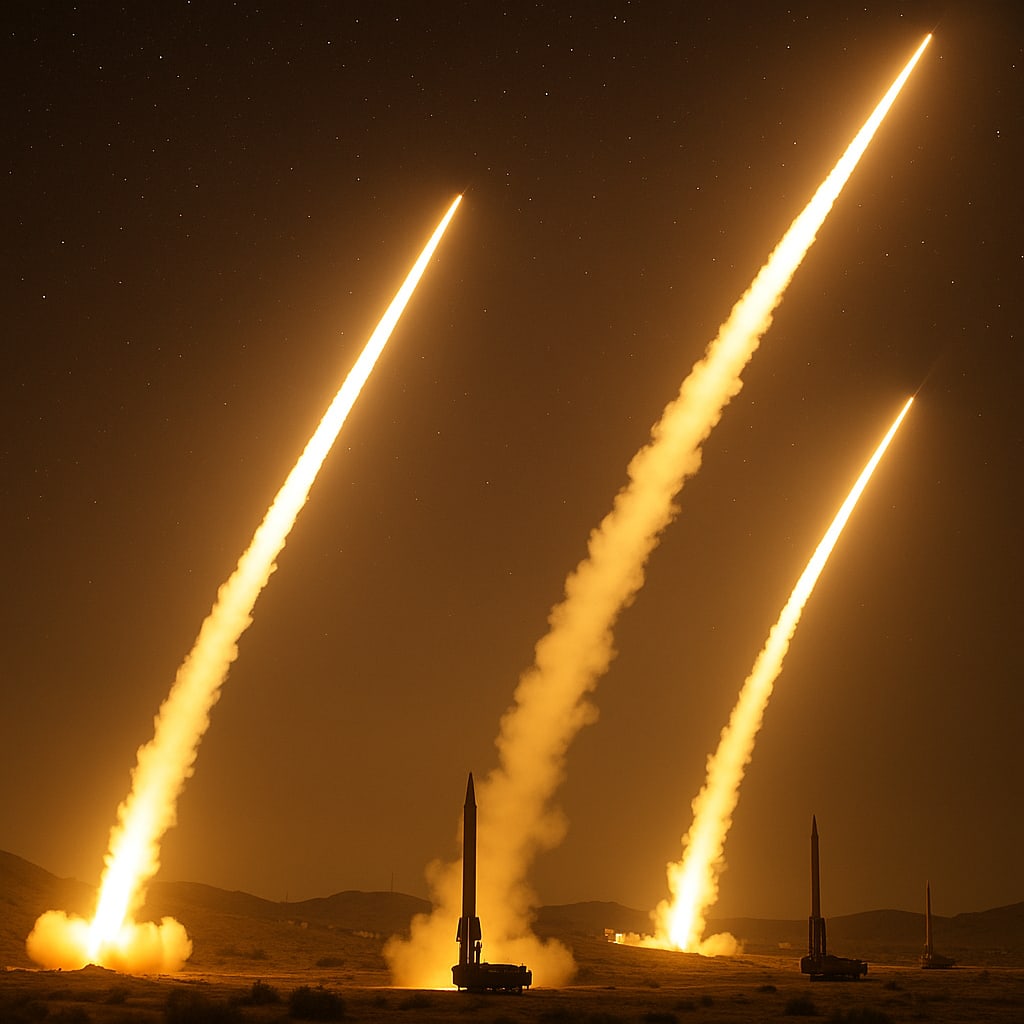
In response, Iran launched more than 300 projectiles—drones, cruise missiles, and ballistic missiles—toward Israel on April 13, 2024. This marked the first time Iran had launched a direct attack from its own territory onto Israeli soil.
However, the scale of damage was relatively limited. Most of the incoming threats were intercepted by Israel’s Iron Dome and Arrow defense systems, with support from the U.S., U.K., France, and Jordan. Only a few missiles reached Israeli territory, causing minor injuries and minimal infrastructure damage.
Analysts believe Iran intended this strike to be a demonstration of capability and resolve, rather than a bid for war. The move sent a message: Iran could act directly when pushed too far—but it still wished to avoid an uncontrollable regional conflict.
4. Strategic Objectives Behind Iran’s Strike
Iran’s actions were driven by several strategic motives:
- Deterrence: Iran wanted to reestablish red lines by showing that it would respond forcefully if its senior officials or diplomatic facilities were targeted.
- Domestic Pressure: After losing key IRGC members and facing criticism at home, the regime needed to project strength to maintain internal unity.
- Regional Messaging: By attacking directly, Iran signaled to its allies (like Hezbollah, the Houthis, and Hamas) that it wouldn’t rely solely on them to fight its battles.
- International Posturing: Iran may have also been testing U.S. and European reactions, while demonstrating its missile capabilities in a way that might shift global nuclear negotiations.
5. Israel’s Response: Contained, Yet Cautious
Despite the provocation, Israel’s counter-response was measured. Rather than launching an all-out retaliation, Israel conducted limited strikes on Iranian targets in Syria, avoiding escalation with Iran itself.
Israel appeared to recognize Iran’s strike as a calculated move—intended more for optics and political signaling than destruction. With allies like the United States urging restraint, both sides seemed to step back from the brink—for now.
6. Implications for the Region
While the immediate conflict didn’t escalate into full-scale war, the incident has drastically shifted the regional balance. Several key takeaways have emerged:
- New Precedent: Iran’s direct strike breaks decades of strategic ambiguity, setting a dangerous new precedent for state-on-state attacks.
- Proxy Groups Re-energized: Iran's proxies—like Hezbollah in Lebanon and the Houthis in Yemen—could become more active, believing that Iran now backs more aggressive postures.
- Diplomatic Fallout: Israel has lobbied for further sanctions on Iran, while Tehran has used the strike to rally domestic and regional support against perceived Western double standards.
- Global Involvement: The U.S., U.K., and NATO allies have reaffirmed their commitment to Israel’s defense, suggesting a more openly militarized Western stance in the region.
Conclusion: A Fragile Peace, a Boiling Conflict
Iran’s direct strike on Israel represents a turning point in their hostile relationship. While it was carefully designed to avoid mass casualties and broader war, it shattered long-held assumptions that the two powers would only fight through proxies.
With tensions still high, the Middle East remains on edge. The situation underscores the dangerous unpredictability of retaliatory strikes and the thin line separating symbolism from catastrophe. Unless diplomacy finds a stronger foothold, the next exchange might not be so restrained.
About the Creator
Saboor Brohi
I am a Web Contant writter, and Guest Posting providing in different sites like techbullion.com, londondaily.news, and Aijourn.com. I have Personal Author Sites did you need any site feel free to contact me on whatsapp:
+923463986212
Keep reading
More stories from Saboor Brohi and writers in The Swamp and other communities.
Ukraine Under Fire: Russia Launches Summer Offensive With Unprecedented Airstrikes
Ukraine Under Fire: Russia Launches Summer Offensive With Unprecedented Airstrikes As the war in Ukraine enters its third summer, a dangerous new chapter has begun. Russia has launched what analysts describe as its most intense wave of airstrikes since the beginning of the full-scale invasion in February 2022. From Kharkiv to Kyiv, Ukrainian cities have been battered by drones, missiles, and aerial bombs. At the same time, Russian troops have intensified ground operations across the eastern front.
By Saboor Brohi 7 months ago in The Swamp


Comments
There are no comments for this story
Be the first to respond and start the conversation.