
Who is John Bolton?
Inside the Life, Career, and Controversial Legacy of a U.S. Foreign Policy Hawk

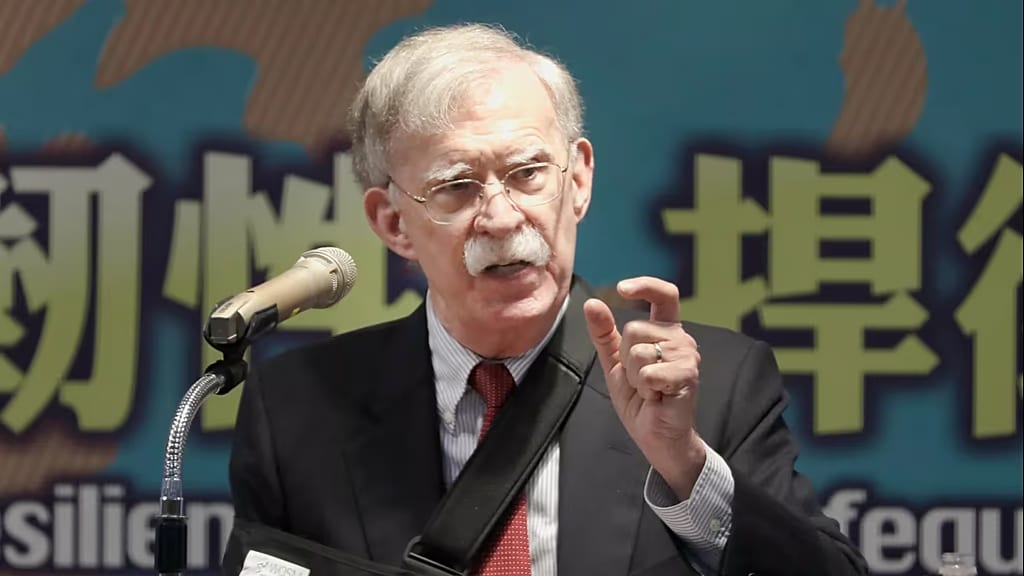
In the halls of American foreign policy, few names spark as much debate and controversy as John Bolton. A towering figure in Republican politics for over four decades, Bolton has served as a diplomat, lawyer, and political commentator whose hawkish views on international relations have shaped U.S. foreign policy through multiple presidential administrations. But who exactly is this man whose distinctive white mustache has become almost as recognizable as his uncompromising stance on national security?
Early Life and Education
John Robert Bolton was born on November 20, 1948, in Baltimore, Maryland, into a middle-class family that would instill in him the values of hard work and conservative principles. Growing up in a working-class neighborhood, Bolton's father was a firefighter while his mother worked at a department store. Despite their modest means, his parents emphasized the importance of education and civic duty.
Bolton's academic prowess became evident early on. He excelled in high school and earned a scholarship to Yale University, where he graduated summa cum laude with a Bachelor of Arts in 1970. At Yale, he was deeply involved in conservative politics and served as chairman of the Yale Political Union's Party of the Right. This early political engagement would foreshadow his lifelong commitment to conservative ideology.
After completing his undergraduate degree, Bolton continued his education at Yale Law School, earning his Juror Doctor degree in 1974. During his time in law school, he served as an editor of the Yale Law Journal and continued to hone his analytical and argumentative skills that would later serve him well in both legal practice and diplomatic negotiations.
Legal Career and Early Government Service
Following law school, Bolton began his career in private practice, working at the prestigious law firm Covington & Burling in Washington, D.C. However, his true calling lay in public service, and he soon found opportunities to blend his legal expertise with his passion for conservative politics.
Bolton's first significant government position came during the Reagan administration in 1981, when he joined the State Department as an attorney-adviser. This role introduced him to the complex world of international law and diplomacy, areas where he would eventually make his mark. His work during this period involved legal analysis of foreign policy issues and helped shape his understanding of America's role in global affairs.
In 1982, Bolton moved to the Justice Department, where he served as an Assistant Attorney General for the Office of Legislative Affairs. This position required him to work closely with Congress on various legal and policy matters, giving him valuable experience in navigating the intersection of law, politics, and public policy.
Rise Through Republican Administrations
The election of George H.W. Bush in 1988 opened new doors for Bolton's career in foreign policy. In 1989, he was appointed Assistant Secretary of State for International Organization Affairs, a role that put him at the center of America's engagement with international institutions like the United Nations.
During his tenure in this position, Bolton played a crucial role in several significant international developments. He was instrumental in the U.S. response to the end of the Cold War and helped coordinate American policy during the Gulf War. His work during this period established him as a skilled negotiator and a fierce advocate for American interests on the world stage.
Bolton's approach to international relations began to crystallize during these years. He developed a deep skepticism of international organizations and multilateral agreements that he believed constrained American sovereignty. This philosophy would become a defining characteristic of his career and would influence his approach to every subsequent role.
The Bush Years and United Nations Controversy
After serving in various private sector roles during the Clinton administration, Bolton returned to government service when George W. Bush became president in 2001. His appointment as Under Secretary of State for Arms Control and International Security put him at the forefront of some of the most pressing national security challenges of the early 21st century.
In this role, Bolton was deeply involved in the Bush administration's response to the September 11 attacks and the subsequent War on Terror. He played a significant role in developing the administration's approach to arms control and nonproliferation issues, particularly concerning North Korea and Iran's nuclear programs.
Bolton's tenure was marked by his hardline approach to these challenges. He advocated for strong sanctions against countries that violated nonproliferation agreements and was skeptical of diplomatic solutions that he viewed as insufficient to address genuine threats to American security.
The most controversial chapter of Bolton's career during this period came with his nomination as U.S. Ambassador to the United Nations in 2005. His well-documented criticism of the UN and his confrontational style sparked intense debate in the Senate. Bolton had previously stated that if the UN Secretariat building "lost ten stories, it wouldn't make a bit of difference," a comment that exemplified his skeptical view of international organizations.
Despite fierce opposition from Democrats and some Republicans, President Bush used a recess appointment to install Bolton as UN Ambassador when the Senate failed to confirm his nomination. During his tenure at the UN from 2005 to 2006, Bolton pushed for reforms within the organization and took a tough stance on issues ranging from Iran's nuclear program to UN peacekeeping operations.
Private Sector Interlude and Commentary
When Bolton's recess appointment expired in 2006, he returned to private life but remained actively engaged in foreign policy debates. He joined the American Enterprise Institute as a Senior Fellow, where he conducted research and wrote extensively on national security issues. During this period, he also became a regular commentator on Fox News, where his sharp analysis and unwavering conservative viewpoints made him a popular figure among the network's audience.
Bolton also returned to private legal practice, joining the law firm Kirkland & Ellis as a partner. His unique combination of government experience and legal expertise made him a valuable asset for clients dealing with complex international legal and regulatory issues.
Throughout this period, Bolton remained a prolific writer and speaker. He authored several books, including "Surrender Is Not an Option: Defending America at the United Nations and Abroad," which provided his insider's perspective on American foreign policy and his experiences in government service.
National Security Advisor Under Trump
Bolton's return to the highest levels of government came in March 2018, when President Donald Trump appointed him as National Security Advisor, replacing H.R. McMaster. This appointment was somewhat surprising given Bolton's previous criticism of some of Trump's foreign policy positions, but it reflected Trump's desire to have a strong advocate for American interests in this crucial role.
As National Security Advisor, Bolton was responsible for coordinating foreign policy across the various departments and agencies of the federal government. He played a key role in several significant policy decisions, including the U.S. withdrawal from the Iran nuclear deal, the movement of the U.S. embassy in Israel to Jerusalem, and the administration's approach to North Korea's nuclear program.
Bolton's tenure was marked by his advocacy for a more aggressive approach to several international challenges. He supported increased military pressure on Iran, advocated for a tougher stance toward China, and pushed for policies that prioritized American interests over international consensus.
However, Bolton's time as National Security Advisor was also characterized by tensions with President Trump over various policy issues. These disagreements eventually led to his departure from the administration in September 2019, with both Bolton and Trump offering different accounts of whether he resigned or was fired.
Post-Trump Career and Controversies
Following his departure from the Trump administration, Bolton returned to writing and commentary, but his relationship with his former boss became increasingly strained. In 2020, he published "The Room Where It Happened: A White House Memoir," which offered a highly critical account of his time in the Trump administration.
The book sparked significant controversy and legal challenges from the Trump administration, which argued that Bolton had violated his obligations regarding classified information. Despite these challenges, the book was published and became a bestseller, providing readers with Bolton's insider perspective on key decisions and events during his tenure as National Security Advisor.
Bolton's criticisms of Trump extended beyond his book, and he became one of the few former Trump administration officials to publicly oppose the former president's 2024 campaign for the presidency. This stance further solidified his position as a controversial figure within Republican politics.
Legacy and Impact
Throughout his long career in government and public life, John Bolton has remained a consistent advocate for what he sees as principled American leadership in international affairs. His supporters praise him as a skilled negotiator and a fierce defender of American interests who is willing to take unpopular positions when he believes they are in the national interest.
Critics, however, argue that Bolton's hawkish approach to foreign policy has contributed to unnecessary conflicts and has damaged America's relationships with allies and international institutions. They contend that his skepticism of diplomacy and preference for military solutions have made the world less safe and less stable.
Regardless of one's opinion of his policies and approach, there is no denying that John Bolton has been one of the most influential figures in American foreign policy over the past four decades. His impact on U.S. international relations will continue to be felt for years to come, and his career serves as a case study in the complex relationship between ideology, politics, and diplomacy in American government.
Conclusion
John Bolton remains a polarizing figure in American politics and foreign policy. His unwavering commitment to his principles and his willingness to take controversial positions have made him both a respected voice among conservatives and a lightning rod for criticism from those who disagree with his approach.
As America continues to navigate complex international challenges in the 21st century, Bolton's career offers valuable lessons about the role of ideology in foreign policy, the importance of strong institutions, and the ongoing debate about America's proper role in the world. Whether one agrees with his positions or not, John Bolton's influence on American foreign policy is undeniable, and his legacy will continue to shape debates about national security and international relations for generations to come.
His distinctive approach to diplomacy – characterized by skepticism of international organizations, preference for bilateral relationships, and willingness to use economic and military pressure to achieve American objectives – represents one important strand of thinking about how America should engage with the world. As future policymakers grapple with emerging challenges from great power competition to global governance, they will undoubtedly continue to wrestle with the fundamental questions that have driven Bolton's career: How should America balance its national interests with international cooperation? What role should military strength play in diplomacy? And how can the United States maintain its leadership position while respecting the sovereignty and interests of other nations?
These are the questions that have defined John Bolton's career, and they remain as relevant today as they were when he first entered public service more than four decades ago.
About the Creator
Fazal Ur Rahman
My name is Fazal, I am story and latest news and technology articles writer....
read more and get inspire more............
Keep reading
More stories from Fazal Ur Rahman and writers in The Swamp and other communities.
Cracker Barrel New Logo: A Fresh Look or a Risky Break from Tradition?
When Cracker Barrel quietly revealed its new logo, the internet didn’t stay quiet for long. A brand that has always thrived on nostalgia—wooden rocking chairs, checkerboard tables, and warm biscuits—suddenly thrust itself into a storm of debates. For some, the redesign is a refreshing breath of modern air. For others, it feels like the slow unraveling of a beloved American tradition.
By Fazal Ur Rahman6 months ago in The Swamp
Why Black History Matters in America?
The United States of America is celebrating their 250th anniversary in 2026. I'm proud to be an American and as someone who was born here, I wouldn't imagine myself living anywhere else. This is a country where opportunities are possible. Where anyone can be successful in anything they desire to do. Equality, community, and togetherness are the backbones of what America is and should be about. However, we have an administration who wants to erase and disregard those who have made positive, meaningful impacts in our country, specifically Black figures, such as Martin Luther King, Jr., Rosa Parks, and Maya Angelou. President Trump and his administration have been constantly complaining and fighting against what they call the "Woke agenda". They use this excuse as a distraction from other issues they refuse to address, such as the high cost of living, climate change, and inflation. That equality is dividing America, when in reality, it's bringing us together. Being woke is not tied to a specific political party. No matter where you stand on the political spectrum, you can still care about other people and their plights. Compassion and empathy for others isn't tied to a political party, either. We were taught as children to treat others the way we want to be treated and not judge others because they're different from us. Caring about others isn't a personal attack on your beliefs. It doesn't make you any less of a person. People who are easily offended over African American figures, past or present, or anything related to it, are grasping at straws. Current and future generations need to know who people like Harriet Tubman and Shirley Chisholm were, especially in the classroom. Black History is part of American History. It should be recognized, not hidden or forgotten. Besides, you can't shield children from everything, just because your feelings are easily hurt.
By Mark Wesley Pritchard 27 days ago in The Swamp
Veil of Subconscious Awakening
Images slide behind my eyelids like film cadres, bursting with meanings. In one moment, I’m speeding down the highway, making the speedometer swing wildly like a frantic pendulum. The next moment, I’m plunging from a falling plane, slowly crashing earthward. At home, I meet black cat’s green, googly eyes staring at me from the cavernous hollowness of the kitchen. When I turn for a moment, it disappears, and all I can see is a pair of blue suede shoes set up against the wall. I pick them up and put them on. When I glimpse at them again, they’ve become black as night, making me blink and flinch.
By Moon Desert6 days ago in Fiction



Comments
There are no comments for this story
Be the first to respond and start the conversation.