
When Refugees Suffer in Silence
The UNHCR’s Absence and the Forgotten Lives in Malaysia

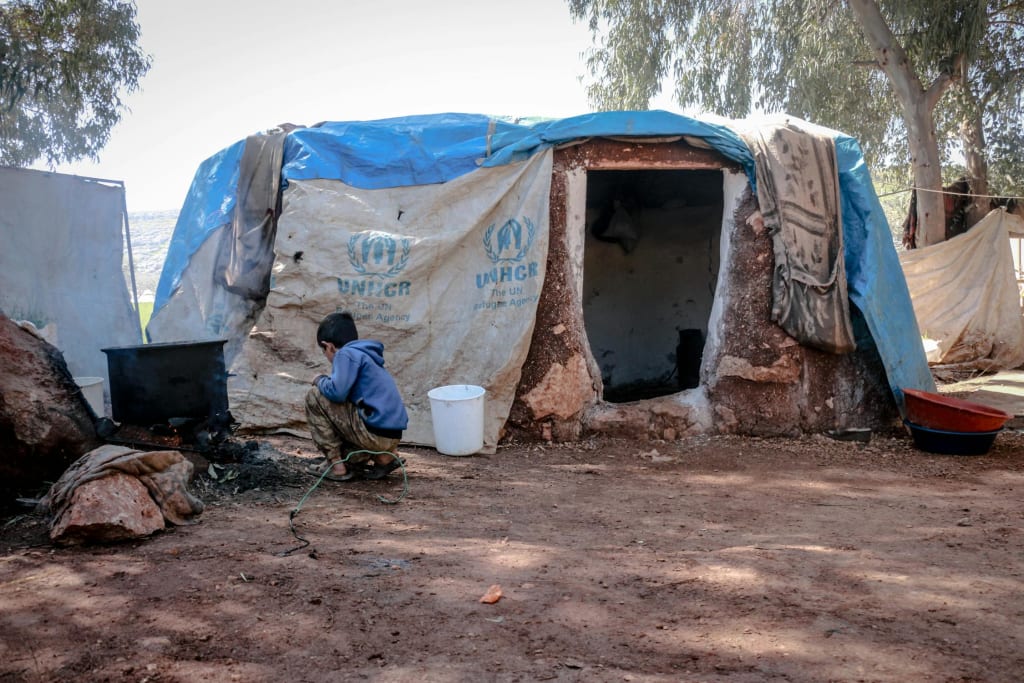
For many people, the word "refugee" might trigger images of hope, of international solidarity, or at least the belief that global organizations like the United Nations High Commissioner for Refugees (UNHCR) are providing protection. But the reality on the ground is often far from the polished reports or charity campaigns people see online. As a political refugee stuck in Malaysia for over a decade, I can say with certainty: refugees are suffering in silence.
The UNHCR regularly launches global fundraising campaigns, publishing emotional videos and photos of families in need, urging the world to donate. The message is always the same: “Your donation can change a life.” But for many refugees in Malaysia, especially those who have lived for years under the label of "pending resettlement," the promised support rarely — if ever — arrives.
Malaysia is home to tens of thousands of refugees from different corners of the world, including Syria, Myanmar, Yemen, Sudan, Palestine, and Algeria. Despite the existence of the UNHCR office in Kuala Lumpur, many of these refugees find themselves completely abandoned, with little or no response to emails, phone calls, or visits to the office. Their questions are met with silence, and their struggles are ignored.
As someone who has lived this reality since 2013, I can testify that the system feels more like a trap than a safety net. Being a political refugee means not having the right to work legally. It means facing daily discrimination, constant financial pressure, and — worst of all — isolation from both the world and your own future.
In my personal case, my passport was blocked by the Algerian government in 2013. Since then, I have lived in legal and personal limbo. I am now 40 years old. I have spent the best years of my life waiting for protection, unable to get married, unable to establish a career, and continuously moving from one temporary solution to another just to survive. UNHCR has been informed of this, but their silence is as heavy as the injustice itself.
The most painful part is the hypocrisy surrounding refugees’ rights. The Algerian government speaks of sovereignty and national honor, but violates the basic rights of its own citizens abroad, especially those it considers “unwanted” for political reasons. France, which often preaches human rights, turns a blind eye to the corruption of the Algerian regime, protecting its financial and diplomatic interests instead of standing for justice.
As the relationship between Algeria and France becomes more complicated — full of double standards and backroom deals — it is the average Algerian citizen who pays the price. Whether inside Algeria or abroad, people are left to face hardships without protection. Corruption has become the air we breathe. Whether you are a political dissident or just someone who crossed the wrong official, your life can be destroyed with no explanation and no accountability.
My story is only one example of this wider problem. A problem that remains invisible to most of the world, even as international organizations continue to collect donations in the name of refugees like me. Refugees are not just numbers in a report or faces in a fundraising video. Behind each label is a real human life, a story of injustice, and a voice that is too often silenced.
The world must do better. Both governments and humanitarian organizations need to be held accountable, not just praised for appearances. Because as long as this silence continues, refugees will continue to suffer — alone and unheard.
About the Creator
Yahiaoui Mohamed
Political refugee and writer, sharing real stories about human rights, social injustice, and the silent struggles of refugees worldwide.
Keep reading
More stories from Yahiaoui Mohamed and writers in The Swamp and other communities.
The Failure of the Algerian Regime
In every functioning nation, the primary role of any government should be to serve its people, protect their dignity, and secure a prosperous future. But in Algeria, this concept has long been turned on its head. The Algerian regime, rather than uplifting its citizens, has for decades perfected the art of enriching itself at the cost of national unity, stability, and sovereignty. The latest political controversies only add more proof to this long and painful reality.
By Yahiaoui Mohamed9 months ago in The Swamp
Trump Tests the Boundaries of His Power as Minnesota Pushes Back
The clash between federal authority and state autonomy has once again taken center stage in American politics, as former President Donald Trump’s latest assertions of power meet firm resistance from Minnesota’s leadership. The standoff highlights a deeper constitutional tension—one that goes beyond a single state or political personality and speaks to the evolving balance between Washington and the states in an era of intense polarization. At the heart of the dispute is Trump’s enduring political influence and his continued effort to shape national policy debates even outside the Oval Office. Through public statements, legal pressure, and mobilization of his political base, Trump has sought to assert a vision of executive power that stretches traditional norms. Minnesota, governed by leaders who emphasize states’ rights, civil liberties, and local control, has emerged as a prominent counterweight to that approach. Minnesota’s pushback is not merely symbolic. State officials have consistently defended their authority to interpret and implement policies in ways that reflect local values and legal frameworks. Whether the issue involves immigration enforcement, voting regulations, public health measures, or law enforcement cooperation, Minnesota’s stance underscores a broader resistance among Democratic-led states to what they view as federal overreach—or, in Trump’s case, an attempt to govern by pressure rather than constitutional process. Trump’s political style has long thrived on testing limits. During his presidency, he frequently challenged institutional guardrails, from the judiciary to Congress, arguing that decisive leadership required bold action. Supporters praised this approach as a rejection of bureaucratic inertia, while critics warned it eroded democratic norms. Even now, Trump’s rhetoric suggests a belief that executive power should be expansive, flexible, and closely tied to popular mandate rather than institutional restraint. Minnesota’s response reflects a contrasting philosophy. State leaders emphasize that the U.S. Constitution establishes a system of shared power, where states are not mere administrative units but sovereign entities with their own responsibilities and rights. By asserting legal challenges, issuing policy refusals, or reinforcing state laws, Minnesota is signaling that political popularity does not override constitutional boundaries. This confrontation resonates far beyond state lines. Other states are closely watching how Minnesota navigates the pressure, aware that precedents set today could shape future federal-state relations. If aggressive assertions of power go unchallenged, states fear a gradual weakening of their authority. Conversely, a strong and legally grounded resistance could reaffirm the importance of federalism in an increasingly centralized political environment. Public opinion remains sharply divided. Trump’s supporters argue that states like Minnesota obstruct policies aimed at national security, election integrity, or law and order. From their perspective, resistance is framed as defiance rather than defense of democratic principles. On the other hand, critics view Minnesota’s stance as a necessary safeguard against the concentration of power and the politicization of federal authority. Legal experts note that these conflicts often end up in court, where constitutional interpretation becomes the ultimate referee. The judiciary has historically played a crucial role in defining the limits of executive power, and future rulings may further clarify how far a president—or a former president with significant influence—can go in shaping state behavior. Minnesota’s willingness to challenge perceived overreach suggests confidence in the legal system as a counterbalance to political pressure. Beyond legal implications, the dispute also carries electoral significance. Minnesota’s resistance reinforces its identity as a state that values progressive governance and institutional checks. For Trump, confronting such states energizes his base and reinforces his image as a leader willing to confront opposition head-on. In this sense, the clash is as much about narrative as it is about policy. Ultimately, the struggle between Trump’s assertive political posture and Minnesota’s determined pushback reflects a defining question of modern American democracy: how power should be exercised, limited, and contested. As polarization deepens, these confrontations are likely to become more frequent, testing not only political alliances but the resilience of constitutional norms. Minnesota’s stand serves as a reminder that in the American system, power is not absolute. It is negotiated, challenged, and constrained through institutions designed to prevent dominance by any single figure or level of government. Whether this balance holds will shape the nation’s political trajectory long after the current disputes fade from the headlines.
By Fiaz Ahmed Brohi2 days ago in The Swamp
Diesel Generator Market Size and Forecast 2025–2033
Introduction The global energy ecosystem is undergoing rapid transformation, driven by rising electricity demand, expanding industrial activity, and the urgent need for power reliability. In this context, diesel generators—often regarded as traditional power solutions—continue to play a vital and irreplaceable role across industries and geographies. Despite the accelerating transition toward renewable energy, diesel generators remain a cornerstone of backup and off-grid power systems due to their reliability, scalability, and operational efficiency.
By Marthan Sir7 days ago in The Swamp



Comments
There are no comments for this story
Be the first to respond and start the conversation.