
The Failure of the Algerian Regime
A Nation Betrayed by Its Rulers

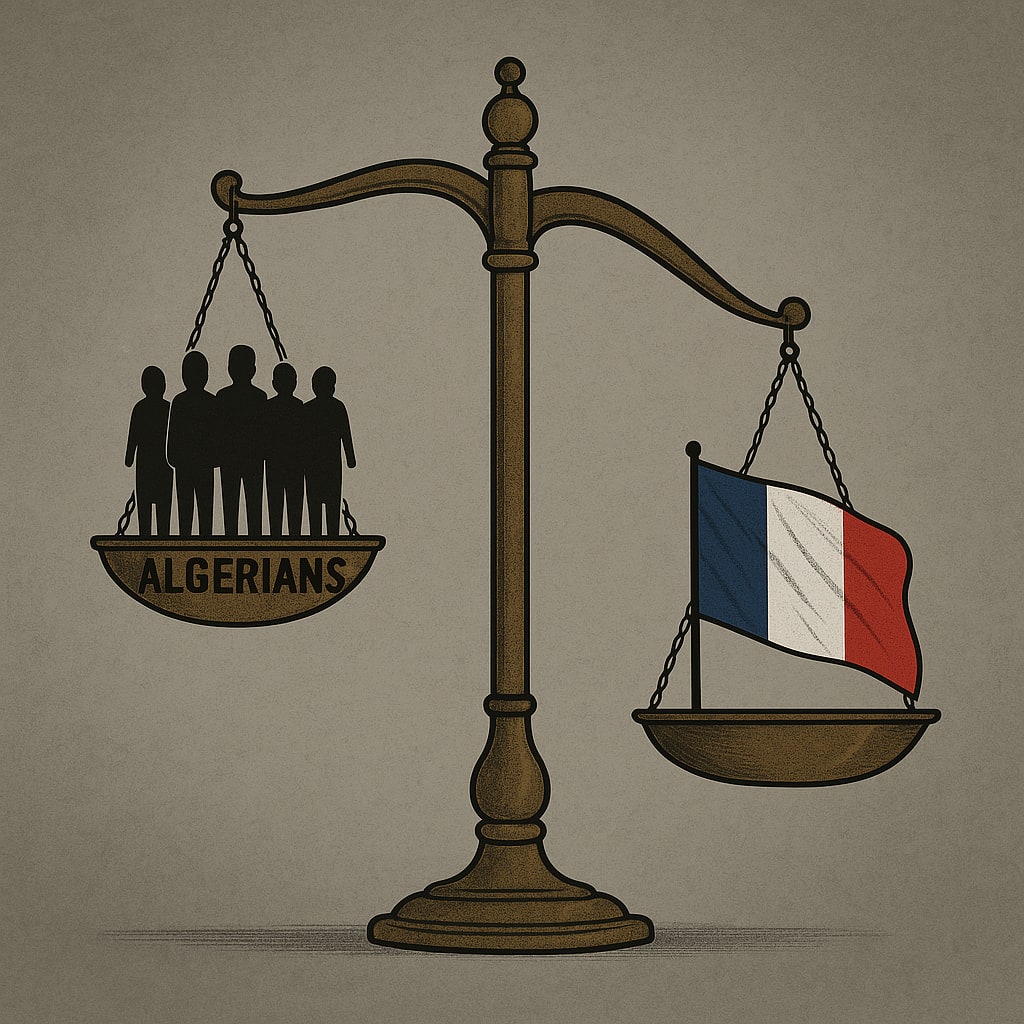
In every functioning nation, the primary role of any government should be to serve its people, protect their dignity, and secure a prosperous future. But in Algeria, this concept has long been turned on its head. The Algerian regime, rather than uplifting its citizens, has for decades perfected the art of enriching itself at the cost of national unity, stability, and sovereignty. The latest political controversies only add more proof to this long and painful reality.
Since the bloody civil war of the 1990s, the Algerian state has never truly broken free from its shadowy past. While thousands of ordinary Algerians lost their lives or vanished in what came to be known as "The Black Decade," the political and military elite managed to survive, adapt, and thrive — not by rebuilding the country, but by striking quiet deals with foreign powers, especially France, the former colonial master. France's protection of the Algerian ruling class during that brutal war was only the beginning of a relationship that continues to prioritize power over people.
For years, Algerian officials have used their positions to loot state resources, leaving the population to deal with chronic unemployment, decaying infrastructure, and a healthcare system on the brink of collapse. While Algerians line up for basic necessities, their rulers' children enjoy lives of luxury, armed with diplomatic passports and bank accounts scattered across Europe and North America. France, Switzerland, Spain, the UK, Canada, and the United States have all become safe havens for these families, offering them investment opportunities, elite education, and lavish lifestyles.
Ironically, countries like France preach about fighting money laundering and corruption, yet they have become the primary destinations for Algerian oligarchs to "cleanse" their stolen wealth through real estate, businesses, and personal assets. The situation is so normalized that it rarely sparks outrage unless a political dispute erupts between the regimes.
A recent example that sheds light on the true nature of this twisted relationship is the case of Boualem Sansal. His name once again brought to the surface the deep imbalance in Algerian-French relations and the glaring double standards in the country's justice system. Reports suggest Sansal could be granted a presidential pardon despite being accused of serious crimes, including alleged collaboration with a foreign state. Yet, at the same time, Algerians living abroad, including journalists and whistleblowers, face life sentences — or worse — for daring to expose corruption or criticize the regime.
This episode underscores the disturbing reality: France can still dictate the terms when its interests are involved, and Algeria's ruling class is willing to bend to foreign pressure, even if it means sacrificing its own credibility. The initial arrest of Sansal had sparked a rare moment of hope, a glimmer of belief that perhaps the country was finally defending its sovereignty. But diplomatic negotiations behind closed doors quickly dashed these hopes, as rumors of a politically motivated release surfaced.
Perhaps the most tragic part of this saga is the unequal treatment of Algerians in the eyes of their own justice system. Opposition figures and activists who uncover political abuse or financial misconduct are labeled as "terrorists" or "traitors" and punished with exile, imprisonment, or threats to their families. Their real crime is not betrayal but truth-telling — an act that seems more dangerous to the regime than any external enemy.
This leads to one unavoidable question: Is Algeria a state governed by laws or by loyalty? When high-level criminals are shielded by their political connections or foreign sponsors, and truth-seekers are vilified and silenced, the answer becomes painfully clear. The justice system is not built to protect the nation, but to protect the ruling class.
If Algeria hopes to reclaim its lost dignity and the trust of its people, it must establish real justice — one that applies equally to every citizen, regardless of their title or connections. Boualem Sansal must face a fair and public trial, and the ongoing persecution of peaceful activists and dissidents must end.
The courts must no longer be instruments of political revenge, but guardians of the law. Algeria must demand respect and fair treatment from foreign powers, rather than accept lopsided deals that keep its elite safe while its people suffer.
Only then can Algeria begin to heal the wounds of its past and move towards a future where justice is more than just a word, and sovereignty is more than an illusion.
About the Creator
Yahiaoui Mohamed
Political refugee and writer, sharing real stories about human rights, social injustice, and the silent struggles of refugees worldwide.
Keep reading
More stories from Yahiaoui Mohamed and writers in The Swamp and other communities.
When Refugees Are Abandoned
In the modern world, we often hear beautiful speeches about human rights, refugee protection, and global solidarity. But for many political refugees, these words are just empty promises. I am writing this not as a complaint, but as the voice of someone who has spent more than a decade trapped in silence and injustice.
By Yahiaoui Mohamed9 months ago in The Swamp
Canada, China Set for ‘Historic’ Gains From New Partnership, Carney Says
Canada and China may be standing at the edge of a major turning point in their diplomatic and economic relationship. According to Canadian Prime Minister Mark Carney, a newly announced partnership between the two nations could unlock “historic gains” and reshape how both countries engage with each other — and the world.
By Aqib Hussain5 days ago in The Swamp


Comments
There are no comments for this story
Be the first to respond and start the conversation.