
What Xi Jinping’s Purge of China’s Most Senior General Reveals
The removal of a top military figure sheds light on power consolidation, loyalty, and deeper challenges within China’s armed forces.

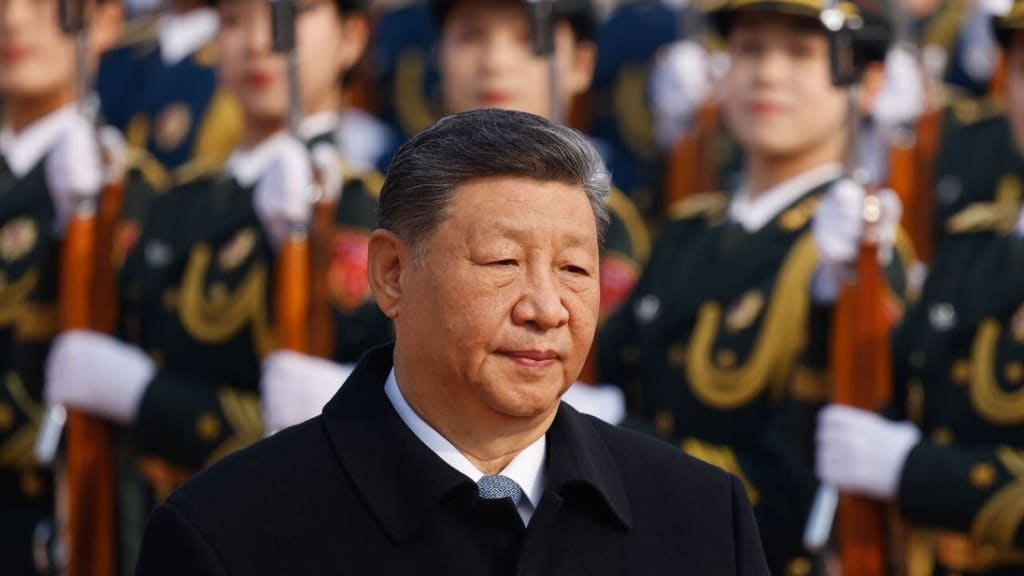
A Sudden Fall at the Top
The recent purge of one of China’s most senior generals has sent shockwaves through Beijing’s political and military circles. Under President Xi Jinping, the move is being widely interpreted as more than a routine disciplinary action. Instead, it offers a revealing glimpse into how Xi governs, how he views loyalty within the People’s Liberation Army (PLA), and the internal pressures facing China’s military at a critical moment.
While Chinese authorities have provided limited public detail, state media confirmed the general’s removal and hinted at “serious violations of discipline.” Such language, often used in high-level purges, has become a familiar hallmark of Xi’s sweeping anti-corruption and loyalty campaigns.
The PLA and Xi’s Grip on Power
Since taking office, Xi Jinping has made control of the military a central pillar of his leadership. As chairman of the Central Military Commission, Xi has repeatedly stressed that the PLA must remain absolutely loyal to the Communist Party—and to its core leadership.
The purge of a senior general reinforces this message. Analysts note that Xi’s leadership style prioritizes personal authority and centralized command, particularly within the armed forces. Removing a figure from the highest ranks signals to others that no position is beyond scrutiny.
In practical terms, the move strengthens Xi’s grip on the military at a time when China faces rising tensions in the Taiwan Strait, the South China Sea, and in its broader rivalry with the United States.
Anti-Corruption or Political Discipline?
Officially, the purge is framed as part of China’s long-running anti-corruption campaign. Over the past decade, dozens of generals and defense officials have been investigated, prosecuted, or quietly removed.
However, many experts argue that corruption alone does not explain the timing or scale of such purges. In China’s political system, anti-corruption efforts often overlap with political discipline, serving as a tool to eliminate rivals, enforce obedience, and reshape power structures.
The removal of such a senior figure suggests deeper concerns—possibly about loyalty, internal dissent, or failures in military reform. It may also reflect Xi’s dissatisfaction with how effectively the PLA is modernizing and preparing for future conflicts.
Cracks Beneath the Surface
The purge hints at underlying challenges within China’s military. Despite massive investment and rapid modernization, the PLA still faces issues related to command structure, professionalism, and internal cohesion.
Frequent purges can disrupt continuity and morale, even as they reinforce discipline. Some analysts warn that constant fear of investigation may encourage risk-averse behavior among commanders, potentially affecting operational effectiveness.
At the same time, Xi appears willing to accept these risks to ensure absolute control. From his perspective, political reliability may matter more than individual expertise, especially in a system where the military is inseparable from party rule.
A Signal to Domestic and Foreign Audiences
Domestically, the purge serves as a powerful reminder of Xi’s authority. It reinforces the narrative that the Communist Party is serious about rooting out corruption and maintaining discipline at the highest levels.
Internationally, the message is more complex. On one hand, it shows that Xi is determined to keep the PLA firmly under his command, reducing the likelihood of rogue decision-making. On the other, it raises questions about stability and trust within China’s military leadership.
Foreign governments closely watch such developments, particularly as China plays a growing role in global security affairs. Sudden leadership changes can signal internal stress, even as Beijing projects strength and unity.
Historical Patterns Under Xi
This is not the first time Xi has removed top military leaders. Early in his tenure, he targeted powerful generals linked to previous administrations, dismantling entrenched patronage networks.
What sets the latest purge apart is its timing and seniority. Coming amid economic uncertainty and heightened geopolitical tensions, it suggests that Xi is doubling down on consolidation rather than loosening his grip.
The pattern is clear: loyalty to Xi and the party line remains non-negotiable, regardless of rank or past service.
What It Means Going Forward
The purge is likely to accelerate further restructuring within the PLA. New appointments may favor officers with proven political reliability, even if it means sidelining experienced figures.
For China’s leadership, the priority appears to be unity and control ahead of any potential crisis. Whether that approach strengthens or weakens the PLA in the long term remains a subject of debate.
Conclusion
Xi Jinping’s purge of China’s most senior general reveals a leadership style defined by consolidation, discipline, and an uncompromising demand for loyalty. While officially framed as anti-corruption, the move underscores deeper concerns about control, reform, and readiness within China’s military.
As China navigates an increasingly complex global environment, the episode serves as a reminder that power in Beijing remains tightly centralized—and that even the highest-ranking figures are not immune when political loyalty is called into question.
About the Creator
Asad Ali
I'm Asad Ali, a passionate blogger with 3 years of experience creating engaging and informative content across various niches. I specialize in crafting SEO-friendly articles that drive traffic and deliver value to readers.
Fighting Ends After Syrian and Kurdish Forces Agree on Ceasefire
After weeks of escalating clashes that threatened to further destabilize northern Syria, Syrian government forces and Kurdish-led groups have agreed to a ceasefire, bringing a fragile calm to areas that had seen intense fighting. The agreement, brokered through regional mediation and quiet international diplomacy, marks a significant moment in a conflict that has repeatedly shifted alliances and front lines over more than a decade. The ceasefire follows violent confrontations between Syrian Arab Army units and Kurdish forces, primarily affiliated with the Syrian Democratic Forces (SDF), in strategically sensitive مناطق near key roads, oil fields, and population centers. The clashes had raised fears of a wider conflict that could draw in external actors already deeply entangled in Syria’s complex war. Why the Fighting Broke Out Tensions between Damascus and Kurdish authorities have simmered for years. While both sides have occasionally cooperated against common threats such as extremist groups, their long-term political goals remain sharply divided. Kurdish groups seek greater autonomy and recognition of their self-administered regions, while the Syrian government insists on full territorial control and centralized authority. Recent fighting was reportedly triggered by disputes over security control, checkpoints, and access to resources, particularly oil and wheat. Local incidents quickly escalated as reinforcements were deployed and artillery exchanges followed, displacing civilians and disrupting already fragile livelihoods. The Ceasefire Agreement According to sources familiar with the talks, the ceasefire includes an immediate halt to hostilities, the withdrawal of heavy weapons from flashpoint areas, and the reopening of key roads for civilian and commercial traffic. Joint coordination mechanisms are also expected to be established to prevent misunderstandings and accidental clashes. Importantly, the agreement reportedly includes provisions for dialogue on local governance and security arrangements, signaling that both sides recognize military escalation as costly and unsustainable. While details remain limited, mediators emphasized that the ceasefire is intended as a first step rather than a comprehensive political settlement. Impact on Civilians For civilians caught in the crossfire, the ceasefire brings cautious relief. Thousands were forced to flee their homes as fighting intensified, seeking shelter with relatives or in makeshift camps. Schools closed, medical services were interrupted, and essential supplies became scarce. Humanitarian organizations have welcomed the truce but warn that conditions remain dire. Many areas affected by the clashes were already struggling with economic hardship, fuel shortages, and the aftermath of years of war. A sustained ceasefire could allow aid access, repairs to infrastructure, and the gradual return of displaced families. Regional and International Dimensions The ceasefire also has broader regional implications. Northern Syria is a geopolitical chessboard involving multiple actors, including Russia, the United States, Turkey, and Iran. Kurdish-led forces have long been supported by the US in the fight against extremist groups, while the Syrian government is backed by Russia and Iran. Any escalation between Syrian and Kurdish forces risks upsetting this delicate balance. Observers note that external actors likely played a behind-the-scenes role in encouraging restraint, as renewed conflict could undermine counterterrorism efforts and complicate regional stability. Turkey, which views Kurdish armed groups near its border as a security threat, is also closely watching developments. A breakdown of the ceasefire could prompt new cross-border operations, further complicating the situation. Challenges Ahead Despite the ceasefire, deep mistrust remains. Previous truces in Syria have often collapsed due to accusations of violations, local power struggles, or shifting external priorities. Analysts caution that without a clear political framework addressing Kurdish autonomy, resource sharing, and integration of armed forces, the current calm may prove temporary. Economic pressures add another layer of risk. Control over oil fields and agricultural land is not only a political issue but also an economic lifeline in a country devastated by sanctions, inflation, and unemployment. Disagreements over revenue sharing could easily reignite tensions. A Fragile Opportunity Still, the ceasefire offers a rare opportunity for de-escalation at a time when Syria can ill afford another front of conflict. If maintained, it could open space for confidence-building measures, local reconciliation efforts, and renewed discussions about Syria’s future governance. For now, residents in affected areas are cautiously hopeful, listening for the sounds of normal life returning instead of gunfire. Whether this ceasefire becomes a stepping stone toward lasting stability or merely a pause in a long-running struggle will depend on the willingness of all sides to prioritize dialogue over force. In a conflict marked by broken agreements and shifting loyalties, even a fragile calm is meaningful. The coming weeks will reveal whether this ceasefire can hold—and whether it can lay the groundwork for a more durable peace in northern Syria.
By Fiaz Ahmed Brohi7 days ago in The Swamp
Achilles & Patroclus
A Love That Refused to Be Named—Yet Never Died Some stories survive because they are retold. Others survive because they refuse to disappear. The bond between Achilles and Patroclus belongs to the second kind. For over two thousand years, scholars, poets, soldiers, lovers, and rebels have returned to their story—not because it is simple, but because it is dangerously human. It lives in the space between friendship and love, duty and desire, mortality and myth. It is a relationship so intense that ancient writers argued over it, modern readers debate it, and history itself seems unwilling to define it neatly. Was it friendship? Was it love? Was it something that transcended both? Perhaps the enduring power of Achilles and Patroclus lies not in what they were called, but in what they were willing to lose for one another. The World of Heroes and Gods To understand Achilles and Patroclus, we must first understand the world that shaped them. Ancient Greek mythology was not a place of gentle heroes and moral clarity. It was a brutal landscape ruled by honor, reputation, and fate. Glory mattered more than life. Men were remembered not for kindness, but for courage in death. Achilles was born into this world already half-divine. The son of Thetis, a sea nymph, and Peleus, a mortal king, he was destined for greatness—and an early death. Prophecy declared it clearly: Achilles could live a long, unremarkable life, or a short life crowned with eternal glory. He chose glory. Patroclus, by contrast, was fully human. Exiled from his homeland after a tragic childhood accident, he found refuge in the court of Peleus—and there, he met Achilles. From that moment, their lives intertwined. Achilles: The Hero Who Burned Too Bright Achilles was unmatched on the battlefield. Faster, stronger, more skilled than any warrior of his time, he was almost invincible. Yet his greatest strength was also his deepest flaw: his pride. He was sensitive to insult, fiercely protective of his honor, and quick to withdraw when slighted. When King Agamemnon dishonored him during the Trojan War, Achilles refused to fight—knowing full well that his absence would doom countless Greek soldiers. Achilles did not fear death. He feared disrespect. And yet, despite his arrogance, Achilles was not heartless. He loved deeply—when he allowed himself to. That is where Patroclus enters the story. Patroclus: The Quiet Center of Achilles’ World Patroclus lacked Achilles’ divine lineage and legendary strength, but he possessed something arguably more powerful: empathy. Ancient texts describe him as gentle, kind, and emotionally perceptive. He soothed Achilles’ rage, tended to wounded soldiers, and acted as a bridge between Achilles and the rest of humanity. Where Achilles burned, Patroclus steadied. Where Achilles isolated himself in pride, Patroclus reached outward in compassion. Their bond was not based on equality of power—but on emotional necessity. A Relationship Beyond Simple Labels Ancient Greek writers themselves disagreed on the nature of Achilles and Patroclus’ relationship. Homer, in The Iliad, never explicitly labels them as lovers—but portrays a bond so intense that it surpasses all others. Plato, in The Symposium, argued passionately that they were lovers, placing their relationship among the highest forms of love. Other writers debated who was the lover and who was the beloved—revealing more about Greek social norms than about the relationship itself. Modern readers often search for labels: friends, lovers, soulmates. But ancient Greece did not categorize relationships the way we do today. What mattered was not the label—but the depth of devotion. And by that measure, Achilles and Patroclus shared something extraordinary. The War That Tested Their Bond The Trojan War dragged on for years. Blood soaked the sand. Heroes fell. Still, Achilles refused to fight, nursing his wounded pride. Patroclus watched as Greek soldiers died—men he knew, men he cared for. He pleaded with Achilles to return to battle. Achilles refused. Finally, Patroclus made a desperate request: If Achilles would not fight, could he at least wear Achilles’ armor and lead the Myrmidons into battle? Achilles agreed—but with a warning. Patroclus was to drive the Trojans back, not pursue them to the gates of Troy. It was a tragic compromise. Patroclus’ Death: The Moment Everything Shattered Wearing Achilles’ armor, Patroclus entered the battlefield like a living symbol of hope. The Trojans fled, believing Achilles had returned. But hope turned to hubris. Patroclus pushed forward—too far. He was struck down by Hector, the greatest warrior of Troy. When news reached Achilles, the world stopped. Ancient texts describe his grief as animalistic, uncontrollable, and absolute. He covered himself in ash. He screamed until the sea heard him. He refused food, sleep, and comfort. This was not the reaction of a man mourning a casual friend. This was the grief of someone who had lost his other half. Grief That Transformed a Hero into a Force of Destruction Patroclus’ death changed Achilles. Honor no longer mattered. Prophecy no longer mattered. Life itself no longer mattered. Achilles returned to battle—not for glory, but for vengeance. He slaughtered Trojans without mercy. He hunted Hector with a singular obsession, eventually killing him and dragging his body behind his chariot—a shocking act, even by ancient standards. Achilles knew this would seal his own fate. He accepted it willingly. A life without Patroclus was not a life he wished to prolong. Love Stronger Than Immortality In one of the most haunting details of the myth, Achilles demanded that his ashes be mixed with Patroclus’ after death—so they would remain together forever. This request speaks volumes. Achilles, half-divine and destined for immortality through legend, chose shared rest over eternal separation. Love, in this story, is not soft or gentle. It is consuming. It is destructive. It is worth dying for. Why Their Story Still Resonates Today Achilles and Patroclus endure because they represent something universal: The fear of loving deeply in a violent world The vulnerability hidden beneath strength The devastating cost of emotional repression The truth that some bonds define us more than destiny In a modern age still uncomfortable with emotional intimacy—especially between men—their story feels radical. They loved without apology. They grieved without restraint. They chose devotion over survival. Modern Reinterpretations and Cultural Revival From Madeline Miller’s The Song of Achilles to contemporary art, poetry, and film, Achilles and Patroclus have been reclaimed as icons of queer love, emotional vulnerability, and defiance of rigid norms. These reinterpretations do not distort the myth—they amplify what was always there. Their story invites each generation to ask: What does love look like when stripped of labels? What are we willing to sacrifice for those we love? And who are we without them? Fate, Choice, and the Human Cost of Glory Greek mythology often portrays fate as unavoidable. Yet Achilles’ story suggests something subtler. He could not escape death. But he could choose why he died. In choosing Patroclus over longevity, Achilles redefined heroism—not as conquest, but as devotion. Perhaps that is why his story survives. Not because he was invincible. But because he was human enough to love, and brave enough to let that love destroy him. Conclusion: A Flame That Never Went Out Achilles and Patroclus are not relics of an ancient past. They live on in every story about love that defies expectation. In every bond that feels deeper than language. In every grief that reshapes a life. Their story reminds us that some connections are not meant to be explained—only honored. And in a world obsessed with power, legacy, and survival, they whisper a dangerous truth: To love fully is the bravest act of all.
By Zahid Hussainabout 11 hours ago in The Swamp




Comments
There are no comments for this story
Be the first to respond and start the conversation.