
What to Know About the Strait of Hormuz as Iran Plans Military Drill Amid US Tensions
Why the world’s most vital oil route is at the center of US-Iran confrontation

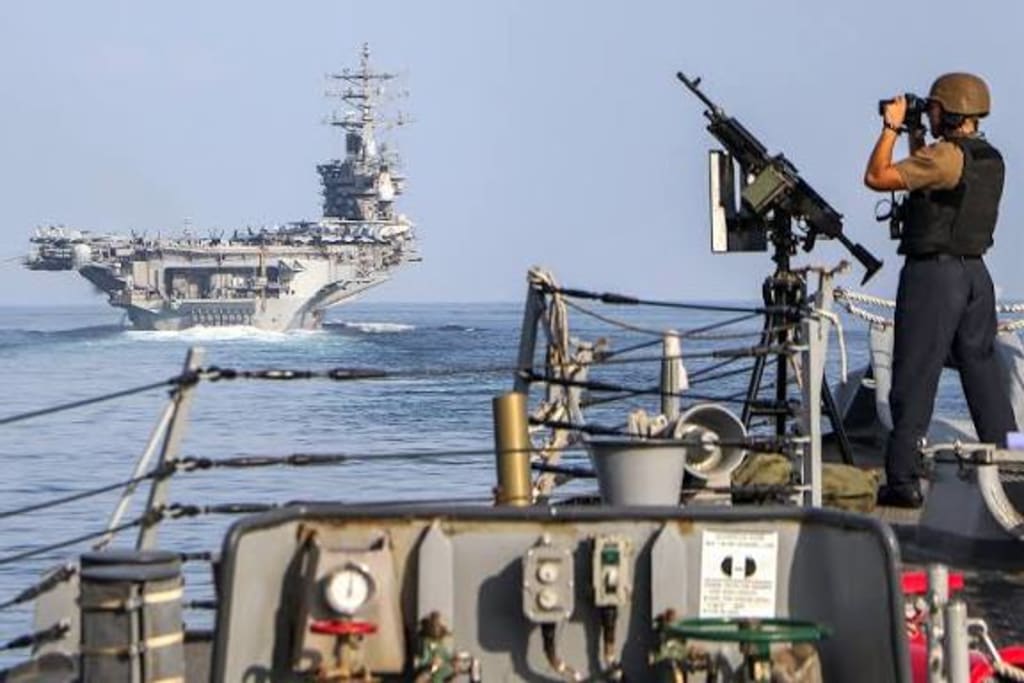
As tensions between Iran and the United States continue to rise, one of the world’s most strategically important waterways — the Strait of Hormuz — has become a central focus of international attention. Iran has announced a two-day live-fire naval exercise in the strait, heightening concerns about potential confrontation and disruptions to global energy markets.
timesofisrael.com +1
The Strait of Hormuz is a narrow sea passage connecting the Persian Gulf with the Gulf of Oman and the Arabian Sea. Despite its relatively small size, this narrow waterway plays an outsized role in the global economy because a significant portion of the world’s oil supply passes through it every day. Its geographic importance means that any military activity in or near the strait can have far-reaching implications for regional stability, international trade, and energy prices.
timesofisrael.com
Why the Strait of Hormuz Matters Globally
The Strait of Hormuz is one of the most vital maritime lifelines for global energy supplies. On any given day, a substantial share of seaborne oil exports from major producers such as Saudi Arabia, Iraq, Kuwait, the United Arab Emirates, and Iran itself transit this route. Disruption to shipping traffic in the strait — whether from conflict, blockade, or accidents — can quickly lead to spikes in global oil prices and broader market volatility.
Because of its global importance, many nations — including those far beyond the Middle East — closely monitor activity in the region. For countries that rely heavily on Gulf energy exports, even a short interruption in traffic can have significant economic repercussions.
Iran’s Planned Military Drills
In late January 2026, Iran’s Islamic Revolutionary Guard Corps (IRGC) announced live-fire naval exercises in the Strait of Hormuz scheduled to take place at the end of the month. This follows a buildup of U.S. naval forces in the region, including the arrival of the aircraft carrier USS Abraham Lincoln and its strike group, as part of a broader U.S. military presence.
Reuters +1
Iran’s state media characterized the drills as routine and defensive, emphasizing sovereign rights to operate in international waters. However, the exercises also involve live-fire components and occur in close proximity to busy commercial shipping lanes, drawing warnings from foreign militaries and governments.
U.S. and International Military Warnings
The U.S. Central Command (CENTCOM) has publicly warned Iran against “unsafe and unprofessional behavior” during the planned exercises. U.S. officials have stressed the importance of freedom of navigation for international maritime traffic and urged that any military operations be conducted safely and professionally to avoid accidents or escalation.
CENTCOM’s statements highlighted specific actions it would not tolerate, such as Iranian fast boats approaching U.S. warships on dangerous courses or low-altitude flights near U.S. naval vessels. The U.S. military emphasized that it recognizes Iran’s right to operate in international waters — provided such activity avoids danger to commercial shipping and military assets.
Other Western nations, including Germany, have urged peaceful resolution of tensions and stressed diplomacy over military posturing. These voices reflect concerns that miscalculation in such a strategically fraught location could inadvertently draw in larger conflict.
Middle East Monitor
Geopolitical Context and Rising Tensions
The backdrop to the planned drills includes broader Iran–U.S. tensions over a range of issues, such as Iran’s nuclear program, political unrest within Iran, and opposing military postures in the region. Recent blasts in Iranian cities and the shadow of possible escalation have contributed to anxiety about possible conflict between Tehran and Washington.
AP News
U.S. officials have issued stern warnings that dangerous behavior could provoke serious responses, though diplomatic channels also remain active in parallel. Iran’s leadership has framed its military preparedness as a deterrent to outside intervention, asserting that any aggression against it would threaten the security of foreign powers and regional stability alike.
timesofisrael.com
These developments illustrate the delicate balancing act both sides are performing: Tehran seeks to display strength and sovereignty, while Washington insists on maintaining security and the free flow of commerce through international waterways.
Economic and Strategic Stakes
The economic stakes of any military escalation in the Strait of Hormuz cannot be overstated. Oil markets react quickly to geopolitical risks, and even the threat of disruption can push prices higher. For major oil importers in Asia and Europe, stability in the strait is a critical component of energy security.
Additionally, naval escorts, insurance premiums, and rerouting costs increase when tensions rise, adding economic strain beyond simple supply concerns.
What Comes Next
As Iran’s live-fire drills proceed, international observers will watch closely to see whether the exercises remain contained and professional, or whether they lead to closer encounters with U.S. or allied forces.
For now, authorities on both sides emphasize caution. CENTCOM’s warnings underline that while military drills are legitimate, they must not endanger civilian maritime traffic or provoke inadvertent clashes at sea — an environment where a single misstep could have dramatic consequences.
The Strait of Hormuz, in its role as a critical artery of global energy and trade, remains a geopolitical pressure point where diplomacy, military strategy, and international law intersect. As tensions persist, the world continues to monitor developments in this narrow but crucial waterway with wide-ranging implications.
About the Creator
Fiaz Ahmed
I am Fiaz Ahmed. I am a passionate writer. I love covering trending topics and breaking news. With a sharp eye for what’s happening around the world, and crafts timely and engaging stories that keep readers informed and updated.
Keep reading
More stories from Fiaz Ahmed and writers in The Swamp and other communities.
Russia Struggles to Shake Reliance on Foreign Technology Imports
Russia continues to face significant challenges in reducing its dependence on foreign technology imports despite years of government efforts to promote domestic production and technological self-sufficiency. Western sanctions, supply chain disruptions, and limited access to advanced components have exposed structural weaknesses in Russia’s tech sector, highlighting the difficulty of replacing imported systems with locally produced alternatives. Since the introduction of broad international sanctions following the conflict in Ukraine, Russia has accelerated its push for “technological sovereignty.” Officials have repeatedly stated that the country must rely on homegrown solutions in areas such as semiconductors, telecommunications, industrial software, and electronics manufacturing. However, experts say progress has been uneven and costly. A Legacy of Dependence For decades, Russia’s technology industry has relied heavily on imported hardware and software, particularly from the United States, Europe, and East Asia. Key industries—including aviation, energy, telecommunications, and defense manufacturing—were built using foreign microchips, machinery, and operating systems. When sanctions restricted access to these technologies, companies were forced to search for alternatives almost overnight. Many turned to suppliers in China and other non-Western markets, but these substitutes often lacked the same performance or compatibility with existing systems. “Russia’s problem is not only sanctions,” said one Moscow-based technology analyst. “It is that its high-tech manufacturing base was never designed to be fully independent.” Semiconductor Shortages One of the most serious challenges has been access to advanced semiconductors. Modern chips are essential for everything from smartphones and medical equipment to military systems and artificial intelligence. Russia’s domestic chip industry remains years behind global leaders in Taiwan, South Korea, and the United States. While Russia can produce older-generation chips for basic uses, it struggles to manufacture high-performance processors at scale. As a result, industries dependent on cutting-edge computing power face delays and rising costs. Government programs have invested billions of rubles into chip development projects, but experts warn that building a competitive semiconductor ecosystem requires decades of infrastructure, skilled labor, and international cooperation. Software and Digital Services Software has been another major area of concern. Following the departure of major Western companies, Russian businesses lost access to widely used operating systems, cybersecurity tools, and enterprise software platforms. In response, authorities encouraged the adoption of Russian-made software solutions. While some local companies have developed alternatives, businesses report technical limitations and compatibility issues. Migrating large systems from foreign to domestic software has proven complex and expensive. Banks, hospitals, and transport networks have been particularly affected, as their operations depend on reliable and secure digital infrastructure. “Replacing software is not like replacing a light bulb,” said an IT consultant working with Russian firms. “It requires retraining staff, redesigning systems, and accepting lower performance in some cases.” Economic Impact Russia’s dependence on imported technology has had a visible economic cost. Manufacturing delays, rising production expenses, and reduced innovation have slowed growth in several sectors. Industries such as aviation and automotive manufacturing have struggled to maintain production levels due to shortages of electronic components. Some factories have been forced to suspend operations or redesign products using simpler technology. Small and medium-sized enterprises face the greatest pressure, as they lack the financial resources to invest in alternative suppliers or custom-built systems. Government Strategy and Limits The Russian government has launched multiple initiatives to boost domestic innovation, including tax incentives, subsidies for tech startups, and national development programs focused on microelectronics and artificial intelligence. Officials argue that long-term independence is achievable and that current difficulties are temporary. They point to growing partnerships with Asian suppliers and increased funding for local research institutions. However, critics say that true technological independence is unrealistic in a globalized economy. Modern technology depends on international supply chains that no single country can fully replace. “Even the most advanced nations rely on imported components,” said a European technology researcher. “Russia’s attempt to isolate itself technologically will likely result in slower development and reduced competitiveness.” Talent and Brain Drain Another challenge has been the loss of skilled professionals. Thousands of engineers and IT specialists left Russia following political and economic uncertainty, weakening the country’s innovation capacity. Although universities continue to train new graduates, rebuilding a skilled workforce takes time. Industry leaders warn that without attracting global talent and cooperation, domestic technology programs may struggle to reach international standards. A Long Road Ahead Despite the obstacles, Russia continues to pursue its goal of reducing reliance on foreign technology. New production facilities are under construction, and state contracts increasingly favor domestic suppliers. Yet analysts agree that the transition will be slow and difficult. Access to advanced tools, global research networks, and foreign investment remains limited. For now, Russia remains heavily dependent on imported technology—either directly or through alternative trade routes. The effort to replace foreign systems has exposed the complexity of modern technological ecosystems and the risks of isolation in a highly interconnected world. Whether Russia can achieve meaningful technological independence will depend not only on funding and policy, but on its ability to rebuild trust, innovation, and international cooperation in the years ahead.
By Fiaz Ahmed about 6 hours ago in The Swamp
Over 1,000 Retail Jobs at Risk as Claire’s Enters Insolvency
A Sudden Shock for Retail Workers More than 1,000 retail jobs are now in jeopardy following the appointment of insolvency practitioners at Claire’s, the UK’s popular accessories retailer, just four months after it was rescued from financial difficulties. The move, reported by Sky News, comes as a significant blow to employees, many of whom were still recovering from previous uncertainties at the company.
By Aarif Lashari6 days ago in The Swamp




Comments
There are no comments for this story
Be the first to respond and start the conversation.