
What Is ICE and What Powers Do Its Agents Have to Use Force?
“Understanding ICE’s role, authority, and the rules governing the use of force by its agents”
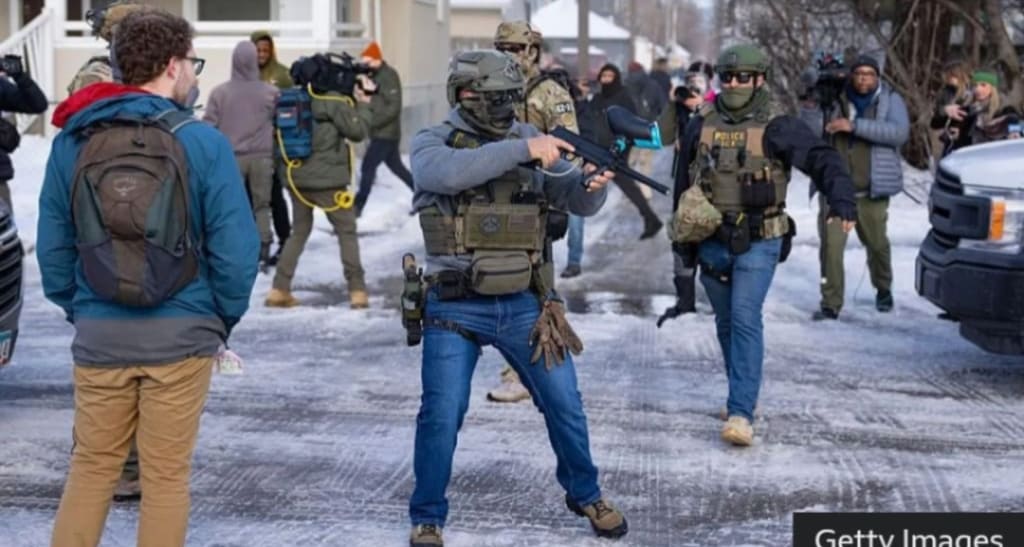
Immigration and Customs Enforcement, commonly known as ICE, has been at the center of public debate and media attention in the United States for years. Recently, incidents involving ICE agents have raised questions about the scope of their authority and the use of force. Understanding ICE’s role, responsibilities, and legal powers is crucial for anyone following immigration policy, law enforcement, and civil rights issues.
What Is ICE?
ICE is a federal agency under the Department of Homeland Security (DHS), created in 2003 after the reorganization of U.S. immigration services following the September 11 attacks. Its mission is to protect the United States from cross-border crime and illegal immigration that threatens national security and public safety.
ICE has two main divisions:
Enforcement and Removal Operations (ERO):
Responsible for identifying, apprehending, and removing individuals who are in the U.S. illegally.
Handles immigration detention, deportation, and removal proceedings.
Homeland Security Investigations (HSI):
Focuses on investigating criminal activities such as human trafficking, cybercrime, drug smuggling, financial fraud, and immigration-related crimes.
Together, these divisions ensure that ICE operates across both civil immigration enforcement and criminal investigations.
The Legal Basis for Using Force
ICE agents, like other federal law enforcement officers, are empowered to use force in specific circumstances. Their authority comes from a combination of:
Federal laws governing law enforcement
Department of Homeland Security directives
Internal ICE policies and guidelines
ICE agents are trained to use force proportionally and only when necessary. According to ICE policy, force is authorized:
To protect themselves or others from imminent harm.
To prevent the escape of a detainee who poses a threat.
To enforce lawful orders related to arrest, detention, or removal.
Types of Force ICE Agents Can Use
ICE agents follow a force continuum, which is a standard law enforcement practice that escalates based on the situation. The continuum generally includes:
Verbal Commands: The first step is attempting compliance through verbal warnings and clear instructions.
Physical Restraint: Agents may use handcuffs or non-lethal physical techniques to control a detainee.
Non-Lethal Tools: Includes batons, pepper spray, tasers, or beanbag rounds, used only if the subject resists or poses a danger.
Firearms: Lethal force is authorized only in extreme situations, such as to protect life from an immediate threat.
ICE policies explicitly state that lethal force must be a last resort and that all other reasonable means should be attempted first.
Training and Oversight
ICE agents undergo extensive training in both enforcement and use-of-force protocols:
Basic Training: Covers federal law, arrest procedures, conflict resolution, and cultural competency.
Use-of-Force Training: Emphasizes proportionality, de-escalation techniques, and situational judgment.
Ongoing Evaluation: Agents are periodically assessed on performance, including use-of-force incidents.
Oversight mechanisms include internal investigations, reviews by the DHS Office of Inspector General, and, in some cases, independent inquiries.
Controversy and Public Concerns
ICE’s authority to use force has sparked debate and criticism, especially in cases involving civilians and children. Critics argue that:
The definition of imminent threat can be subjective, sometimes leading to excessive use of force.
There have been incidents where detainees were harmed unnecessarily, raising human rights concerns.
Policies for de-escalation and transparency are not always consistently applied.
Supporters argue that ICE agents face high-risk situations and must have the legal tools to protect themselves and the public.
High-Profile Cases and Their Impact
Recent high-profile incidents have brought attention to ICE’s use of force. For example:
Cases involving detention raids or confrontations with individuals resisting deportation.
Situations where agents have used lethal force, which often trigger investigations by DHS, the FBI, or state authorities.
These incidents frequently spark public debate, protests, and calls for policy reform, highlighting the tension between law enforcement duties and civil liberties.
What Citizens Should Know
Understanding ICE’s powers is important for the public. Key takeaways include:
ICE agents are lawful federal officers, but their actions are bound by federal and agency-specific rules.
Use of force is regulated, with lethal force being a last resort.
Individuals have rights during encounters with ICE, including the right to remain silent and the right to legal representation.
Oversight and accountability mechanisms exist, though public transparency varies.
Being informed helps communities engage in constructive dialogue about immigration policy, law enforcement accountability, and human rights protections.
Conclusion
ICE plays a critical role in U.S. immigration enforcement and national security, but its powers, especially regarding the use of force, remain a subject of scrutiny. Agents are authorized to use force to protect life, enforce law, and prevent escape, following a structured continuum from verbal commands to lethal force.
The challenge lies in balancing enforcement with respect for human rights and civil liberties. As ICE continues its operations, ongoing training, oversight, and public accountability are essential to maintain trust and ensure that the use of force remains lawful, proportional, and justified.
Whether one views ICE as a necessary component of national security or a controversial enforcer of immigration law, understanding what the agency is and how its agents are empowered is critical for informed discussion in today’s society.
About the Creator
Keep reading
More stories from Aarif Lashari and writers in The Swamp and other communities.
US Set to Quit World Health Organization: What It Means for Global Health
The United States has officially announced its intention to withdraw from the World Health Organization (WHO), a decision that has sent shockwaves through the global health community. The move, announced by government officials, is framed as a response to concerns over organizational efficiency, governance, and accountability. However, experts warn that the decision could have far-reaching consequences for global health initiatives, pandemic preparedness, and international cooperation.
By Aarif Lashariabout 11 hours ago in The Swamp
Carney’s China Embrace Widens Gap With US in Trump’s Tariff Era
Canada is making waves on the global stage, and not necessarily where the U.S. wants. Prime Minister Mark Carney’s embrace of China is widening a gap with Washington at a time when President Trump’s tariff policies are shaking up international trade. What was once unthinkable — Canada leaning toward Beijing — now looks like a pragmatic move in a world of rising tariffs and disrupted supply chains.
By Aqib Hussain5 days ago in The Swamp
Pending Home Sales Drop Sharply in December, Dimming the Housing Outlook for 2026
Pending home sales in the United States fell sharply in December, delivering a sobering signal for the housing market as it heads into 2026. The latest data suggests that elevated mortgage rates, stubborn affordability challenges, and growing economic uncertainty are continuing to suppress buyer activity, raising concerns that a meaningful housing recovery may be further away than previously hoped.
By Muhammad Hassana day ago in The Swamp
The Path to Salvation
The late autumn evening air filled the monk's lungs, but it wasn't the season that chilled his bones. The heavy-handed presence of evil he had sensed upon entering the woods surrounding this mountain village had not bothered to conceal itself from him.
By Made in DNAabout 14 hours ago in Fiction




Comments
There are no comments for this story
Be the first to respond and start the conversation.