
Western Powers Shift Gears: Canada, UK, Australia & Portugal Recognize State of Palestine Ahead of UN Assembly
A landmark diplomatic turn as four nations back Palestinian statehood, demanding peace, reform, and release of hostages—sparking both hope and controversy.

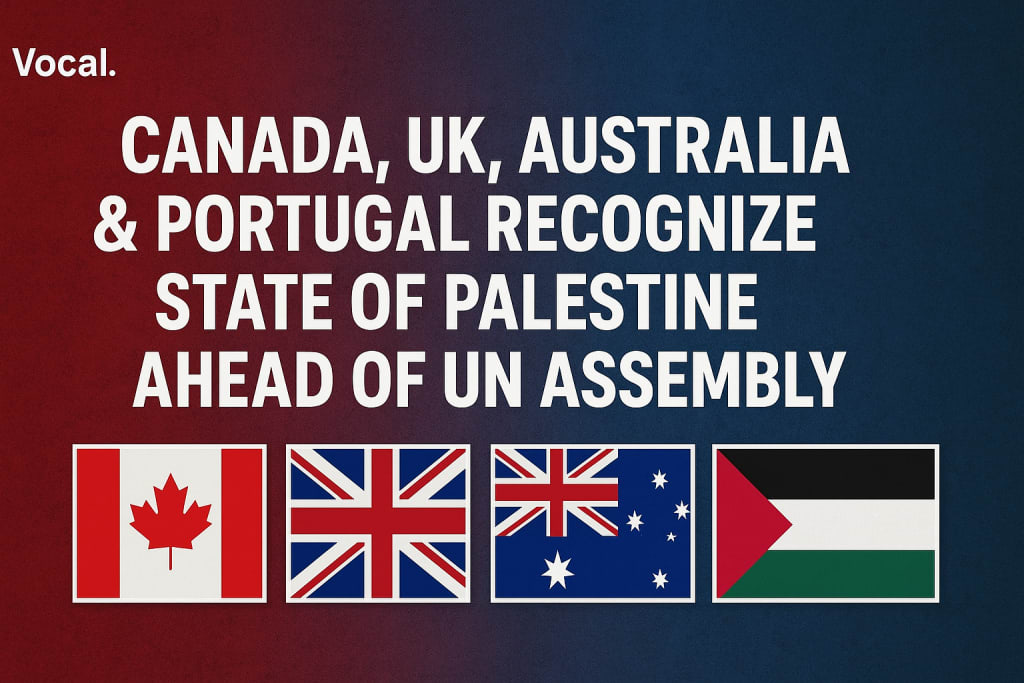
On September 21, 2025, the world witnessed a diplomatic pivot. Canada, the United Kingdom, Australia, and Portugal formally recognized the State of Palestine—just as the United Nations General Assembly session was about to get underway in New York. The startling announcements, made by Prime Ministers Mark Carney (Canada), Keir Starmer (UK), Anthony Albanese (Australia), and Portugal’s Foreign Minister João Gomes Cravinho, marked a significant shift in foreign policy from long-standing allies of Israel. The message was clear: the international community’s patience is being tested, and a new course is being demanded.
Why This Moment Matters
For decades, recognition of Palestine by Western powers has been uneven and conditional, often deferred to peace negotiations or contingent upon agreements between the parties. But this coordinated move signals that some of the world’s most influential democracies believe the current status quo is no longer viable. As Al Jazeera points out, the recognition came “in coordination with the UK before UN General Assembly meeting this week,” amid mounting concern about humanitarian crises and stalled peace processes.
These nations made it clear they support the two-state solution as the only meaningful path to lasting peace. They reinforced calls for Hamas to release hostages, disarm, and for the Palestinian Authority (PA) to reform—setting the goal of Palestinian elections by 2026.
Statements and Conditions
Canada under Mark Carney underscored that recognizing Palestine does not legitimize terrorism. The Canadian government emphasized the need for governance reform in Palestine, including democratic elections, and demilitarization.
Australia, led by Anthony Albanese, issued similar sentiments: recognition comes alongside expectations—ceasefire, release of hostages, and no role for Hamas in future governance.
UK PM Keir Starmer said the recognition was aimed at “reviving the hope of peace for the Palestinians and Israelis” under a two-state framework, emphasising that Israel’s security must be safeguarded while Palestine’s aspirations be honoured.
Portugal, via Foreign Minister Paulo Rangel, reaffirmed that recognising Palestine is a consistent line of Portuguese foreign policy—a reflection of principles rather than political expediency.
These leaders made a point of linking recognition with concrete steps: elections in 2026, reforms in the PA, no involvement of Hamas, and a framework that respects Israel’s security concerns.
Reactions: Support, Criticism, and Tension
Palestinian Response: The announcements were warmly welcomed by Palestinian officials. They saw this move as a long-overdue affirmation of their right to self-determination and justice. Palestinian President Mahmoud Abbas described it as paving the path toward peace and coexistence. Hamas, while welcoming the recognition, stressed that substantial tangible changes in Gaza and the West Bank are necessary—not just symbolic gestures.
Israeli Reaction: Sharp condemnation. Prime Minister Benjamin Netanyahu called the recognition a “huge reward to terrorism,” referring to the Hamas attacks of October 7, 2023. He rejected the notion of a Palestinian state west of the Jordan River.
International Dynamics: The move stands in contrast to the position of the United States and some other Western allies. Though some countries have supported Palestinian statehood in principle, few have taken this formal step amid ongoing conflict. Observers note this might reflect growing frustration over the humanitarian situation in Gaza and a desire among many global publics for more assertive diplomatic pressure.
Implications: What Comes Next
1. Diplomatic Pressure Increases: With major Western democracies recognizing Palestine, pressure is now mounting on Israel to engage in negotiations more seriously and make concessions, especially regarding ceasefire, hostages, settlements, and governance reforms.
2. Palestinian Authority Reform & Elections: The recognition comes hand-in-hand with expectations—elections by 2026 and reforms in how the Palestinian government operates. If the PA does not deliver, international patience may wane.
3. Hamas’ Role Under Scrutiny: All four nations have emphasized that Hamas must have no role in future governance structures. This sets a challenging standard, given Hamas’ current control over Gaza, and may lead to real tensions or conflicts in how a unified Palestinian governance model could emerge.
4. Israeli Domestic Impact & Regional Reactions: Expect political fallout within Israel. Some factions may call for stronger responses, both diplomatically and perhaps militarily. On the regional front, this move may encourage other countries to follow suit, increasing Palestine’s diplomatic recognition but also potentially increasing friction in international forums and with allies of Israel.
5. UN General Assembly & Multilateral Moves: Given the timing—just ahead of the UNGA—this could energise resolutions or joint statements. Countries like France were reported to be preparing their own recognition announcements.
Critical Questions & Challenges Ahead
Will recognition and diplomatic pressure lead to real improvements on the ground, especially for civilians in Gaza and the West Bank?
How will Israel respond in policy and action—will there be retaliation, isolation, or countermeasures?
Can the Palestinian Authority manage to deliver free and fair elections by 2026, while excluding Hamas from governance without worsening internal divisions or violence?
Will this step become a tipping point that ushers in wider international recognition, or will it lead to diplomatic backlash isolating Israel further, and possibly even hurting the peace prospects if not managed carefully?
Looking Ahead
This moment is being described by many analysts as historic—a crack in the decades-old diplomatic ice. The coordinated recognition by major Western powers signals that global public opinion, humanitarian concerns, and geopolitical realities are no longer comfortable with indefinite limbo. While recognition doesn’t immediately redraw borders or end conflicts, it resets expectations: a two-state solution is not just rhetorical; it is being backed by concrete acts of statecraft.
For Palestinians, this could be a moment of vindication; for Israelis, a moment to reflect on security and legitimacy; and for the international community, a test of whether recognition can be transformed into peace, justice, and lasting reconciliation.
SEO & Reader Highlights
Keywords to watch: recognition of Palestine, two-state solution, Canada UK Australia Portugal, Netanyahu reaction, Hamas release hostages, Palestinian elections 2026.
Why readers are keen: this event alters decades of foreign policy, impacts global diplomacy, and could reshape Middle East peace efforts.
About the Creator
Waqar Khan
Passionate storyteller sharing life, travel & culture. Building smiles, insights, and real connections—one story at a time. 🌍
Every read means the world—thanks for your support! 💬🖋️
Keep reading
More stories from Waqar Khan and writers in The Swamp and other communities.
Keir Starmer and Donald Trump Hold Chequers Press Conference Live: What You Need to Know
On September 18, 2025, UK Prime Minister Keir Starmer is set to join U.S. President Donald Trump for a highly anticipated live press conference at Chequers, the Prime Minister’s country residence in Buckinghamshire. This event comes at the end of Trump’s second state visit to the United Kingdom, which has so far been rich with ceremony, royal pageantry, and deep diplomatic undercurrents.
By Waqar Khan4 months ago in The Swamp
Putin Dispatches Naval Vessels.
Vlad "The Invader" Putin (taken from Vlad "The Impaler" Tepes) has officially stepped into the situation between America and Venezuela on the high seas. It seems the capture of Nicolas Maduro, who is now facing trial in New York, crossed a red line for Russia. Maduro and Putin are close allies, and Maduro's successor, Delcy Rodriguez, will be just as close with her Russian counterpart.
By Nicholas Bishop5 days ago in The Swamp


Comments
There are no comments for this story
Be the first to respond and start the conversation.