
Trump Accepts Nobel Medal from Venezuelan Opposition Leader Machado
A dramatic political gesture raises questions about symbolism, diplomacy, and the meaning of peace prizes.

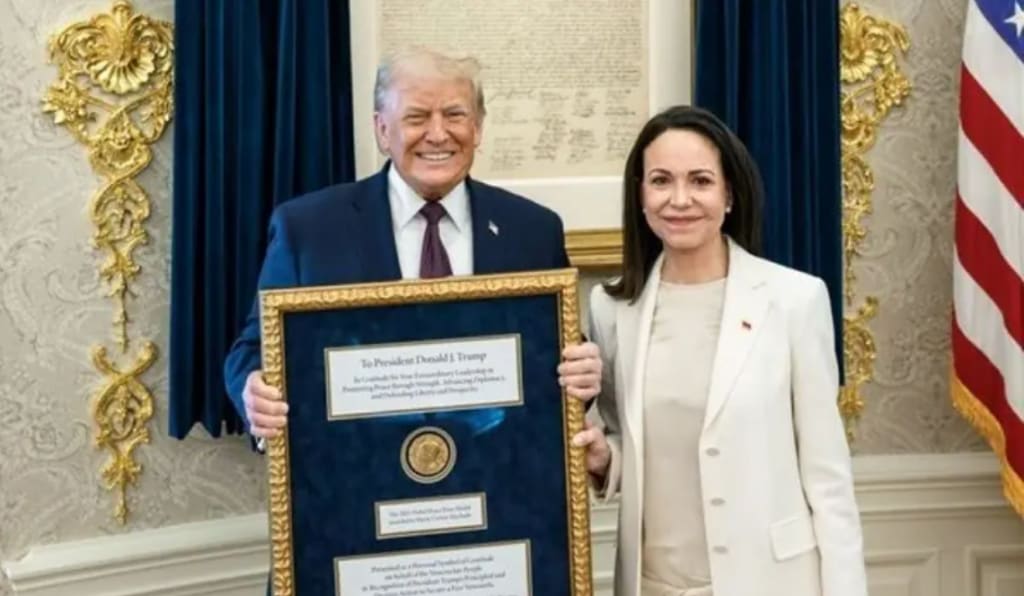
In a moment that made headlines worldwide, Venezuelan opposition leader María Corina Machado presented U.S. President Donald Trump with her Nobel Peace Prize medal at the White House on January 15, 2026. The event, described as both symbolic and political, immediately sparked discussion about the nature of international recognition, diplomatic strategy, and the role of symbolism in politics.
Trump accepted the medal, describing it as a “wonderful gesture of mutual respect.” However, experts quickly clarified that the Nobel Peace Prize itself cannot be transferred, and while a physical medal can change hands, the title of Nobel Laureate remains with the original recipient. Despite this, the optics of the event immediately made it a global talking point.
A Gesture Packed With Symbolism
Machado, who won the 2025 Nobel Peace Prize for her efforts promoting democracy and human rights in Venezuela, explained that giving the medal to Trump was a thank-you for his support of Venezuelan freedom. The medal bore a ceremonial inscription reading:
“In Gratitude for Your Extraordinary Leadership in Promoting Peace through Strength, Advancing Diplomacy, and Defending Liberty and Prosperity.”
Trump, known for his longstanding desire to win a Nobel Peace Prize, posted on social media praising Machado as “a wonderful woman who has been through so much” and expressed gratitude for the symbolic gesture.
The exchange was more than ceremonial—it was a political statement, emphasizing international alliances, shared ideals of governance, and the power of symbolism in modern diplomacy.
Why the Medal Matters, But the Prize Doesn’t Transfer
It’s important to distinguish between the physical medal and the official Nobel Peace Prize honor. The Norwegian Nobel Institute emphasizes that the title of Nobel Laureate cannot be transferred or shared, even if the medal is handed over to another person. This means that, despite public perception, Trump is not officially recognized as a Nobel Peace Prize winner.
Nonetheless, the physical medal carries significant symbolic weight, especially in politics. In this case, the gesture communicated support for democratic principles in Venezuela and acknowledged Trump’s perceived role in influencing international outcomes.
Venezuela’s Turbulent Political Context
The backdrop of this gesture is crucial. Venezuela has experienced years of political instability under the leadership of Nicolás Maduro, whose administration was accused of corruption, human rights violations, and suppressing democratic institutions.
In early January 2026, U.S. forces captured Maduro in a high-profile operation.
Machado, a vocal opponent of Maduro, fled Venezuela in December and began lobbying internationally to regain influence.
The Trump administration has maintained support for interim leadership under Delcy Rodríguez, a figure with ties to Maduro’s former government.
In this context, Machado’s presentation of the medal was both strategic and symbolic, aiming to strengthen her political leverage while reaffirming her commitment to democratic ideals.
Trump’s Response and Political Optics
Trump’s acceptance of the medal was enthusiastic. He framed it as recognition of his contributions to international diplomacy and freedom movements, praising Machado and highlighting U.S. support for democratic transitions.
However, critics argue that the gesture is largely symbolic, with limited direct impact on Venezuelan politics. By linking himself to Machado’s Nobel Peace Prize, Trump reinforced his image as a global influencer, while Machado sought to leverage the moment to draw renewed attention to her leadership ambitions.
Global Reactions and Controversy
The reaction to the event has been mixed:
Some commentators hailed it as a powerful symbolic alignment between the U.S. and democratic movements in Venezuela.
Others criticized the move, suggesting it undermined the prestige of the Nobel Peace Prize, using a personal award for political purposes.
Observers in Norway, where the Nobel Peace Prize is administered, expressed surprise and concern, emphasizing that the prize is intended to honor peaceful achievements, not political maneuvering.
International media coverage highlighted the event as unusual and unprecedented, raising broader questions about the intersection of awards, symbolism, and diplomacy.
Symbolism Meets Realpolitik
The medal exchange underscores how political symbolism is frequently leveraged to influence perceptions and relationships:
The physical medal, while not granting the Nobel title, communicates respect and recognition.
For Trump, it reinforced his international profile and provided positive imagery for supporters.
For Machado, it was an opportunity to signal alignment with U.S. leadership and maintain relevance on the global stage.
Analysts note that such gestures can shape public perception, media narratives, and diplomatic dialogue, even if they don’t directly alter policy outcomes.
Implications for U.S.–Venezuela Relations
This gesture also reflects the complexity of U.S.–Venezuela relations:
The U.S. continues to back interim leadership under Rodríguez, maintaining strategic interests in the region.
Symbolically, the medal presentation shows recognition of opposition leaders advocating for democracy, sending a message to both domestic and international audiences.
Machado’s alignment with Trump illustrates the delicate balancing act opposition figures face when navigating global alliances while advocating for reform at home.
How these symbolic acts translate into real-world political influence remains to be seen, but they are strategically valuable tools in international relations.
Cultural and Historical Significance
The event also sparks broader discussions about the role of awards and international recognition in politics:
Can gestures like this alter public perception of leaders or movements?
What is the value of symbolism in shaping global narratives?
How do international institutions maintain credibility when political maneuvering intersects with honors like the Nobel Peace Prize?
While there are no easy answers, the moment highlights the interplay between politics, recognition, and media attention in today’s globalized world.
Final Thoughts
Trump’s acceptance of a Nobel Peace Prize medal from María Corina Machado is more than a ceremonial act. It combines political symbolism, personal ambition, and international messaging in a single moment.
Although the official Nobel title remains with Machado, the gesture demonstrates the power of visual symbolism in shaping narratives and influencing diplomatic perceptions. For Venezuela, it provides a renewed platform for opposition voices. For Trump, it reinforces his global visibility and reputation as a decisive actor in international politics.
As the world watches, the event raises enduring questions about the intersection of recognition, diplomacy, and political strategy, offering a case study in how gestures — even symbolic ones — can resonate far beyond the room in which they occur.Start writing...
About the Creator
Muhammad Hassan
Muhammad Hassan | Content writer with 2 years of experience crafting engaging articles on world news, current affairs, and trending topics. I simplify complex stories to keep readers informed and connected.
Keep reading
More stories from Muhammad Hassan and writers in The Swamp and other communities.
Grief Over Pet Death Can Be as Strong as That for a Family Member, Survey Shows
For many, pets are more than just animals; they are companions, confidants, and family members. A recent survey has revealed that the grief experienced after the death of a beloved pet can be as intense as mourning the loss of a close family member, underscoring the profound emotional significance of human-animal relationships. The survey, conducted across multiple countries, sheds light on the psychological and social impacts of pet loss, highlighting how society often underestimates the depth of grief associated with losing a furry, feathered, or scaled friend. The Survey Findings The survey included thousands of participants who had experienced the death of a pet, asking them to rate their grief and compare it with other life events. Key findings include: Emotional intensity: Around 70% of respondents reported that their grief over a pet was as strong, or stronger, than grief experienced for a close relative. Duration of mourning: Many participants noted that grief lasted weeks to months, with some describing lingering emotional effects for years. Social recognition: Over 60% of respondents felt that their grief was not fully recognized by friends or family, often leading to feelings of isolation. These results highlight that pet loss is not trivial or fleeting, but a legitimate emotional experience that can significantly affect mental health. Why Pet Loss Can Be So Painful The intense grief associated with losing a pet is rooted in several factors: Unconditional companionship: Pets provide constant support and affection, often without judgment, creating deep emotional bonds. Routine and lifestyle changes: Pets become woven into daily routines, and their absence disrupts normal life, contributing to feelings of emptiness. Emotional support: Many people rely on pets for comfort during stressful periods. The loss of this support system can be emotionally destabilizing. Anthropomorphism: Owners often attribute human-like emotions and personalities to pets, which strengthens the emotional connection. These factors combine to make the loss of a pet deeply personal and emotionally impactful. Types of Pets and Grief While dogs and cats are the most commonly reported pets in grief surveys, studies show that owners of birds, rabbits, reptiles, and even fish can experience similarly profound grief. Dogs: Often mourned for their loyalty, companionship, and protective nature. Cats: Valued for affection, playfulness, and calming presence. Exotic pets: Owners may experience grief linked to unique bonds and care routines. The intensity of grief may also correlate with the length of the relationship, the pet’s role in the family, and the circumstances of their death. Psychological Effects of Pet Loss Grieving a pet can manifest in ways similar to grieving a human loved one, including: Sadness and crying Sleep disturbances Loss of appetite Social withdrawal or irritability Guilt or feelings of responsibility for the pet’s death Mental health professionals note that acknowledging these feelings is crucial. Suppressing grief or minimizing the loss can lead to prolonged emotional distress or depression. Societal Perceptions and Misunderstanding One challenge pet owners face is that society often underestimates or dismisses their grief. Phrases like “It was just a pet” or “You can get another one” can exacerbate emotional pain and make the bereaved feel invalidated. Experts emphasize that recognizing pet grief is vital for emotional recovery. Many workplaces, schools, and communities are beginning to acknowledge pet loss in bereavement policies, reflecting a growing understanding of its psychological impact. Coping Mechanisms and Support People cope with pet loss in various ways, including: Memorializing the pet: Creating photo albums, planting trees, or holding small ceremonies can provide closure. Support groups: Pet loss support groups, both online and in person, allow owners to share experiences and find understanding. Professional counseling: Therapists trained in grief counseling can help individuals navigate intense emotions and prevent prolonged distress. Continuing routines: Some owners find comfort in volunteering at animal shelters or fostering pets, keeping a connection to animals alive. Cultural practices also influence how grief is expressed. In some countries, rituals or pet funerals help formalize mourning and provide social support. Recognizing Pet Grief in Children Children can experience pet loss intensely but differently than adults. They may express grief through: Play or drawing, reflecting their memories Regressive behavior, like bed-wetting or clinginess Withdrawal or irritability Parents are encouraged to validate children’s feelings, explain the pet’s death honestly, and provide opportunities for rituals or goodbyes, such as memorials or planting a tree. Changing Cultural Attitudes As pets increasingly become family members, cultural attitudes toward pet grief are evolving. Some trends include: Pet bereavement leave: Companies and organizations offering time off for employees after a pet dies. Therapeutic services: Counseling and hotlines specifically for pet loss. Social media acknowledgment: Online communities where people share memories and support each other. These changes help normalize pet grief and encourage individuals to seek support without shame. Expert Opinions Dr. Karen Smith, a psychologist specializing in grief counseling, explains: “People often underestimate the grief associated with losing a pet, but it is real and can be profoundly impactful. Acknowledging it, talking about it, and seeking support are crucial steps in healing.” Veterinarians also note that pet loss can affect physical health, with increased stress, headaches, and fatigue being common among those grieving. Final Thoughts The survey underscores a powerful truth: pets are family, and losing them can be devastating. Recognizing the depth of grief associated with pet loss is essential for emotional well-being and social understanding. Whether it’s a dog, cat, bird, or other companion, the bond people form with animals is deep, meaningful, and enduring. By acknowledging this grief, society can help ensure that pet owners receive empathy, support, and space to mourn, validating one of the most profound emotional experiences in human life.
By Muhammad Hassan2 months ago in The Swamp
The Forsyth House Fire
Since 1851, Forsyth House has stood on the corner of Union Street and Gordon Street in the heart of Glasgow. Its iconic, or was... because on Sunday 8th of March, 2026, a fire broke out in a small, seemingly un-named shop in the building and tore all that history down. As I write, the rubble is still unsettled and the street is still blocked off. Central Station is quiet on the upper level, and around 30 small businesses have quite literally gone up in smoke.
By S. A. Crawford3 days ago in The Swamp
RAF Typhoon Jets in Action Over Bahrain
Royal Air Force fighter jets roared across the skies above the Gulf kingdom this week as part of a high-profile training and security mission involving the advanced Eurofighter Typhoon aircraft. The deployment highlights the United Kingdom’s continuing military partnership with Bahrain, a strategic ally that hosts a key British naval facility in the region. The operation involved several RAF Typhoon jets flying out of RAF Akrotiri and staging exercises in cooperation with Bahraini defence forces. The sorties, conducted over international waters and Bahraini airspace, focused on air combat manoeuvres, rapid response drills and coordination with ground-based radar units. Officials from the Royal Air Force described the exercise as part of a broader effort to maintain readiness in the Middle East while strengthening defence ties with regional partners. According to defence sources, the drills simulated real-world scenarios including interception of unidentified aircraft and protection of maritime routes in the Persian Gulf. “These missions allow our crews to practice complex operations in a realistic environment,” a British defence spokesperson said. “Working alongside Bahrain’s forces improves coordination and ensures we are prepared to respond to potential threats to regional security.” The Typhoon jets involved in the operation represent one of the most sophisticated fighter aircraft in the RAF fleet. Equipped with advanced radar systems, precision-guided weapons and supersonic speed capabilities, the aircraft are designed to perform air superiority, reconnaissance and strike missions. The fighter is jointly developed by European aerospace companies including BAE Systems, Airbus and Leonardo. Military analysts say the presence of RAF jets in Bahrain reflects the United Kingdom’s long-standing strategic interest in maintaining stability in the Gulf. The region remains critical for global energy supplies and international shipping routes, and Western powers have continued to conduct patrols and exercises there amid ongoing geopolitical tensions. Bahrain hosts the Naval Support Facility Bahrain, which opened in 2018 as the Royal Navy’s first permanent base east of the Suez Canal in more than four decades. The facility allows British warships to operate more easily across the Gulf and Indian Ocean, while also supporting air and maritime missions involving British forces. During the latest exercise, Bahraini air controllers worked closely with RAF pilots to track simulated targets. Local fighter units also participated in some training segments, allowing both sides to exchange operational experience and refine joint tactics. A Bahraini defence official said the drills demonstrated the strength of cooperation between the two countries. “Our partnership with the United Kingdom is built on decades of military collaboration,” the official noted. “These exercises ensure our forces can operate effectively together when regional stability is challenged.” Residents in parts of Bahrain reported seeing the fighter jets streaking across the sky in tight formation. Defence authorities confirmed that the flights were scheduled training missions and that no civilian air traffic was disrupted during the operation. The deployment also provides valuable flying hours for RAF pilots stationed in the Middle East, many of whom regularly support coalition missions across the region. Training in the Gulf’s unique climate conditions—characterised by high temperatures and desert winds—helps crews prepare for potential operational deployments. Security experts say exercises like these are increasingly important as military powers adapt to evolving threats such as unmanned aerial vehicles and long-range missile systems. Practicing rapid interception and coordinated defence responses allows allied forces to maintain a technological and tactical edge. For the United Kingdom, the mission underscores its continued commitment to defence partnerships beyond Europe. While the RAF maintains a strong presence at home bases across Britain, overseas operations remain central to its global strategy. As the Typhoon jets completed their final sorties over Bahrain, defence officials from both countries described the exercise as a success. Plans are already under discussion for future joint drills, reinforcing a partnership that has long been a cornerstone of security cooperation in the Gulf region.
By Fiaz Ahmed 3 days ago in The Swamp
A Transparent Look at Vocal Challenges and Top Stories
Almost three years ago, we shared a resource article that served as a place for people to suggest new challenge prompts. We thought it would be a good idea to refresh that thread, and take the opportunity to answer a few common questions about top stories, how challenges are judged and how submissions are reviewed.
By Vocal Curation Team4 days ago in Resources


Comments
There are no comments for this story
Be the first to respond and start the conversation.