
U.S. Energy Secretary Directs Texas Oil Company to Restore Operations Off California
Federal order aims to revive offshore energy production while balancing environmental concerns and regional energy demands.
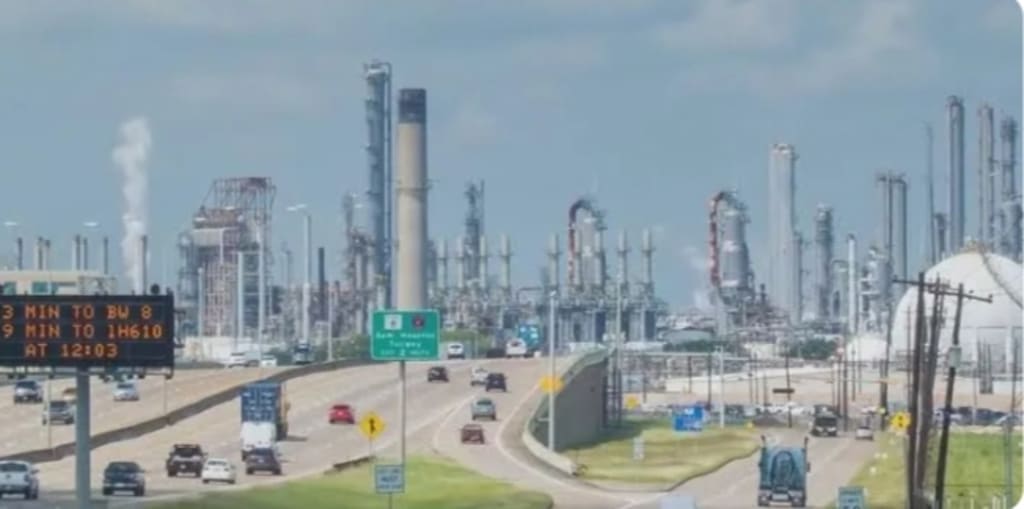
A new directive from the U.S. government has placed the spotlight on offshore energy production along the California coast. The Chris Wright has instructed a Texas-based oil company to restore operations at an offshore facility near California, marking a significant development in the ongoing debate over domestic energy production, environmental safety, and economic stability.
The decision underscores the federal government’s efforts to strengthen domestic energy supplies at a time when global energy markets remain uncertain. However, the move has also reignited concerns among environmental groups and coastal communities who worry about the risks associated with offshore drilling.
As energy security and climate priorities continue to shape national policy, the directive illustrates the complex balancing act facing regulators and energy companies in the United States.
A Federal Push to Resume Operations
The directive from the Department of Energy calls for a Texas-based oil operator to resume production at an offshore platform located off California’s coast. Operations at the site had been halted previously due to regulatory reviews and environmental concerns following earlier infrastructure problems.
Federal officials argue that restoring operations is necessary to maintain stable energy supplies and reduce reliance on imported oil. By restarting production, authorities hope to increase domestic output while maintaining safety and environmental oversight.
The decision reflects broader policy efforts aimed at ensuring that existing energy infrastructure continues to function effectively, particularly during periods of market volatility.
For the energy industry, such directives can provide a clearer path forward after prolonged regulatory uncertainty.
Offshore Energy and California’s Complex Relationship With Oil
California has long had a complicated relationship with offshore oil drilling. The state is home to some of the nation’s strongest environmental protections and ambitious climate goals, yet it also has a long history of petroleum production both on land and offshore.
Several offshore platforms were installed along the California coastline during earlier decades when domestic oil production was expanding rapidly. These facilities have supplied crude oil to refineries across the region, supporting jobs and contributing to local economies.
However, public attitudes toward offshore drilling shifted significantly after several major oil spills in the region. One of the most notable incidents occurred in Santa Barbara, where a large oil spill in 1969 helped ignite the modern environmental movement in the United States.
Since then, environmental regulations surrounding offshore drilling have become far stricter, and many new projects have faced strong opposition from local communities and environmental organizations.
Why the Federal Government Is Acting Now
Energy policy in the United States often reflects broader economic and geopolitical considerations. In recent years, global energy markets have experienced fluctuations driven by geopolitical tensions, supply disruptions, and shifting demand patterns.
Federal officials argue that ensuring reliable domestic production is essential for national energy security. By maintaining and restoring existing oil infrastructure, policymakers believe the country can better manage potential supply shortages or price spikes.
Offshore platforms that are already built and permitted represent a significant investment. Allowing them to remain inactive for extended periods can reduce overall production capacity and create uncertainty for energy companies.
Supporters of the directive say restoring operations at existing facilities is more practical than developing entirely new projects, which can take years to approve and construct.
Environmental Concerns Remain Central
Despite the economic and strategic arguments for restoring offshore production, environmental advocates remain deeply concerned about the risks.
Offshore drilling carries the possibility of oil spills, which can harm marine ecosystems, damage coastal tourism industries, and disrupt fishing communities. Even relatively small leaks can cause significant environmental damage.
Environmental groups argue that restarting operations at aging infrastructure may increase the risk of accidents if equipment is not properly maintained or upgraded.
They also point to California’s long-term climate goals, which include reducing fossil fuel use and transitioning toward renewable energy sources such as wind and solar power.
For critics, restoring oil production appears to conflict with these broader environmental commitments.
The Role of Safety and Regulation
Federal regulators insist that safety remains a top priority in any effort to resume offshore production. Before operations can fully restart, companies must meet strict regulatory standards and undergo detailed inspections.
These inspections typically include evaluations of pipelines, drilling equipment, and safety systems designed to prevent leaks or blowouts. Modern offshore platforms are equipped with multiple layers of protection intended to reduce the likelihood of major accidents.
Government agencies responsible for offshore energy oversight also conduct regular monitoring to ensure compliance with environmental and safety regulations.
In many cases, restoration orders require companies to implement updated technology and improved monitoring systems before production resumes.
Economic Impact for the Energy Sector
For the Texas-based oil company involved, the directive represents an opportunity to resume operations that could generate significant revenue and support jobs within the energy sector.
Offshore oil platforms require a wide range of workers, including engineers, technicians, safety specialists, and support staff. Restarting operations could therefore bring economic benefits not only to the company but also to contractors and service providers connected to the project.
Energy production also contributes to government revenues through royalties and taxes, which can be used to fund public programs.
Supporters of offshore production argue that maintaining domestic energy resources helps strengthen the national economy and reduce vulnerability to global supply disruptions.
A Broader Debate About America’s Energy Future
The directive to restore offshore oil operations highlights a broader debate about the future of energy in the United States.
On one side are those who believe domestic fossil fuel production remains essential for economic stability and national security. They argue that oil and gas will continue to play a major role in the global energy system for decades to come.
On the other side are advocates who believe the country should accelerate its transition away from fossil fuels in order to address climate change and reduce environmental risks.
California has been at the center of this debate, often leading the nation in renewable energy development while simultaneously managing the legacy of its existing oil infrastructure.
Looking Ahead
As the Texas oil company prepares to restore operations off California’s coast, the situation will likely remain under close scrutiny from regulators, environmental groups, and the public.
The outcome could influence future decisions about offshore drilling not only in California but across the United States.
For now, the directive reflects the ongoing tension between two powerful priorities: ensuring reliable energy supplies and protecting fragile coastal ecosystems.
How those priorities are balanced will continue to shape the nation’s energy policy in the years ahead.
About the Creator
The Forsyth House Fire
Since 1851, Forsyth House has stood on the corner of Union Street and Gordon Street in the heart of Glasgow. Its iconic, or was... because on Sunday 8th of March, 2026, a fire broke out in a small, seemingly un-named shop in the building and tore all that history down. As I write, the rubble is still unsettled and the street is still blocked off. Central Station is quiet on the upper level, and around 30 small businesses have quite literally gone up in smoke.
By S. A. Crawford3 days ago in The Swamp
Wealthy British nationals fleeing Gulf conflict bypass UK to avoid tax bills
Wealthy British nationals living in the United Arab Emirates (UAE) and neighbouring Gulf states are choosing to relocate to countries such as Ireland and France rather than return to the United Kingdom amid rising conflict in the region — a decision driven largely by concerns over the UK tax system as the current tax year draws to a close. With only a few weeks left before the 2025–26 UK tax year ends on 5 April, many high‑net‑worth individuals who have established non‑resident status are hesitant to risk returning home for fear of triggering significant tax liabilities. The UK’s tax authority, HM Revenue & Customs (HMRC), counts the number of days an individual spends in the UK as a key determinant of tax residency; exceeding allowable days could make a non‑resident liable for UK income tax and capital gains tax on worldwide income and gains. Conflict prompts decisions rooted in tax, not safety The rising conflict in the Gulf region has forced many Britons to contemplate where to regroup. Rather than risk being treated as UK tax residents by spending too much time in Britain — and potentially face retroactive taxation — they are instead flying to countries perceived as more tax favourable until the new UK tax year begins. Ireland and France have become popular temporary destinations, offering a buffer until Britons can return without altering their tax status. A wealthy business owner, speaking to The Guardian, said he was spending time in Dublin to avoid returning prematurely to London, which could have triggered capital gains tax on assets or businesses that had been sold while he was abroad. “I’m happy to pay income tax and tax on investments next tax year, but I don’t want the sale of a business that I sold years ago to fall within UK capital gains tax,” he said. Exceptional circumstances relief unlikely Some expatriates hoped that current travel advisories related to the conflict might qualify them for HMRC’s “exceptional circumstances” rule — a provision that, in the past (notably during the COVID‑19 pandemic), allowed flexibility over residency tests for people unable to leave certain regions. But tax professionals warn that HMRC is unlikely to be sympathetic, noting that governments generally don’t consider advisory alerts sufficient to trigger tax‑year leniency. Nimesh Shah, chief executive of tax advisory firm Blick Rothenberg, told The Guardian that the current situation around the Gulf does not meet the stringent criteria HMRC applies for exceptional circumstances. “In HMRC’s mind they’ve chosen to go [to the UAE] to not pay tax in the UK,” he said, adding that those leaning on that provision may be disappointed. Tax rules and residency traps Under UK tax law, the Statutory Residence Test governs whether an individual is considered a UK resident for tax purposes. Spending too many days in the UK — typically more than 90 or 120 in a year, depending on circumstances — can trigger residency status. Once deemed resident, individuals may face income tax on worldwide earnings and capital gains tax (CGT) on gains realised abroad, including sales of businesses or investment assets. Those who have been non‑resident for fewer than five full tax years are particularly vulnerable. If they return and restart UK residency status, the UK’s Temporary Non‑Residence (TNR) rules could subject them to CGT on gains made while they were outside the country — even if those gains occurred years earlier. Broader context: wealthy Britons and tax migration This latest bout of relocation sits within a wider debate over the UK’s changing tax landscape. In recent years, reforms to the so‑called “non‑domiciled” tax regime and moves to tax worldwide income more comprehensively have prompted some wealthy individuals to reconsider their tax affairs and, in some cases, their residency. While broader “millionaire exodus” claims are contested and likely exaggerated, these current moves reflect how tightly the timing and interpretation of tax laws influence where the wealthy choose to live during periods of geopolitical stress. Public reaction and policy implications Reaction among the public and on social media has been mixed. Some commentators argue that if wealthy Britons benefit from UK services — including evacuation support — they should contribute to the tax base. Others take a more laissez‑faire view, noting that existing residency rules allow people latitude in where they live and pay tax, and that individuals often make these choices for legal, financial reasons rather than a disdain for their home country. For policymakers, these developments highlight ongoing tensions between tax competitiveness and fairness — a debate that is likely to continue as the UK navigates the post‑Brexit economic and political landscape. Subtitle: Wealthy British expatriates displaced by Gulf conflict are avoiding returning to the UK to protect tax‑favourable status, choosing alternative European destinations to evade potentially costly tax residency rules.
By Fiaz Ahmed 2 days ago in The Swamp




Comments
There are no comments for this story
Be the first to respond and start the conversation.