
We Are Not a Democracy: Why the Founders Built a Republic
The Founding Fathers feared pure majority rule and designed a system to protect liberty through restraint, rather than emotion.

We say we want to destigmatize mental health to create a space where people can speak openly, seek help without shame, and be heard with compassion. But if you look closer, you'll see a very different trend emerging. Mental health isn't always treated as a concern to be addressed. Increasingly, it's being used as a weapon.
It's becoming alarmingly common to accuse someone of being unstable, unhinged, or mentally ill, not because they're showing signs of distress but because they've expressed an opinion that's controversial, inconvenient, or just different. It's not about care. It's about control. Scroll through social media, news panels, or comment threads, and you'll see the same language: "This person clearly needs help." "Unwell." "Psychotic." "Delusional." These aren't diagnostic terms. They're dismissal tactics.
We're not debating ideas anymore. We're invalidating people by casting doubt on their mental fitness. It's the easiest way to shut someone down. If you can convince others that a person is unstable, you don't need to engage with what they're saying. But that shortcut is corrosive, and it sets a precedent that's both lazy and dangerous.
This isn't the same as genuine concern. There's a world of difference between recognizing someone who may be in crisis and responding with empathy and tossing around mental health labels to silence or ridicule someone who challenges your beliefs. One is compassion. The other is character assassination.
And this behavior isn't limited to anonymous online arguments. You see it on major platforms and in public discourse. When a public figure steps out of line or challenges mainstream narratives, it's not uncommon for critics to question their mental stability. We've seen journalists dismissed as "deranged," politicians labeled "unfit," and passionate advocates discredited as having "issues" not because of erratic behavior but because they were persistent, blunt, or difficult to ignore.
The message behind these attacks is loud and clear: if you don't conform, your sanity becomes fair game.
This isn't a modern invention. It's a tactic with a long and dark history. In authoritarian regimes like the former Soviet Union, dissenters weren't just silenced. They were labeled as mentally ill. Diagnoses like "sluggish schizophrenia" were assigned to those who dared to question the government. People were institutionalized not for mental illness but for political nonconformity. Mental health became a tool of the state not to care for people but to control them.
Of course, we're not living under Soviet-style repression. But the cultural pattern is unsettling. Casual accusations of mental instability are increasingly normalized in day-to-day conversation. And every time we default to those labels, we lose a little more room for honest, difficult discussions, especially when those conversations involve truth, power, or pain.
The damage this causes goes deeper than many realize.
For starters, this trend undermines actual mental health advocacy. How can we claim to support mental wellness while turning mental illness into a punchline whenever someone says something we don't like? We can't raise awareness and reinforce stigma at the same time.
It also sends a harmful message to people who really are struggling. It tells them their condition makes their thoughts less valid. That their anxiety disqualifies their questions. That their depression makes their experiences less severe. In this culture, a diagnosis doesn't open the door to support. It slams the door shut on your credibility.
Millions of people live with conditions like anxiety, depression, PTSD, bipolar disorder, ADHD, and others. These people work jobs, raise families, lead organizations, and speak out on important issues. But when they see mental illness used to shut others down, it reminds them how easily their own vulnerability could be used against them, too. And that creates silence. Shame. Fear.
And silence, in this case, is dangerous. For someone already struggling, the fear of being mocked or labeled "unstable" might be enough to stop them from asking for help. In those moments, a cheap insult isn't just rude. It's reckless. It can cut deeper than anyone realizes.
This habit also affects free expression more broadly. Freedom of speech doesn't just disappear when laws change. It disappears when people feel unsafe to speak. When mental health terms are used to attack someone's credibility, people get quieter. They stop sharing. Not because they have nothing to say but because they're tired of being pathologized for thinking differently.
Often, this behavior isn't even conscious. It's copycat behavior. We've heard terms like "crazy" or "delusional" tossed around so frequently that they've become conversational reflexes. But just because something is familiar doesn't mean it's harmless. Words shape our culture. They frame how we see each other and ourselves.
We need to draw a line. Mental health should never be used as a debate strategy. It's not a clever comeback. It's not a mic-drop insult. It's not a way to shut down an argument without doing the work. If you disagree with someone, engage with their ideas. Bring facts. Make your case. But don't default to calling them unstable. That's not an argument. That's avoidance.
And if someone truly seems to be in crisis? Approach them with humanity. Reach out privately. Ask if they're okay. Share resources. Be present. But don't perform concern for applause or to score points in a debate. That's not care. That's the cruelty of wearing a mask.
Suppose we're serious about destigmatizing mental illness. In that case, it has to start with how we treat each other, especially when we're angry or challenged. That's when our values are put to the test. That's when empathy matters most.
Because the way we speak shapes the world we live in. When mental illness becomes a slur, we don't just hurt individuals. We erode the foundation of public dialogue. We lose empathy. We lose trust. And we lose the opportunity to learn from people who see the world differently.
So before you say someone "needs help," stop and ask: Am I trying to help, or am I trying to win?
If it's the latter, pause. A real human is being behind that screen, camera, or headline. One with thoughts, history, and values, even if you disagree with every word they say. They don't need to be diagnosed with a specific condition. They deserve to be heard.
Mental health is not a weapon. And the moment we treat it like one, we don't just shut down voices. We abandon the very compassion we claim to stand for.
About the Creator
Keep reading
More stories from Robert Lacy and writers in The Swamp and other communities.
Mental Health Is Not a Weapon
We say we want to destigmatize mental health to create a space where people can speak openly, seek help without shame, and be heard with compassion. But if you look closer, you'll see a very different trend emerging. Mental health isn't always treated as a concern to be addressed. Increasingly, it's being used as a weapon.
By Robert Lacy10 months ago in The Swamp
Parallel Protests
I haven't written for quite some time, but I have A LOT of thoughts about yesterday's protest rally against our government's involvement and complicity in America's war on Iran, on the harbourside of my home city Bristol, and I need to put them somewhere. My gorgeous girlfriend is always a loving and listening ear and sharing it all with her will always be a healthy and happy way of processing the mental and emotional weight, but getting it straight in my brain to share means writing it all down in straight lines, so, here we are and thanks for being here.
By Steph Cole6 days ago in The Swamp
Trump fires Noem as frustrations build among White House officials, GOP lawmakers
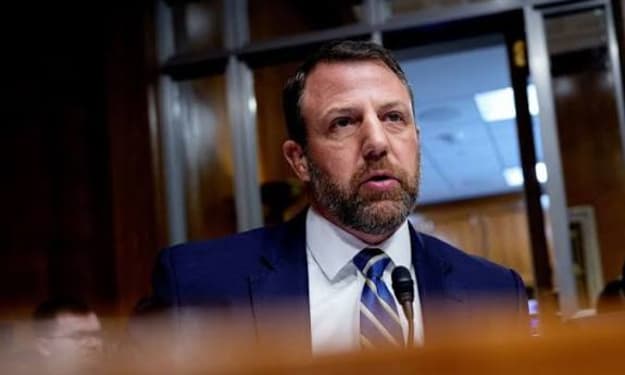
In a dramatic shake-up inside the U.S. administration, President Donald Trump has dismissed Homeland Security Secretary Kristi Noem after mounting criticism from both White House officials and members of the Republican Party. The decision marks the first major cabinet departure of Trump’s current term and highlights growing tensions inside the administration over immigration policy, spending controversies, and internal management of the Department of Homeland Security. The White House confirmed that Trump plans to nominate Oklahoma Senator Markwayne Mullin as Noem’s replacement. The senator, a Republican known for his strong support of the administration’s security agenda, is expected to undergo Senate confirmation hearings in the coming weeks before formally assuming the role. Rising tensions inside the administration Noem’s removal comes after weeks of growing frustration among senior officials and lawmakers who questioned her leadership of the Department of Homeland Security (DHS). Critics argued that the agency had struggled to manage several politically sensitive issues, particularly the administration’s aggressive immigration enforcement strategy and its response to domestic security incidents. During recent congressional hearings, Noem faced intense questioning from both Republican and Democratic lawmakers. Members of Congress pressed her on spending decisions, including controversial advertising contracts and costly departmental projects that had drawn scrutiny from oversight committees. The hearings exposed divisions within the Republican Party, with some GOP lawmakers expressing concern that the controversy was damaging the administration’s broader security agenda. Although Trump initially defended Noem publicly, sources within Washington suggested that patience inside the White House had been wearing thin. Several officials reportedly believed that the ongoing controversies were becoming a political distraction at a time when the administration wanted to emphasize border enforcement and national security achievements. A key architect of immigration enforcement Noem had been a central figure in implementing Trump’s hardline immigration policies. As Homeland Security secretary, she oversaw large-scale immigration enforcement operations and border security measures that formed the cornerstone of the administration’s domestic policy agenda. Supporters credited her with aggressively pursuing the administration’s goal of tightening border controls and accelerating deportations of undocumented migrants. However, critics argued that some of the operations created chaos in local communities and strained relations between federal authorities and state governments. The department also faced criticism following incidents tied to federal enforcement operations, including controversial raids and confrontations that sparked public protests in several American cities. These incidents intensified political pressure on the administration and further fueled debate over the direction of U.S. immigration policy. Trump offers new role despite dismissal Despite removing her from the cabinet, Trump publicly praised Noem’s service and announced that she would take on a new diplomatic role as Special Envoy for the “Shield of the Americas.” The initiative is expected to focus on strengthening security cooperation across the Western Hemisphere, including efforts to combat narcotics trafficking, improve border coordination, and enhance regional law-enforcement partnerships. In a social media statement announcing the change, Trump thanked Noem for her contributions and highlighted what he described as “spectacular results” on border security during her tenure. The president said the new role would allow her to continue supporting the administration’s security objectives in Latin America and the Caribbean. Noem later acknowledged the transition and expressed gratitude for the opportunity to serve in the administration. She emphasized that the Department of Homeland Security had made “historic accomplishments” during her leadership and pledged to continue supporting Trump’s policies in her new position. Political implications ahead The leadership change could reshape the political dynamics surrounding immigration and homeland security in Washington. By nominating Senator Mullin, Trump appears to be seeking a figure with strong ties to congressional Republicans who can help stabilize relations between the administration and lawmakers. Analysts say the move may also be an effort to reset the administration’s message on national security ahead of upcoming legislative battles. Immigration enforcement remains one of the most divisive issues in U.S. politics, and the White House is likely hoping that new leadership at DHS will shift attention away from internal controversies and back toward policy goals. Whether the shake-up will ease tensions within the administration remains uncertain. However, Noem’s departure underscores the intense political pressures surrounding homeland security policy and the fragile alliances that often shape decision-making at the highest levels of government.
By Fiaz Ahmed 3 days ago in The Swamp
Guard Your Battery
Why are some people so attractive just by standing there? It’s not because they are "likable," but because they don’t need everyone to like them. I realized later that truly charismatic people allow themselves to be criticized, but they never criticize themselves. They never try to please the world; instead, the world stops to watch them.
By Emily Chan - Life and love sharing5 days ago in Poets



Comments
There are no comments for this story
Be the first to respond and start the conversation.