
Water Heater Market Forecast 2025–2033: Rising Demand for Smarter, Greener Heating Solutions
How innovation, sustainability, and construction growth are reshaping the global water heater industry


The global water heater market is entering a new phase of expansion, propelled by rapid urban development, sustainability-driven innovation, and an aggressive shift toward energy-efficient technologies. According to Renub Research, the market was valued at USD 30.72 billion in 2024 and is set to reach USD 48.16 billion by 2033, exhibiting a CAGR of 5.12% during 2025–2033. From residential apartments and industrial plants to luxury hotels and smart homes, hot water has evolved from a basic utility to an efficiency-driven, technology-enhanced solution.
This editorial explores the market’s evolving landscape, major growth drivers, regional opportunities, segment-wise insights, and competitive developments shaping the next decade of global water heating technology.
Water Heater Market Overview
A water heater is an essential appliance used across households, commercial spaces, and industrial facilities to provide a continuous supply of hot water for bathing, cooking, cleaning, sterilization, and numerous industrial processes. Traditionally powered by electricity or gas, the industry has now shifted toward solar, heat pump, and hybrid heating technologies to improve energy efficiency and reduce operational costs.
Modern water heaters are no longer mere heating units. They are now integrated with smart features such as Wi-Fi control, energy-use monitoring, leak detection, voice control, and IoT-enabled automation. From compact tankless units for small apartments to high-capacity boilers serving manufacturing plants, water heaters today offer a broad spectrum of technical sophistication to meet evolving consumer and industry demands.
Key Growth Drivers of the Global Water Heater Market
1. Rising Consumer Preference for Energy-Efficient Products
Energy efficiency has become one of the strongest market drivers. Consumers increasingly want systems that not only deliver dependable hot water but also reduce utility bills and carbon footprints. Technologies such as:
Heat pump water heaters
Solar water heaters
Hybrid heating systems
High-efficiency electric units
…are witnessing widespread demand because they lower energy use by 50–70% compared to conventional units.
Governments worldwide are supporting this shift. Rebates, tax incentives, and stringent energy-efficiency mandates push households and businesses toward greener choices. For instance, many countries are phasing out low-efficiency electric and gas heaters.
As of January 2025, heat pump technology continues to dominate discussions around sustainable water heating thanks to its strong efficiency performance and eco-friendly credentials.
2. Rapid Urbanization and Massive Infrastructure Development
Urbanization is reshaping the global demand for modern water heating solutions. Today, 4.4 billion people—over half the world—live in cities, and this number is expected to double by 2050. Such urban acceleration demands new apartments, commercial complexes, hotels, hospitals, and industrial facilities—each requiring reliable water heating.
A German Advisory Council on Global Change report estimates that the world will need to construct as much infrastructure in the next 30 years as it has since industrialization began. This translates into an annual investment of EUR 3.6 trillion, directly boosting demand for water heating systems.
High-rise buildings and commercial establishments, in particular, require high-capacity, durable, and energy-efficient units, driving innovation and market expansion.
3. Smart Technologies Transforming Consumer Expectations
Smart home ecosystems have entered the water heating industry. AI and IoT are enabling water heaters that:
Adjust temperatures automatically
Track and optimize energy use
Predict maintenance needs
Integrate with Alexa & Google Assistant
Operate remotely through mobile apps
This convenience, combined with improved energy performance, is reshaping consumer preferences.
A notable example is Midea Group’s Smart Wi-Fi Storage Water Heater, launched in September 2023, offering enhanced safety, scheduling, and monitoring functions. Smart heaters are rapidly becoming a preferred choice among urban homeowners globally.
Key Market Challenges
1. High Installation and Maintenance Costs
While energy-efficient and solar-powered water heaters reduce long-term costs, they often require higher upfront investment. Heat pump and solar systems may also need specialized installation, making them less attractive for low-income consumers or price-sensitive markets.
Additionally, periodic maintenance, part replacement, and servicing add to long-term ownership costs. This is particularly challenging in developing regions where budget constraints limit adoption of premium models.
2. Regulatory Compliance and Environmental Restrictions
Governments are tightening standards around:
Emissions
Energy efficiency
Refrigerant use
Environmental safety
Manufacturers must invest heavily in R&D to comply with these regulations. For example, phasing out high-GWP refrigerants in heat pump systems increases production costs. Meanwhile, the gradual shift to renewable-powered water heating systems continues to challenge manufacturers relying on conventional electric and gas models.
Despite these challenges, regulations are ultimately steering the market toward technological innovation and sustainability-driven growth.
Market Insights by Key Segments
30–100 Liters Water Heater Market
This capacity segment remains widely popular among:
Medium-sized households
Small commercial units like salons and cafés
Small offices
These heaters provide a balance of compact design, affordability, and sufficient hot water capacity. The rise in apartment construction across urban cities is boosting demand, while government incentives promoting energy-efficient appliances are accelerating adoption.
Electric Water Heater Market
Electric water heaters remain dominant due to:
Easy installation
High safety standards
Low maintenance
Widespread grid access
The segment is further growing due to the introduction of smart, app-enabled storage and tankless models. Additionally, green-building initiatives encourage the use of electric-powered systems over fossil-fuel units.
This market benefits significantly from rapid residential construction and expansion in commercial real estate.
Storage Tank Water Heater Market
Storage water heaters continue to be the backbone of water heating, especially in:
Large homes
Industries
Hotels and hospitals
These units excel in supplying hot water simultaneously to multiple outlets. Improved insulation, corrosion-resistant tanks, and enhanced energy ratings are making storage heaters more competitive. Solar-powered and hybrid storage systems are also gaining popularity globally.
Industrial Water Heater Market
Industries such as:
Pharmaceuticals
Food processing
Chemicals
Hospitality
Manufacturing
…require large-scale, high-temperature water heating systems. The growth of industrialization in Asia-Pacific, Latin America, and the Middle East is boosting this segment significantly. Compliance with safety, efficiency, and environmental standards is driving industries to adopt advanced, automated heating systems.
Regional Market Outlook
United States
The U.S. water heater market is driven by replacement demand, smart home adoption, and rising energy costs. Consumers prefer smart, energy-efficient heaters to reduce electricity bills. Environmental regulations and government incentives also push the market toward greener options.
In April 2023, Ariston introduced a new range of Wi-Fi electric storage water heaters with voice control compatibility, aligning with the U.S. smart home trend.
United Kingdom
The UK is accelerating toward low-carbon heating technologies as part of its emission reduction goals. Heat pumps, hybrid heaters, and solar systems are gaining popularity, particularly in newly built and retrofitted homes.
In September 2024, Dimplex launched the Alta Wi-Fi panel heater, reinforcing the UK’s transition to smarter, space-efficient heating appliances.
India
India is one of the fastest-growing markets thanks to:
Rapid urbanization
Middle-class expansion
Rising residential and commercial construction
Growing preference for energy-efficient appliances
Solar water heaters especially enjoy high demand due to cost-effectiveness and abundant sunlight. In October 2023, Racold launched premium Omnis and Altro water heater lines, designed by Italian designer Umberto Palermo, showcasing India’s shift toward aesthetically modern, high-performance heaters.
Saudi Arabia
Saudi Arabia’s market growth stems from its expanding construction sector, increasing hospitality services, and strong focus on sustainability. Government initiatives promoting energy-efficient buildings are further encouraging adoption of modern heating systems.
Water Heater Market Segmentation
Product
Electric
Gas
Solar
Technology
Tankless
Storage Tank
Hybrid
Application
Residential
Commercial
Industrial
Capacity
Below 30 Liters
30–100 Liters
100–250 Liters
250–400 Liters
Above 400 Liters
Regional Coverage
North America, Europe, Asia-Pacific, Latin America, Middle East & Africa
(with country-level breakdowns including U.S., China, India, Germany, Brazil, Saudi Arabia, etc.)
Competitive Landscape
Leading companies in the global water heater market include:
A.O. Smith
Rinnai Corporation
Whirlpool Corporation
Bajaj Electricals
Haier Inc.
Havells India
Lennox International
Kenmore
Thermex Corporation
These companies are focusing on new product launches, smart technology integration, geographic expansion, and strategic partnerships to strengthen market presence.
Final Thoughts
The global water heater market is evolving rapidly with increasing demand for smart technologies, sustainability-driven solutions, and high-efficiency heating systems. As construction continues to boom and energy conservation becomes a global priority, innovative products—ranging from solar heaters to IoT-enabled smart systems—will drive the next decade of industry growth.
With a strong CAGR of 5.12% through 2033, the market is on track for substantial expansion, offering opportunities for manufacturers, suppliers, and investors worldwide.
About the Creator
Sushant. Renub Research
I’m Sushanta Halder, Digital Marketing Manager at Renub Research with 15+ years in SEO, content, PPC & lead generation. Passionate about data-driven growth strategies.
Keep reading
More stories from Sushant. Renub Research and writers in The Swamp and other communities.
Non-Lethal Weapons Market Overview & Forecast (2025–2033)
The global Non-Lethal Weapons Market, valued at USD 8.58 billion in 2024, is moving through one of its most transformational phases. According to Renub Research, the market is expected to grow at a CAGR of 5.52% from 2025 to 2033, eventually reaching USD 13.91 billion by 2033. As governments worldwide face a complex and evolving public-security environment—ranging from civil unrest to rising geopolitical tensions—non-lethal solutions are becoming indispensable.
By Sushant. Renub Research2 months ago in The Swamp
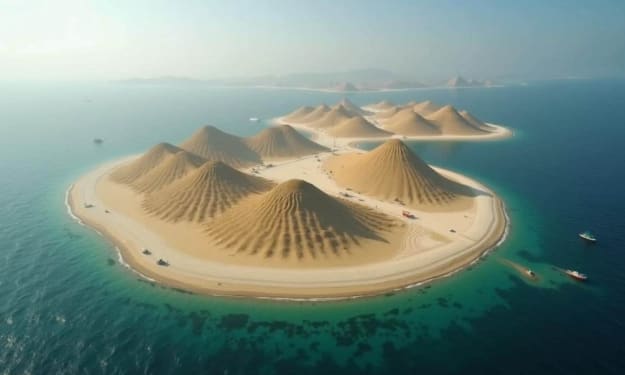
By Dumping Tonnes of Sand into the Ocean for 12 Years, China Has Created Brand New Islands from Scratch
Imagine looking out over the South China Sea and seeing islands that weren’t there a decade ago. That’s exactly what’s happening. For 12 years, China has been dredging millions of tonnes of sand from the seabed and dumping it onto shallow reefs. The result? Massive artificial islands with runways, harbors, and even radar systems — entirely built from scratch. It’s an extraordinary engineering achievement. But it’s also a deeply controversial story that touches on geopolitics, environmental damage, and international law. How Do You Build an Island From the Ocean? The process is intense, complicated, and massive in scale. Specialized ships called cutter-suction dredgers scoop up sand and crushed coral from the seabed. That slurry is pumped through pipelines onto reefs, layer by layer, until the area rises above the high-tide line. Once land starts forming, engineers reinforce it with rock and concrete to protect it from storms. Roads, runways, and harbors soon appear, along with radar and communication systems. What was once just a coral reef becomes a fully functional island capable of hosting military aircraft and ships. From a technical standpoint, it’s impressive. From an environmental and geopolitical standpoint, it’s far more complex. Why These Islands Matter The South China Sea is one of the most strategic waterways in the world. About one-third of global maritime shipping passes through here every year, and the sea is rich in oil, gas, and fish. Several countries — including Vietnam, the Philippines, Malaysia, Brunei, and Taiwan — have claims in the region. China, however, claims almost the entire South China Sea under the so-called “nine-dash line.” Artificial islands give China a physical presence in contested waters, turning submerged reefs into military and logistical hubs. Once an island has a runway or a port, it changes the balance of power. It’s no longer just sand; it’s a foothold that can influence maritime traffic, regional security, and international diplomacy. From Coral Gardens to Concrete Islands There’s a darker side to this story. These islands are built on coral reefs — ecosystems that took thousands of years to form. Dredging and dumping sand destroys these reefs almost instantly. Sediment plumes cloud the water, smothering coral and blocking sunlight. Fish nurseries vanish, and entire marine ecosystems collapse. Nearby fishing communities in countries like the Philippines and Vietnam report lower catches as fish populations decline. What was once a thriving marine environment becomes, for many species, a barren landscape. Geopolitical Tensions Artificial islands aren’t just about sand and concrete; they’re about power projection. Once they host ports, airstrips, and radar systems, they act like permanent military outposts in the middle of contested waters. Even after a 2016 international tribunal ruled that China’s expansive claims were legally invalid, Beijing continued construction. Its neighbors are responding: Vietnam has built its own artificial islands, and the U.S. conducts freedom-of-navigation operations to challenge China’s dominance. These islands are flashpoints for tension, with ships and planes moving constantly to assert influence. What began as an engineering project has become a high-stakes geopolitical chessboard. Legal Questions According to the United Nations Convention on the Law of the Sea (UNCLOS), artificial islands do not generate territorial waters or exclusive economic zones. So technically, China cannot claim surrounding seas just because it built land there. But in practice, perception matters. Once an island is equipped with infrastructure and personnel, it becomes a de facto presence that is difficult to ignore. Countries, ships, and planes start operating around it, effectively shifting influence without officially changing borders. International law is struggling to keep up with technological possibilities. Creating new land from the ocean wasn’t something lawmakers imagined when defining maritime rights. Environmental and Strategic Impacts The environmental consequences are serious: coral reefs, fish populations, and coastal ecosystems are destroyed. Yet these islands also reshape the geopolitical map. They allow China to extend its reach in the South China Sea, assert military presence, and strengthen supply chains across contested waters. This raises a broader question: how should the world balance technological innovation with environmental protection and international norms? Artificial islands like these may be an engineering triumph, but they come with costs that ripple across oceans and generations. The Takeaway China’s decade-long project to create islands from the sea is more than a feat of engineering. It’s a story about power, ambition, and the lengths nations will go to secure influence. These islands are now military bases, geopolitical tools, and environmental scars all at once. As technology advances, creating land where none existed will become easier. But the lessons of the South China Sea are clear: reshaping the earth may give a country strategic advantages, but it also disrupts ecosystems, challenges international law, and sparks regional tension. Sand and sea may seem endless, but the consequences of building on top of them will last for generations.
By Muhammad Hassan3 days ago in The Swamp
Center Stage with Paul Stewart
*** I'm keen to republish the interviews I did for my series with Vocal creators. It's been a few years and I thought it might be nice to revisit these wonderful conversations. I'll be releasing them one at a time for a few weeks/months.
By Heather Hubler3 days ago in Interview



Comments
There are no comments for this story
Be the first to respond and start the conversation.